
Neighbours may grumble about weeds, you may glance at the mower with a weary sigh, and the internet insists that you need a strategy. Perhaps you do. Then again, the kindest thing for your lawn, your budget and the planet may be to stop battling clover and allow it to do its work.
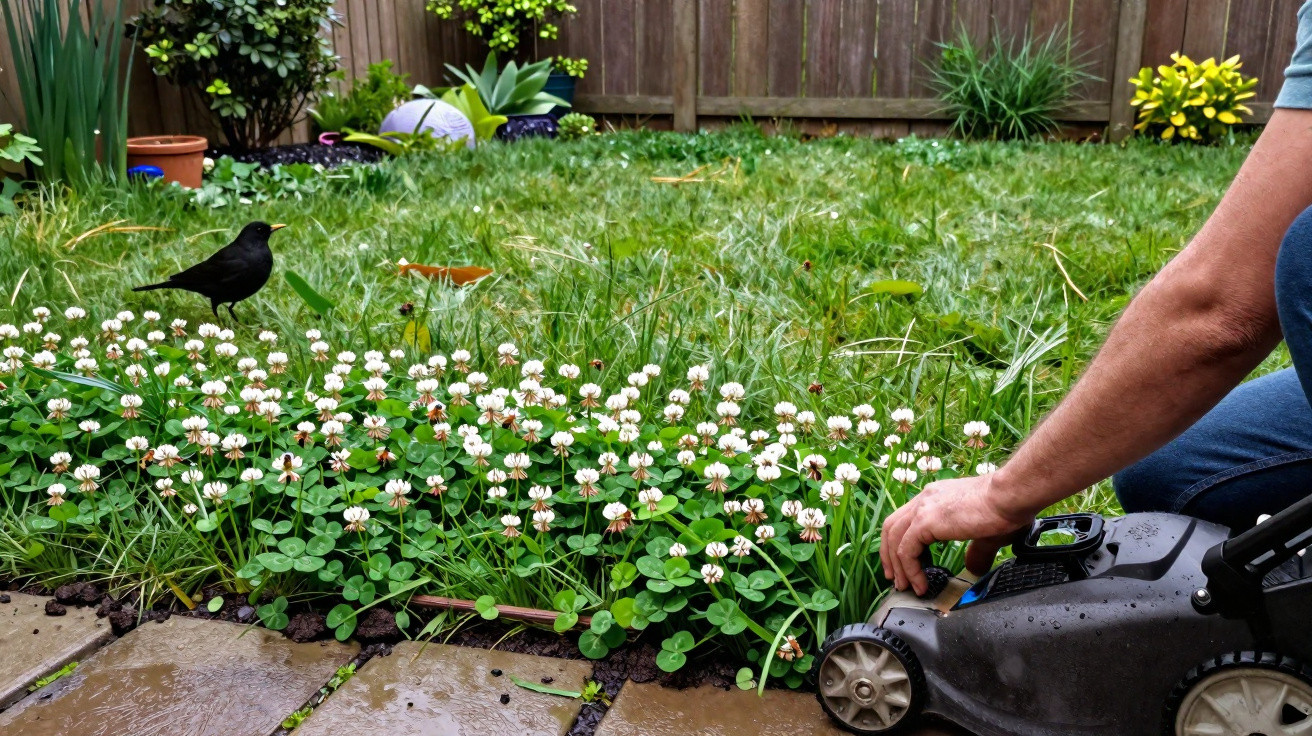
I first properly noticed my own lawn on a warm July morning following a light shower. Clover blooms dotted the green surface like pins in a cushion, bees moved methodically between them, and a blackbird hopped along the border as though it were in charge. When I crouched down and pressed my hand against the foliage, the leaves felt cool and bouncy where the grass had become sparse. The clover had filled the bare patches I had repeatedly failed to repair. Perhaps this so-called weed was actually the useful one.
What clover in your lawn is really telling you
A lawn full of clover is neither a personal shortcoming nor a gardening calamity. It is communicating something. White clover flourishes in soil that is slightly low in nitrogen and somewhat compacted, taking hold where grass finds conditions difficult. Its three-part leaves do more than look attractive: they cover the ground, help keep it cool and limit evaporation during hot weather. Rather than lowering your lawn's quality, clover acts as a natural partner that helps it cope under pressure.
Here is the science, explained from ground level. Clover forms a relationship with Rhizobium bacteria, which take nitrogen from the air and “fix” it in the soil. Within mixed turf, this may provide roughly 50–150 kg of nitrogen per hectare annually for neighbouring grass to use, supporting greener growth without continual feeding. A council study in the Midlands found that verge strips containing clover experienced fewer summer brown-outs than strips planted only with grass. There is no trick involved: it is simply a plant carrying out the role normally filled by fertiliser.
The benefits spread further still. Additional clover supports more microscopic soil life, improves soil structure and helps water soak in when heavy rain arrives. In practical terms, that can mean fewer puddles on the patio and a lawn that is less troubled by dry periods. Its flowers provide a valuable food source for pollinators, particularly city bees that can struggle to find forage in midsummer. A lawn that welcomes clover is like changing its sound from mono to stereo. It remains a lawn, but it gains more richness.
How to make peace with clover and get a better lawn
Begin by cutting the lawn slightly taller, at around 7–9 cm, with sharp mower blades. Longer grass shades the ground and complements clover's low, leafy growth, allowing both plants to prosper without either overwhelming the other. For a more refined-looking mix, overseed with a little microclover in early autumn or mid-spring: use around 3–5 g/m² combined with your normal rye/fescue seed. During establishment, water thoroughly once or twice weekly. After that, allow the two to grow together.
Avoid applying weed-and-feed across the whole lawn. It removes the very plant that supplies your grass with free nutrients. Should you wish to encourage the grass, use a modest slow-release fertiliser once each year instead of a strong dose that promotes leaves at the cost of roots. Most of us have experienced the urge to scatter pellets everywhere after spotting a brown area. Pause instead. Reseed exposed patches, redirect regular foot traffic away from worn areas and occasionally aerate the ground with a hollow tine. Honestly, no one does all of that every day.
Pay attention to how the garden is used, then make adjustments accordingly. If bees near the patio make you uneasy when entertaining, mow the clover blooms the day before, then allow them to return the following week. Testing the soil will reveal its pH and organic matter levels, letting you respond to evidence rather than guesswork.
“Clover doesn’t mean a failed lawn. It means your lawn is teaching you how it wants to grow,” a groundskeeper told me, half-smiling over the hum of a mower.
- Sweet spot mix: 5–10% clover seed by weight in your lawn blend.
- Mow smart: keep it high in heatwaves, lower a notch in cool, wet spells.
- Water deeply rather than frequently: roots seek out moisture and the turf becomes tougher.
- Leave spring clippings on the lawn once a month to return nutrients to the soil.
A greener kind of green
Making room for clover is not so much a passing fashion as a change in outlook. It means choosing a lawn that contributes something in return: fewer added inputs, more living activity and less fragility. It will still look green and remain suitable for picnics, football and afternoon naps. It simply achieves that through a more intelligent system beneath the surface. You may not take first prize for stripes at the local show, but you could discover that your lawn comes through heatwaves more calmly and that your Saturday mornings are less occupied. That small white flower near your feet links your patch to pollinators across the street, your household costs and the way we garden in an increasingly warm and unsettled climate. It is a small thing, but it has significance.
| Key point | Detail | Benefit for the reader |
|---|---|---|
| Clover feeds the lawn | Fixes atmospheric nitrogen through root nodules | Greener grass with fewer fertiliser purchases |
| Biodiversity boost | Flowers feed bees; roots support soil life | A healthier garden ecosystem and a gentler footprint |
| Resilience and ease | Improved drought tolerance and fewer bare patches | Less watering, less effort and a more usable lawn |
Frequently asked questions
- Will clover take over completely? In a regularly mown, lightly fed lawn, grass and clover usually find a balance. If clover becomes dominant, increase the mowing height and overseed sparse spots with grass to restore balance.
- Is clover safe for children and pets? Yes. It is soft, grows low and is gentler beneath bare feet in summer than many grasses. If you are concerned about bee stings, cut the flowers short before days with lots of foot traffic.
- What is microclover? It is a small-leaved form of white clover developed for lawns. It mixes tidily with rye and fescue, remains low and flowers lightly while continuing to fix nitrogen.
- How do I seed clover into an existing lawn? Lightly scarify and rake the surface, scatter 3–5 g/m² of microclover mixed with grass seed, then water well for two to three weeks. Keep foot traffic to a minimum until germination has established.
- Can I remove clover if I change my mind? You can reduce it by feeding the grass in spring, mowing higher and spot-treating only where required. Removing it entirely requires herbicides and reseeding, making the process more expensive and less gentle.




Comments
No comments yet. Be the first to comment!
Leave a Comment