
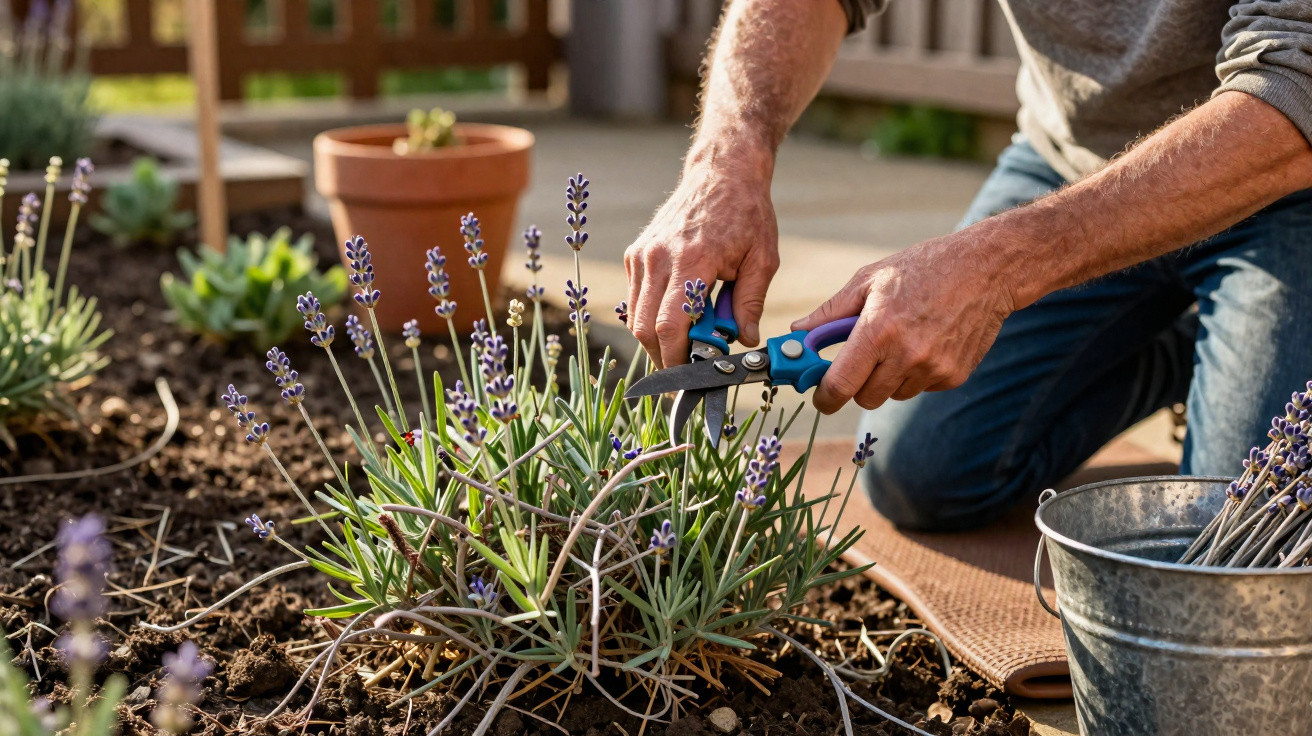
Your lavender has become leggy, grey around the base and, frankly, rather forlorn. March is the moment to restore it to a compact, scented mound that flowers again instead of resembling driftwood by July.
You notice it as soon as you pick up the secateurs and raise a straggling stem, searching for green beneath the silvery foliage. Last summer’s flower spikes crumble in your fingers; the middle appears empty, while the woody base resembles a miniature shrub that has stopped making an effort.
Meanwhile, your neighbour’s lavender is trimmed into a gentle dome, making yours seem a little uncared for. A bee drifts past, almost as though it is judging you. Look more closely, though, and you may spot tiny new buds low on the stems: a sign that the plant can recover if you prune thoughtfully.
Most of us have looked at a plant that seems beyond help and wondered whether replacing it would be kinder. With lavender, however, timing makes all the difference. It can be brought back.
Assessing neglected lavender in early spring
March is not the time to carve a perfect sculpture. Instead, you are encouraging growth from the parts of the plant that can still respond. Find the “green line” on every stem: the place where soft, leafy growth turns into naked brown wood.
Hold a stem up to the light and give it a gentle pinch. A stem that flexes is living; one that breaks like chalk is dead and should come out. Your target is a low, compact dome, ready to send up fresh shoots as temperatures rise.
I once saw a friend rescue a lavender that looked like a heap of bones. Working in gradual sweeps, she removed a third of the living growth and retained a tidy, rounded cap of leaves. By June it was thick with growth and humming with bees, and by July it had not become leggy at all.
Rather than attacking it with one drastic cut, she used two gentle pruning sessions: a shaping trim in March followed by a quick shear after the first flowers. That modest summer adjustment prevented the late-season extension growth that makes plants woody.
Unlike rosemary, lavender does not reliably shoot from old wood. Prune into brown stems without leaves and you may see no response at all. In March, make the safe cut immediately above the lowest fresh buds, normally 2–5 cm into green growth.
Remove last year’s flower stems, open up the centre a little to improve air movement, and maintain an overall rounded outline. Never cut into bare, brown wood. Where a branch is dead from top to bottom, cut it away neatly at the base before continuing.
Step-by-step: the March lavender prune for renewed bloom and less woodiness
Begin with clean, sharp secateurs. Step back and imagine a cushion rather than a cube. Move around the plant, removing 2–5 cm from the live tips to form an even dome, with every cut just above small pairs of leaves.
Then pull out any dead, grey stems from the middle. When a stem lives at its base but is bare through the centre, follow it down until healthy buds appear, then cut at that point. This directs the plant’s energy into fresh, low-level shoots.
Let’s be honest: nobody actually does this every day. It is easy either to fuss over the plant with an overly cautious snip or to cut far too fiercely and shave it back into old wood. The right approach lies between those extremes.
For very neglected lavender, rejuvenate it gradually over two springs. This year, cut back by a third while remaining in green growth. Once it has flowered in summer, give it another light shear and preserve the dome. The following March, reduce it a little further towards that young, compact shape.
Approach it like a bee and a barber: create a smart form, allow plenty of exposure and avoid bare areas. Cut tough, but cut kind.
“Aim for green-on-green cuts in March, then shear lightly after the first flush. That two-step rhythm keeps lavender flowering and stops it getting leggy,” says a Sussex grower who’s been clipping lavenders for 20 years.
- Aim for a rounded dome about 25–35 cm high for most English lavenders.
- Prune above living buds; when unsure, leave the cut higher.
- Take out dead wood completely to improve airflow through the centre.
- Avoid nitrogen-rich fertiliser; a light potash feed supports flowering.
- A gravel mulch keeps the base dry, whereas bark may retain moisture against the stems.
From March to July: care, timing and when to replace lavender
Water only when the soil is dry and drains freely, because lavender dislikes having wet feet. A sunny, breezy position will do more than any plant tonic. For potted lavender, choose a gritty compost mix and empty any saucers left wet over winter.
Maintain the dome with a quick shear immediately after the first flush has faded. Trim 2–3 cm from the finished flower stalks and the upper foliage. This prevents stems from becoming elongated, the growth that leaves the base woody by mid-summer.
Some lavenders have simply reached the end of their useful life. If the centre is hollow, the base is splitting and foliage survives only as a ring, replace what won’t revive. Take heel cuttings from any healthy green material this March, pot them up, and you should have new compact plants next year.
This is the understated technique used by professionals: shape in March, shear in summer and keep a light hand throughout. By July, you are not battling woody growth; you are steering fresh shoots towards another display of flowers.
Pruning in March is about a regular routine, not dramatic rescues. Shape a dome now for early-summer flowers, then make a quick cut after the first flush to keep it compact. By July, the base will not be turning into timber.
The small points count: clean blades, a sunny week after trimming, and a fine-gravel surface mulch instead of compost. Think sun and air, not snacks and shade.
It also helps to adjust expectations. Lavender does not live as long as yew or box, and many English varieties are at their best for five to eight years. That is not a mistake on your part; it is simply the plant’s nature.
When an old shrub is more memory than living plant, take cuttings now and establish a new mound nearby. The fragrance will remain the same, and bees will come just as dependably.
Even if you missed last summer’s pruning, you can still expect a pleasing display this year. March offers another opportunity. Cut within the green growth, form the dome and shear lightly after the first flowers.
By high summer, you can have colour without woody ankles. The lavender will look cared for rather than over-controlled. Pass the method on and a few more plants may avoid the compost heap.
| Key point | Detail | Benefit for the reader |
|---|---|---|
| Timing | Shape in March; shear lightly after the first flush | Maximises bloom and prevents July woodiness |
| Where to cut | Always above live green buds, never into bare wood | Reduces dieback risk and drives fresh growth |
| Aftercare | Sun, drainage, gravel mulch, light potash only | Healthier plants with tighter mounds and longer life |
FAQ:
- Can I cut a very woody lavender hard in March? Proceed carefully. Remove a third only within green growth and take out dead stems. Plan a second, light shear after the first flowering rather than making one severe cut.
- Will lavender regrow from old brown wood? Normally, no. English and hybrid lavenders seldom produce new shoots from bare wood. Always prune immediately above live buds where the stem remains green.
- Does the variety change how I prune? Yes. English types (Lavandula angustifolia) can take a firm shaping cut in March followed by a light summer shear. French/Spanish types (stoechas) need lighter, more regular trims as well as warmer, drier conditions.
- Should I feed after pruning? Do not use high-nitrogen feeds. If you choose to feed, a light sprinkling of potash supports flowers. Excess feeding causes floppy growth that becomes woody sooner.
- What if my plant is past saving? Take several 8–10 cm cuttings from healthy tips this March and begin again. Keep the parent plant neat for one further season, then replace it once the young plants are ready.



Comments
No comments yet. Be the first to comment!
Leave a Comment