
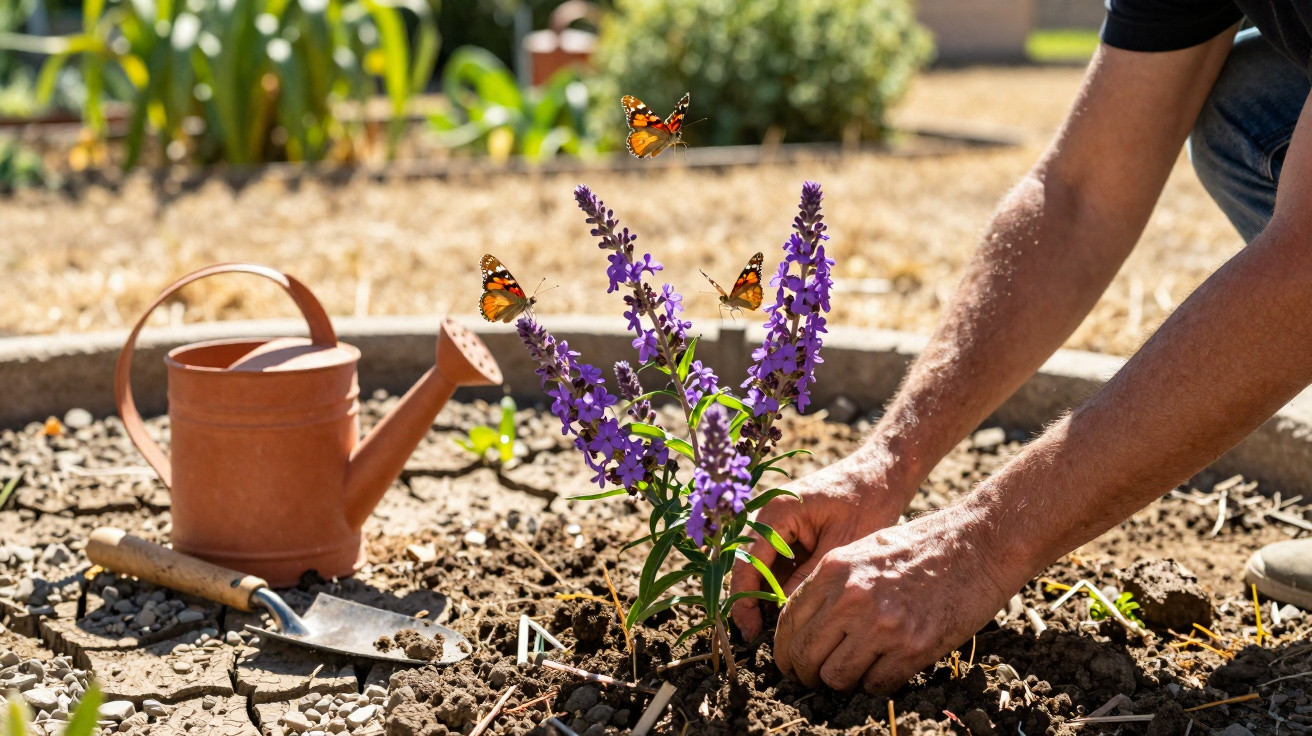
A resilient, scented shrub is discreetly becoming one of summer’s stand-out plants.
On sun-baked patios and dry borders, one plant continues to bloom when other shrubs begin to flag. It attracts swarms of butterflies and copes easily with impoverished ground. Buddleia, widely known as the butterfly bush, is a drought-tolerant option for a water-wise, wildlife-friendly garden in the UK or the US.
Meet the butterfly bush
Buddleia (Buddleja davidii and contemporary hybrids) performs best in full sunshine. Its flower display lasts for weeks, running from mid-summer to early autumn. Its panicles are available in violet, lavender, magenta, white and soft orange. On warm evenings, its fragrance carries through the air. Nectar-packed blooms, held at an ideal height, attract butterflies, moths and bees.
The shrub withstands wind, reflected warmth and nutrient-poor soil. It is well suited to roadside verges, gravel gardens and south-facing walls. In the ground, many cultivars grow to 2–3 metres. Compact varieties remain below 1 metre when grown in containers.
Full sun, sharp drainage and a light hand with the hose form the winning trio for buddleia.
Why it sips water, not gulps
Its grey-green foliage helps restrict moisture loss. Fresh growth surges after rainfall before carrying the plant through dry weather. Established roots access deeper reserves of moisture. After it has settled in, buddleia requires only occasional watering during a hot summer.
City heat, poor soil, no problem
Urban heat islands increase summer temperatures. Buddleia tolerates heat reflected from brickwork and tarmac. It can establish itself in rubble where many other shrubs struggle. This toughness makes it a dependable structural plant for low-input schemes.
Benefits for a water-smart, wildlife-rich garden
- Requires little irrigation after its first year.
- Provides a lengthy nectar season for butterflies and day-flying moths.
- Recovers quickly from pruning or wind scorch.
- Needs little fertiliser in light, sandy ground.
- Delivers bold visual interest from July into September.
One shrub can host multiple small tortoiseshells, peacocks or red admirals at once in the UK, with swallowtails and monarch lookalikes visiting in parts of the US.
How to grow it with confidence
Plant during spring or early autumn, allowing the roots to establish before severe heat or frost arrives. Leave enough space for the eventual size of each plant, so air can circulate through the canopy.
Planting checklist
- Site: a minimum of six hours of direct sunshine.
- Soil: freely draining. Incorporate grit into heavy clay or use a raised bed.
- Watering: water deeply after planting, then once a week during the first dry summer. Reduce watering once growth is established.
- Feeding: apply compost or a light organic feed only in spring.
- Mulch: use gravel or a thin layer of bark to reduce evaporation, keeping it away from the stems.
Pruning that powers blooms
Prune firmly in late winter when the buds begin to swell. On tall varieties, cut stems back to 30–50 cm above ground level. Compact types require just a gentle trim. Flowers are borne on the new shoots. During summer, remove faded panicles to prolong flowering and reduce self-seeding.
Containers and small spaces
For compact cultivars, select a 40–60 litre container. Fill it with a peat-free, free-draining compost containing 20% horticultural grit. Water once the upper 3–4 cm of compost feels dry. Feed sparingly in late spring. Turn the container by a quarter each month to promote balanced growth.
Mind the spread: regulation and responsible choices
Buddleia produces self-sown seedlings on disturbed land. This creates concerns around railway cuttings, riverbanks and brownfield areas. In parts of the UK, it is regarded as invasive in the wild. Several US states identify it as an issue close to riparian areas in the Pacific Northwest.
Pick sterile or low-seed cultivars, deadhead promptly and bin prunings so seeds do not travel.
Choose newer varieties bred to produce minimal viable seed. The Lo & Behold series, including ‘Blue Chip’ and ‘Ice Chip’, has a compact habit and produces little seed. The “Miss” series, comprising ‘Miss Molly’, ‘Miss Violet’ and ‘Miss Ruby’, provides strong colour with less potential to spread. Consult local guidance before planting close to waterways or nature reserves.
Alternatives that feed butterflies
Combine buddleia with, or replace it using, nectar-rich native plants to extend the food supply and minimise any spreading risk.
| Shrub or perennial | Region fit | Water needs | Nectar season | Notes |
|---|---|---|---|---|
| Buddleia (sterile cultivars) | UK and US | Low once established | Mid to late summer | Deadhead to limit volunteers |
| Buttonbush (Cephalanthus occidentalis) | US native | Moderate; tolerates wet | Summer | Great near ponds; hosts pollinators |
| Joe‑pye weed (Eutrochium spp.) | US native | Moderate | Late summer | Tall, nectar-rich umbels |
| Common knapweed (Centaurea nigra) | UK native | Low | Summer | Excellent for meadow edges |
| Wild marjoram (Origanum vulgare) | UK and US | Low | Summer to early autumn | Edible, great for bees and butterflies |
When it blooms and what to expect
Across southern England and much of the US, flowering usually begins in July. In cooler areas, blooms tend to peak in August. The fragrance is strongest during the early evening. Panicles fade neatly if clipped before they set seed. In cold locations, expect deciduous growth, while mild coastal areas may retain semi-evergreen foliage.
Design moves that make it sing
Combine violet buddleia with silver artemisia and blue oat grass. Position white varieties against dark brickwork to create a glow at dusk. In a small garden, a single compact shrub alongside a ribbon of Verbena bonariensis forms a shifting cloud of wings above knee height.
Hardiness, pests and pets
Most buddleia varieties tolerate winter temperatures of roughly −15°C (about USDA zone 5–6) when given a mulched crown. Wind scorch may brown leaf margins, though fresh shoots emerge in spring. Deer frequently leave it alone. Aphids can appear in early summer, but predators usually remove them quickly. Advice on pet safety differs; keep prunings away from inquisitive animals and contact a vet if substantial quantities are consumed.
Water math for a thirsty summer
An established buddleia planted in the ground can often cope with 10–15 litres every two to three weeks during dry conditions. In one drought month, three shrubs may use 90–120 litres. Mophead hydrangeas covering a comparable area can exceed 250–300 litres. Across an estate or a street of front gardens, that difference quickly becomes substantial.
Practical extras that help
Take cuttings from non-flowering shoots in late summer. Remove the lower leaves and insert the cuttings into gritty compost. Maintain only slight moisture. Roots should develop within weeks. When gardening near waterways, spread a tarp beneath pruning work and bag the flower heads before wind can disperse seed. Do not plant on embankments or brownfield land, where controlling seedlings is difficult.
Plan for successive nectar waves. In early spring, use flowering currant and lungwort. For high summer, choose buddleia, oregano and knapweed. Sedums and ivy blossom provide for early autumn. This progression keeps butterflies in the garden for months while helping to keep water costs low.
Comments
No comments yet. Be the first to comment!
Leave a Comment