
Leaves turn crisp around their edges, terracotta pots suddenly seem vulnerable, and you begin measuring time in nights rather than days. It is the hushed wait before the first snowfall, when frost arrives not as a storm but as a whisper. The issue is not whether it will arrive, but which plants will survive - and which will not.
At twilight, I make my way around the beds, my breath cold in the air and a torch in hand, wiping soil from my fingers as I hear ice lightly clinking in the birdbath. Rosemary seems more fragrant in the cold, while the dahlias appear both courageous and slightly ridiculous, and the lawn keeps its warmth like a hand guarding a secret. A neighbour gestures towards the sky and says we are in for a clear night - gardener-speak for frost. I cover the last basil plants with an old sheet, because habit is better than remorse. What happens tonight shapes spring.
Read frost as weather, not destiny
Frost is seldom distributed evenly. It gathers in hollows like spilt milk, avoids a spot heated by a brick wall, and leaves untouched a bed that receives the earliest sunlight. During calm, cloudless nights, warmth lifts from the soil and escapes into the open sky, allowing leaves to ice over. This is radiational frost - the silent variety that catches you unprepared. A little cloud cover or the faintest breeze can give plants an extra degree or two, and that modest advantage matters more than it might seem. Frost is first a pattern, and only then a problem.
Last year, I saw two identical geraniums have entirely different experiences. One was placed on a south-facing step against the house and came through winter with only a woolly blanket of leaves. The other stood three metres away in a dip, where its flowers turned black overnight. Across six cold snaps, temperature readings showed a 2–3°C buffer beside the wall. A very short distance produced a major difference. That small advantage in your garden - a fence, hedge or water butt giving off stored warmth - is insurance that costs nothing.
The science matches what your skin tells you. Dry air cools more quickly when the dew point is low, meaning ice develops sooner and remains on foliage for longer. Damp soil stores heat and gives it back slowly, much like a battery, whereas dry ground behaves like a trapdoor. Wind stirs the layers of air, preventing individual pockets from becoming excessively cold. A forecast of 1°C beneath a clear sky with low humidity can still feel like –2°C at leaf height. The useful rule is to assess the night itself, rather than relying only on the number on your phone.
Take simple steps early, using elaborate measures only when necessary
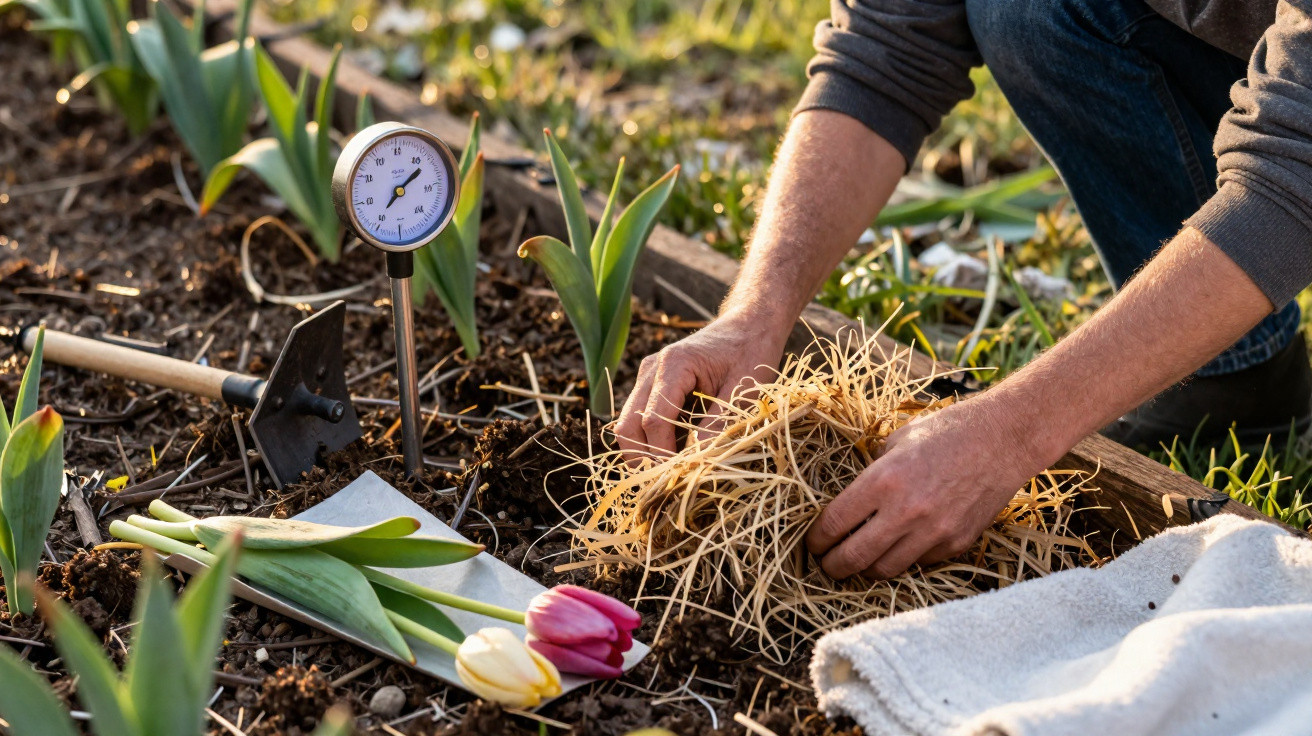
Water during the afternoon ahead of frost. Damp soil retains the day’s heat and releases it upwards overnight, raising the air temperature just enough to soften the cold’s impact. Apply mulch after watering rather than beforehand, so that the warmth is held beneath shredded leaves, straw or bark. Around tender crowns - including dahlias and young perennials - mound mulch at the base to safeguard the root crown. When a hard freeze is forecast, put breathable covers over plants before dusk. Old sheets, frost fleece and even newspaper can work in an emergency.
Covers have a potential downside. Plastic resting directly on foliage transfers cold and may worsen the damage, so use stakes or a frame to create a small tent around each plant. Breathable materials are ideal: they retain warmth while allowing moisture to escape, and they are simple to ventilate on sunny mornings. Take covers off after sunrise to stop plants becoming overheated or leggy. We have all experienced that panicked moment when every plant gets wrapped up. Pause. Cover the sensitive plants first, and allow the hardy ones to cope alone. Your garden will show you which plants genuinely need support.
In truth, no one manages that routine every day. You can improve your chances by keeping a compact kit ready and following a rhythm that suits your life. Store pegs and clothes pegs in a tin, keep pre-cut pieces of row cover to hand, and have several cloches or overturned crates ready for emergencies. Mark your divas - citrus, potted herbs and late tomatoes - and make them the first priority during your evening check.
“Frost protection isn’t about winning a battle. It’s about stealing degrees, night after night, until spring wakes everything up.”
- Quick frost kit: fleece, clips, stakes, mulch, head torch, thermometer
- Moveable heat: water-filled jugs, sun-warmed bricks, compost placed nearby
- Emergency cover: sheets, cardboard, crates, laundry baskets
Plant for spring now while the soil still holds summer’s memory
Spring does not begin in March. It begins on a cold afternoon as you place bulbs into crumbly soil and spread compost with the scent of woodland. Reduce late-season nitrogen so new growth can harden off, then nourish the soil instead with compost, leaf mould and, if you use it, a light scattering of rock dust. Lift tender tubers such as dahlias if your soil remains wet, dry them, then store them somewhere cool and dark. Raise pots off bare concrete using wooden blocks, preventing roots from freezing beneath them. Watch the freeze–thaw cycle, as repeated icing can force young perennials out of the soil. Ease them gently back into place and add mulch, as though tucking them into bed once more.
| Key point | Detail | Benefit for the reader |
|---|---|---|
| Map your microclimates | Monitor cold hollows, warm walls and areas of early sun | Know precisely which places need protection first |
| Use breathable covers | Place fleece or fabric over a simple frame, then remove it at sunrise | Limit damage without retaining moisture |
| Build soil warmth and resilience | Water before frost, mulch afterwards and feed with compost | Stronger roots, fewer losses and quicker spring growth |
FAQ:
- When should I cover my plants? Put covers in place before sunset when a clear, calm night of 1–2°C or lower is forecast. If the sky appears glass-clear and the air is dry, regard it as a frost night even when the forecast is marginal.
- Is watering before a freeze really helpful? Yes. Damp soil holds daytime warmth and releases it overnight, often raising the air by a few crucial degrees at leaf height. Water early enough for the leaves to be dry by dusk.
- Is mulch alone enough to prevent frost damage? Mulch shields roots and crowns rather than delicate foliage. Combine it with covers if you want to protect leaves and stems during a cold snap.
- What should I do with potted plants? Cluster them against a south-facing wall, lift containers off bare concrete, and insulate the pots with hessian or bubble wrap. Bring genuinely tropical plants indoors before night temperatures fall below 7°C.
- Should I prune in late autumn? Avoid heavy pruning of spring-flowering plants. Remove damaged or diseased wood now, and make structural cuts after flowering. Retaining some upper growth can protect lower buds from the cold.


Comments
No comments yet. Be the first to comment!
Leave a Comment