
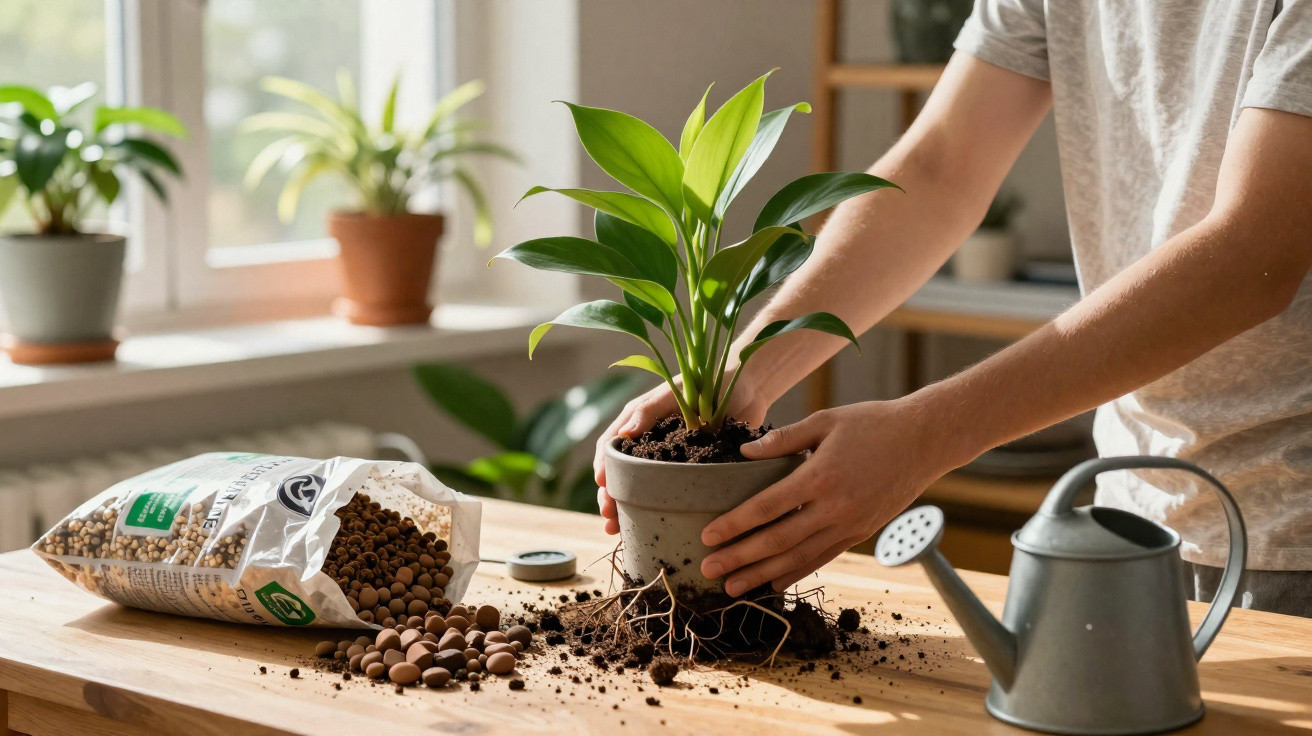
The leaves were looking healthy on Monday.
Glossy, upright and almost self-satisfied on the windowsill. By Friday, that very same plant was drooping over its terracotta pot as though it had endured a drought, despite the compost feeling properly moist beneath your fingers.
You shift it nearer the light, then move it away again. You search online, check the compost once more and add a little extra water “just in case”. A week later, another yellow leaf lands on the worktop like a small accusation.
Among a collection of diligently watered houseplants, the weakest ones begin to decline one after another. It is not thirst. It is not neglect. It is something far quieter and far more widespread - something that almost nobody inspects.
The silent killer hiding beneath your plants
Most houseplants are not lost because they lack care. They perish because they are confined in pots that do not allow them to breathe. You water “properly”, stick to the timetable on the label, and the compost feels damp… yet the roots are slowly being deprived of air.
Poor drainage is often the true cause. Water enters the pot but cannot escape quickly enough. It gathers around the roots, fills the pockets of air and leaves the compost behaving like a dense sponge. Everything can appear fine at the surface. Below the compost line, however, it is a swamp.
When roots remain in still water, they cannot absorb oxygen. They quite literally begin to rot. Yellow foliage and limp stems make you think, “It’s thirsty.” Then you water again. That is the error that ultimately kills the plant.
On Instagram, you may spot thriving monsteras in elegant pots with no drainage holes in sight. They look polished and fashionable on a marble shelf. What is not visible is the nursery pot hidden inside - or the gradual decline of plants placed directly in those ornamental containers.
Indoor plant specialists estimate that root rot and poor drainage cause the majority of unexplained plant deaths, much more often than underwatering. It is not because people do not care. They simply cannot see what is taking place at the base of the pot.
Think of the last plant you lost. Perhaps its leaves yellowed from the bottom upwards. Its stems became soft. Maybe you noticed a stale smell when you finally removed it from the compost. That was not poor watering “technique”. It was a drainage issue that had been developing for weeks.
From a plant’s perspective, every watering is a flood. If there is nowhere for that flood to drain, the roots remain in an endless wet season. Healthy compost should work like a sponge, absorbing water before releasing it. Compost with poor drainage acts more like a bowl, retaining every drop.
Roots require oxygen in the tiny spaces between compost particles. If those spaces are continually full of water, the roots suffocate. Fungi flourish in this wet, low-oxygen setting and begin to attack weakened tissue. That is root rot: not a disease that simply “appears”, but the result of a suffocating home.
The difficult part is that overwatered houseplants can look just like underwatered ones: droopy, dull and exhausted. So people reach for the watering can once more. Where there is no route for drainage, every “kind” act only makes matters worse.
How to improve drainage before you water again
The most effective action is not deciding how frequently to water. It is considering where the water travels once it reaches the compost. Begin with the pot: it needs at least one unobstructed drainage hole, roughly the width of a pencil, and ideally several in larger containers.
For a tidy, minimalist finish, put the nursery pot inside a decorative cachepot. You can then lift it out, allow surplus water to drain into the sink and return it afterwards. That prevents standing water from collecting at the bottom and quietly damaging the roots.
Change to a lighter, more open potting mix. Combine ordinary houseplant compost with perlite, orchid bark or pumice so water can pass through instead of remaining in place. Water should flow, not linger. A useful test is this: after watering, droplets should emerge from the bottom within seconds rather than minutes.
Many people leave plants sitting in full saucers. That water may seem harmless at the bottom of the plate, but hours later the roots are still drawing from the puddle. A safer approach is straightforward: water thoroughly, wait ten minutes and then pour away any remaining water from the saucer or cachepot.
When leaves droop, people sometimes attempt to solve the problem with “emergency” watering. That water lands directly on compost that is already saturated. The plant does not recover, so you feel guilty… and repeat the process. Let’s be honest: nobody really does this every day with a meticulously detailed tracking notebook.
We have all touched dry topsoil and hurried to water. Meanwhile, the bottom third of the pot may still be drenched. This is how so many well-intentioned plant owners gradually drown a favourite fern.
The easiest way to stop the cycle is to inspect conditions deeper in the pot. Push a wooden chopstick or skewer into the compost, right down to the base. Leave it there for one minute before removing it. If it emerges dark and wet, do not water. If it is only faintly damp or nearly clean, it is fine to water.
You can lift the pot, too. A pot that remains noticeably heavy usually contains more trapped water. With time, you will learn the difference between the weight of a “just-watered” pot and one that is “ready-to-drink”. This is practical, low-tech and takes only seconds.
“Most plant problems disappear when people stop thinking in days and start thinking in drainage,” says an urban plant stylist in London who maintains more than 400 office plants each week.
For a simple reference, use this quick drainage checklist whenever a plant seems unhappy:
- Check: Does the pot have at least one clear drainage hole?
- Touch: Is the compost damp halfway down, rather than only at the top?
- Look: Is water sitting in the saucer or decorative pot?
- Smell: Is there a sour or swampy odour when you lean close to the compost?
- Feel: Does the pot seem unusually heavy for its size?
Small changes that help houseplants survive
Once you realise that watering itself is not the villain, your perspective changes. Instead of asking, “Am I bad at plants?”, you ask, “Can the water get out?”. It is a far kinder question - and one you can genuinely address.
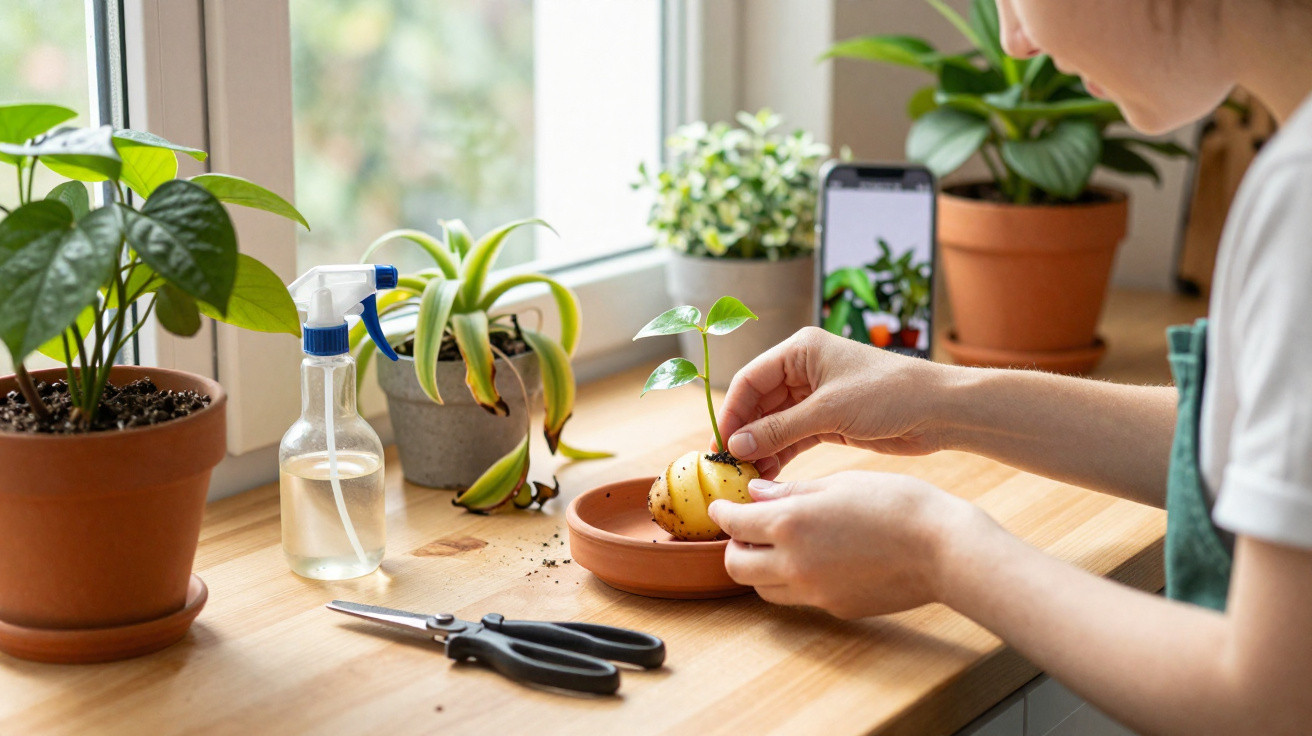
You begin to spot the details: the fashionable ceramic pot without a hole, the dense compost your peace lily arrived in, or the one plant whose saucer is always wet. You adjust one thing and then another. You repot using a more open mix, drill a hole in a container or finally discard the pot that never quite seemed suitable.
There is no need to become a botanist. Simply give water an exit route and give your plants room to breathe. The next time a leaf turns yellow, think about roots and oxygen before reaching for the watering can.
| Key point | Details | Why it matters to readers |
|---|---|---|
| Choose pots with proper drainage holes | Select pots with at least one unobstructed hole, and do not plant straight into solid decorative containers. Put the plastic nursery pot inside a cachepot instead. | Stops water stagnating at the base, the chief cause of root rot and sudden “mystery” plant death. |
| Use light, free-draining compost mixes | Blend standard potting compost with perlite, pumice or bark (about 30–50%) so water can move through while air pockets remain around the roots. | Provides roots with both moisture and oxygen, reducing yellow leaves, fungus gnats and the feeling of dense, compacted compost. |
| Change how you decide when to water | Test lower compost with a skewer, judge the pot’s weight and observe how quickly water reaches the saucer when you water. | Moves you away from rigid “every X days” routines, which overlook drainage and often drown plants that need to dry first. |
FAQ
Why is my plant dying even though I water it regularly?
Regular watering does not ensure healthy roots. With poor drainage or compact compost, water gathers at the bottom and suffocates roots, causing leaf drop, yellowing and eventually rot.Do I really need pots with drainage holes?
Yes, particularly if you are a beginner. A drainage hole lets excess water escape rather than sit around the roots. Decorative pots can still be used, but keep the plant in a smaller plastic pot with holes inside it.How can I tell if my plant has root rot from bad drainage?
Indicators include a sour or swampy smell, soft or black roots when you slide the plant out, and compost that remains wet for many days. Leaves commonly yellow from the bottom upwards, while stems can feel soft.What’s a quick way to test if the soil is too wet?
Insert a wooden skewer into the pot all the way down, leave it for one minute and then remove it. If it comes out very dark and wet, do not water and allow the plant to dry.Can I fix drainage in a pot that has no hole?
You can drill a hole if the material permits, or leave the plant in a smaller pot with holes and use the container without holes as a cachepot. Depending solely on a layer of pebbles at the bottom does not properly solve the drainage issue.
Comments
No comments yet. Be the first to comment!
Leave a Comment