
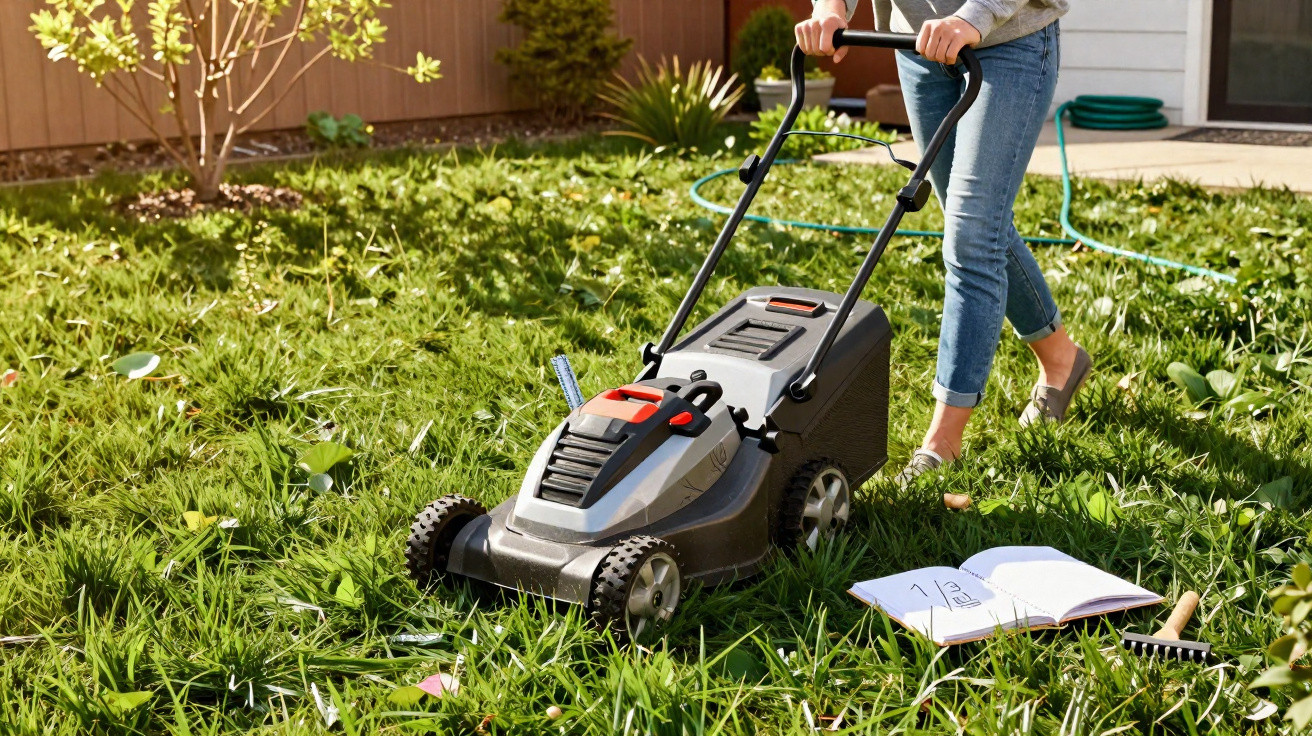
Winter is still lingering in the lawn, but the sun is tempting, the days are getting longer, and the sight of patchy grass is becoming irritating. So it is tempting to bring out the mower and cut everything “nice and short” to make it look tidy again. That is exactly where the problem starts: cutting too early and too low deprives the lawn of the strength it needs to restart, while encouraging moss, weeds and bare patches.
Why March determines the quality of your summer lawn
After winter, a lawn is weakened. Its roots have endured cold, wet conditions and limited light. At this stage, every grass blade is a small power station that urgently needs to collect energy.
Experts often liken grass leaves to tiny solar panels: the greater the leaf area, the more sunlight the plant can capture. Light is scarce during winter and very early spring. Mowing too short at this point takes away the lawn’s “solar panels” and slows its recovery.
“The most important rule in early spring is to leave the grass slightly longer rather than forcing a ‘golf-course close cut’.”
While the ground remains cold and often very wet, the plant focuses on protecting its reserves. Close mowing puts it under stress during this sensitive period. The effects are often visible within days:
- Grass blades turn yellow or look dull and straw-like.
- Moss spreads through thin areas.
- Bare patches develop as weakened blades die off.
The calendar alone is of little help. Ground and air temperatures, along with the condition of the lawn, are what matter. In many areas, the ideal time for the first cut is closer to the end of the month or even early April. Mowing in March while mornings are still frosty carries considerably more risk than benefit.
When the first cut of the year actually makes sense
Rather than relying on a date, gardeners should look for clear signs:
- Soil temperature is around 7 degrees or a little higher.
- No prolonged frost and no more regular night frosts.
- Grass height is roughly 8–10 centimetres, showing that it has grown noticeably.
- The soil is not wet and muddy, but has dried out well.
Only once these conditions are more or less met is it worth reaching for the lawnmower. Driving over wet ground too soon compresses the soil under the machine’s weight. This compacts the ground, causes water to collect and leaves roots with too little oxygen – ideal conditions for moss, but poor ones for a dense lawn.
The “one-third rule”: mowing the lawn to make it denser
The key to a strong, rich green lawn is straightforward, yet still unfamiliar to many people: never remove more than around one third of the current blade length in a single cut.
“If the lawn has grown to 9 centimetres, it should still be about 6 centimetres high after mowing – no shorter.”
This “one-third rule” prevents the lawn from going into shock. If it is cut drastically from 10 to 3 centimetres, it suddenly loses a large amount of leaf area. The plant then has to react by drawing reserves from its roots upwards, weakening itself in the process. Removing only the tips leaves enough leaf area for the lawn to keep gathering energy while also branching out.
For the start of the season, many specialists therefore advise a cutting height of around 5 to 6 centimetres. It may initially appear “too long”, but it brings several benefits:
- The ground is shaded more effectively and does not dry out as quickly.
- Open areas fill in sooner, giving the lawn a more even appearance.
- Moss and weeds find it harder to force their way through.
How to prepare properly for the first cut in March
Before using the mower, it is worth checking the lawn briefly. Working directly on frozen ground or deep mud tears out roots and leaves wheel tracks behind. Wait until the soil has dried and no longer squelches underfoot.
Useful preparation steps include:
- Remove leaves and branches – so the mower can run freely and no damp mulch is left behind.
- Loosen compacted patches – use a garden fork or lawn aerator to make holes in selected spots, allowing air and water to circulate more effectively.
- Sharpen the blades – blunt blades tear the grass and leave ragged cut edges that dry out faster or become diseased.
- Set a deliberately higher cutting height – the first pass of the year should be more of a “tidying comb-through” than a drastic cut.
Mowing in dry weather during the late morning is especially gentle on the lawn. Most of the dew should have dried so the grass can be cut cleanly and wet clumps do not collect in the mower box.
What to do after the first mowing session
One cut alone is not enough. Care during the following weeks is what counts. Regular but gentle mowing, while following the one-third rule, will reward you with much denser growth.
“It is better to mow more often and slightly higher than rarely and extremely short.”
In spring, a schedule of about once a week is usually sufficient. If the grass is growing particularly fast, a second cut may be useful – but make sure to adjust the cutting height so that only the upper tips are removed again.
Many gardeners are now experimenting with areas that are intentionally mown less often. Under labels such as “No Mow March”, the idea of leaving parts of a lawn longer has become established. Wildflowers can develop there, insects can find food, and there can still be a neat, walkable grass area around the patio or seating area.
Common spring mistakes – and how to avoid them
Most problems with pale or patchy lawns in summer begin in the first weeks of the season. Common mistakes include:
- Starting too early: mowing during frost or on cold, wet ground.
- A drastic cut: removing more than half the blade length in one go.
- Blunt blades: leaving frayed cut edges that are more vulnerable to disease.
- A permanently low cutting height: the lawn effectively “starves” and becomes thinner.
Keeping these points in mind and actively avoiding them lays the groundwork for a lawn requiring far less maintenance. A strong, dense sward suppresses many issues naturally, because weeds, moss and bare patches simply have no room to establish themselves.
What else helps the lawn grow back genuinely thicker
Alongside the right mowing approach, several other measures also matter. A weak lawn with a lot of moss often benefits in spring from light overseeding in sparse areas. A moderate fertiliser suited to the soil can also help, provided it is not applied too early or in excessive quantities.
It is also important to take a realistic view of the site: heavily shaded corners beneath mature trees will never resemble an English ornamental lawn. In these spots, shade-tolerant grass mixes or deliberately created islands of flowers and clover can look more relaxed and prove more robust than fighting over every individual blade of grass.
Anyone who understands their lawn, watches for its signals and follows the simple one-third rule in March usually gains twice over: the green space looks more natural and healthier, while summer maintenance becomes noticeably easier because the lawn has grown tougher and denser.




Comments
No comments yet. Be the first to comment!
Leave a Comment