
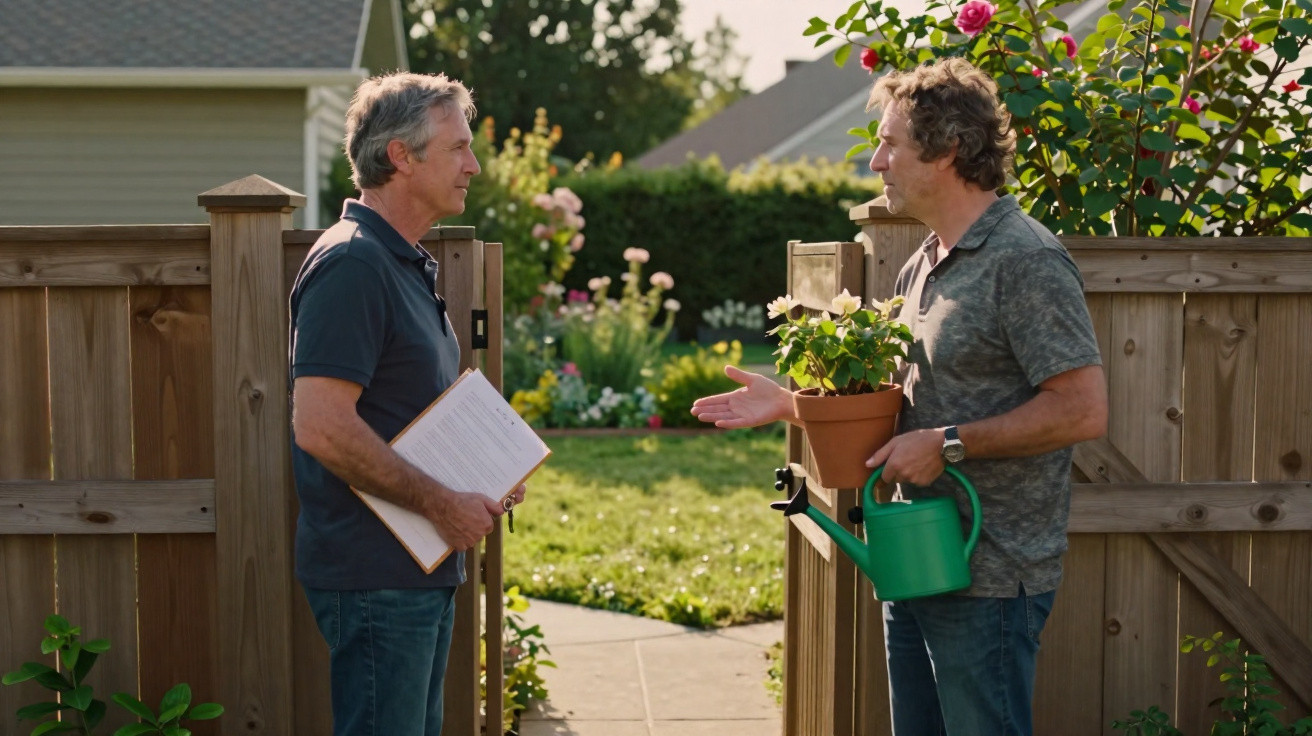
The dispute began with a bin.
There was no yelling and no police tape stretched across the hedge. It was simply a blue recycling bin left in the wrong spot, obstructing the narrow passage to the rear gardens of four terraced homes on a quiet English street.
“Can you move your bin, please? I need to get to my garden.”
“Your garden? That path is ours. You’re just using it.”
Old title deeds came out of drawers. Somebody enlarged Google Street View. One neighbour brought up “easements” they had once read about on an online forum. Tension built around a concrete strip scarcely a metre wide.
By the weekend, nobody was talking.
The passage had not changed. Neither had the roses.
Yet one question had altered everything: does using a route to reach your garden make it yours?
When a narrow path becomes a battleground
Garden access may sound dry and technical on paper.
In reality, it can feel intensely personal. Either you can walk freely down the path to your back gate, or you feel observed, criticised and faintly like a trespasser whenever you take the lawnmower out.
In British streets lined with Victorian and 1930s terraces, rear access is valuable. Those narrow ginnels and shared side passages were not built for contemporary life, with bicycles, hot tubs and Amazon deliveries. Now, however, they accommodate prams, gas engineers and the friend who invariably turns up late for the barbecue.
The law remains in the background, but the boundary feels emotional to neighbours. Is this piece of land mine? Or do I merely have permission to use it?
That one word - “use” - is where many disagreements truly begin.
Consider a familiar arrangement: four terraced houses, a central alley and gardens that can only be reached through the communal passage. The title deeds for Number 12 show ownership of the ground beneath the route. The deeds for Numbers 10, 14 and 16 contain a more obscure phrase: “a right of way on foot to the rear garden”.
For years, everybody manages well. Bins are placed tidily at one side. Children race through on scooters. Then Number 12 puts up a shed that takes a small bite out of the alley. “It’s our land,” they say. “We own it.” Their neighbours object: “You’re making the route we’ve always used narrower.”
Before long, measuring tapes appear alongside accusatory WhatsApp messages. One person cites a Facebook legal group. Someone else brandishes a printout about “easements by prescription”. Behind it all lies the central confusion: one person may own the land, while others may legally hold long-established rights to use it.
This is what lawyers often encounter: ownership is a clear, emphatic line on a plan, whereas use is a history built over decades.
Under the law of England and Wales, the person who owns the soil beneath the alley may seem to have every advantage. Their name appears on the register. They pay the insurance. They may hold the sole key to a front gate.
But easements - including rights of way and rights to pass and repass - can complicate that apparently straightforward position. They may be expressly written into a title or develop through lengthy, uninterrupted use. A neighbour who has quietly taken bins, bicycles and timber through the passage for twenty years may have stronger legal protection than the owner realises.
That is when disputes harden. The instinctive response of “I bought this, it’s mine” clashes with the gradual, almost unseen force of habit and routine. The law does not only ask who owns the land; it also considers who has used it, and for how long.
Steps to cool a garden access row before it explodes
The most helpful first step is not a solicitor’s letter. It is putting the kettle on.
Before contacting a lawyer, sit with your neighbour at the kitchen table and compare the title plans. Examine the red boundaries. Check for small wording such as “right of way” or “subject to rights granted in a conveyance dated…”.
After that, discuss practical use alone. “I need to get ladders through twice a year.” “I’d like to keep my bike there without obstructing you.” Focusing on how the space functions, rather than on who is correct, can be remarkably effective.
If possible, photograph the area together: the width of the path, the position of the bins and the distance a gate can open. Should advice be needed later, you will both be dealing with the same facts rather than disputed measurements recalled from a strained Sunday morning.
Some disputes begin because changes are made quietly in the hope that no one will object. A lock is fitted to a gate. A fence moves “just a bit”. A collection of plant pots gradually occupies more of the passage every year. The other neighbour says nothing - until eventually they do.
Clear conversations at an early stage are better than unspoken resentment. If you intend to install a side gate that might affect a shared route, say so directly. If a neighbour suddenly tells you not to walk where you have always walked, ask for an explanation calmly, then check your documents afterwards instead of reacting immediately.
At a human level, the real injury is often not the legal issue but the sense of being disrespected. People tend to remember tone more than technical detail. Speak slowly, allow pauses and resist trying to get the final word at that moment.
Let’s be honest: hardly anyone reads their title deeds line by line after buying a home.
“People get hung up on the word ‘own’,” says one property solicitor I spoke to. “What matters in these cases is often not who owns the ground, but who has the right to keep using it in a particular way, and whether that use is being unfairly squeezed.”
A handful of straightforward habits can prevent matters escalating into open warfare:
- Check your title deeds before building gates, sheds or fences close to shared access.
- Record agreements in writing, even if it is only an email confirming where bins or bicycles will be kept.
- Keep a brief record of serious events, such as locked gates, obstructed paths or threatening notes.
- Try a mediation service before moving towards full legal action.
- Take a long-term view: an unresolved access dispute can cause a house sale to collapse.
One understated reality is that most garden access disputes concern pride more than law.
An open discussion of what seems fair, what feels safe and what each person can accept will often matter more than any case law found during a late-night Google search.
Living with the tension between “mine” and “ours”
Once you have watched neighbours fall out over a side passage, it is difficult to overlook it elsewhere. The fine divide between “my land” and “our route” crosses countless British streets: unseen, but used every day. It affects how people understand privacy, security and the meaning of home.
Some people will always rely on the language of ownership: “I paid for this place, I decide.” Others are guided by established shared practice: “We’ve all walked here for years, this is how the street works.” These instincts do not naturally align, and the law sits uncomfortably between them in an effort to accommodate both.
What makes garden access disputes unexpectedly compelling is that they are never solely about earth and paving slabs. They involve childhood memories of playing out the back, feelings of being shut in or excluded, and longstanding class tensions around who “belongs” on a street. At a small scale, they reflect a wider national debate about land, space and who is free to move through it.
Recall the last occasion you paused before opening a gate because you were unsure whether you were entitled to do so. That brief flash of uncertainty is what many people experience every day as a dispute develops. Exchanging stories about these rows - positive settlements as well as unpleasant outcomes - can help others recognise the warning signs sooner.
Some readers may quietly inspect their deeds for the first time in years. Others may think of a neighbour they judged too severely. A few may even choose to knock on a door, offer a cup of tea and discuss the side path before it turns into the street’s next silent conflict.
| Key point | Detail | Why it matters to the reader |
|---|---|---|
| Difference between ownership and use | The ground may belong to one neighbour while others have a legal right of way over it | Understand that “owning” land does not always mean being entitled to block access |
| The force of established practice | Long-term, uninterrupted use can create or strengthen a right of way | See how your current routines may carry weight in a future dispute |
| Prevention rather than cure | Discussion, title checks and mediation before legal action | Reduce stress, costs and the effect of a dispute on neighbourhood life |
FAQ:
- What’s the basic difference between “ownership” and a “right of way”? Ownership means the land is legally yours. A right of way means someone else can legally use part of that land for a specific purpose, like walking to their garden, even if they don’t own it.
- My neighbour says I can’t use the side passage I’ve always used. Are they allowed to do that? It depends on what your deeds say and how long you’ve been using it. If you have a registered right of way, they can’t just block it. Long, consistent use might also give you legal protection, but you’d need proper advice.
- Can putting a gate or shed across a path actually break the law? It can, if it “substantially interferes” with a legal right of way. Narrowing a path or making it practically unusable is often more of a legal problem than simply putting up a visible gate.
- Should I talk to a solicitor at the first sign of a dispute? Not always. A calm conversation, checking deeds together and maybe using a mediator can solve a lot. If gates are locked, threats made or building work starts, that’s when early legal advice helps.
- Will an ongoing access dispute make it harder to sell my house? Yes, it often does. Buyers and lenders tend to walk away from unresolved arguments over rights of way. Getting things clarified and, ideally, written into the title can protect your future sale.





Comments
No comments yet. Be the first to comment!
Leave a Comment