
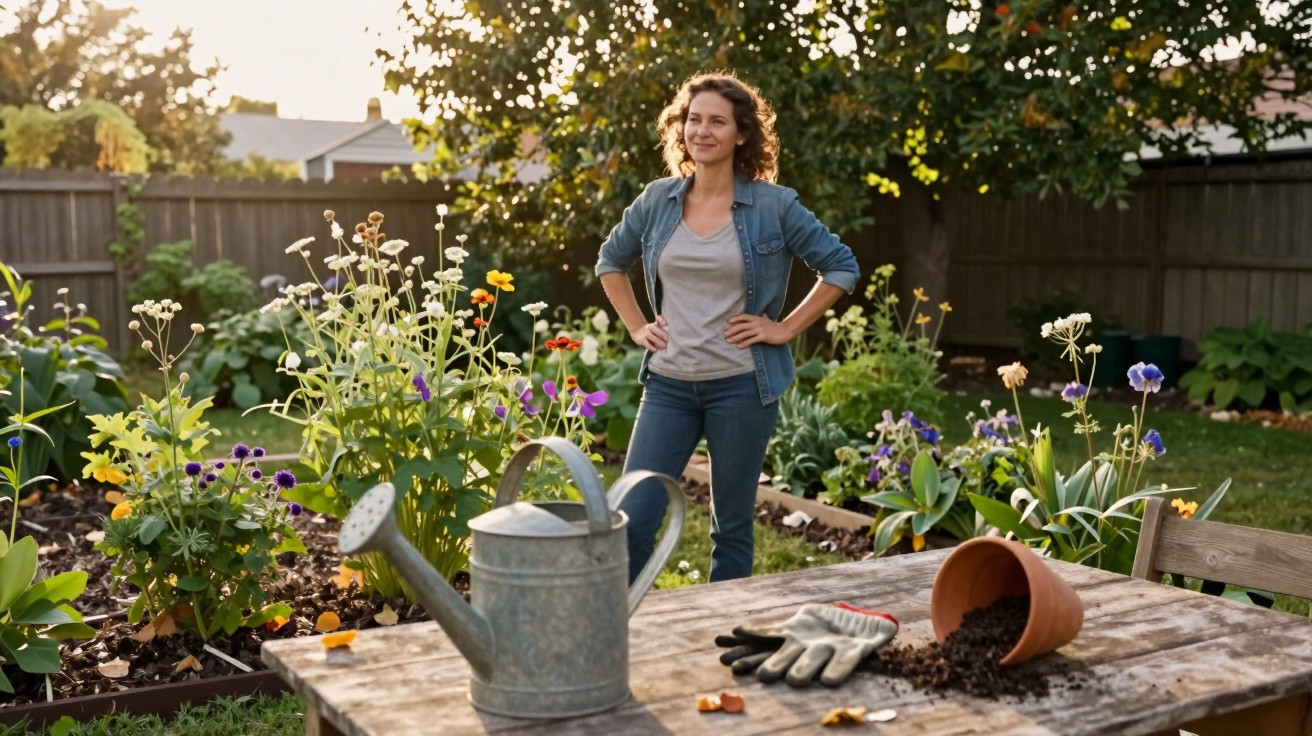
The hose slid out of my grip and drenched my shoes – again. The late-afternoon sun hung low, casting the sort of gold that makes every spider’s web look like stained glass in a cathedral. Standing in a back garden that was part neat, part untamed, I noticed something I had overlooked for years. The plants that were constantly tended, staked, pruned and sprayed looked worn out. Meanwhile, those left to “sort themselves out” were tough as old boots, putting up fresh growth after a windy week and two days without watering.
Somewhere between the drooping tomato canes and an unruly clump of chives, a thought struck me.
Perhaps the finest gardeners are those who quietly give up trying to control every last thing.
The quiet habit that builds resilient gardens
In any garden that has been cherished for years, you will spot it: little areas of disorder nobody has rushed to clear. A spent stem still standing. A seemingly empty patch of soil that is not empty at all, merely waiting. Self-sown seedlings forcing their way through gaps in paving. It is not carelessness; it is a practice. Gardeners whose plots flourish for decades repeatedly do one straightforward thing: they allow the garden to do more of the work.
Rather than beginning again from zero each season, they let plants return by themselves, prove their worth and claim a place.
I met one such gardener in a small town near Bristol. Helen is 73, and although her knees object whenever she bends down, her garden could easily appear in a glossy magazine. She brushed aside the compliment. “I hardly do anything now,” she laughed, resting on her garden fork. She gestured towards a border where herbs and flowers grew together. She explained that she had not planted half of them twice; they simply returned stronger each year, wherever they chose to grow.
When last summer’s heatwave reduced the neighbours’ lawns to something like cardboard, Helen’s plot became a soft, dusty green. It was neither lush nor immaculate, but it remained alive. She did not frantically water it, nor did she replant in autumn. Instead, she watched to see what endured and saved seed from those stubborn winners.
Without necessarily calling it that, Helen gardens for resilience. Her lasting approach is to use “benign neglect” deliberately. At the end of the season, she does not pull everything out. She keeps seed heads in place, lets plants self-seed, welcomes volunteers in unfamiliar positions and then makes only light edits. That is all. It requires no additional labour; if anything, it means less.
Across successive seasons, this practice makes the garden a living filter. Delicate, thirsty divas fade away. Plants that recover after wind, withstand late frosts and cope with missed watering become its foundation. Soil develops better structure, roots weave further down, and the garden gradually learns to manage.
How to garden on purpose by doing a little less
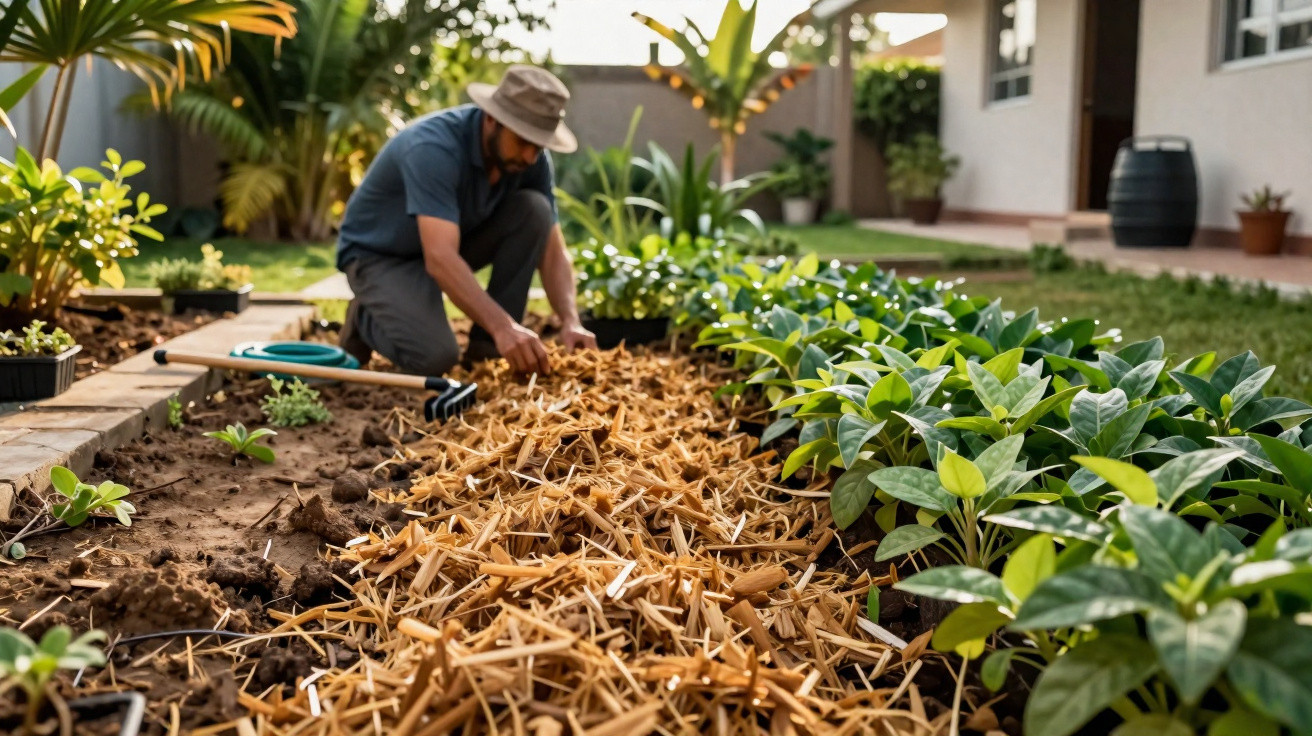
Begin at the point when you most want to make everything tidy: at summer’s end or in early spring. The urge to “reset” a garden can be intense. Rather than cutting back every stem and leaving beds completely bare, choose several areas to remain partly wild. Keep the seed heads of cosmos, calendula, poppies and fennel. Leave the ground around sage or thyme alone for a while.
Then make one small but intentional effort: pay attention to what returns.
The following season, allow those survivors a little more space and reduce your replanting list by one third.
Many of us get caught in the trap of perfection gardening: Instagram-style matching borders, symmetry and buying the same annuals every year as though restocking a shelf. We remove anything that appears tired and overlook the possibility that a “messy” corner could provide next year’s plants for free. If nothing self-seeds, we presume the answer is more compost, more types of plant and more money spent.
Honestly, nobody manages this perfectly every day.
Plants that could have become reliable, hardy regulars are often weeded out when they are tiny, simply because they emerged in the “wrong” place. It is easy to feel like a poor gardener when a plant dies, rather than quietly asking, “Alright then, who survived?”
“I used to think good gardening meant constant intervention,” a London balcony gardener told me. “Now I think it’s more like hosting. You set things up, then get out of the way and watch who knows how to handle themselves.”
- Start small: Pick one border or one pot where you will allow plants to self-seed and volunteer for an entire year.
- Watch for patterns: Which plants cope with neglect, heat or rain without fuss? Those are the ones to keep.
- Reward the survivors: Split or relocate the hardy plants into additional spaces rather than purchasing new, delicate varieties.
- Edit with a light hand: Remove only plants that are clearly failing or swamping everything around them. Be a curator, not a police officer.
- Make it a repeated habit: Season by season, this gentle editing creates a garden able to absorb setbacks.
When a resilient garden becomes tougher, so do you
Committing to this long-term practice brings a subtle change. You no longer take each plant loss personally. A storm stops feeling like a disaster and becomes another test from which the garden can learn. Seeing plants reappear in unexpected places is oddly grounding. You begin to understand that a lack of control does not mean everything will fall apart.
We have all experienced it: a week away or a hectic period at work leaves us feeling that we have “failed” the garden.
Then you step outside and find the plants that simply carried on regardless. There is a quiet comfort in that.
| Key point | Detail | Value for the reader |
|---|---|---|
| Allow plants to self-seed | Leave some seed heads and “messy” areas in place each season | Free, hardier plants adapted to your precise microclimate |
| Edit rather than restart | Take out only the weakest or most invasive plants, while retaining survivors | A garden that improves without draining your energy or budget |
| Observe over time | Notice what prospers through heat, cold and neglect | Creates a resilient plant palette and builds your confidence |
FAQ
- Question 1: Won’t letting plants self-seed make my garden look untidy?
- Question 2: How long will it take before this habit produces noticeable results?
- Question 3: If I stop clearing everything, will weeds take over?
- Question 4: Can this approach work on a balcony or in a very small space?
- Question 5: Which plants are best for beginning resilient-style gardening?

Comments
No comments yet. Be the first to comment!
Leave a Comment