
For the third consecutive summer, Emma saw her roses become an all-you-can-eat buffet for aphids. The same bed, the same excitement early in the season, followed by the same gradual dismay as buds distorted and foliage curled.
She sprayed, pruned and bought “miracle” treatments in colourful plastic bottles. For a week or two, the blooms seemed slightly improved. Then the pests returned, almost to a timetable.
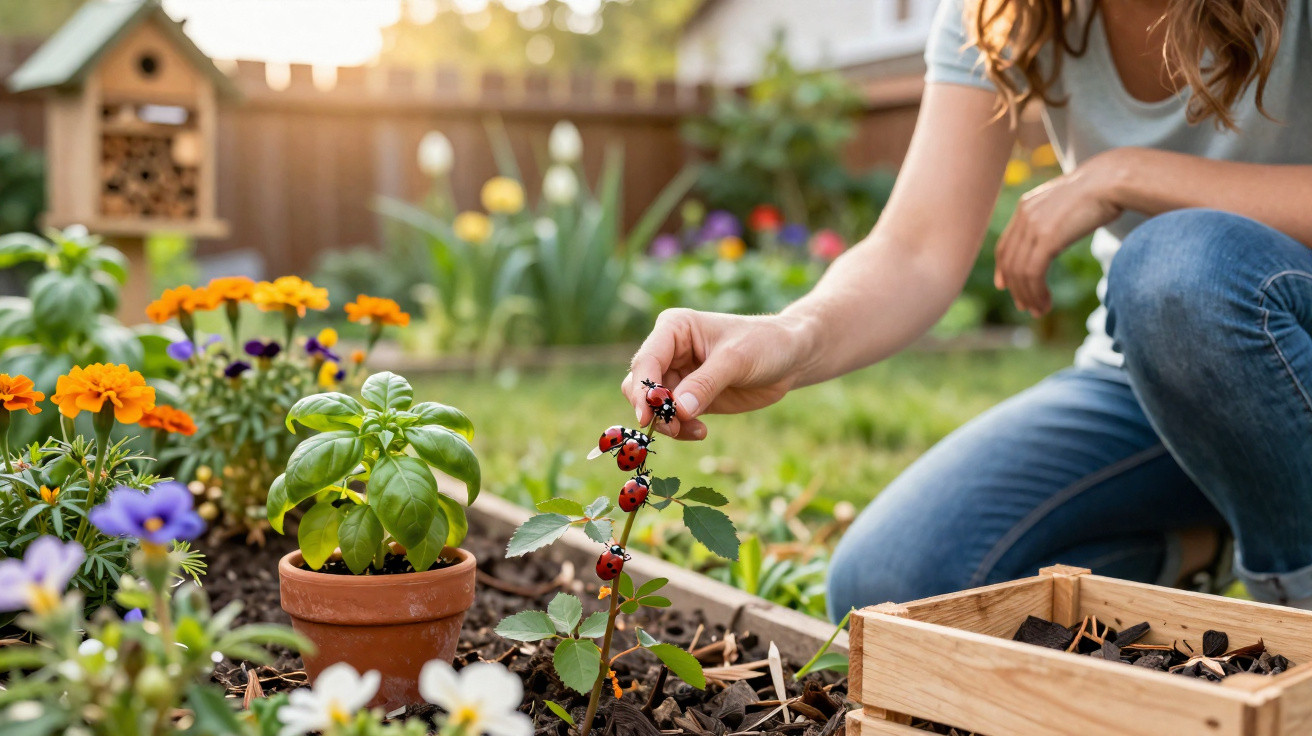
One morning, she took a closer look and spotted another problem. There were no ladybirds, hoverflies or spiders tucked among the stems. Only pests.
That was when she understood that her garden had a deeper problem. Its balance had broken down.
When your flowers become a pest magnet, something deeper is going on
When your flowers are attacked every year at almost exactly the same time, it is not simply “bad luck”. It means a system has quietly fallen out of balance.
Roses smothered in aphids, dahlias devoured by slugs and petunias torn apart by caterpillars are not random events. They indicate that plants have become easy prey while their natural protectors have disappeared.
Gardeners frequently tackle one symptom after another, trying one product after the next. They may win a battle in May, lose the war in June, then repeat the whole process the following spring. Gardening starts to feel like the same cycle on repeat.
Consider a typical suburban front garden: a slim lawn, a line of roses and a gravel path. It is neatly arranged, generously watered and fed with quick-release fertiliser.
In April, the roses burst into soft new growth. By May, aphids arrive as reliably as a storm.
The gardener sprays once, then again, then switches brands because “the first one didn’t work”. By midsummer, the roses appear worn out and the soil is bare and almost devoid of life. There are no untidy corners, wild hedges or places where beneficial insects can live from one year to the next.
The pests were not “too strong”. The garden itself was simply too weak.
Ecologists describe this as “broken ecological balance”, although you do not need a degree to spot it. You only need to consider what is absent, rather than focusing solely on what is attacking.
Healthy gardens tend to be noisy and a little unruly. Spiders stretch webs between stems, tiny wasps fly close to the ground and beetles shelter beneath leaves.
Where pesticides, bare earth and beds planted with a single species take over, the range of living creatures dwindles. The insects left behind may be those feeding on your flowers, with nothing remaining to feed on them.
Nature doesn’t hate your flowers; it just fills any empty space you leave.
Small changes that quietly rebuild balance
The first useful measure is almost frustratingly straightforward: diversify. Replace monoculture with a variety of species, heights and forms.
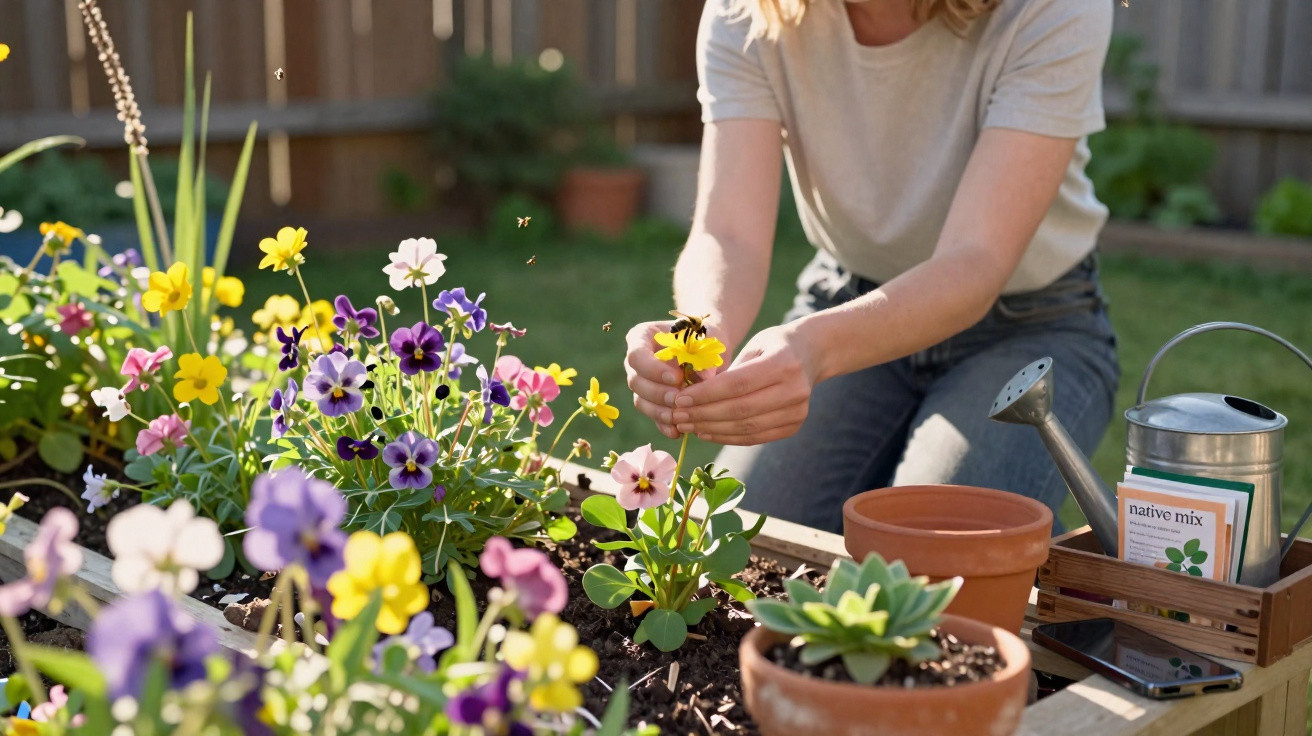
Rather than planting roses alone along a fence, alternate them with lavender, yarrow, marigolds and one or two small shrubs. Combine annuals with perennials, as well as plants that flower early with those that bloom later.
This kind of patchwork provides micro-habitats. Ladybirds can find pollen and cover, lacewings gain places to overwinter, and spiders have dependable structures on which to build webs. Your flowers cease to be an isolated feast and become part of a neighbourhood.
Next comes the step many people quietly dislike: reducing chemical use. Quick-acting pesticides can seem reassuring, particularly when a treasured dahlia is under attack.
However, these sprays affect more than aphids. They also kill the ladybirds that are about to eat them, the tiny parasitic wasps that suppress their numbers and the hoverflies visiting your cosmos. You clear the battlefield and leave it vacant.
We have all had that moment when it is tempting to “just nuke everything and start fresh”. Honestly, nobody truly does this every day, but a single powerful spray at the wrong moment can undo months of natural balance. That is how the cycle begins again the next year, a little worse than it was before.
Adopt one gentle principle and follow it: observe before you act. Watch for a week and count. Are predators present as well as pests? Are the numbers settling down or rapidly increasing?
After that, use targeted, mild measures: squash a few colonies by hand, spray soapy water only onto affected stems and allow plants time to recover. Also focus on the longer term with healthier soil, more shady patches and less exposed ground.
“People tell me they have a ‘pest problem’,” says Marie, a long-time community gardener. “I visit their yard and see a ‘habitat problem’. Once we give nature back some tools, the pests almost never disappear completely, but they stop ruling the place.”
- Plant at least 3–5 different flowering species in each bed
- Leave some leaf litter or a log pile as winter shelter for beneficial insects
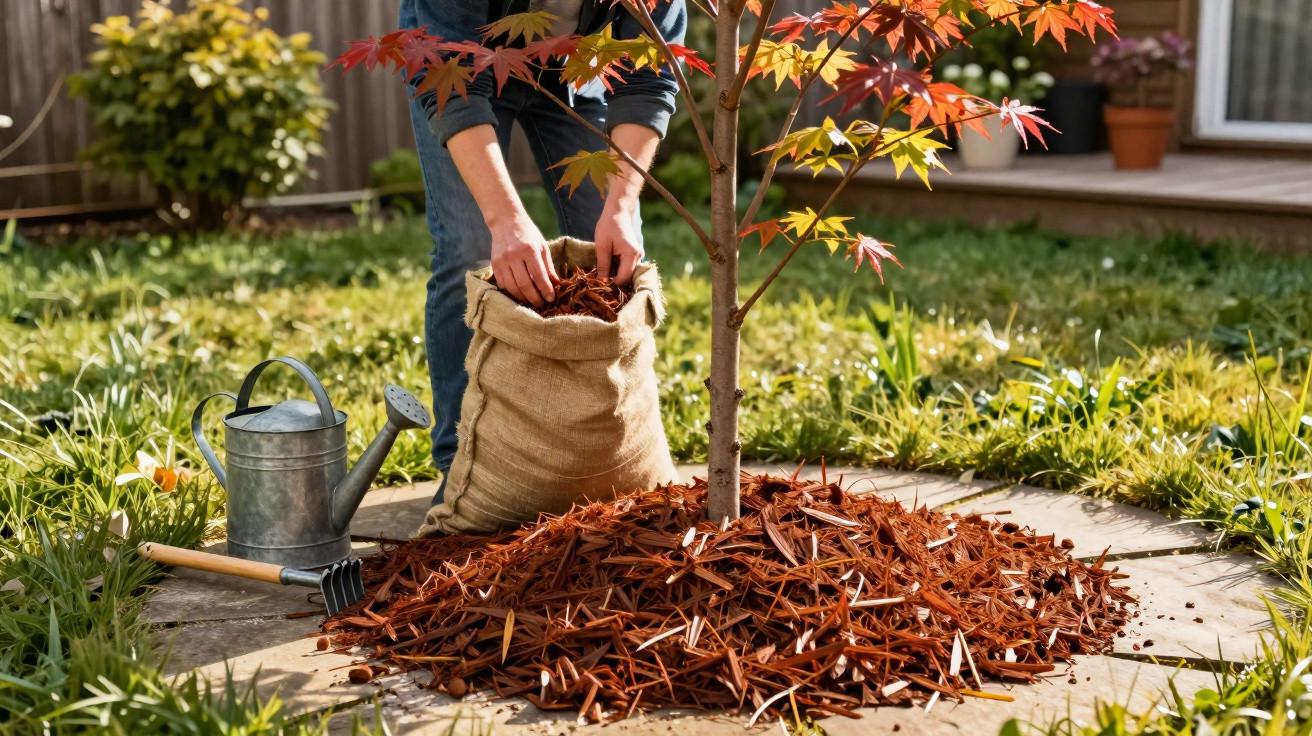
- Use mulch rather than bare soil to safeguard roots and soil life
- Keep chemicals for emergencies, rather than using them routinely
- Accept limited damage as evidence that the system is alive
Living with a garden that’s alive, not perfect
Change your aim from “spotless flowers” to “a living garden that mostly thrives”. That small shift in outlook can transform both your flower beds and your nerves.
A balanced garden has imperfect edges. There may be a torn petal, a nibbled leaf or a spider’s web shining in the morning light between two stems. Pests are still present, but they belong to a busy community and are no longer the leading characters.
What appears imperfect is often insurance for the long term. A few aphids today provide food for ladybirds later. A small wild area behind the shed can support an entire army of tiny predators, ready to arrive when your roses put on spring growth.
The next time your flowers come under attack, ask yourself a different question. Rather than “What can I spray?”, ask “What’s missing here that should be keeping this in check?”
Perhaps you have tidied too thoroughly, leaving no hollow stems or protected winter hiding places. Perhaps chemical fertilisers have exhausted your soil, which now needs compost and time. Or perhaps your garden looks attractive but is ecologically empty.
Change seldom occurs overnight. Still, season by season, the balance moves. First, outbreaks become less frequent; then they become shorter. After that, you may notice new visitors: a ladybird larva, a hoverfly or a ground beetle you have never seen before.
There is a quiet pleasure in watching a garden handle its own dramas. You will still step in occasionally, still lose one or two plants, and still complain when slugs find your favourite hosta.
But the story becomes different. Rather than fighting nature, you are negotiating with it.
Your flowers no longer call for help every year. They become part of a broader living system which, once restored, usually protects itself. That is when you realise that the most powerful pest control in your garden was never the bottle on the shelf. It was the balance you patiently brought back.
| Key point | Detail | Value for the reader |
|---|---|---|
| Diversify plantings | Combine species, heights, flowering periods and structures | Reduces recurring pest attacks on the same flowers |
| Reduce routine chemicals | Rely on observation and targeted, mild methods instead | Protects natural predators and long-term balance |
| Create habitat | Wild corners, mulch and winter shelter for insects | Encourages beneficial species that control pests for free |
FAQ:
Why do the same pests return to my flowers every year?
The conditions that support them have remained unchanged. Monoculture beds, poor soil and too few predators create a dependable buffet. Disrupt one of those elements and the cycle will usually ease.Can I really stop using pesticides completely?
Many gardeners do, particularly in smaller gardens. In extreme situations, you may still require targeted products, but in most years, sound balance and gentle methods are sufficient.What flowers attract beneficial insects?
Choose simple, open blooms such as yarrow, marigolds, cosmos, lavender, fennel, dill, sedum and daisies. These provide food for ladybirds, hoverflies, lacewings and tiny parasitic wasps.How long does it take to rebuild balance?
Greater diversity and less spraying can make a visible difference within one season. A deeper, more resilient balance generally needs 2–3 years of consistent habits.Is some pest damage normal in a healthy garden?
Yes. A few holes or aphids are part of a living system. A complete lack of insects often signals a quiet, depleted garden rather than one that is genuinely healthy.

Comments
No comments yet. Be the first to comment!
Leave a Comment