
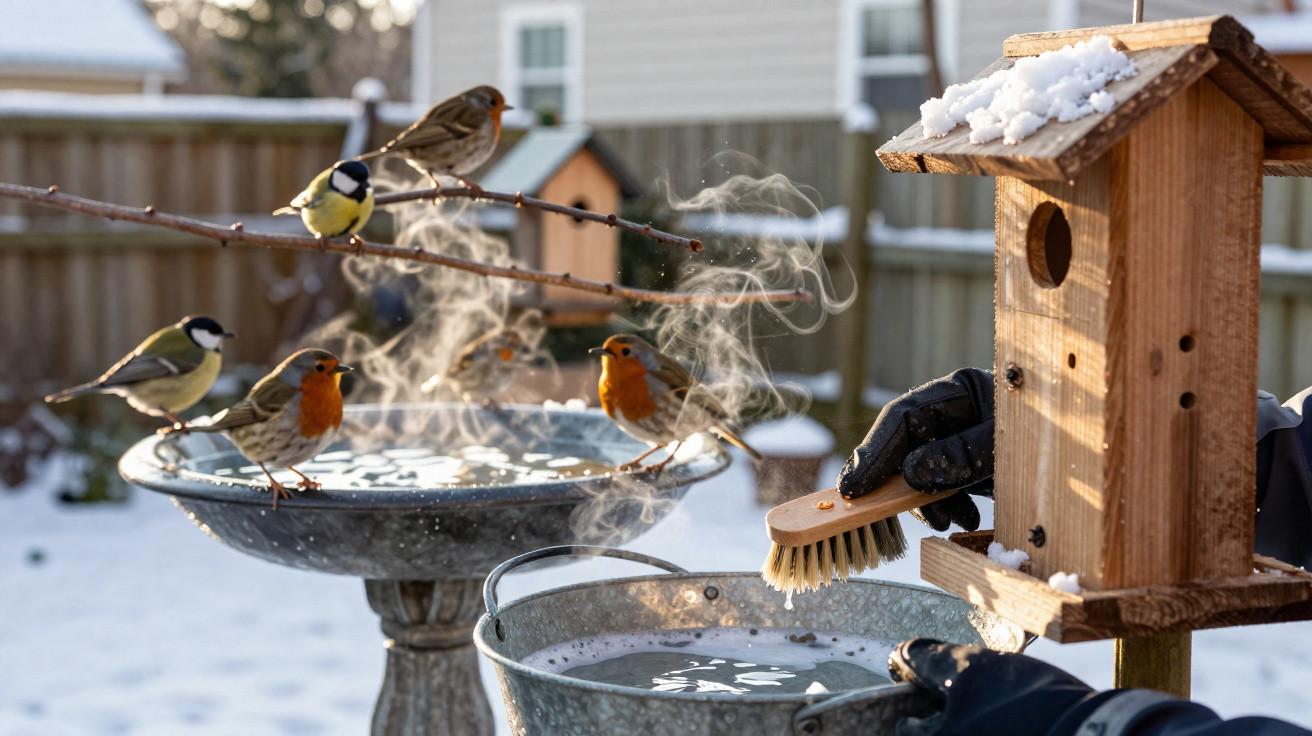
Across the UK and further afield, people are stocking seed trays and putting out fat balls to support wild birds in winter. But beneath the appealing sight of blue tits and sparrows competing for food is a danger that receives little thought: our well-meant help can become a health risk for the birds we want to protect.
When a winter buffet becomes a health hazard
Every heap of sunflower hearts or peanuts attracts a gathering of birds, which is exactly the intention. As food becomes limited, birds head towards the most accessible and energy-rich option available: your garden.
When feeding naturally, small birds tend to be dispersed. They travel among trees, hedges, fields and verges, and seldom crowd onto a few square centimetres of plastic or metal. A garden feeding station alters this pattern entirely.
Your bird table is not just a buffet; it’s also a meeting point where germs can spread faster than in the wild.
Unnatural crowding increases disease transmission
On a particularly active day, one feeder may be used by dozens of birds from several different species. They use the same perches, knock against one another, fight over space and touch the same surfaces with their bills.
When a finch or sparrow carries an infection, this concentrated contact area provides an easy route for disease to spread. Saliva, nasal discharge and droppings are left on perches, seed openings and trays, exposing the next bird to arrive straight away.
Scientists describe this as “localised over-density”: large numbers of birds confined to a very small area for extended periods. It is a situation rarely found naturally in winter hedgerows or woodland.
The unpleasant layer beneath the feeder
Although the activity at the feeder draws our attention, the more serious build-up occurs underneath it. Seed shells, partly eaten scraps and droppings gather on the ground, while rain, sleet and snow create a wet, decaying layer.
Birds that feed on the ground, including robins, dunnocks and blackbirds, search through this material. Their feet and bills come into contact with spoiled food and faeces, creating an ideal breeding environment for bacteria, protozoa and moulds.
Once food is wet, trampled and mixed with droppings, it stops being a lifeline and starts behaving like slow-acting poison.
Seed left in place for several days may ferment or develop mould. Certain fungi release toxins that harm birds’ livers and digestive systems. Others inflame the mouth and throat, so eating becomes painful or even impossible.
The hidden killers at the feeder: trichomonosis and salmonellosis
Trichomonosis and salmonellosis repeatedly appear in winter deaths among garden birds. Neither is caused by cold weather or predators, but by micro-organisms that flourish in unclean conditions.
Why infections can peak during winter
Low temperatures do not automatically disinfect a feeder. Damp accumulations of seed, droppings and organic matter form their own small microclimate, where many germs can survive very effectively.
Meanwhile, birds use substantial energy simply to maintain their body temperature. This pressure, alongside reduced supplies of natural food, weakens their immune systems. An infection they might resist in June may prove fatal in January.
Recognising an ill bird: “puffed up” is not just cute
People often interpret familiar signs of illness as a bird “having a nap” or “keeping warm”. The truth may be far more serious.
- Feathers held fluffed up for prolonged periods, including during daylight
- A bird remaining motionless on the feeder or ground and barely responding
- Eyes that are partly shut or sticky
- Drooling, food caught around the bill, or repeated attempts to swallow
- Allowing people to approach unusually closely
These are common signs of trichomonosis, an illness affecting the mouth and throat that makes swallowing painful before eventually making it impossible.
If you regularly see lethargic, puffed-up birds on your feeders, the priority is not “more seed”, but “less contamination”.
What garden birds really need from you: cleaning, not just feeding
Providing food is only part of the responsibility. A contaminated feeder may be more dangerous than having no feeder at all. The greatest help you can offer birds in winter is to match feeding with thorough hygiene.
Never refill a dirty feeder
The most straightforward rule is the one you would follow in your own kitchen.
Do not pour fresh seed on top of old, clumped, damp or dirty food. Empty, then clean first.
Inspect trays and tube feeders before each refill. Look for:
- Seed stuck together in clumps
- Droppings clearly visible on perches and feeding ports
- A greenish coating, grey fluff or questionable slime
If any of these are present, discard the food. Put it on a compost heap well away from feeding sites, or dispose of it in the bin. Saving spoiled food to “avoid waste” only increases the likelihood of disease spreading to dozens of birds.
Reposition feeders so the ground can recover
Rotation is one useful approach that is frequently missed. Move feeders a few metres every fortnight or so. The pause gives soil organisms an opportunity to break down droppings and seed husks without facing a continual overload.
Occasionally changing the feeding hotspot also makes it harder for predators, such as cats and sparrowhawks, to take advantage of predictable routines.
A simple weekly disinfection routine
In the coldest part of the year, carry out a thorough clean at least weekly, and do so more regularly when feeders receive very heavy use.
| Step | What to do | Why it matters |
|---|---|---|
| 1. Empty | Take out all leftover seed, fat or suet | Prevents fresh food being combined with contaminated remains |
| 2. Scrub | Clean with hot soapy water and a stiff brush | Removes droppings, slime and biofilm physically |
| 3. Disinfect | Use a diluted bleach solution (about 5–10%) | Eliminates lingering bacteria such as Salmonella |
| 4. Rinse | Rinse thoroughly using plenty of clean water | Clears chemical residue that could irritate birds |
| 5. Dry | Allow all items to dry completely before refilling | Prevents moulds and yeasts becoming established |
Why drying matters as much as washing
Refilling a damp tube or placing seed on a wet tray is much like setting up a mould culture. Fungi can take over the new food you have just bought within days.
Allow every component to air-dry fully somewhere warm and well ventilated. Wooden feeders in particular need enough time to dry completely through. A spare feeder makes this much simpler: one can stay in service while the other is washed and dried.
Don’t forget the water: birdbaths and drinkers need care too
Birds need drinking water even on the coldest days, and they depend on it to maintain their feathers properly. However, water hygiene is commonly overlooked during winter.
Stagnant water is an invisible issue
A birdbath that appears “not too bad” may still contain large quantities of bacteria. Each time an infected bird drinks or bathes, it releases germs into the water. The next bird then carries those directly into its bill.
Algae and slime can develop more slowly in the cold, which means water may look cleaner than it does in summer while remaining hazardous.
Replace the water daily
Refreshing the water each day serves two purposes: it removes and dilutes pathogens, while also helping to deal with ice.
- Empty the container fully
- Quickly brush the sides to remove film and debris
- Refill it with clean, preferably lukewarm (not hot) water
Never add salt, glycerine or car antifreeze to stop ice. These substances are toxic, even in small amounts.
In hard frosts, putting the dish on a thick wooden board or shifting it slightly nearer the house may slow the formation of ice.
Winter roost boxes: more than just spring nesting sites
The small wooden box attached to your fence is not simply a nursery for May. For birds such as wrens and tits, it may provide a life-saving bedroom during nights below zero.
Remove old nests and parasites
Last year’s nest can look appealing, yet it may contain fleas, mites and ticks ready for another host. Removing it between seasons gives winter-roosting birds a cleaner place to begin.
Choose a mild, dry day when birds are unlikely to be inside, then open the box, take out the old nesting material and brush the inside thoroughly. Chemicals are usually not needed and may remain in the wood.
Dry, secure shelters for birds roosting together
Many small birds endure cold spells by roosting close together. Several birds may press into a single cavity to share warmth, occasionally stacking on top of one another.
In a confined box that is dirty and damp, such close contact substantially raises the chance of parasites and infections moving between birds. A clean, dry roost improves their chances.
A light layer of dry wood shavings or untreated sawdust at the base of the box can absorb moisture. Do not use straw or hay, as both can rapidly become mouldy in damp conditions.
Real-life winter routine: a practical weekly schedule
For many homes, the obstacle is not a lack of care but a shortage of time and established habits. A straightforward routine can make hygiene automatic rather than merely a “nice idea”.
- Daily: Inspect feeders quickly, remove clearly wet clumps, sweep beneath the main feeding area and replace birdbath water.
- Twice a week: Give the birdbath and any heavily used trays a light scrub.
- Weekly: Fully clean and disinfect one set of feeders, then exchange it with the spare set.
- Every 2–3 weeks: Move the primary feeders to a slightly different place in the garden.
- Once in late autumn or a mild winter spell: Inspect and clean unoccupied nest boxes.
Children are often eager to take part. Giving them jobs such as “bird bath monitor” or “feeder inspector” can make these tasks a shared winter ritual and teach basic ecology and responsibility at the same time.
Risks, trade-offs and when to pause feeding
One difficult fact must be acknowledged: sometimes the safest option is to stop feeding temporarily.
When you spot several sick or dead birds in the garden, wildlife organisations generally recommend taking down all feeders and birdbaths for at least a couple of weeks. This interval encourages birds to disperse again and may disrupt local disease transmission.
Feeding birds is an act of care, but clean feeding is an act of protection.
When carefully selected winter foods are combined with serious hygiene measures, your garden can be a dependable canteen and a healthy gathering place for birds, instead of an unseen driver of disease.
Comments
No comments yet. Be the first to comment!
Leave a Comment