
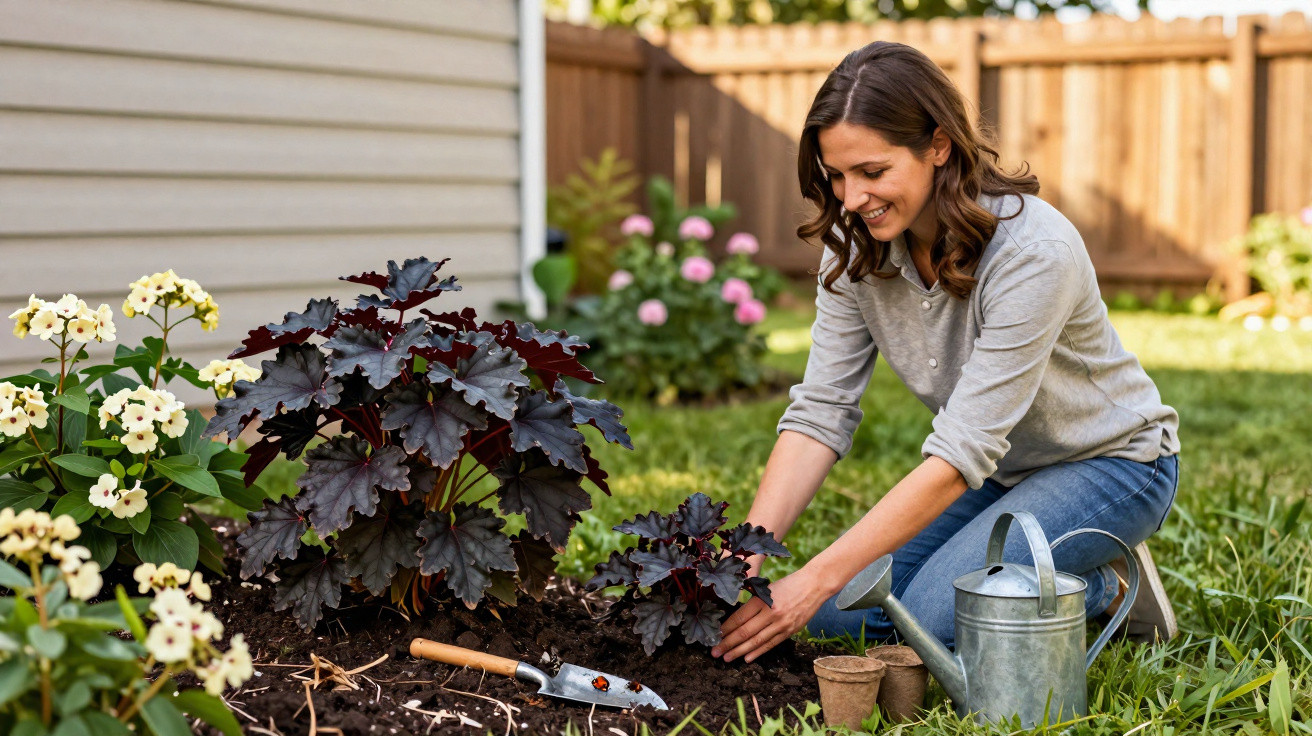
A radical change of colour in the border delivers drama, pest protection – and plenty of wow factor.
Many amateur gardeners look out over their patch at the end of winter with frustration: lots of lawn, lots of hedging, lots of uniform green. The answer may initially seem almost provocative – it is deep, near-black plants that are meant to transform the garden. Yet there is sound reasoning behind the trend: black foliage does more than create visual tension; it supports the ecosystem and may even discourage aphids and similar pests.
Why the traditional all-green garden is starting to feel dull
One colour dominates most gardens: green. Lawns, shrubs and herbaceous perennials all look much alike, especially in the flat light of February and March. There are few focal points for the eye and nothing truly stands out. This is precisely where the “black garden” trend comes in: dark leaves disrupt the monotony without losing the garden’s natural character.
“By planting dark foliage plants, you are drawing with contrasts – the garden immediately appears deeper, more contemporary and more structured.”
Near-black foliage adds depth in much the same way as shadow does in a painting. Pale plants visually move forward, while paths and borders suddenly look deliberately designed, even when very little else has changed. Just one or two strikingly dark plants can make an entire area feel completely renewed.
Black elder and coral bells: the quiet stars of the border
Dark-leaved elder: as delicate as maple, as tough as a shrub
An elder with exceptionally dark foliage is especially popular, often sold under cultivar names containing “Black”. Its fine branching and delicate leaves bring Japanese maple varieties to mind, but this shrub is considerably hardier, frost-resistant and easy to look after.
- quickly adds height and structure at the back of a border
- has an airy habit rather than forming a heavy wall
- makes a visual impact in the garden from spring through to autumn
In early summer, it produces delicate, pale flower umbels that seem to glow above the dark leaves. They also attract bees, bumblebees and other beneficial insects. Anyone with sufficient space can plant it as a specimen in the lawn, giving even a simple plot a “design feature”.
Nearly black coral bells: a velvet carpet for the front garden
For the foreground, a deeply coloured coral bell is ideal, such as varieties with names like “Obsidian”. This perennial keeps its leaves for almost the entire year, making it particularly valuable in winter and early spring. The foliage resembles polished volcanic rock – smooth, glossy and intensely dark.
Typical places to use it include:
- edging along paths
- beneath shrubs or small trees
- in containers on the patio or balcony
- as a broad carpet that frames other plants
This dark foliage carpet makes pale flowers and grasses visually burst into life. Even straightforward pansies or daisies suddenly look professionally arranged against this backdrop.
How dark leaves can slow down pests
Pigments as a natural protective layer
The visual impact tells only half the story. The real advantage lies in the chemistry of the foliage. Black or very dark plant parts contain high levels of substances known as anthocyanins. These pigments protect leaves from intense sunshine and cold. For many insects, they can also act as a warning signal.
“Dark leaves often taste less appealing to pests – and they conceal minor feeding damage more effectively.”
Many sap-sucking insects, including aphids and leafhoppers, prefer tender, light-green shoots. Darker, firmer foliage is less appealing to them. If damage does occur, it is barely noticeable against the dark background. The garden continues to look well kept, even where small bite marks are present on closer inspection.
More beneficial insects, less garden chemistry
Dark-leaved elder varieties offer a further benefit: they provide abundant nectar and pollen. Syrian hoverflies, ladybirds and other “support troops” in particular find food and shelter there. In return, these creatures deal with aphid colonies – entirely without shop-bought sprays.
This gradually creates a more stable balance:
| Element | Effect in the garden |
|---|---|
| Dark-leaved plants | more resilient, less attractive to pests |
| Nectar-rich flowers | attract pollinators and beneficial insects |
| More beneficial insects | natural control of aphids and similar pests |
| Less chemistry | healthier soil, greater biodiversity |
Those who deliberately plant such species allow nature to do a large part of the work. This saves money, time and stress – while also bringing more life into the garden.
Why late winter is the ideal time
Plant before spring gets underway
Late winter, when the ground is usually no longer deeply frozen but growth has not yet begun, is an excellent time for new shrubs and perennials. Roots can start to establish while the above-ground part of the plant still requires very little energy. By summer, the root system will have strengthened, helping plants cope far better with dry spells.
“Plant now, and you give your dark favourites a head start of several weeks.”
There is another advantage: borders are easy to assess, old perennials have been cut back and gaps are clearly visible. Dark accents can therefore be placed with purpose, rather than trying to work out where space remains amid dense summer greenery.
Low-maintenance – ideal for reluctant gardeners
Many popular dark-leaved varieties are considered undemanding. Once established, they generally cope well with ordinary garden soil. A simple maintenance routine is enough:
- water regularly for several weeks after planting
- cover the soil with bark mulch or leaves so that it does not dry out as quickly
- for elder, shorten old or overly long shoots in late winter to encourage denser growth
- divide coral bells every few years if the clump becomes too large
This trend is particularly appealing to busy people and gardening beginners: the result looks “high-end”, while the effort remains manageable.
Using contrast well: keeping black planting lively in the border
Dark foliage needs light-toned companions
Black plants on their own can soon feel oppressive. The skill lies in combining them. Pale, yellow-green or silvery leaves provide the perfect counterpoint. Effective examples include:
- dark coral bells beside yellow-green fern or hosta
- black-leaved elder planted near silvery lavender
- black tulips or dark daffodils among white or soft-pink spring flowers
- dark foliage behind pale grasses with a blond shimmer
The result can look as though a professional landscape designer planned the garden, even if the selection of plants remains modest.
Colours burst against a dark background
One effect that is often overlooked is that flower colours appear stronger in front of dark foliage. Pink, yellow, white and orange seem almost luminous. Anyone who enjoys planting tulips, dahlias or summer perennials can benefit enormously from a dark “backdrop curtain” in the border.
Only a few dark-leaved plants are needed to enhance entire blocks of colour. A border that looked merely “nice” last year can become a small stage show with just a few well-chosen new additions.
How beginners can try the trend with confidence
Anyone still unsure should begin on a small scale. A container on the balcony holding dark coral bells and pale-green grass will reveal within a few weeks whether the look appeals. In a terraced-house garden, clear focal spots work well: the entrance, one corner of the patio, or the transition from lawn to herbaceous border.
Important ground rules are:
- It is better to place a few dark plants deliberately than to scatter a little everywhere.
- Always combine them with light-coloured partners so the overall effect stays welcoming.
- Consider the site: many dark-leaved varieties prefer part-shade to sunny positions, but do not tolerate waterlogged soil.
More than appearance: the long-term benefits of black borders
Dark plants are now seen as a key component of modern, wildlife-friendly gardens. They unite design and function. Using them supports beneficial insects, reduces the need for pest-control products and brings a look into the garden that would otherwise be seen only in expensive display gardens.
For families, this can be an exciting experiment. Children marvel at “black plants”, while adults test new combinations and watch insect activity change. The result is a garden that is not only more attractive, but also livelier and more resilient in hot summers and pest outbreaks.
Anyone willing to embrace the dark side in late winter will be rewarded in summer with a garden that looks as though far more work has gone into it than actually has. Black borders are not a passing styling trick, but a smart tool for anyone seeking maximum impact with minimal effort.






Comments
No comments yet. Be the first to comment!
Leave a Comment