
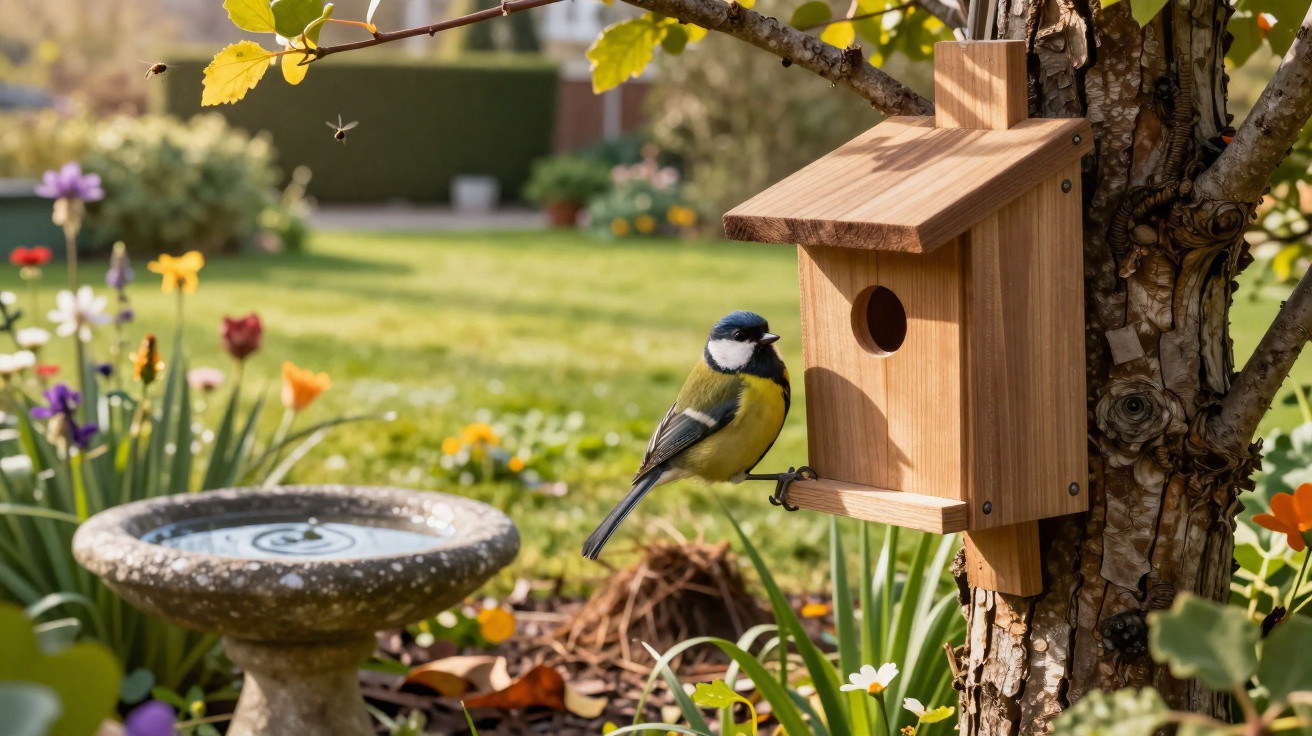
The reason is rarely chance; it is usually found in the details.
A pristine lawn, a designer nest box and expensive feed from the garden centre – yet hardly any tits appear? More and more garden owners report this situation. These colourful songbirds may seem carefree and playful, but they are actually quite discerning. Anyone who misunderstands what they need can unintentionally create an attractive setting that is nevertheless inhospitable to birds.
Why tits often ignore “showpiece gardens”
Tits do not choose a habitat for its appearance, but for its prospects of survival. Three things matter: safety, food and peace. Only when this trio is in place does a garden become a genuine bird territory.
Tits do not need postcard perfection; they need a functioning mini-ecosystem with cover, insects and undisturbed corners.
Rather than smooth expanses of lawn, they favour richly structured spaces: dense hedges, mature trees, crevices and knot holes. A tree canopy without cavities holds little appeal for them. What matters are sheltered niches where they can nest and keep their young safe.
Safe roosting and nesting sites come first
In the wild, tits mainly breed in tree hollows, cracks in old timber or gaps in buildings. Gardens with young trees, smooth exterior walls and deadwood removed at every opportunity frequently offer too few of these places.
- No cavities in trees or walls
- Nest boxes positioned at the wrong height or in the wrong location
- Continually disturbed areas with no quiet zone
If cats or magpies have an unobstructed view, or people regularly walk directly past, tits quickly cross a site off their list.
The biggest mistakes that drive tits from the garden
Many well-intentioned measures upset the ecological balance, leaving a garden unappealing to insects and, as a result, to tits as well.
Excessive tidiness instead of living messiness
What looks neat to a gardener often tells tits, “there is nothing here for us”. When every corner is raked, every branch removed and every leaf cleared away, insect habitats disappear – along with the tits’ main food source, especially in spring.
Typical problems include:
- Branches and trunk remnants removed completely – scarcely any breeding places for insects
- Leaf-free beds – fewer hiding places for spiders, larvae and beetles
- Closely mown grass everywhere – very little structure and hardly any insect diversity
Using poisons in the “low-maintenance” garden
Where chemical treatments are routinely sprayed against aphids, slugs or fungal disease, the food supply collapses abruptly. Tits can eat seeds and fat-based food at feeding stations, but they need soft insects and caterpillars for their chicks.
Without enough insects in spring, tits will not move in at all – even if bird feeders are generously stocked.
Even products described as “gentle”, as well as combination treatments, often kill precisely the small creatures that tits urgently need to find.
Constant noise and continual activity
Spring cleaning with a leaf blower, pressure washer or powered hedge trimmer – alongside children, barbecues and robotic lawnmowers: what sounds like lively garden life to people feels like unrelenting stress to tits.
- Early lawnmowing right beside the nest box
- Crafting and sawing during the breeding season
- Patios brightly lit until late at night
If there is no quieter corner, the birds will prefer a neighbouring garden.
Free-roaming cats and other hunters
One agile cat can apparently make an entire territory seem empty. Tits pay close attention to places where danger repeatedly occurs. If cats like to sit beneath feeding stations or directly below trees with nest boxes, the birds will seek safer locations.
Which trees and structures tits genuinely like
Uniform thuja hedges and sterile ornamental gravel offer tits very little value. Far more inviting are mixtures of native trees and shrubs with varying heights and structures.
Popular tree species in a tit territory
- Oaks – provide especially large numbers of caterpillars and other insects
- Old apple and pear trees – with hollows, cracks and dead sections
- Pines and spruces – secure perches and a good view of the surroundings
- Birches and willows – diverse insect life on their bark and foliage
Other important structural features include:
- Dense hedges for shelter
- Standing deadwood, where it can safely be left in place
- Piles of branches and brushwood as large-scale insect hotels
The more varied the planting, the more reliable the insect supply – and the more attractive the garden becomes to tits.
A practical plan: making your garden suitable for tits
Choose and install the right nest box
In modern gardens, nest boxes often replace missing tree cavities. However, they need to be exactly suitable, otherwise tits will avoid them.
| Species | Entrance-hole diameter | Recommended height |
|---|---|---|
| Blue tit | approx. 28 mm | 2–3 metres |
| Great tit | approx. 32 mm | 2–3 metres |
An east- or south-east-facing position is ideal. This allows morning sun to reach the box without it overheating at midday or being exposed to the strongest winds. Pick an area that is as peaceful as possible, rather than directly above a patio, play area or driveway.
Combine food, water and protection
Feeding stations available throughout the year can help draw tits’ attention to the garden. Even so, the natural food supply remains crucial.
- Provide water all year round – use a bird bath or shallow dish, and clean it regularly
- Offer sunflower seeds and fat-based food in winter
- Reduce pesticide use consistently so caterpillars and beetles are available in spring
- Create leaf islands and branch piles instead of disposing of everything
- Fit protective collars or guards to nest boxes against cats and pine martens
The timing of pruning is also important: it is better to cut back hedges, shrubs and larger trees heavily outside the breeding season, in late autumn or winter.
Practical details that are often overlooked
Many small choices ultimately add up to a garden that is either rich or poor in birdlife.
- Clean nest boxes every year, ideally in autumn once all young birds have fledged
- Maintain space between several boxes, as tits are territorial and avoid competition
- Let parts of the lawn grow longer to encourage more flowers and insects
- Keep cats indoors during the breeding season where possible, or use a bell on their collar
Even a slightly more “untidy” section of garden can be enough for tits to notice the difference and stay.
Why tits are so valuable in the garden
Tits are not merely pleasant to watch; they quietly carry out valuable work in the background. During the rearing of their young, a single pair of tits feeds thousands of caterpillars, mosquito larvae and other insects to its brood.
The whole garden benefits from this:
- Fewer pests on fruit trees and ornamental shrubs
- Healthier tree crowns because leaf-eating insects are kept in check
- Greater biological balance and less need for spraying
Anyone aiming to make their garden more climate-resilient and robust over the long term will, by encouraging tits, also support a network of plants, insects and other bird species.
Further tips for a lively, tit-friendly garden
Some terms often arise in this context but remain vague. “Deadwood” may sound like neglect, yet ecologically it describes a treasure trove of life. Fungi, beetles, larvae and spiders settle in dead wood – exactly the prey that tits gather for their chicks. A vertical tree stump or a thick pile of branches at the back of the garden can therefore be more valuable than another rose bush.
For something children can enjoy, attracting tits can become a project: build a nest box together, keep a simple record of when tits appear, which food they prefer and whether they carry nesting material. In this way, the seemingly “quiet” protection of wildlife becomes a visible experience that lasts for years – while also turning the garden into a small, stable ecosystem that tits no longer avoid but actively visit.

Comments
No comments yet. Be the first to comment!
Leave a Comment