
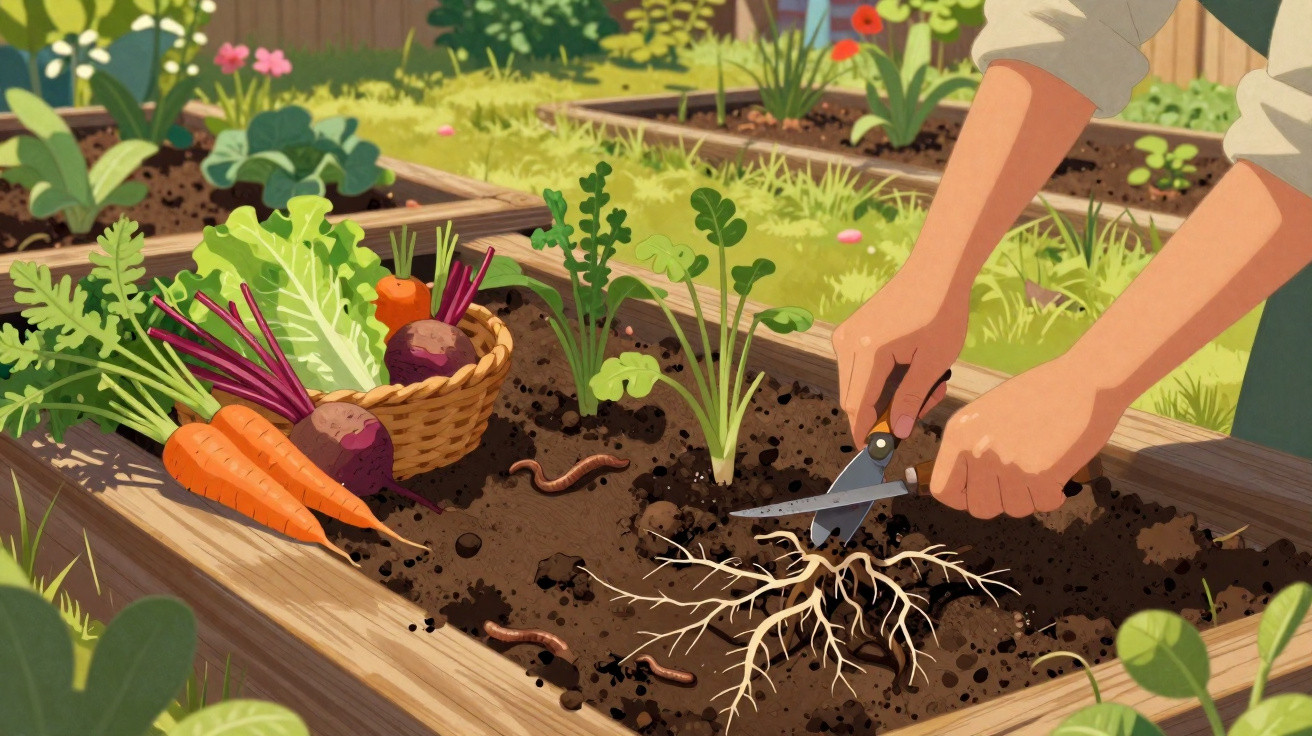
The first time I left a row of dead bean plants in place, my neighbour assumed I had abandoned the garden. Their pods were dry, the leaves had fallen away, and all that remained was a jumble of brittle stems and old stakes. I was worn out after harvesting and, truthfully, could not face pulling everything up. Instead, I cut off the tops, added them to the compost, and left the roots hidden beneath the soil.
Winter followed, with rain hammering the beds and boots travelling along the paths. I expected the familiar problems in spring: compacted ground, hard clods and stubborn lumps of soil capable of testing both tools and patience.
But this time, something unexpected occurred.
When I stopped pulling roots out of the soil
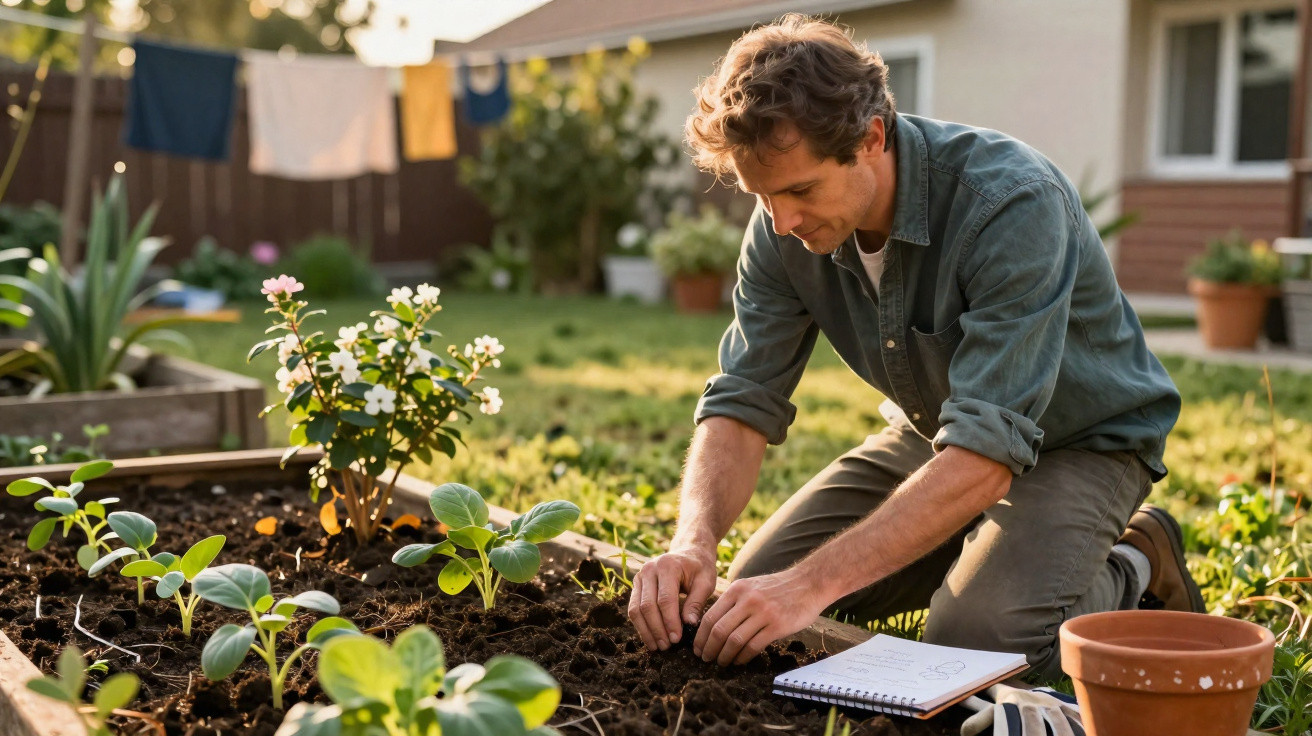
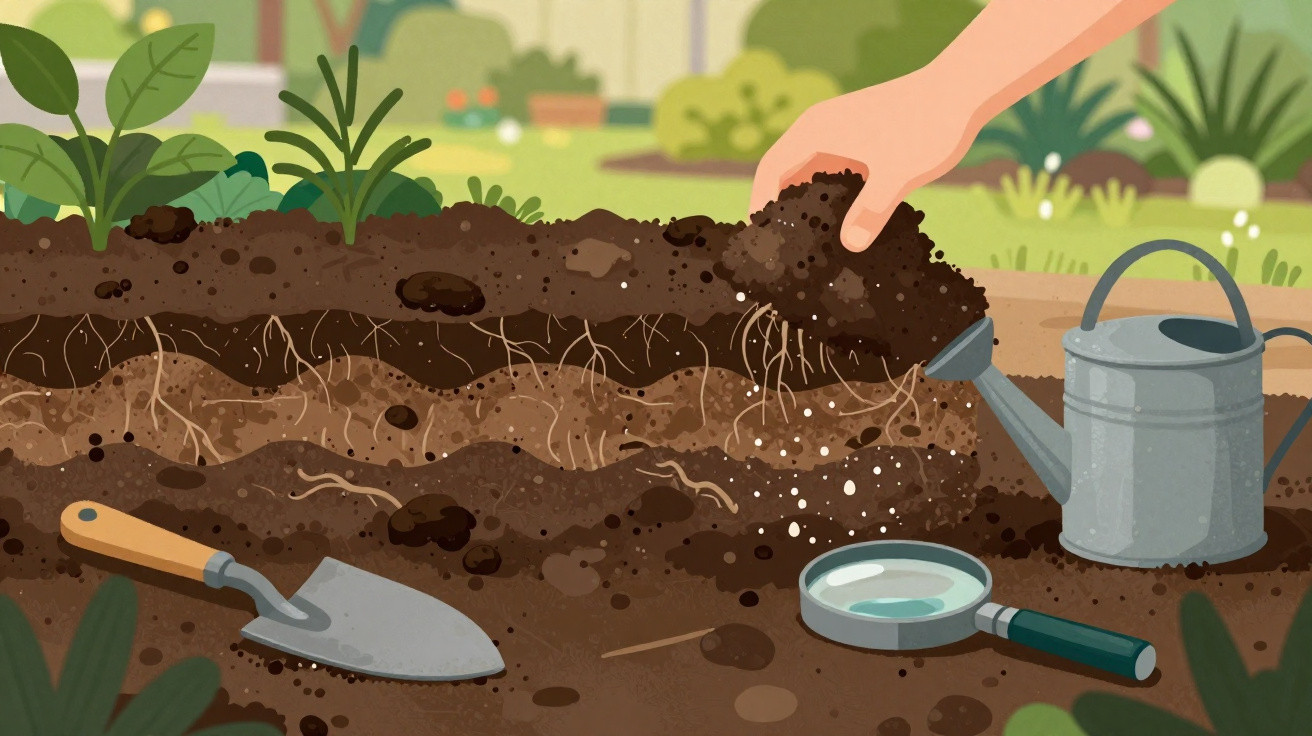
When spring arrived, I pushed my hand into the bed that had held the beans. The soil yielded softly, almost like a sponge. The solid, lifeless layer I had struggled with in earlier years had disappeared. Instead, the earth broke apart between my fingers: dark, moist and nearly silky. Every handful revealed earthworms darting away from the light. I stood there with soil on my hand, strangely pleased by something I had barely done.
The sole change was simple: the roots were still below ground, slowly breaking down.
A few weeks afterwards, I sowed carrots in the same bed. Usually, getting straight and uniform rows takes effort. This time, the seeds settled easily into a finely textured, loose surface. The carrots emerged quickly and continued growing steadily, producing thick, unapologetic foliage. At harvest time, their orange roots came free with scarcely any pulling.
In the neighbouring bed, which I had “cleaned up properly” the autumn before by removing every root, the result was entirely different. Germination was uneven, more carrots forked, and the soil was harder. The seeds and gardener were the same; what differed was what lay beneath the surface.
What I had discovered follows a straightforward principle. Roots do more than hold plants upright: they shape the soil. While growing, they force their way through minute gaps, creating routes for water and air. Once the plant dies, the roots do not simply disappear. They decay gradually, leaving small tubes coated in organic material. Microbes occupy them. Fungi spread through them. Earthworms travel along these channels as though they were underground motorways.
This creates a natural web of pores and tunnels that no spade can reproduce. By doing very little in autumn, I had unintentionally given a quiet workforce the chance to remodel the soil throughout winter.
How to leave roots in place without damaging your beds
The main action is almost embarrassingly easy. Rather than gripping the whole plant and pulling it from the ground, cut it at the base and leave its root system where it is. I use sharp secateurs or a serrated knife, cutting the stem just above soil level. The above-ground growth goes into the compost or onto a separate heap. The parts below ground remain, unseen but active.
With sturdier plants, such as sunflowers or brassicas, I occasionally rock the stem gently to loosen it slightly before cutting as low as possible. The aim is to cause minimal disturbance to the soil. It is more like closing a door softly than slamming it shut.
There are, however, practical limits. I do not leave roots from plants that are visibly diseased: cabbages affected by clubroot, tomatoes scorched by blight, or anything else clearly showing a problem. These should be taken well away from the beds or put into council green-waste collections. I also remove perennial weeds with rhizomes, including couch grass, bindweed and thistle. Those are not the roots you want to add to your soil system.
We have all had the moment when it feels tempting to leave everything in place and simply hope it works out. This method is not that kind of neglect. It is deliberate, selective laziness: allowing the appropriate roots to carry out slow work underground on your behalf.
“Once I stopped obsessively ‘cleaning’ my beds, the soil did what it had been trying to do all along: heal itself,” a market gardener friend told me. “I just had to get out of the way.”
- Cut annual vegetable plants at the base once the season ends, leaving their roots in the ground.
- Remove and dispose of roots from clearly diseased plants so that problems are not carried into the following year.
- Pull invasive perennial weeds out completely, including all roots, rather than allowing them to spread below ground.
- Spread a light mulch over the dead roots to protect and nourish the soil community.
- Compare the texture and visible life in “root-kept” beds with fully cleared beds over one or two seasons.
The quiet revolution beneath your feet
Once you have watched your soil become softer without double-digging it into submission, it is difficult to overlook the difference. You begin to see rainwater soaking in rather than collecting on the surface. Plants cope with dry spells for a little longer. A garden fork enters the ground with less resistance. This is not magic; it is soil structure: innumerable tiny spaces left by decomposing roots, occupied by air and life rather than compaction and frustration.
To be honest, no one manages this perfectly every day. Some seasons are hectic, some beds are cleared hastily, and some habits return automatically. Still, choosing to leave roots in place just once, even in a single row, opens up another approach to gardening: one that relies more on biology than brute force.
You may find yourself sharing the same story: “I left plant roots in the ground after harvest… and my soil quietly took care of the rest.”
| Key point | Detail | Value for the reader |
|---|---|---|
| Leaving roots in place | Cut plants at soil level and allow roots to decompose below ground | Improves soil structure naturally without heavy digging |
| Selective removal | Remove diseased plants and invasive perennials, while retaining healthy annual roots | Reduces disease risk while increasing soil life |
| Support with mulch | Apply a light organic cover over dead roots | Improves moisture retention and feeds soil organisms |
FAQ:
- Question 1: Can I leave tomato roots in the ground after harvest? Yes, provided the plants were healthy and showed no blight or other serious diseases. If disease was present, remove the full plant, including its roots, and do not add it to a home compost heap.
- Question 2: Will leaving roots cause more pests? Usually not. Most pests feed on foliage and fruit rather than dead roots. Decomposing roots primarily support microbes and earthworms, which improve soil health and help plants withstand pests.
- Question 3: Does this work in clay soils? Yes, it is particularly useful in heavy clay. Over time, roots form channels that help loosen dense layers, allowing air and water to move more freely.
- Question 4: How long do roots take to decompose? Fine roots may break down in a few months. Larger roots can take a year or longer, although they steadily become part of the soil structure as they decay.
- Question 5: Can I direct sow into a bed with old roots inside? Generally, yes. Most rotting roots do not obstruct sowing. If a thick root is encountered while making a furrow, move it aside with your fingers or a small tool, then continue.
Comments
No comments yet. Be the first to comment!
Leave a Comment