
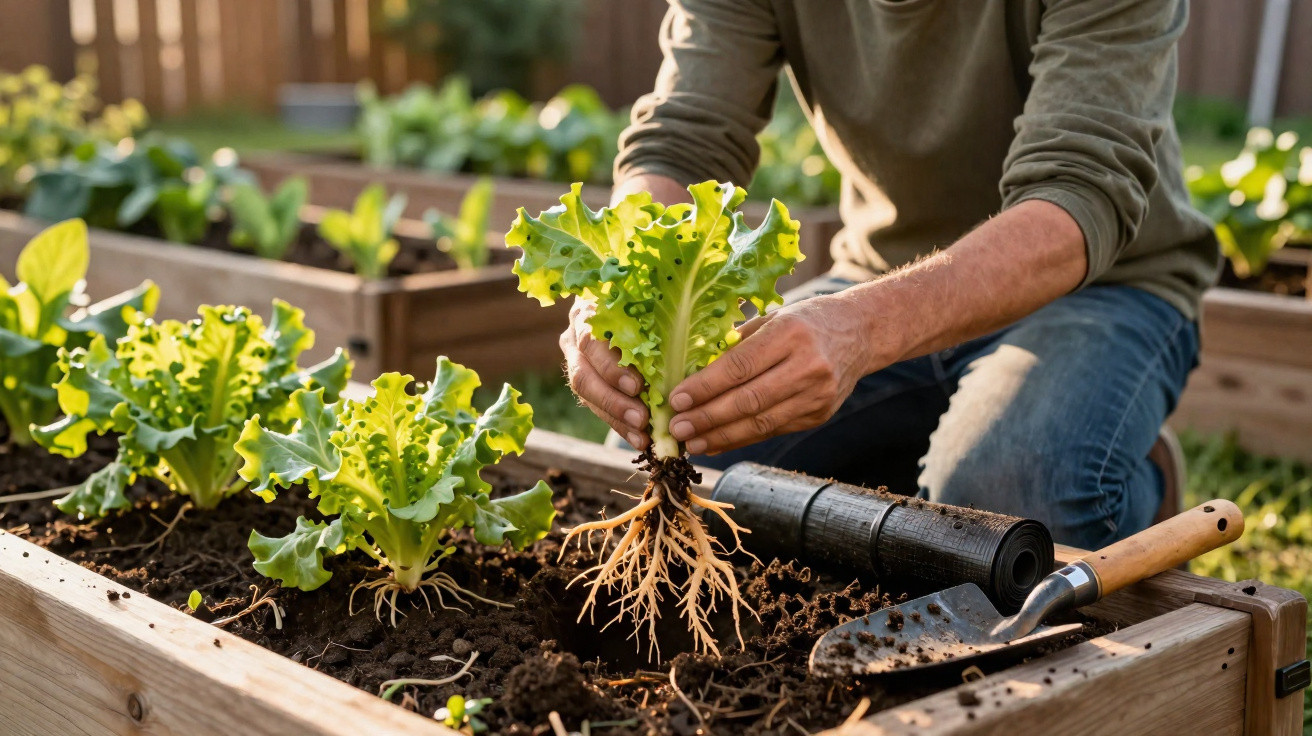
One July evening, shortly before the sun disappeared behind the neighbour’s roof, I looked at two tomato plants growing in the same raised bed. They had the same soil, water and care. One was tall and sturdy, with thick stems and yellow flowers spilling over it. The other resembled its weary relative: smaller, paler and almost apologetic.
I had put them side by side with the best intentions, as many of us do in compact gardens where every centimetre matters. “They’ll help each other,” I thought. One bed, one shared fortune.
A few weeks later, the difference was hard to ignore. The weather had been identical, as had the gardener, yet their outcomes could not have been more different.
Something unseen was going on beneath the soil.
When roots quietly decide who wins in a shared bed
From above, a shared bed can seem like a harmonious little community. Foliage overlaps, flowers mingle and bees move between plants as though resources are evenly shared. Look below the surface, however, and the scene changes quickly.
Roots are far more than passive tubes for taking up water. They search, detect and encounter one another. In effect, they even “negotiate” how moisture and nutrients are divided.
That hidden exchange explains why one plant can surge ahead in a bed while the one beside it falters, despite receiving apparently identical care above ground.
Gardeners commonly put uneven growth down to differing sunlight, an overlooked watering session or a plant that is slightly unwell. At times, they are right.
Yet if you watch a mixed bed for an entire season, a pattern often emerges: the same species, or the same particularly vigorous variety, repeatedly takes control in the same place. A squash plant’s roots, for example, may travel far beyond the spread of its leaves, quietly occupying soil beneath nearby peppers and basil.
A gardener I spoke with at a community allotment saw her kale stay stunted throughout the season while one courgette plant became enormous. The reason? Its roots had extended beneath the kale row, discreetly drawing from the same underground supply.
Biologists refer to this as “root competition” and “priority effects”. Put simply, the plant that establishes its roots first often determines the terms. Roots that grow early and quickly secure more nitrogen and water, leaving later arrivals with whatever remains.
Some roots also give off subtle chemical signals into the soil. These may slow rival plants, alter microbial activity or shift growth patterns.
You cannot see this interaction taking place. What you notice is its outcome: one part of the bed is full and flourishing, while another looks unhappy. The uneven canopy is merely the visible outline of an invisible struggle.
How to calm root competition in your garden beds
There is a straightforward, almost traditional solution that can make a major difference: give the roots a map. Not a literal map, naturally, but modest physical barriers that direct where each plant is able to spread.
Some gardeners push slim boards or old roofing tiles vertically into the soil, dividing a raised bed into “silent boxes”. Others use buried pots with their bases removed to restrain greedy plants such as mint or cucumbers.
You can still keep the appearance of a shared bed and its lush, jungle-like feel, while preventing roots from spreading unchecked. The conflict becomes less of a battle and more of a quiet truce.
One particularly common error is believing that spacing plants above ground creates equal conditions below it. Those tidy 30 cm gaps between seedlings? Roots pay little attention to them. In favourable conditions, they can cross that distance within a couple of weeks.
Most of us have had the moment of wondering why parsley at the edge of a tomato row looks miserable while basil in a pot is producing masses of leaves. It is not necessarily because the parsley was neglected. It is because the tomato never stopped looking after itself.
Another common problem is placing a notoriously thirsty plant with a timid one in the same watering area. The less assertive plant will not make a fuss; it will simply remain small.
“People think their beds are unfair,” a soil ecologist told me once. “They’re not unfair. They’re just honest about who gets there first and grows the fastest.”
- Use root barriers for bullies
Insert a narrow board or slate 25–30 cm deep between assertive crops (tomatoes, squash, cucumbers) and more delicate plants (leafy herbs, lettuce). - Group plants by appetite, not just by height
Place heavy feeders together and light feeders together, rather than combining one demanding plant with three minimalists. - Stagger planting times
Let slower-growing plants have a two-week head start before introducing aggressive neighbours, allowing their roots to establish some ground first. - Rotate the “prime spot” each year
That corner where plants always thrive? Give a different crop the benefit of it next season, while improving the rest of the bed. - Observe the roots at cleanup
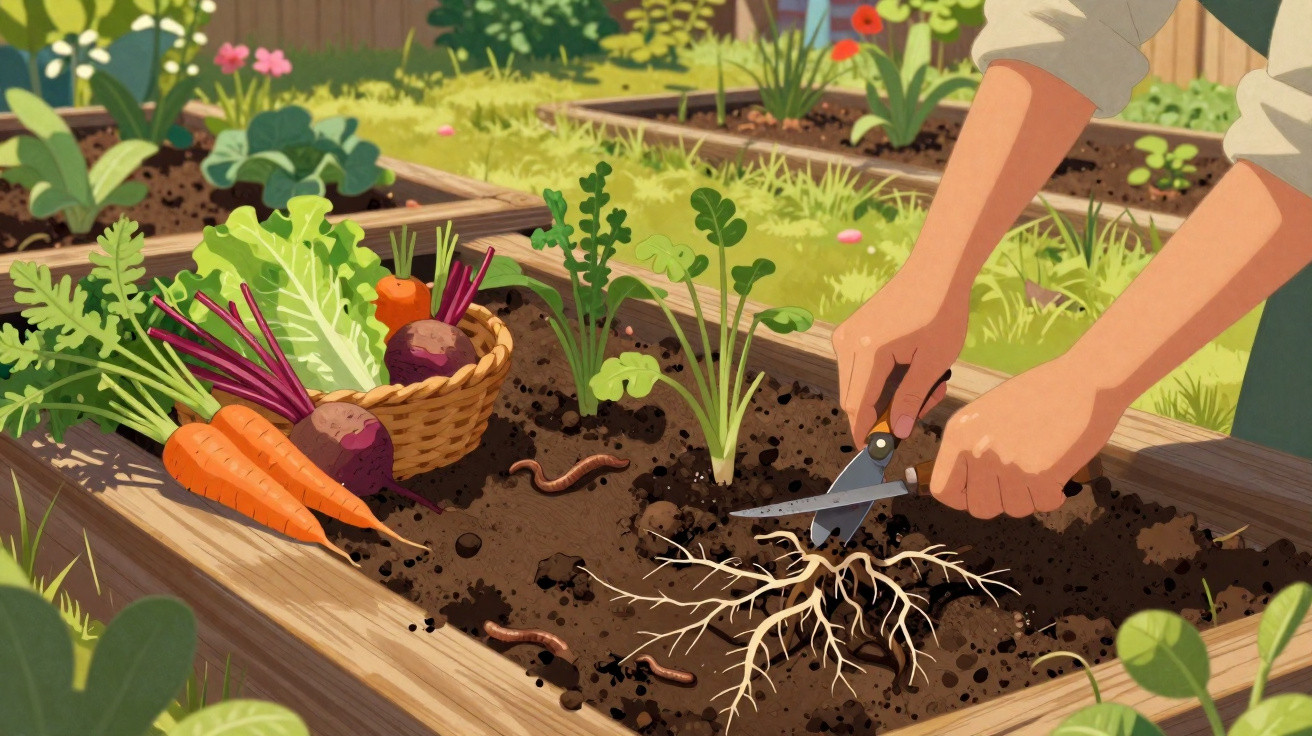
When plants are removed in autumn, examine the spread of their roots. It is the most useful map you can have of what was happening below ground.
Living with uneven growth instead of fighting it
Once you recognise that roots are continually communicating, pressing forward and responding, uneven growth feels less like a failure and more like useful information.
At times, the plant that loses out is showing you where the soil dries first or where nutrients have been exhausted. On other occasions, it is simply the story of a plant that started growing sooner in spring and never surrendered that early advantage.
Let’s be honest: no one digs up an entire bed halfway through the season to check root competition every day. Instead, we interpret the leaves and the harvest, then make changes for the following year. That gradual refinement, season after season, is how a shared bed becomes somewhere you understand rather than simply somewhere you plant.
Uneven growth will not vanish altogether. But once you understand the quiet relationship between roots for what it is, you begin planting with it rather than against it.
| Key point | Detail | Value for the reader |
|---|---|---|
| Root competition shapes growth | Early, vigorous roots secure more water and nutrients in shared beds | Explains why certain plants flourish while neighbouring plants fall behind |
| Simple physical boundaries help | Boards, tiles or bottomless pots can gently direct root spread | Reduces underground rivalry without sacrificing the shared-bed appearance |
| Observation across seasons matters | Noting which plants dominate and inspecting roots during cleanup | Enhances future planting plans and yields through real-world feedback |
FAQ:
- Why is one plant huge and the other tiny in the same bed?
In most cases, the larger plant established more root space and claimed resources earlier. Care above ground may have looked equal, but access to water and nutrients below ground was not.- Do all plants compete aggressively with their neighbours?
No. Some plants, including squash, tomatoes and sunflowers, are often strong competitors. Others, such as many herbs and lettuces, are less assertive and can lose ground more easily.- Can companion planting really reduce root competition?
It can. Combining plants with different root depths or growth rates helps them share resources instead of competing for precisely the same soil layer.- Is uneven growth always a sign of a problem?
Not necessarily. It may simply show natural differences in vigour, microclimates or small variations in soil quality across the bed.- What’s one simple change to try next season?
Give slower-growing or more delicate plants a one- or two-week head start before planting vigorous neighbours, so their roots can establish some territory first.

Comments
No comments yet. Be the first to comment!
Leave a Comment