
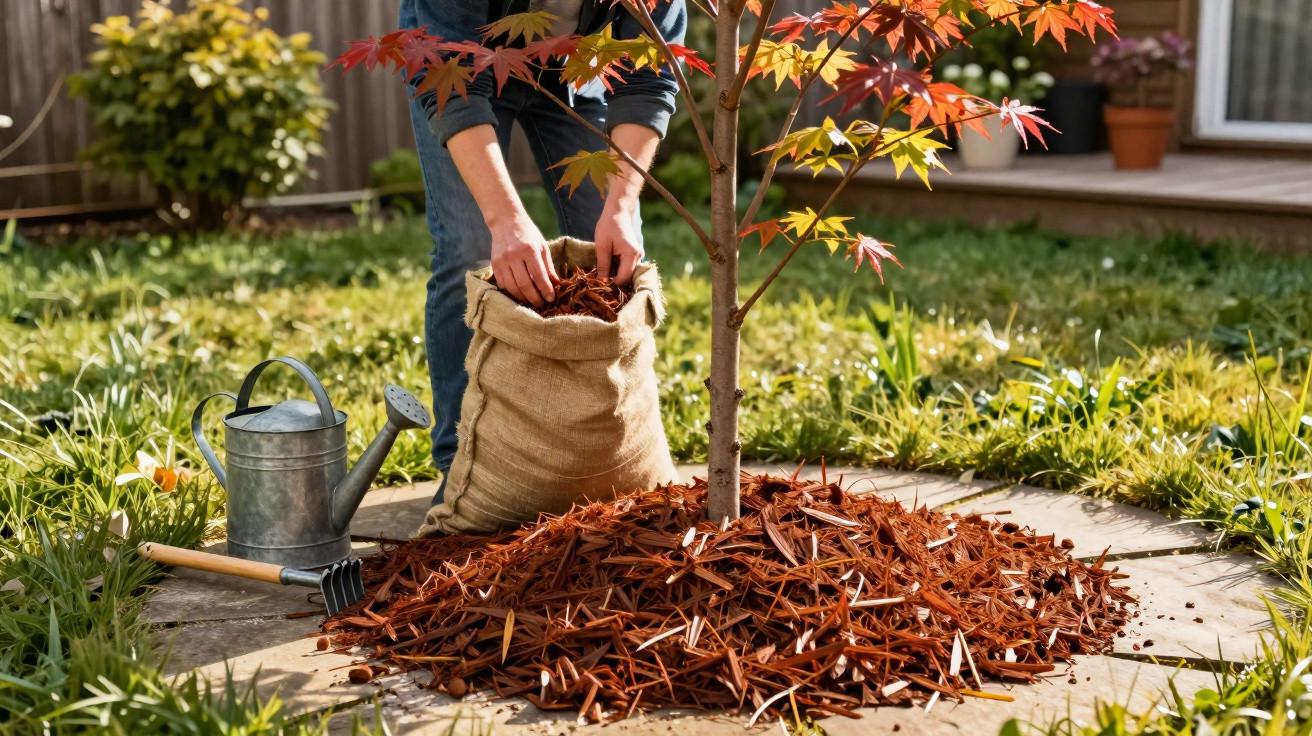
Burnt leaf margins, dried-out shoot tips and barely any fresh growth: this is, unfortunately, how Japanese maples often look in gardens, even when they are watered regularly. The reason is rarely the “wrong tree”; almost always, it lies in the conditions around its roots. This is precisely where one straightforward measure, strongly recommended by experts in March, can help.
Why Japanese maples react so sensitively in spring
Japanese maples (Acer palmatum) have a reputation for being delicate, and this is true at least where their roots are concerned. Their root systems sit very close to the soil surface, where they are exposed directly to every change in the weather: late frosts, the first hot days, drying winds, intense sunshine and waterlogging.
The effects soon become visible in the canopy:
- Stressed roots can supply water upwards only with a delay.
- Leaf tips dry out and turn brown.
- New shoots remain short or fail to emerge altogether.
- The tree appears generally tired, with sparse foliage.
In their native habitats, many of these maples grow in open woodland and ravines. The ground there is permanently covered by a natural layer of leaves and bark. As a result, the roots remain cool, lightly moist and well aerated. This is exactly the environment lacking in a typical front garden dominated by lawn or gravel.
“Targeted soil protection in March recreates the natural woodland floor – and removes a large part of the tree’s stress burden.”
The key March task: a protective root covering
The essential term is mulching. This means applying a loose layer of organic material over the soil around the trunk. It acts as a natural blanket, moderating temperature and moisture while gradually supplying nutrients.
Garden experts advise starting this work in early spring. By then, the hardest frosts have passed, the soil has become active again and the tree is close to producing new growth. Adding mulch at this point creates stable conditions for the roots before the full canopy begins demanding water and nutrients.
How to mulch your Japanese maple in March: step by step
1. Prepare the area
Start preparing as soon as the ground is no longer frozen:
- Carefully pull out weeds around the tree by hand.
- Gently crumble the surface soil to a depth of no more than 2–3 centimetres; do not use a hoe, as this may damage the fine roots.
- Remove old, compacted remnants of grass cuttings or fallen leaves where they have formed a crust.
The area treated should extend at least as far as the outer tips of the canopy, since this is where most of the fine roots are located.
2. Choose suitable mulch for Japanese maples
Japanese maples prefer slightly acidic, humus-rich soil, much like rhododendrons. The material applied to the ground should therefore provide similar conditions. Particularly suitable options include:
- Composted pine bark.
- Well-rotted leaf mould, such as that made from oak or beech leaves.
- Fine, well-seasoned woodchips from untreated branches and twigs.
- Mature garden compost spread in a thin layer, ideally mixed with pieces of bark.
The following materials are less suitable or can cause problems:
- Dark decorative gravel in full sun, as it becomes very hot.
- Plastic sheeting or landscape fabric placed directly on the ground, because the soil effectively “suffocates”.
- Thick layers of fresh grass clippings, which rot quickly and attract slugs.
“Think of a woodland floor: loose, humus-rich and slightly springy underfoot – that is how the ideal area beneath a maple should feel.”
3. Apply the mulch correctly
Once you have selected the material, the crucial practical step follows:
- Spread the mulch evenly around the trunk, reaching at least to the edge of the canopy.
- For trees planted in beds, create a layer around 5–8 centimetres deep.
- Leave a clear ring of roughly 10 centimetres around the trunk itself.
This bare ring matters more than many people realise. If the material touches the trunk directly, the bark stays permanently damp. Fungi and rot can then take hold easily, potentially leading to serious trunk diseases. The visible transition from trunk to root flare, the slight swelling at the base of the tree, should remain exposed and easy to see.
How mulch changes your maple’s growing conditions throughout the year
Applied properly, a mulch layer delivers several benefits across the whole gardening year:
- Temperature buffer: roots are less likely to freeze during late frosts and do not overheat as quickly on hot June days.
- Moisture retention: the soil dries out more slowly while remaining free-draining.
- Nutrient source: gradual decomposition releases natural nutrients.
- Weed control: there is less competition for water and nutrients.
Many owners notice a difference after just one season: leaves appear fuller, colours become more intense and shoot tips are less dry. Above all, the familiar brown leaf margins occur far less often because the plant receives water more consistently.
Watering correctly: mulch changes the routine
A mulch covering slows the drying of the upper soil layer. That may sound simple, but it noticeably changes how you should water. Rather than giving small amounts every day, experts recommend watering less frequently but much more thoroughly.
For trees planted in the ground, the following is a broad guide:
- In normal weather: two substantial waterings per week.
- During hot, dry spells: three to four thorough waterings per week.
The mulch ensures that these quantities reach the roots instead of evaporating immediately. It also prevents the extreme swings that place trees under considerable stress, such as very wet periods followed by dust-dry intervals.
Japanese maples in pots: a special case with separate rules
Many gardening enthusiasts grow their Japanese maple in a container on a terrace or balcony. Mulch is beneficial here too, although the layer must be thinner.
For containers, follow these guidelines:
- Apply mulch only around 3–5 centimetres deep.
- Empty the saucer or outer pot after watering so that no water remains standing.
- During prolonged rainy periods, avoid waterlogging wherever possible; if needed, raise the pot slightly off the ground.
In late summer, it is worth reducing watering slightly. The tree must not dry out, but neither should it remain constantly wet. This mild “hardening” often helps to encourage more intense autumn colour.
Common mistakes that weaken Japanese maples
In addition to missing mulch, several widespread habits can be particularly harmful to the tree:
- An overly sunny position: varieties with finely cut foliage in particular cope poorly with midday sun.
- Heavy, waterlogged soil: roots receive too little oxygen and may rot.
- Hard pruning: Japanese maples often respond with dead wood and a misshapen crown.
- Keeping the tree in a pot indefinitely without repotting: roots circle within the container and the growing medium becomes depleted.
Keeping these issues in mind while establishing an appropriate mulched area removes the greatest day-to-day sources of stress for your maple.
What mulch does beneath the soil surface
Many gardeners initially regard mulch as an ornamental surface layer. In reality, a great deal happens underneath it. Micro-organisms, earthworms and fungi immediately begin breaking down the organic matter. This process produces humus, a fine crumb structure and better soil aeration.
Over the following months, the soil becomes looser, retains water more evenly and develops more air-filled pores. Shallow-rooting plants such as Japanese maples benefit enormously from this. Their roots can spread into new areas that were previously compacted or dry.
Other useful jobs to carry out in March
Anyone already working on a Japanese maple in March can also schedule a few additional checks:
- Make minor shape corrections by removing dead, thin branches.
- Check the bark for frost cracks, especially on the south-facing side.
- If necessary, apply a light dose of organic fertiliser with a relatively low nitrogen content.
The important point is that the tree does not tolerate radical intervention. Numerous small, carefully considered actions are more beneficial than one major operation. Mulch plays the leading role here: it stabilises the environment in which every other measure can properly take effect.
Give your Japanese maple this kind of root covering from this spring onwards, and you will usually see the difference by the first summer: less drought stress, more even growth and an overall more vigorous-looking tree. For a job that can be completed in half an hour, that is a considerable result.

Comments
No comments yet. Be the first to comment!
Leave a Comment