
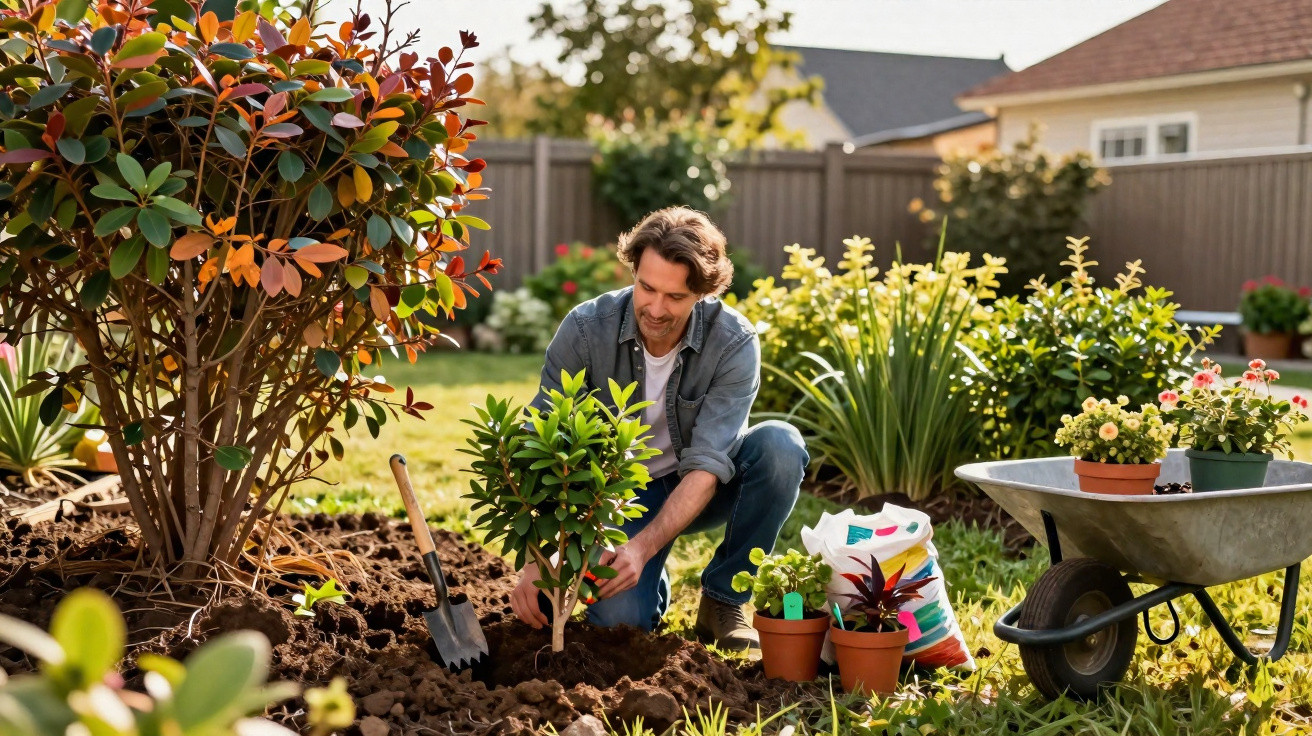
For years, Photinia – often sold for gardens as a “red-leaved glossy shrub” – was seen as a dependable choice: fast-growing, evergreen and producing red new growth in spring. Now, however, attitudes are changing. Disease, bare patches and frustration over pruning are increasingly common. More and more amateur gardeners are asking the same thing: is it still worth persevering, or is it wiser to choose a different shrub?
From garden favourite to troublesome hedge
Anyone living on a new-build estate will recognise the sight: an entire street lined with identical red hedges. For years, this worked well, at least visually. Photinia grew quickly, filled gaps fast and gave gardens a slightly “designed” appearance with its red young foliage, without demanding much attention.
Over time, though, another side became apparent. At first, a few more leaves fall than usual; then holes appear, and eventually the whole hedge looks tired. Many owners report that, after a few years, they have never regained the dense screening they originally had – regardless of how much they prune or feed it.
Rather than providing reliable screening, the hedge suddenly looks see-through and patchy, and requires more work than it is worth.
At this stage, perceptions shift. Replacing the Photinia hedge entirely no longer seems extreme but sensible. Few people want to spend money and time every year on a plant that barely fulfils its main purpose: providing privacy and an attractive frame for the garden.
Why Photinia is increasingly struggling
The plant itself has not suddenly become “worse”. Instead, its growing conditions have changed. Milder winters, long wet springs and hedges planted extremely close together create an ideal environment for fungal diseases.
One of the most common is Entomosporium leaf spot. It first appears as red or brown marks on the leaves. They then dry out and drop off. What remains are bare areas through which every curious glance from the pavement can look straight into the garden.
- Leaves develop spots and dry out
- Foliage drops early and in large quantities
- The hedge develops gaps and becomes uneven
- Infected leaves on the ground keep the disease in circulation
Many people then make the crucial mistake of replanting Photinia in the same place. Yet fungal spores remain in the soil, in old foliage and, in some cases, on neighbouring plants. The “new” hedge therefore begins with the same old problems.
Anyone seeking a lasting solution needs a genuine change of strategy – including a different plant species.
Pittosporum: the low-maintenance Photinia replacement for privacy
In garden centres and among landscape gardeners, one name is appearing more often as a replacement for Photinia: Pittosporum. This evergreen shrub stays dense throughout the year without continually becoming untidy or spreading out.
Its greatest advantage is its more balanced growth habit. Rather than shooting upwards uncontrollably, Pittosporum gradually but consistently forms a compact, calm-looking hedge. This makes it particularly suitable for terraced-house gardens, patio boundaries and front gardens.
Pittosporum provides the privacy screening many people hoped to get from Photinia – but more reliably and with less maintenance.
Colours, forms and garden impact
Pittosporum is available in several forms, making it easy to match to an individual garden style:
- Dark-green varieties for a classic, understated hedge
- Variegated varieties with pale margins that brighten shady corners
- Slightly silvery types for modern, clean garden designs
Even when it is not cut perfectly, its outline remains attractive. One or two trims a year are generally enough to keep the hedge neat and dense. For anyone who does not want to be constantly holding hedge shears, this is a clear advantage.
Moving beyond the “green plank fence”: mixed hedges are on trend
The era of rigidly uniform hedges is visibly coming to an end. As more garden owners have negative experiences with monocultures, a different approach is gaining ground: the mixed hedge.
The principle is straightforward: instead of planting 25 metres of Photinia alone, several species are combined. This spreads the risk. If one species partly fails, the others remain and visually compensate for much of the loss.
Pittosporum works especially well as the foundation of such combinations. It can, for example, be supplemented with:
- Elaeagnus – exceptionally tough, salt-tolerant and a good choice for exposed, windy positions
- Cornus (dogwood) – with colourful stems that create interest in winter
- Hazel – offering a native character and valuable for birds and insects
- Other evergreen species suited to the local climate
The result is a hedge that feels more lively and offers more across the seasons. Different flowering periods, leaf colours and textures prevent the dull “green block” effect. At the same time, the garden stands out clearly from a standard housing development.
How to say goodbye to Photinia without regrets
Before reaching for a chainsaw, it is worth assessing the condition of the existing hedge carefully. Individual diseased branches can sometimes be managed with good care. However, when only stems and gaps remain over several metres, the point of recovery has usually passed.
When removing it, all diseased material should be taken out of the garden consistently. Do not put the leaves on the compost heap; dispose of them with general waste or at the local household waste recycling centre. Any material left behind can infect new plants again.
Prepare the soil rather than simply putting new plants in
Simply pulling out old shrubs and inserting new ones can lead to a poor start. Years of compaction, waterlogging or an imbalanced nutrient supply may have affected the soil. Brief but thorough preparation makes all the difference:
- Loosen the soil deeply – ideally with a garden fork, rather than turning it over with a spade
- Work in mature compost or well-rotted manure
- Check drainage, particularly in heavy clay soils
- Deliberately allow more generous planting distances
A hedge planted too closely may look pleasingly full at first, but in later years it suffers from competition, fungal pressure and poor air circulation. The outcome is often exactly what happened with Photinia: rapid early growth followed by an early decline.
What the new hedge should really be matched to
Anyone planting again should think beyond appearance alone. The site and everyday routine matter just as much. How exposed is the area to wind? How much sun reaches the boundary? And how much time is realistically available for pruning and maintenance?
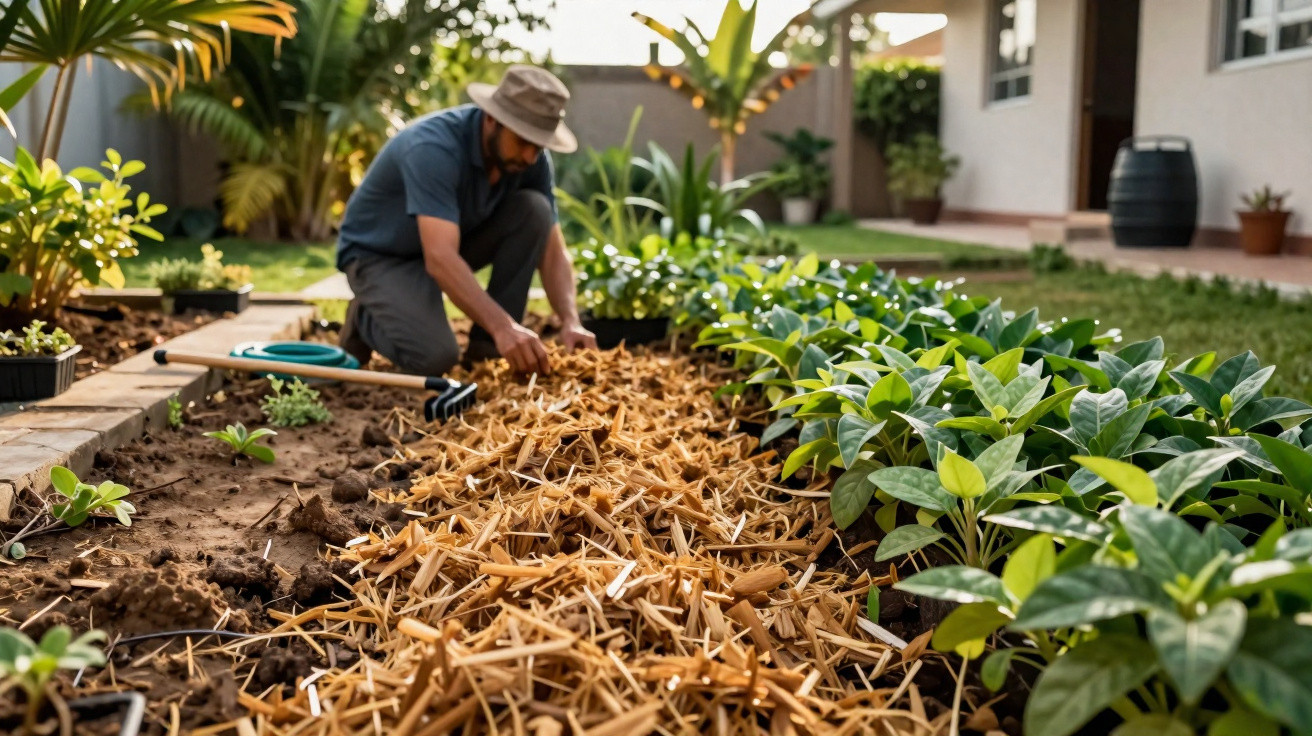
In very windy locations, it helps to support young Pittosporum shrubs with a sturdy stake during their first few years. An organic mulch – such as composted bark or woodchip – retains moisture in the soil for longer, suppresses weeds and keeps the soil crumbly. This gives plants a clear head start, especially in dry summers.
Adding a few flowering species to the hedge will also attract more bees, butterflies and birds to the boundary. The dividing line with the neighbouring property then becomes more than a simple “privacy screen”: it turns into a living habitat that benefits the whole garden.
Replacing a declining Photinia hedge therefore becomes less of an unwanted chore and more of a real opportunity: for a calmer maintenance routine, greater garden diversity and a hedge that will still do its job reliably in spring 2026 and well beyond.

Comments
No comments yet. Be the first to comment!
Leave a Comment