
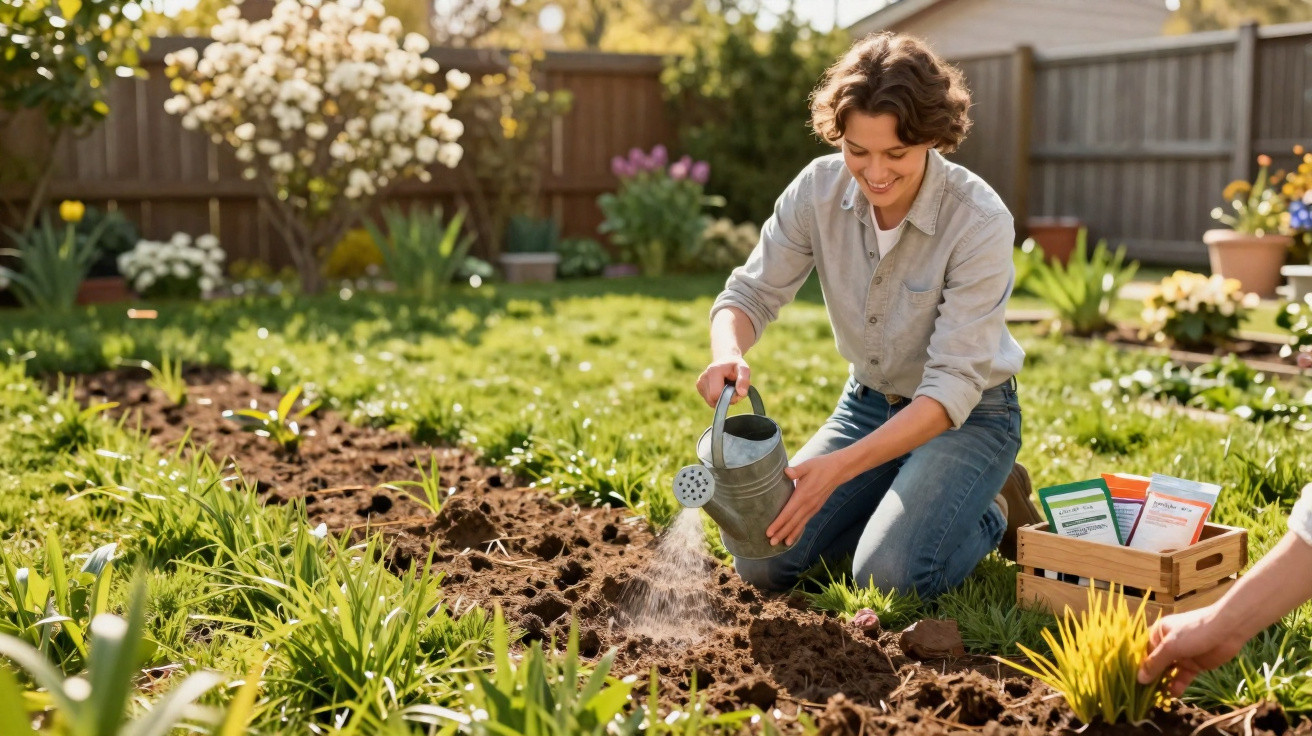
A garden-centre assistant explains the simple spring trick that can help your lawn grow thick and richly green again.
By late February, many homeowners look out of the window in frustration: rather than lush green grass, they see brown patches, moss and flattened areas. This is exactly when most people feel compelled to do something - and often choose the wrong approach. An experienced employee at a garden centre sets out a straightforward sequence of steps that can bring even a tired-looking lawn back into shape surprisingly quickly.
Getting your lawn off to the right start in spring
Timing is the crucial factor. Once temperatures become consistently milder and the ground is no longer frozen, the lawn begins to wake up. In central Europe, this period generally falls in March.
Many people become impatient at this point and cut the grass back drastically. That causes more harm than good. The gardening expert recommends taking the initial stage slowly.
“For the first cuts of the year, never remove more than a third of the blade length - otherwise mowing weakens the plant.”
In practical terms, if the lawn is around 9 centimetres high, the mowing height should be about 6 centimetres. If the grass still appears slightly long afterwards, make another gentle cut a few days later. This allows the lawn to adjust to being maintained and produce new shoots.
Mulching or collecting the clippings?
Many modern lawnmowers include a mulching option. The mower finely chops the grass clippings and spreads them in a thin layer over the lawn. During summer, this provides useful natural fertiliser.
Spring is different. After winter, lawns are often damp and matted, while the grass blades tend to be soft. If large amounts of clippings are left behind, they can stick together and form a blanket over the turf. This prevents air and light from reaching the soil as effectively, causing the lawn to suffer.
- In March and early April: collect clippings in the grass box.
- From May onwards, in dry weather: introduce mulching gradually.
- For very dense, long grass: always remove the clippings so that they do not rot.
For the first few mowing sessions in particular, it is worth playing safe and using the grass box. This lets the lawn breathe freely.
Why your lawn needs more air
Something many people overlook is that the grass blades are not the only part requiring care: the soil underneath also needs attention. Over time, the ground becomes compacted. Heavy soils containing plenty of loam or clay are especially susceptible. Every time someone walks across the lawn, the soil is pressed down a little further.
The result is that water either remains on the surface or runs away rather than soaking deeply into the root zone. Oxygen has greater difficulty entering the ground, limiting how well the roots can function. Moss and thatch spread, leaving the lawn looking tired and patchy.
“A few simple steps to aerate the lawn can make the difference between a thin patchwork and dense green growth.”
How to aerate your lawn properly
For smaller lawns, manual work is entirely sufficient. The garden-department assistant recommends combining raking with piercing the soil.
Typical steps include:
- Remove moss and thatch: Rake firmly across the lawn with a sturdy lawn rake until moss, dead grass and thatch are loosened.
- Pierce the soil: Push a garden fork or lawn-aerating fork into the ground at regular intervals. The holes can be several centimetres deep.
- Add sand if needed: In severely compacted areas, fine horticultural sand can be brushed into the holes. Over time, this improves the soil structure.
Anyone with a large lawn may prefer an electric or petrol-powered scarifier. Its rotating blades lightly score the ground while combing out thatch and moss.
Here is a brief overview of the differences:
| Method | Best used for | Effect |
|---|---|---|
| Rake | Small gardens | Removes moss and loose thatch |
| Scarifier | Medium to large areas | Cuts into thatch and lightly loosens the soil |
| Fork / aerator | Compacted areas | Improves drainage and airflow |
Filling gaps: how to restore grass to bare patches
Once the soil has been loosened and cleared of thatch, one question remains: what should you do with bare areas? The garden-centre expert places particular emphasis on an intermediate step that many people miss.
“Bare patches first need a fresh bed of loose soil - only then is it worth adding new seed or turf.”
In other words, thoroughly loosen the top two to three centimetres of soil in the bare patch. If necessary, work in some fresh lawn soil or humus-rich garden soil, then gently level it. Only then should you add either fresh seed or ready-laid pieces of turf.
Turf or overseeding - which is the better choice?
There are essentially two ways to make bare areas green again:
- Turf / ready-laid turf: Ideal for impatient gardeners. The area looks excellent again within a day. The pieces must be pressed down firmly and watered sufficiently.
- Overseeding with a special lawn-seed mix: Less expensive, but it requires some patience. The expert advises choosing a repair or regeneration mix designed specifically to fill gaps.
When overseeding, spread the seeds thinly but evenly, rake them in lightly to ensure contact with the soil, and keep the area evenly moist during the first few weeks.
Birds, fertiliser and choosing the right moment
Many amateur gardeners know the problem: as soon as fresh seed is spread, the first sparrows arrive at the “buffet”. Birds are particularly keen to eat newly sown seeds in early spring.
The practical advice is either to wait until temperatures rise further and birds have more natural food available, or to deliberately provide them with an alternative. Putting out feeding stations with, for example, fat balls often diverts birds away from the lawn.
At the same time, there is the question of fertiliser. A nitrogen-rich lawn fertiliser stimulates growth. This makes the grass denser and better able to crowd out moss and weeds.
“With lawn fertiliser, it is better to apply a targeted dose than to think ‘more is better’.”
If too much fertiliser is spread, the grass blades may shoot upwards but will remain soft and vulnerable. Scorching is also possible where nutrient salts lie on the lawn in excessive concentrations. A spreader helps distribute the correct amount evenly.
When the mulching mower becomes self-sufficient
As days grow longer and warmer and the lawn enters full growth, the mower’s mulching function can come into use again. The fine clippings then supply nutrients and reduce the need for fertiliser.
Important points:
- Mulch only when the grass is dry.
- Remove no more than a third of the blade length.
- Mow regularly to avoid leaving too much material at once.
Following this routine creates something close to a small nutrient cycle in your own garden: the grass grows, is cut, breaks down and supplies fresh nutrients.
What many people underestimate: patience and realistic expectations
A lawn is a long-term feature. Even with the best advice, a neglected area will not turn into a perfect park lawn within a week. Initial improvements are often visible after only a few days, but the full result develops over weeks and months.
Particularly with severely compacted soil, a multi-year plan is worthwhile: aerate a little every spring, add sand where needed, fertilise regularly but not excessively, and avoid mowing too short in summer. This combination strengthens the turf over the long term.
It is also helpful to consider how the lawn is used. An ornamental lawn can tolerate more detailed care, whereas a family lawn used by children, paddling pools and garden parties needs tougher grass varieties and a little more acceptance of patches or bare spots. Those who assess their household’s needs and the level of wear on the lawn realistically can tailor the maintenance steps more effectively.
The result is exactly what many people secretly hope for: a deep-green, pleasantly springy lawn that is enjoyable to walk on barefoot and sturdy enough to spread out a blanket without worrying, because good care has made the ground strong enough to recover again.



Comments
No comments yet. Be the first to comment!
Leave a Comment