
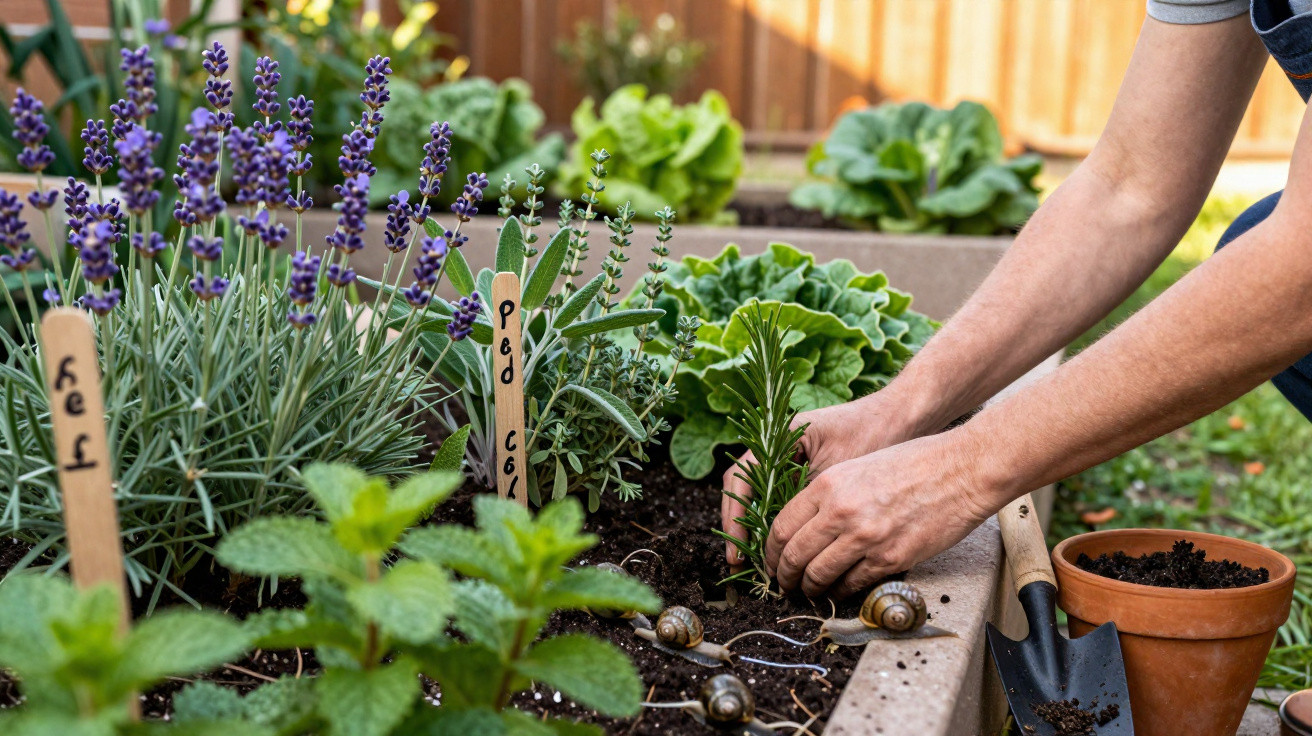
People who grow vegetable plots and ornamental beds often face a recurring challenge: controlling snails and slugs without upsetting the garden’s balance. These molluscs play a role in the food chain, yet they can damage young plants, tender leaves and fruits such as strawberries and tomatoes. For this reason, many gardeners look for natural ways to deter them without using harsh chemicals, creating living borders that both protect and enhance the space.
How do herbs help keep snails and slugs away from the garden?
Snails and slugs tend to avoid rough, dry surfaces and very strong scents. Many herbs release aromatic oils that make an area less appealing, particularly once the plants are well established and carry plenty of foliage.
Rather than poisoning the animals, this living barrier acts as a deterrent, limiting their movement towards more vulnerable crops. It also brings greater diversity to the garden and may provide fresh herbs for the kitchen.
Watch a video on the Horta do Ditinho YouTube channel about the repellent effect of certain aromatic plants in keeping snails, slugs and pests away from beds:
https://www.youtube.com/watch?v=rX_jY8dK2aM
Which herbs help with control, and which should stay away from the border?
When planning a protective border, it is important to distinguish between plants that discourage snails and those that may become a “banquet”. A strong fragrance does not automatically provide protection, and some culinary herbs can attract these molluscs even more.
Here are useful examples for deciding what to place along the outer border and what is best grown nearer the centre of the bed:
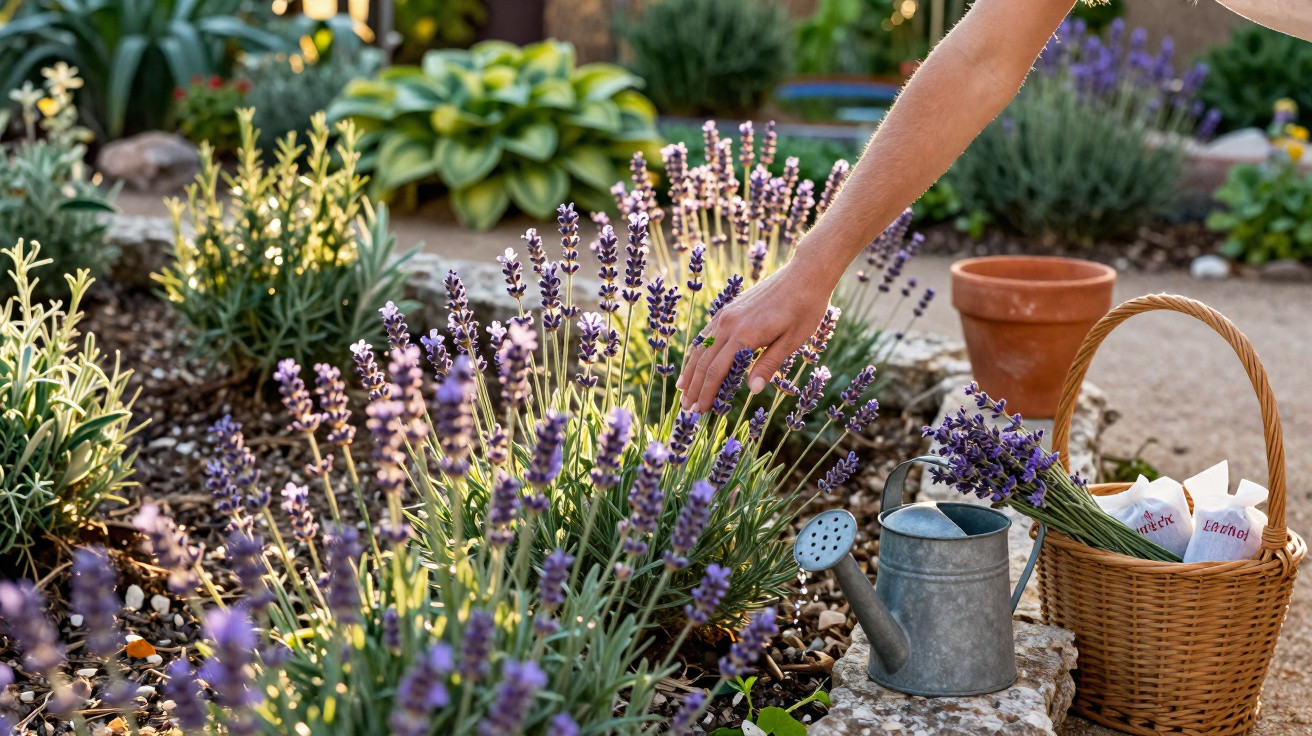
- Lavender, rosemary and thyme – aromatic, hardy plants suited to well-drained soil;
- Sage and hyssop – with firm leaves and an intense scent, they work well in borders;
- Chives and wild garlic – their distinctive smell tends to bother snails;
- Peppermint and spearmint – strongly scented and best grown in contained beds or pots;
- Nasturtium – mildly peppery, it can be useful around vegetables;
- Basil, parsley, coriander, dill, chamomile and oregano – these can be attacked and should be kept in inner areas.
How can you create a herb border to deter snails in practice?
Before planting, check whether the selected species suit your local climate and soil type. Guidance from reputable nurseries or agricultural extension services can help you establish the right levels of light, moisture and spacing.
Once you have this information, mark out the perimeter around the areas that receive the most damage. Use established young plants, position them close together and group herbs with similar requirements. Rough materials, such as crushed eggshells, dry coffee grounds or strips of copper, can be laid in front of the border to increase discomfort on contact.
Do herbs alone solve a snail problem in the garden?
A herb border works best as one element of integrated management, particularly during wet periods, when plenty of organic matter is available. At these times, snails and slugs may bypass the aromatic barrier in search of abundant, moist food.
For this reason, many gardeners combine herbs with night-time inspections, simple traps, waste management and crop rotation. As well as helping with control, herbs attract pollinators, provide aromatic leaves for cooking and increase plant diversity, making the garden healthier and more interesting throughout the year.
Comments
No comments yet. Be the first to comment!
Leave a Comment