
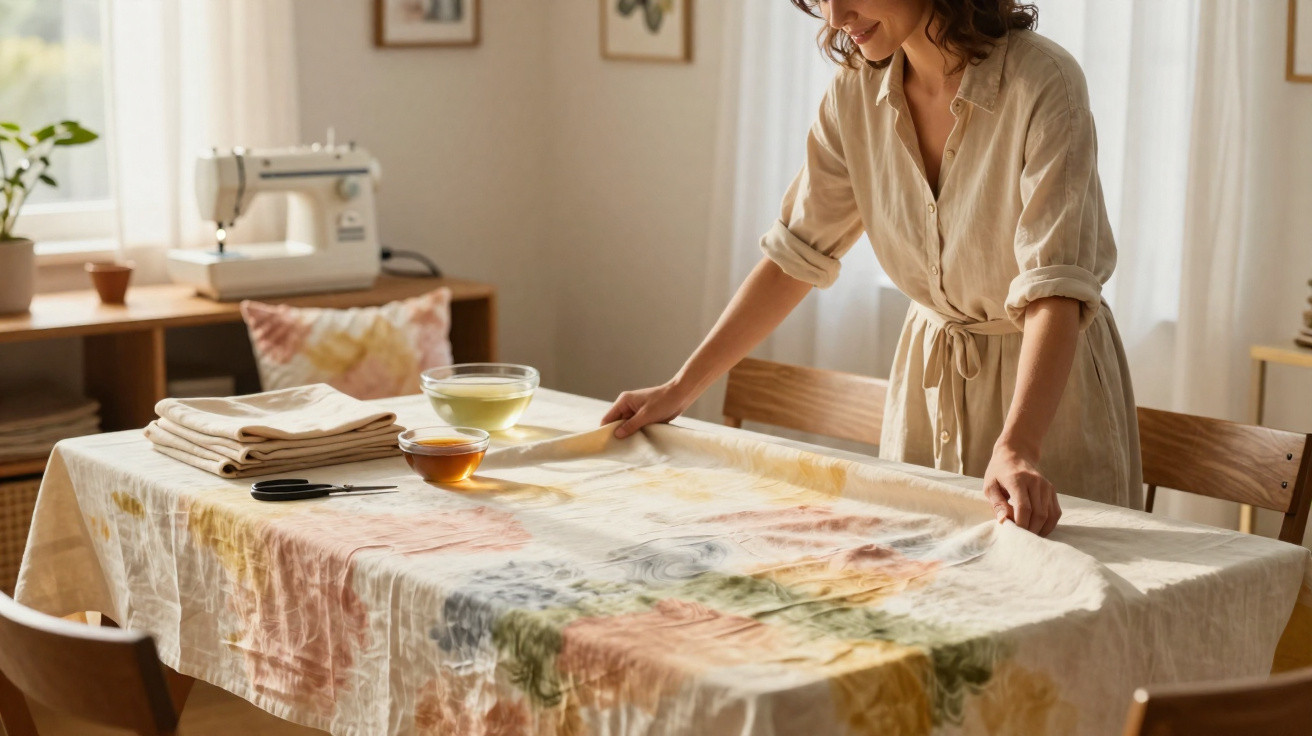
What looks dull and worn in a cupboard can appear like expensive designerware on the dining table, sofa or wall. Yellowed cotton or linen sheets are often automatically put into the donation bag, even though stains can usually be removed – or creatively turned into a stylish pattern. Investing a little time gives you fabric of a quality that new items from home furnishing shops rarely match.
Why yellowed sheets are far too good for the donation bag
The first reaction is often: “It looks old, so get rid of it.” That is precisely the mistake. Yellowing on white sheets rarely means the fabric has reached the end of its useful life. In many cases, it is simply discolouration on the surface.
What seems to be old textile waste can, with the right treatment, become a durable premium fabric with a history.
Sheets dating from the 1960s, 1970s or 1980s in particular are often made from substantial linen, linen-cotton blend or tightly woven cotton. They have a heavier handle, tougher fibres and can last for decades. Giving one away means parting with a material that is now only found, if at all, at the upper end of the market.
What causes yellowing in the first place
A yellow tinge usually has little to do with “dirt” and much more to do with chemistry and time. Typical causes include:
- Perspiration: Salts, acids and skin oils react with fibres, particularly cotton.
- Detergent residue: Too much powder or liquid detergent can leave a film on the fabric which oxidises.
- Fabric conditioner: This leaves a greasy coating that darkens when exposed to air and light.
- Damp storage: Bacteria and microscopic fungi can cause stains and odours.
- Light and time: UV radiation and oxygen alter the cellulose within the fibres.
The good news is that many of these effects can be reversed or concealed visually. Plenty of sheets merely look tired rather than damaged.
First aid: how to make yellowed sheets properly white again
Before turning old sheets into a decorative project, it is worth following a thorough washing and care routine. It takes little effort, yet the results can be impressive.
Step 1: remove residue and neutralise odours
Pour one cup of clear household vinegar straight into the washing machine and run a normal wash. Vinegar breaks down detergent deposits and neutralises smells. It also has a mild descaling effect and leaves fabric softer – without fabric conditioner.
Step 2: deep-clean with oxygen bleach
For thick white cotton or linen sheets, soaking them in oxygen bleach, such as sodium percarbonate, is worthwhile:
- Fill a tub or bucket with very hot water.
- Stir in the stated amount of powder until it has dissolved.
- Submerge the sheet completely and leave it to soak overnight.
- The following day, wash it normally at 40 or 60°C.
This often removes yellowish shadows or makes them substantially lighter. Important: not every delicate blended fabric can withstand high temperatures, so always check the care label first.
Step 3: wash better, worry less
A few basic habits will help the fabric stay fresh for longer in future:
- Wash sheets every two weeks, or weekly if you perspire heavily.
- Use detergent sparingly and never add extra “just in case”.
- Avoid fabric conditioner; use vinegar or bicarbonate of soda occasionally instead.
- Dry outdoors where possible – sunlight has a naturally brightening effect.
- Store sheets only when fully dry, in a well-ventilated cupboard.
Old linen sheets: an underrated luxury fabric for the home
Many households still have bed linen made from linen, hemp or linen-cotton blend from before the 1990s. These fabrics can initially feel somewhat stiff, but become remarkably soft with use – and are almost indestructible.
Linen can absorb up to around one fifth of its own weight in moisture without feeling wet. This creates a cool, dry feel in summer and a pleasantly balanced atmosphere in winter.
Anyone with old linen sheets in the cupboard effectively has a supply of high-quality material for décor and sewing.
There is also an environmental benefit: extending a textile’s lifespan saves the energy, water and CO₂ that would otherwise be required for new textiles. Rather than buying inexpensive tablecloths, cushion covers or napkins, you can reuse material already on hand – and achieve a much more individual look in the process.
Teint-Nuage: turning stains into design
If yellowing cannot be removed completely, or if you deliberately want to disguise it, you can use it creatively. A technique currently gaining momentum on social media is often called “Teint-Nuage” or “Cloud Dyeing” – a cloudy, marbled dye finish in which no two pieces look alike.
How to create the cloudy dye effect step by step
- Wash the sheet at 60°C with a little soda crystals or washing soda to remove finishes and fabric conditioner residue.
- Lightly dampen the still-moist fabric, then scrunch it together loosely and secure it with elastic bands or string.
- Mix a textile dye according to the instructions, ideally one carrying a certification for low levels of harmful substances.
- Either place the fabric bundle fully into the dye bath or apply the dye unevenly with a pipette.
- Leave it for around 45 minutes, adding salt if the instructions require it.
- Rinse thoroughly until hardly any dye runs out, then wash and dry it once more.
The more firmly the fabric is scrunched and the more unevenly the dye is applied, the livelier the result will appear. Light shades such as greige, smoke grey, sage green or terracotta work especially well with rustic linen textures.
What you can sew and make from old sheets
Once the sheet is clean and perhaps newly dyed, it becomes a creative canvas. The dimensions of a classic double-bed sheet are easily enough for several projects.
Ideas for the dining table
- Large country-style tablecloth: A wide sheet can easily be cut into a cloth measuring around 240 x 140 cm.
- Fabric napkins: Offcuts can become square napkins of around 40 x 40 cm with a simple hemmed edge.
- Glass and polishing cloths: Dense linen sheds very little lint and is ideal for polishing glassware.
Décor for the living room and bedroom
- Cushion covers: One marbled-dyed sheet can produce several covers for sofa cushions or floor cushions.
- Throw or plaid: A larger piece with a rough hem can serve as a relaxed sofa throw.
- Wall hanging: Attach a particularly beautifully dyed section to a wooden batten and hang it as a textile wall piece.
Practical everyday projects
- Bags and shopping totes: Robust enough for the farmers’ market and supermarket.
- Bread bags: Linen bags help baguettes and bread stay fresh for longer.
- Reusable gift wrapping: Fabric bags replace wrapping paper and can be used again.
How to spot good old sheets – and when they really should go
Not every yellowed sheet is worth the effort. When sorting through your drawers, look out for a few key points:
| Criterion | What to look for |
|---|---|
| Fabric weight / handle | If the fabric feels dense, weighty and sturdy, that is a positive sign. |
| Material | Linen, hemp, linen-cotton blend or dense cotton are ideal for upcycling. |
| Damage | Small holes are not a problem; widespread weak areas or tears are more likely to rule it out. |
| Odour | Musty smells can often be washed out, but mould with visible staining usually cannot. |
Fabrics that already feel like paper, tear when gently pulled or show clear mould stains should no longer be kept in the home for hygiene reasons. Creative dyeing will not solve the problem in these cases.
Why the effort pays off over time
Spend one or two afternoons cleaning, dyeing and cutting fabric, and you can end up with a complete table set, several cushion covers or a new coordinated décor collection for the living room. Buying all of this new could quickly cost a three-figure sum – usually for thinner-quality materials.
There is also a psychological effect: fabrics you have sewn or dyed yourself tell a small story. Guests will ask about them, and children may later remember helping with the dyeing. The material is no longer “old stuff from Grandma’s cupboard”, but part of a consciously designed home.
Anyone starting with one simple sheet will usually soon realise just how versatile the contents of their own linen cupboard really are. With a little imagination, unwanted purchases, forgotten fitted sheets or single items without a matching cover can become a highly personal textile mix – and trips to the décor department will be needed far less often.



Comments
No comments yet. Be the first to comment!
Leave a Comment