
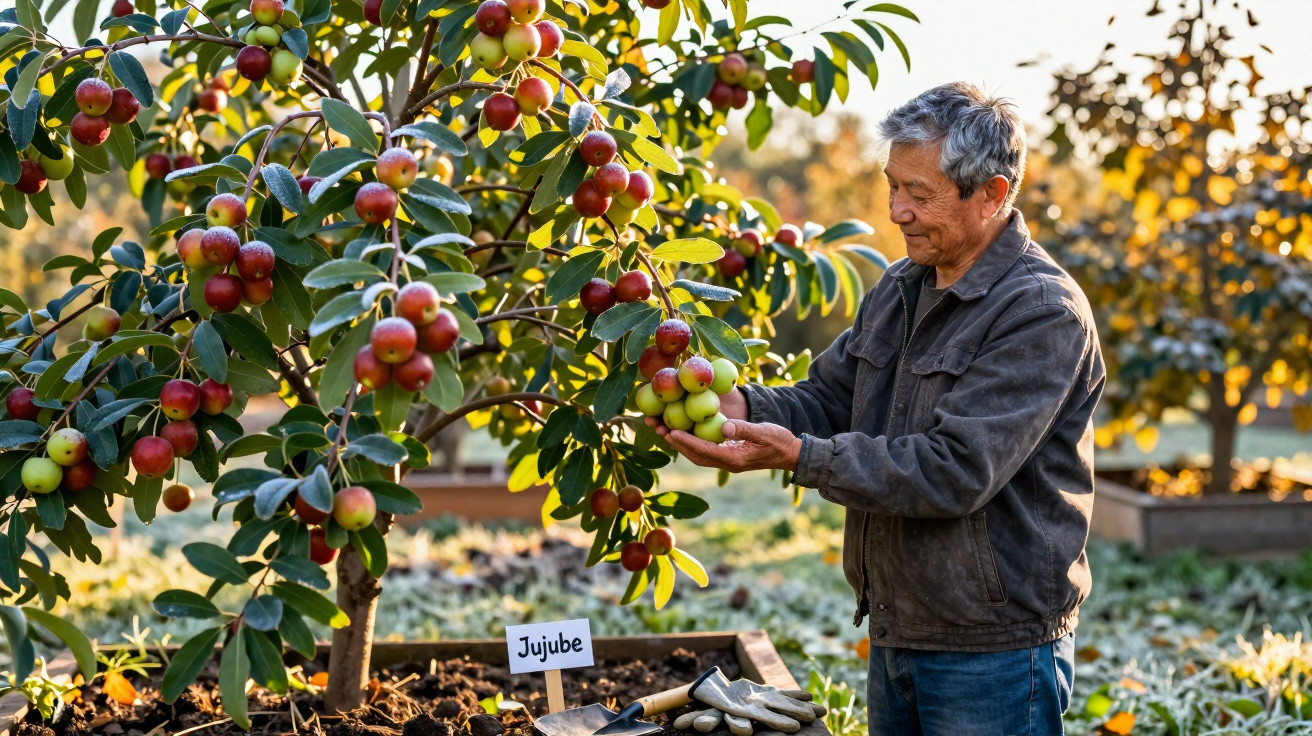
One September morning, in a small garden still damp with dew, a neighbour proudly showed off a tree laden with mahogany-brown fruit, almost hidden by its leaves. Nobody could quite identify this fruit tree, yet it had come through several winters at -12 °C without any special protection. It was a jujube tree, an Asian species that is gradually catching the attention of gardeners tired of temperamental fruit trees. Its fruits, known as jujubes, resemble small, crisp dates when fresh, before becoming soft as they dry. Put in the ground at the right time, an already established specimen can even bear a few fruits by the following autumn. It is an unexpected tree worth a closer look.
The jujube tree, an Asian fruit tree that withstands almost anything
The common jujube tree, or Ziziphus jujuba, has the understated appeal of a tree many people discover rather late. It often comes into leaf more slowly in spring than a cherry or apple tree, which can concern impatient gardeners, but it then develops small glossy leaves and modest flowers that insects value highly. As the first cool nights arrive, its fruit changes from green to reddish-brown. In a family garden, its flexible and sometimes slightly thorny branches create a light, almost graphic outline. It may not demand much attention, but it certainly stands out at the right moment.
Its cold tolerance accounts for much of its appeal. Depending on the cultivar and position, a mature jujube tree will commonly withstand temperatures close to -15 °C, and occasionally a little lower for a short time where the soil remains well drained. This makes it a possibility for many parts of the UK, including well beyond the mildest southern gardens. In the East, the Midlands or some western areas, it can do well against a sunny wall. Young trees are still more vulnerable over their first two winters, but once rooted, they become sturdier with every passing year.
The jujube tree's origins also explain its resilience: it comes from Asian regions with hot summers, sometimes poor soils and marked temperature differences. It dislikes sitting in water, but copes very well with heat and dry spells once established. That toughness does not mean it should be abandoned in an unsuitable corner of the garden. A tree planted in heavy, permanently wet ground will languish, however well intentioned the gardener may be. The jujube tree is straightforward, certainly, but it prefers clear conditions: sunshine, space and soil that can breathe.
Plant it now and it could surprise you by next autumn
Autumn planting suits it especially well, provided the ground is neither frozen nor waterlogged. Dig a hole twice the width of the root ball, loosen the base without reducing the soil to dust, and set the tree at the same depth as it was in its pot. In most cases, a blend of garden soil and mature compost is more than enough. Water thoroughly after planting, even when rain is forecast, as this removes air pockets around the roots. A light mulch will retain moisture without smothering the root collar.
To have a chance of seeing fruit by the following autumn, choose a grafted, well-developed jujube tree rather than a young seed-grown plant. Cultivars such as ‘Li’, ‘Lang’, ‘Chico’ and ‘Honey Jar’ are often available from nurseries, with differing fruit characteristics: larger, sweeter or crunchier. To be honest, hardly anyone compares cultivars every day before buying a tree. Even so, this small habit can prevent a great deal of disappointment. A two- or three-year-old specimen, planted in full sun and watered properly through its first summer, may produce a few jujubes quite quickly.
The most common mistake is trying too hard. Fertiliser is added, watering becomes constant, every branch is pruned at random, and then the tree appears to sulk. A jujube tree responds better to a light touch and some patience.
“With the jujube tree, gardeners often achieve better results by observing the tree than by trying to intervene every weekend.”
- Choose a south- or south-west-facing position.
- Avoid hollows where water remains after rain.
- Protect the young trunk with mulch, without allowing the mulch to touch the bark.
- Prune mainly dead wood and crossing branches in late winter.
Unusual fruit, somewhere between a crisp apple and an indulgent date
Jujubes do not really resemble the fruit people are accustomed to picking in the UK. While still firm and reddish, they have crisp, slightly floury flesh and a flavour reminiscent of a sweet apple. As they ripen further, the skin wrinkles and the flesh becomes denser, almost candied. At this point, they bring dates to mind, though their flavour is not exactly the same. Some people eat them straight from the garden, while others dry them on a tray near a window. Either way, the fruit retains an unexpected quality that makes you want to take another.
Harvesting generally takes place between September and November, depending on the cultivar, climate and amount of summer sunshine. A recently planted tree will not deliver kilos of fruit in its first growing year, and that does not matter. Just a few jujubes are enough to assess the chosen cultivar and observe how it performs. Over time, a mature jujube tree can become genuinely productive without needing the regular treatments required by some apple or peach trees. A fruit tree with few disease problems is a promise that appeals to many gardeners.
The jujube tree also encourages a different view of what a fruit tree should offer. It does not provide a spectacular crop in its first spring, produce huge flowers, or look like the star attraction at a garden centre. It settles in quietly, finds its feet, and often becomes the tree visitors ask about by name. We all know that moment when fruit picked in someone else's garden seems better simply because it tells a story. With its unusual, tasty jujubes, this tree creates precisely that sort of memory.
| Key point | Detail | Benefit for the reader |
|---|---|---|
| Hardiness | A mature jujube tree can tolerate around -15 °C, especially in free-draining soil and sheltered from icy winds. | It becomes a realistic choice for many UK gardens, including those where citrus trees would not survive. |
| Planting | Autumn encourages root establishment before summer heat, as long as waterlogged ground is avoided. | A better-established tree will suffer less in dry weather and can start more vigorously in spring. |
| Harvest | A grafted, established plant in a sunny position may bear a few fruits by the following autumn. | The gardener can discover jujubes quickly and decide whether the cultivar deserves a permanent place in the garden. |


Comments
No comments yet. Be the first to comment!
Leave a Comment