
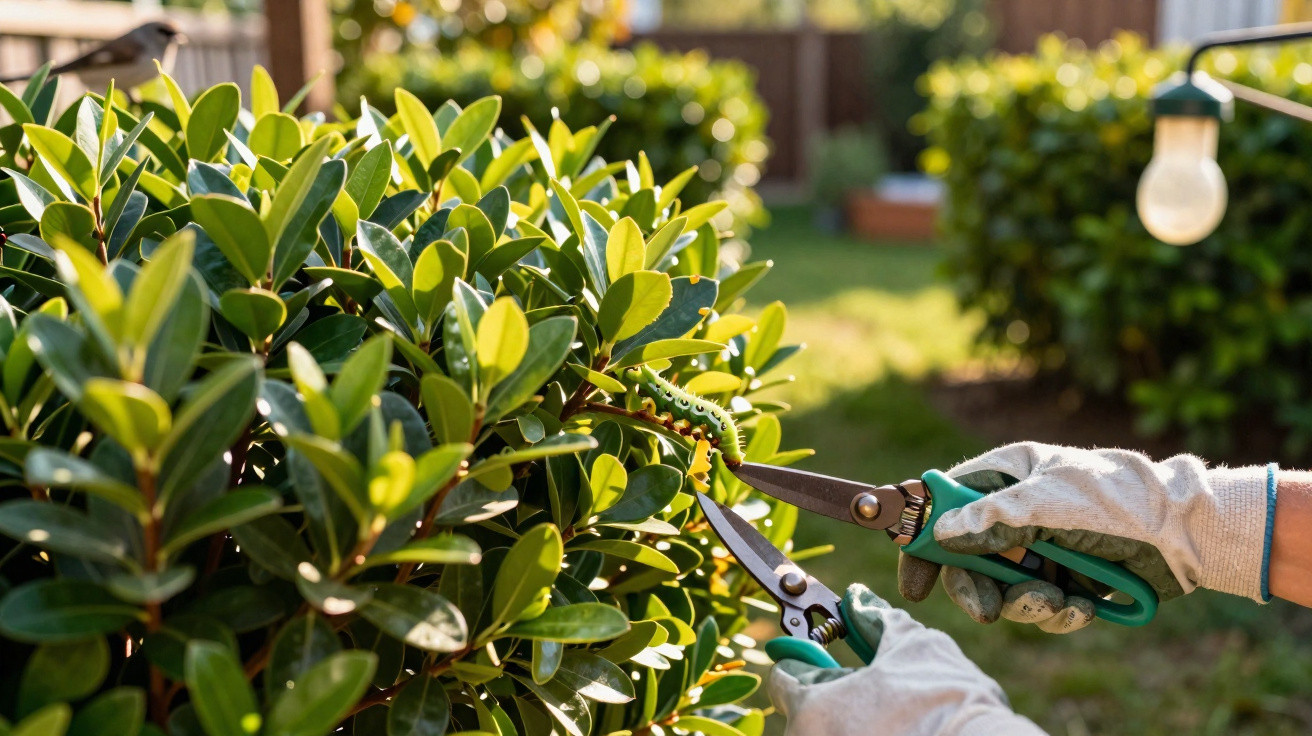
When box turns brown overnight, an inconspicuous pest is often to blame.
One simple, natural step can still save the hedge.
In many gardens across the UK and Europe, box initially looks richly green before suddenly turning brown. The usual culprit is the box tree moth caterpillar. Those who only inspect the outside or immediately reach for chemical pesticides often lose the battle. However, anyone who makes one particular checking routine a habit still has a good chance of preserving a perfectly shaped box hedge this summer.
Why the box tree moth causes such devastating damage
Originally from Asia, the box tree moth has spread throughout Central Europe in recent years. The rather unremarkable adult moths cause very little damage themselves; their caterpillars are the real problem.
They start feeding in the centre of the shrub, concealed by the dense foliage. Leaves are eaten first, followed by young shoots. If nothing is done, they drain the entire plant. The box then first appears thinner, turns grey-green, later becomes straw-like and eventually brown.
The pest's cycle is particularly dangerous:
- a single female moth can lay more than 1,000 eggs
- several generations may occur each year
- fresh waves emerge repeatedly from the beginning of spring until autumn
Anyone taking only a quick look in June will miss the crucial periods. Regular attention matters far more than a single major “special treatment” in high summer.
Early warning signs: how box quietly raises the alarm
Box does not “shout”; it gives subtle clues. Anyone able to recognise them can act before the harm can no longer be reversed.
- irregularly chewed leaves within the shrub
- fine white webbing between branches
- dark green pellets (caterpillar droppings) on leaves or on the ground
- individual shoots drying out even though the rest still appears alive
- greenish-yellow caterpillars with dark longitudinal stripes and black heads
Simply running a hand over the surface means missing almost everything. The moth favours the dense centre of the box. This is exactly where the crucial checking action comes in.
The overlooked box hedge check that saves entire hedges
“The most effective, completely natural protection is a weekly inspection inside the box, combined with directly removing caterpillars and webbing.”
In practical terms, this means not just looking from the outside, but deliberately reaching into the plant. Gently pull the branches apart by hand, look deep into the centre and specifically check for:
- caterpillars of different sizes
- clumped leaves containing webbing
- accumulations of droppings
Remove anything suspicious immediately: place caterpillars in a bucket of soapy water, cut out or strip away webbing, and use secateurs to remove affected shoot tips. At first, this may sound rather basic. In reality, early intervention repeatedly disrupts the moths' life cycle.
Ideally, inspect:
- at least once a week during spring and early summer
- every few days when moth activity is visible in the garden
- after warm spells or thunderstorms, when development often speeds up
Anyone who adopts this routine will substantially reduce caterpillar numbers before they multiply in large numbers. In small gardens, this is often enough to save a hedge for the season.
Pest control without poison: methods that work together
When caterpillars are already more widespread, several natural measures need to work together. No individual approach is a “miracle”, but combined they create a robust defence.
Manual work with secateurs and gloves
Start with the areas showing the most obvious severe damage. Use clean, sharp secateurs to cut back dried or heavily skeletonised branches. Then, wearing gloves, brush off or pick off every visible caterpillar and dispose of them in a sealable container - do not simply throw them onto the ground.
Where several box plants stand close together, work methodically from one shrub to the next. This helps prevent overlooked caterpillars from immediately moving back in.
Using attractants to identify the right time
Pheromone traps attract male box tree moths. Their purpose is not to wipe out the entire population, but to show when the next emergence is beginning. If several moths suddenly appear in the trap, the next egg-laying period will soon start. This is the time to intensify inspections within the shrub once again.
As a rough guide, use around one trap location per 20 square metres of box planting, from April to October. The traps are best positioned close to the shrubs, but not in direct midday sun.
Invisible allies: who helps fight the pest in the garden
Natural enemies of the box tree moth are often underestimated. Lacewings (Chrysopidae) are especially useful, as their larvae eagerly eat eggs and young caterpillars. Tits, sparrows, certain wasp species and, in rural areas, even chickens also help to contain the pest.
A sterile, overly “tidy” garden filled with gravel, stones and few flowers provides hardly any habitat for these helpers. By creating greater diversity instead, gardeners build up a living support team. Useful features include:
- flowering perennials and herbs near box plants
- insect hotels for lacewings and other beneficial insects
- a few “wild corners” with leaves and deadwood
- bird nest boxes and dense shrubs for shelter
The more insects, birds and small mammals thrive in the garden, the harder it is for the box tree moth to spread in large numbers.
Use biological treatments only as a supplement
A well-known biological active ingredient against young box tree moth caterpillars is Bacillus thuringiensis. It is diluted with water and sprayed onto the foliage. When caterpillars eat the treated leaves, they ingest the bacterium and subsequently die.
Timing is crucial: caterpillars must still be small and actively feeding, while the foliage needs thorough coverage - including the inside of the shrub. In many gardens, two applications about a week apart prove effective.
“Biological sprays replace neither weekly inspections nor hand removal - they strengthen the effect when both strategies are used together.”
Anyone who sprays only once the box is almost bare has generally already missed the most important opportunity. Timing is more important than treatment strength.
What garden owners should do now
Anyone with box in the garden should establish a fixed ritual this spring and summer: schedule a weekly “box walk”, looking into the centre of the plants. Ten minutes is often enough to protect the planting.
The routine can look like this:
- inspect the box from every side and watch for colour changes
- use your hands to bend branches apart and look deep inside
- consistently remove caterpillars, webbing and droppings
- neatly prune back heavily damaged shoots
- check pheromone traps and increase inspections when moth activity is high
Those who also maintain a flower-rich, lively garden and deliberately encourage beneficial species make life even more difficult for the box tree moth. Classical box hedges, balls and topiary shapes can therefore continue to be maintained despite the pest.
For many amateur gardeners, it is also worth briefly considering alternatives: other evergreen shrubs, such as Ilex crenata or certain privet varieties, can create visually similar effects without being attacked by the box tree moth. Especially in highly vulnerable locations - such as warm inner courtyards - combining box with alternatives can be sensible for spreading the risk.
Anyone who understands how this pest lives and how the unobtrusive checking action inside the shrub works does not need to give up traditional box shapes. Consistent observation, a little manual work and a lively garden create remarkable resilience - even in years with heavy box tree moth activity.






Comments
No comments yet. Be the first to comment!
Leave a Comment