
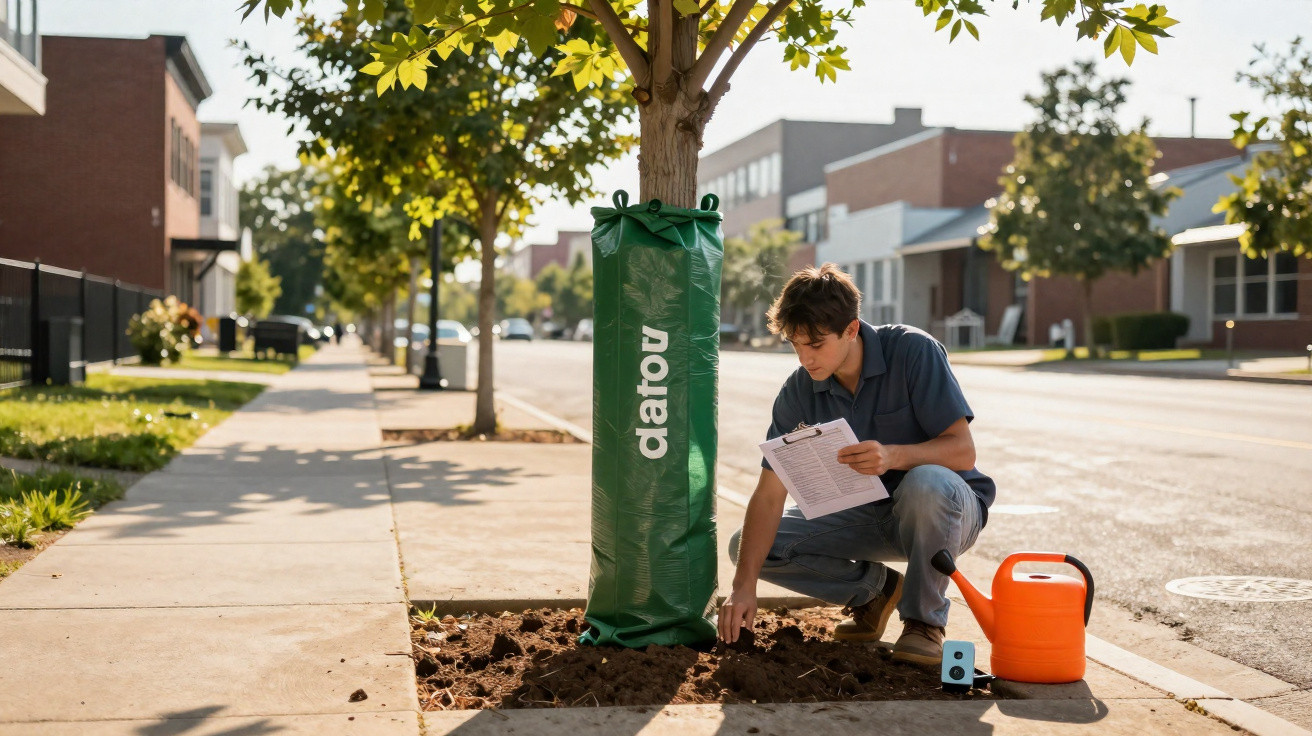
Cities are becoming hotter in ways that residents notice every day. On a summer evening, stepping outdoors no longer brings much relief, as streets and buildings retain warmth well after the sun has set.
Some neighbourhoods remain cooler where trees border the roads. Others have little shade, leaving people exposed to growing discomfort. The difference has consequences for health, energy consumption and everyday life.
Urban trees provide a practical means of cooling cities. They shade surfaces, release moisture and enhance air quality. However, putting trees in the ground is only the beginning.
Helping them survive harsh urban environments is considerably more challenging. A recent study in Dayton, Ohio, demonstrates what is required to establish trees in the areas that need them most.
Cities are set to become hotter
Concrete, asphalt and brick cause urban areas to retain heat. During daylight hours, these materials take in sunlight and then release that stored warmth gradually overnight.
This is known as the urban heat island effect, which makes cities warmer than nearby rural locations.
Trees can limit this effect by creating shade and reducing surface temperatures.
Research indicates that tree cover can lower daily urban temperatures by roughly 3 degrees Celsius (5.4 degrees Fahrenheit). By reducing the need for cooling, trees also lessen electricity demand.
“It’s going to keep getting hotter in the future,” said Erika Wright, first author of the study and a student at The Ohio State University.
“So we need to know if we should be trying to create environments that are more resilient to those changes.”
Legacy cities face particular risks
Dayton is an example of a legacy city: a place with a formerly strong industrial economy that has subsequently experienced declines in population and income. Since the 1970s, Dayton has lost around half of its population.
As resources diminish, looking after green spaces becomes more difficult. Tree cover is extremely limited in many neighbourhoods, with canopy cover reaching only five to eight percent in some places.
Without shade, exposure to heat and associated health risks rises, particularly for older adults.
“People don’t necessarily think of how their yard connects to the surrounding environment, but we all contribute to the urban forest by planting in our own space,” said Wright.
Planting city trees in Dayton
Across 20 Dayton locations, researchers planted 640 saplings, including in parks and on one vacant plot.
The proportion of surrounding land covered by hard surfaces differed between sites, ranging from 7 percent to 65 percent.
The researchers chose eight native tree species, including red maple, northern catalpa and white oak. Every location received the same species mix, enabling survival to be compared across differing conditions.
Testing watering approaches
Water is crucial to a young tree’s survival. The team assessed four watering methods. One set of trees received rainfall alone, while another was given 19 litres (5 gallons) every fortnight.
A third set received the same volume once each month. The final group used gator bags, which contain around 75 litres (20 gallons) and dispense water slowly over time.
These options reflect the practical decisions facing cities. Regularly watering trees requires both labour and money, whereas slow-release systems demand an initial investment.
Half of the trees survived
At the close of the growing season, just about 48 percent of the trees remained alive. Other trees were missing, probably having been removed or damaged.
Survival differed substantially between species. Red maple performed strongly, with 91 percent survival, while black gum fared poorly at only 10 percent. White oak also recorded low survival.
The health of trees at the point of planting was another factor. Certain species were already in poor condition, indicating that nursery quality may be important.
Gator bags achieved the best results
For most species, gator bags produced the strongest results. Their gradual water release allowed moisture to penetrate deeper into the soil, helping trees cope more effectively with dry conditions.
The bags are not without expense, however. Each costs around 30 dollars, which becomes costly when hundreds of trees are involved. Equipment and people also damaged some bags, creating an additional difficulty.
Heat affects tree species differently
Tree species do not all react to heat in the same manner. Certain trees struggled more where pavement coverage was high, and black gum survival fell sharply at hotter sites.
Other species coped with heat more successfully. Northern catalpa performed well at every site, while red maple and honey locust also displayed strong resilience. These trees continued to grow healthily even under warmer conditions.
Human activity affects trees
Environmental pressures are not the sole danger to young trees. Human behaviour can also reduce survival. At one park, 30 of the 32 saplings vanished after being snapped or completely removed by people using the area.
“Even after the trees were pretty well established, we saw losses, which was surprising,” said Wright.
This underlines the importance of community awareness. Trees in public areas rely on local protection and care.
Diversity remains essential
Planting only the hardiest trees might appear to be the most practical option. Yet depending on a small number of species creates its own risks, because pests or diseases can spread rapidly through uniform tree populations.
A more balanced strategy is preferable. Resilient species can be planted initially to create shade, with more sensitive trees introduced later. This approach produces a more robust and stable urban forest.
Key lessons for city trees
The study provides clear direction for urban planners. Firstly, species must be suited to local conditions, as no tree is appropriate for every location. Secondly, early care is worth investing in: watering and maintenance in the first years raise survival rates.
Cities also need to anticipate damage. Shielding young trees from mowing equipment and public activity supports their growth. Involving local residents may improve care and limit losses.
“When a city invests in reforestation of a park, you have to plant more trees than you want to last long term because there will be some percentage that dies off,” said co-author Mary Gardiner.
“But even small differences in management can mean huge variations in survivorship.”
Planting trees without ongoing care is a waste of resources. A tree that dies young delivers no benefit, whereas one that survives may cool streets for decades.
This means aftercare is among the most important elements of urban forestry. Even modest spending on maintenance can lead to better long-term results.
Resilient cities in a warming climate
Half of the trees in the study survived. Although that figure may appear low, it demonstrates what can be achieved in difficult settings. The surviving trees withstood heat, poor soils and restricted water supplies.
Improved planning can increase survival rates. Cities can select more resilient species, use targeted watering and engage communities.
“Looking for cost-effective strategies for cities to be resilient in the face of a warming climate is an important tactic,” said Gardiner. “Conservation like this leads to a great payoff in the long term.”
Urban forests need time to mature. Decisions taken now will influence life in cities for many years ahead.
Comments
No comments yet. Be the first to comment!
Leave a Comment