
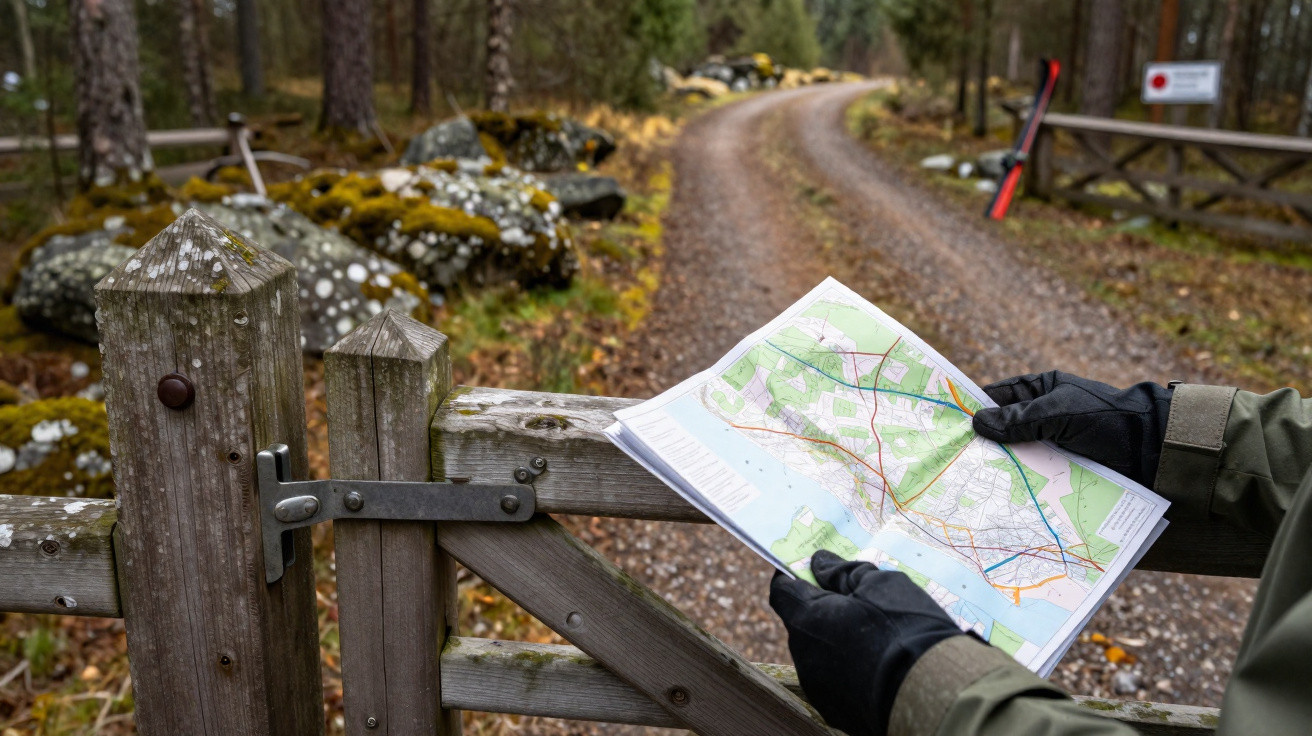
A change of ownership can unsettle a rural community long before a tree is felled or a gate is locked. The immediate concern in a reported Swedish forest sale is hunting: local groups were told that their existing arrangements would end. The important distinction is that these were permissions or agreements linked to the former owner, not necessarily public rights that automatically transfer with the land.
The reported purchase of a vast woodland area in central Sweden by a company linked to Alexander Karp, Palantir Technologies’ chief executive, has prompted questions about access, local traditions and who gets to make decisions about a familiar landscape. It is also a useful reminder for UK clubs and communities: a valued custom is not always the same thing as a protected legal right.
What is known about the forest sale
Swedish media reported that forestry company SCA sold roughly 15,000 hectares of land near Storsjö Kapell in Berg Municipality, in the Jämtland area. Reports put the value of the transaction at around €32 million, although currency conversions and reported figures can vary.
The buyer was identified as Cladonia Skog, a recently created company linked in reports to Alexander Karp. Karp is the co-founder and chief executive of Palantir Technologies, a US software company.
The land is not simply one continuous stand of commercial timber. Reporting has described a varied upland landscape of forest, rocky ground and open areas, used for outdoor activities including skiing, walking and hunting.
That makes the sale more than a financial transaction for people nearby. Woodland can provide timber income, wildlife habitat and long-term investment value, but it may also contain the tracks, meeting places and local knowledge that support rural life.
Buying land does not automatically close the countryside, but it can change the permissions that make long-standing activities possible.
Why hunting arrangements are central to the reaction
Local hunting groups reportedly learned in July that their hunting arrangements would not continue. That does not mean every form of access to the land has ended.
Sweden’s right of public access, known as allemansrätten, generally allows people to walk, ski and enjoy the countryside responsibly. It is not, however, a right to hunt, drive across private land, interfere with forestry operations or camp without regard for the conditions and the landowner.
Hunting is regulated separately. It involves wildlife management, firearms safety, landowner authority and, in many cases, a lease or licence. When ownership changes, a new owner may decide to:
- keep the hunting rights for private use;
- offer a new agreement to an existing local group;
- let the rights to another group or operator;
- manage hunting directly;
- restrict particular areas during forestry or conservation work.
For a local hunting team, losing an agreement can mean more than missing a season. Groups may have years of practical knowledge about animal movements, tracks, damaged fences and safe shooting arrangements. It can also affect the social side of rural life.
Calling this a loss of “rights” can therefore be misleading unless the exact legal agreement is known. The practical outcome may be serious, but the legal position depends on the terms that were in place.
What the buyer has said about future use
The buyer rejected speculation, reported by SVT, that the site was intended for a data centre. Such speculation appears to have arisen partly because of the purchaser’s technology connection and the scale of the acquisition.
The company’s stated intention was to hold and manage the forest for the long term, taking account of nature and Swedish woodland traditions. It referred to careful forestry, plant and animal life, and the area’s significance for skiing and hunting.
These are broad aims rather than a published management plan. For residents and local groups, the useful questions are more specific:
- Will existing tracks and informal access points remain available?
- What kind of forestry work is planned, and when?
- Will previous hunting groups be offered new agreements?
- How will streams, wet ground and sensitive habitats be protected?
- Who is the day-to-day contact for residents and clubs?
- How will temporary hazards and closures be communicated?
Clear answers can prevent rumours filling the gap. Equally, local people are entitled to ask practical questions without assuming that a buyer’s business background proves a particular development is planned.
Why large ownership changes can feel personal
The concern expressed locally is not necessarily about one individual or their nationality. It is about control. A single owner can influence forestry operations, sporting agreements, vehicle access and how responsive management is to people who live nearby.
Large landholdings are not unusual in rural Britain either. Estates, farmers, charities, public bodies, pension-backed investors and forestry companies can all own substantial areas of woodland and moorland.
Ownership alone does not determine whether a place is well managed. A new owner may make constructive arrangements with local groups, maintain paths and communicate clearly. But a landscape can seem outwardly open while important customary uses become uncertain because licences expire or familiar contacts disappear.
The key question is not simply who bought the woodland, but which activities are protected rights, which rely on permission, and how decisions will be made.
What UK groups can take from the case
Swedish law should not be treated as a guide to the position in England, Scotland, Wales or Northern Ireland. The rules on access, shooting, fishing, public rights of way and land management differ across the UK.
The wider lesson is still useful: do not rely solely on an informal understanding where access, shooting or another activity depends on the owner’s consent.
In the UK, different rights can attach to the same piece of land. Shooting rights may be owned or leased separately from the farmland. A recorded public footpath can remain after a sale, even when the surrounding land is private. Scotland has its own outdoor access framework, while access rights in England, Wales and Northern Ireland are more limited and depend heavily on the route, location and land type.
When woodland changes hands, a local group can check:
- whether its arrangement is a lease, licence or informal permission;
- the expiry date, renewal provisions and termination clauses;
- who owns or controls sporting rights and private tracks;
- whether public footpaths, bridleways or other recorded routes cross the land;
- whether woodland grants, felling permissions or environmental designations are relevant;
- which public body holds useful records, such as the local authority or national park authority.
If the legal position matters, obtain advice from a suitably qualified professional rather than relying on social-media discussion or a neighbour’s recollection.
A practical approach when ownership changes
1. Gather the paperwork
Keep copies of agreements, maps, payment records, emails and insurance documents. Note the land covered, dates, named parties and any rules on notice or renewal.
2. Make contact early
Write to the new owner or managing agent in a calm, specific way. Ask who manages the land, whether present arrangements remain in force and how to discuss a new agreement if needed.
3. Separate access from permission
A footpath does not usually give a right to shoot, fish, park or use a private forestry track. Conversely, an owner cannot normally remove a recorded public right of way merely by erecting a sign.
4. Explain the group’s value
A short, factual note can help. Mention relevant contributions such as reporting storm damage, closing gates, picking up litter, helping visitors understand safety notices or sharing wildlife observations. Avoid overstating what the group does or claiming authority it does not have.
5. Put safety first
Never enter an active felling area or approach forestry machinery. Obey warning signs, diversions and temporary closures, particularly after high winds or heavy rain. Shooting groups should maintain clear safety procedures, respect all licence and firearms requirements, and communicate with neighbours and other land users where appropriate.
Common mistakes when land changes hands
Several errors can turn uncertainty into unnecessary conflict:
- Assuming a verbal agreement continues indefinitely. Friendly arrangements may be difficult to prove or enforce after a sale.
- Confusing public access with sporting rights. Walking, camping, fishing, shooting and vehicle access are separate matters.
- Treating speculation as evidence. The purchaser’s background does not establish what will happen on the land.
- Ignoring the written terms. An agreement may include notice periods, renewal clauses or limits on what can be assigned to a new owner.
- Entering work sites because a route was previously familiar. Forestry conditions can change quickly and are hazardous.
- Waiting until a dispute has begun. Early, respectful contact is usually more productive than confrontation.
- Forgetting insurance. Clubs should ensure their cover reflects the activities and land they actually use.
The useful next step
The Swedish sale shows why forest ownership is about more than trees. It can affect timber production, habitat, local recreation and agreements that communities may have relied upon for years.
For a UK group facing a sale, begin with the documents. Identify what is a public right, what is a private agreement and what is merely customary use. Then approach the new owner or agent with a clear, practical request. Good records, safe behaviour and a constructive conversation will achieve far more than assumptions about what a change of ownership must mean.





Comments
No comments yet. Be the first to comment!
Leave a Comment