
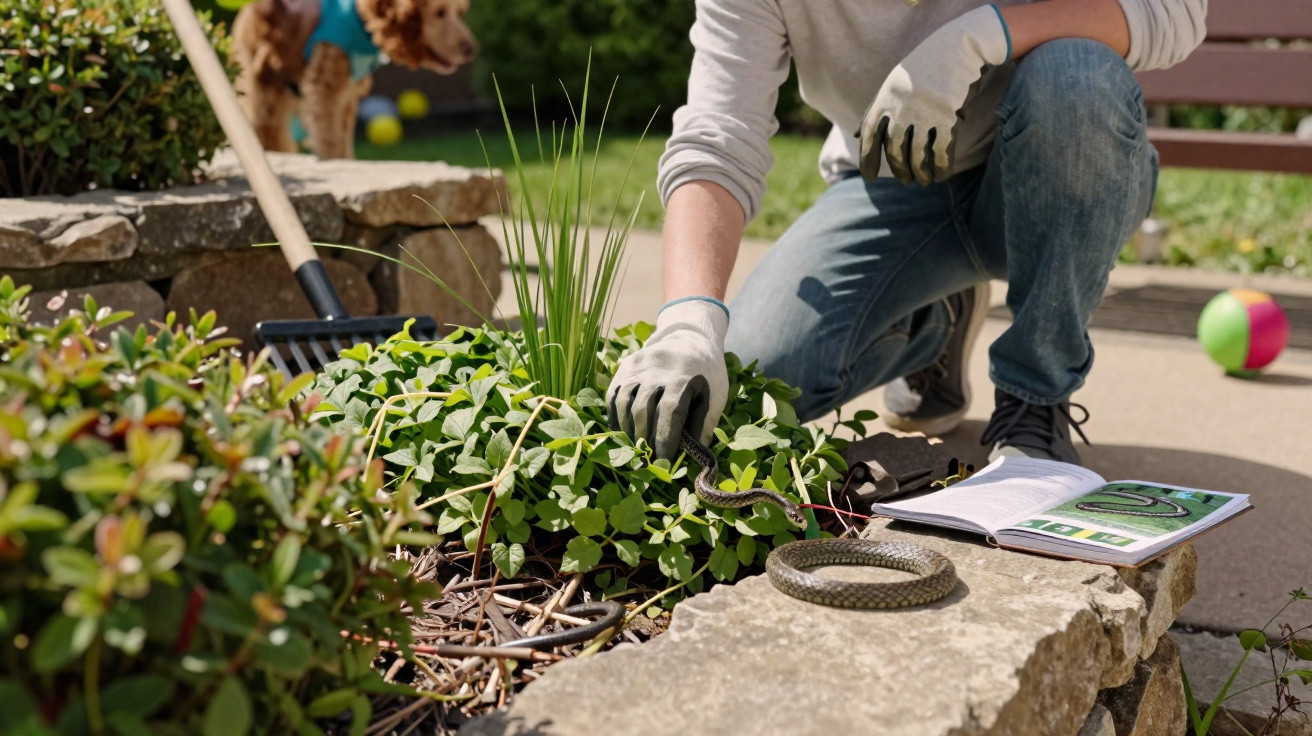
With the first mild days of March, the garden begins to stir – and it is not only flowers and bees that emerge, but venomous vipers too.
While many amateur gardeners eagerly await the spring sunshine, the active period has already begun for some native snake species. As soon as the ground becomes noticeably warmer, vipers leave their winter shelters and may find ideal refuges in the ornamental planting around a home. Sensible bed planning and timely maintenance can greatly reduce the likelihood of an encounter, without any need for panic.
When vipers become active in the garden
Vipers are ectothermic animals, meaning their body temperature depends on their surroundings and they need external warmth. Once daytime temperatures consistently reach around 12 to 15 degrees, their winter dormancy ends and they begin moving about again.
In many areas, this temperature range is reached from around mid-March onwards – and the risk of encountering snakes around the home then rises considerably.
This generally happens earlier in lowland areas than in mountainous regions. The first genuinely sunny days are particularly important: vipers seek out warm, sheltered spots where they can heat up without being spotted. This is where particular planting schemes and garden features become relevant.
Why certain garden plants are so attractive to vipers
What matters less is the exact plant species in a bed than the conditions it creates: warmth, cover and narrow cavities. Several popular ornamental plants and ground-cover species combine all three particularly effectively.
Ornamental grasses and pampas grass: cover and a sunny retreat
A prime example is widely planted pampas grass (Cortaderia selloana). It develops large, dense clumps that can grow several metres tall. Although decorative from the outside, the centre of the plant forms a secluded cavity that is difficult to see into.
- Its dense crown of leaves provides protection from view and predators.
- Heat rising from the ground is retained between the stems.
- The interior remains calm and sheltered, even in windy conditions.
For a viper, such a clump is an ideal retreat: hidden from birds of prey and hedgehogs, yet pleasantly warm. In summer, the grass may even serve as a perfect hunting position, with the snake concealed as it waits for a mouse or lizard to pass.
There is also a legal consideration. Pampas grass is regarded as an invasive non-native species in some countries and can be subject to strict restrictions. A huge clump in a front garden may not only create problems for native flora, but can also make the garden more appealing as snake territory.
Dense ground cover: green carpets full of hiding places
Vigorous ground-cover plants can be similarly inviting. Creeping juniper varieties, cotoneaster and ground-cover ivy are examples. They produce closed, thick carpets. From above, they simply appear green, but at ground level they create a maze of tunnels.
Typical features of these planting combinations include:
- dense foliage forming a ‘roof’ above the soil
- warmth retained in the ground over longer periods
- cavities where small animals, and snakes, can hide
Adding stones, walls or dry-stone walls to beds intensifies the effect. Stones become very warm in the sun and release that heat only gradually. Combined with overhanging vegetation, they form a microclimate that is especially suitable for reptiles.
A south-facing stone wall, dense ground cover in front of it and perhaps a patio as well: an attractive arrangement for people, but a five-star hotel for vipers.
Garden checks before the season: preventing snake visits
Anyone wishing to lower the risk should not wait until the first snake appears beneath the patio. The key is to act before the first sustained warm spell, during late winter or early March.
Lift vegetation and create gaps
One straightforward but highly effective measure is to create a visible gap between the soil and low-hanging foliage. A clearance of 15 to 20 centimetres is ideal.
This can be achieved by:
- thinning out the lower branches of shrubs
- cutting back ground cover along paths, walls and patio edges
- clearing away dead plant matter from the base of plants
Without a dense green screen, vipers feel exposed and will generally look for other areas offering better cover.
Clear stone areas and seal crevices
Rock gardens, dry-stone walls and paved paths are often underestimated. Leaves, dry stems and weeds accumulate between stones, providing perfect building materials for small refuges. Thorough tidying removes these potential hiding places.
Checklist for spring cleaning around stone features:
- Remove leaves and old plant debris from walls and joints.
- Repoint or seal wider cracks in walls, particularly on south-facing sides.
- Cut back heavily any lush plants overhanging patio edges.
For beds beside seating areas, it is also worth checking the mulch being used. Thick layers of bark mulch, wood chippings or leaves are warm, moist and visually impenetrable. A light-coloured mineral surface, such as grit or gravel, warms up less, dries out more quickly and provides scarcely any shelter.
Vipers are protected: dealing with snakes in your own garden
Many viper species receive strict legal protection. In some countries, catching, injuring or killing these animals is prohibited, as is destroying their resting and breeding sites. Substantial penalties may apply, and reptiles also contribute to natural pest control by reducing small mammal populations.
The sensible approach is not to fight the animals, but to plan the garden intelligently so that they remain away from areas used directly by people.
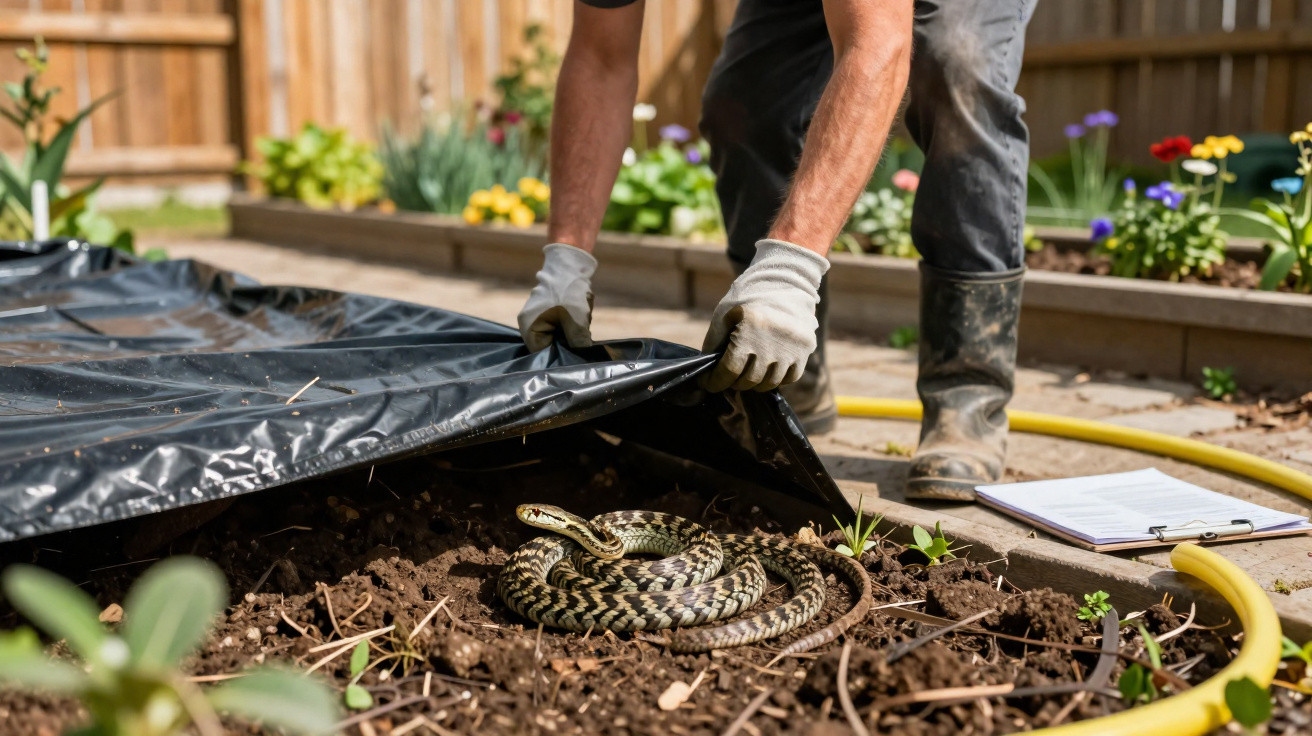
If an encounter occurs despite these precautions, one simple rule applies: keep your distance. In most cases, the snake will retreat as soon as it recognises an escape route. Cornering it or poking around with sticks only raises the risk of a defensive bite.
Practical rules of conduct at a glance:
- Do not move closer or try to touch the animal.
- Stay calm, step back slowly and leave it a clear route to escape.
- Move children and pets away from the area.
- If an animal is directly by an entrance to the house, contact specialists such as the fire service or wildlife conservation groups if in doubt.
Robust closed shoes and sturdy gloves are advisable for garden work, especially when reaching into undergrowth, compost heaps or piles of stones. Scheduling pruning and clearing work early, from mid-March, can disturb potential shelters before they become established for long-term use.
Why a ‘snake corner’ can be useful on the property
Making the immediate living area unattractive to vipers does not drive them out of the wider area entirely. A well-considered approach is to allow a dedicated wildlife zone at the far end of the garden, well away from the patio, play area and entrances.
A so-called hibernaculum, an artificial overwintering site made from wood, stones and leaves, can be created at the edge of the property, for example. If it is positioned more than 20 metres from the main areas used by people, this reduces the chance of encounters immediately beside the house while still giving reptiles and other beneficial animals places to shelter.
Additional advice for families and pet owners
Families with young children, or cats and dogs that roam freely, should discuss a few basic rules. Children are best taught not to touch unfamiliar animals, especially snakes, and always to fetch an adult. In areas with many snakes, dog owners can ask their vet about antivenom and may prefer to avoid walking routes with dense vegetation and scree during high summer.
At the same time, the risk should be viewed realistically. Vipers are shy and do not actively attack people; as a rule, they bite only when threatened or accidentally stepped on. Those who maintain a well-structured garden, reduce common hiding places close to the home and exercise a little care can enjoy the warmer months largely undisturbed – even if a snake is basking somewhere on the property.
Comments
No comments yet. Be the first to comment!
Leave a Comment