
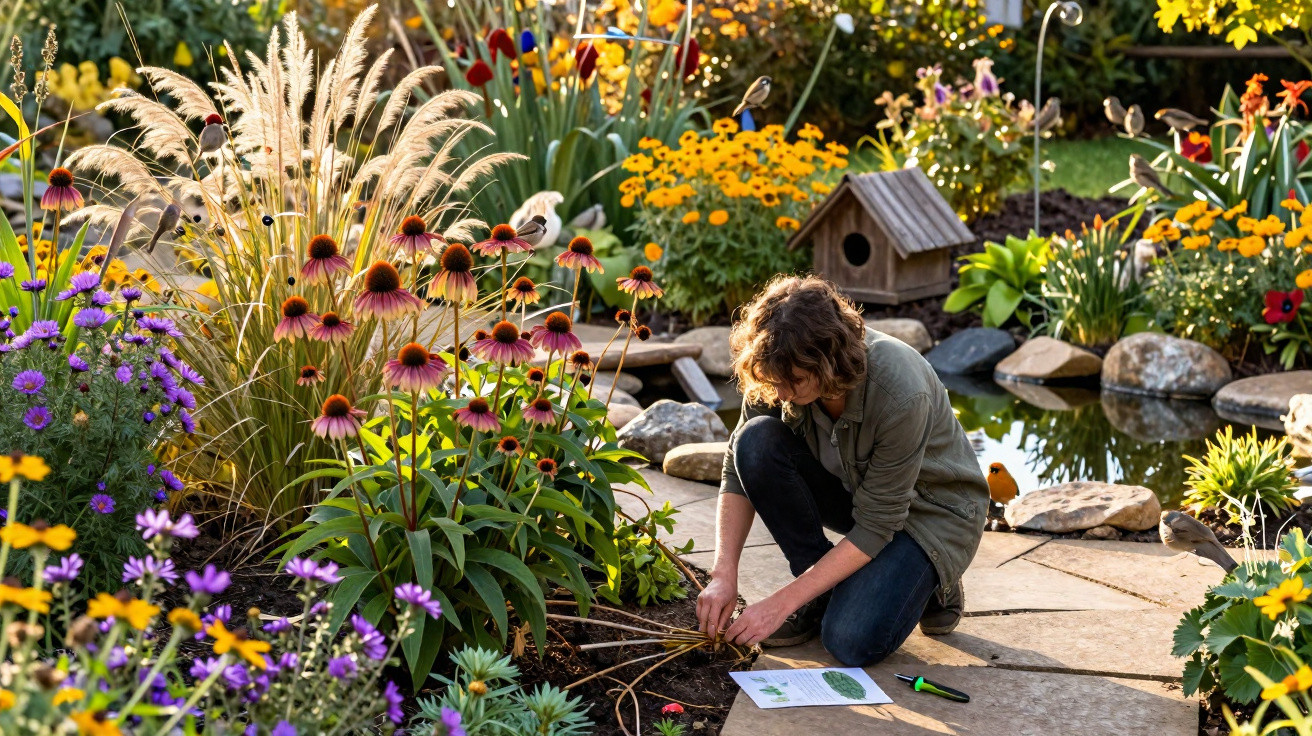
Many amateur gardeners reach for the secateurs almost automatically in autumn, clearing everything away with ruthless efficiency. Beds are left smooth, stems are cut short and not a single leaf remains. Yet this idea of tidiness deprives wildlife of food and shelter precisely when it needs both most. Choose the right perennials – and take a more relaxed approach to autumn – and your garden can become a lively refuge.
Why perennials make such a difference for wildlife
Perennials are far more than decorative planting. For months, they provide nectar, pollen, seeds and sheltered spaces. A garden does not stop being useful in September simply because we prefer it to look neat.
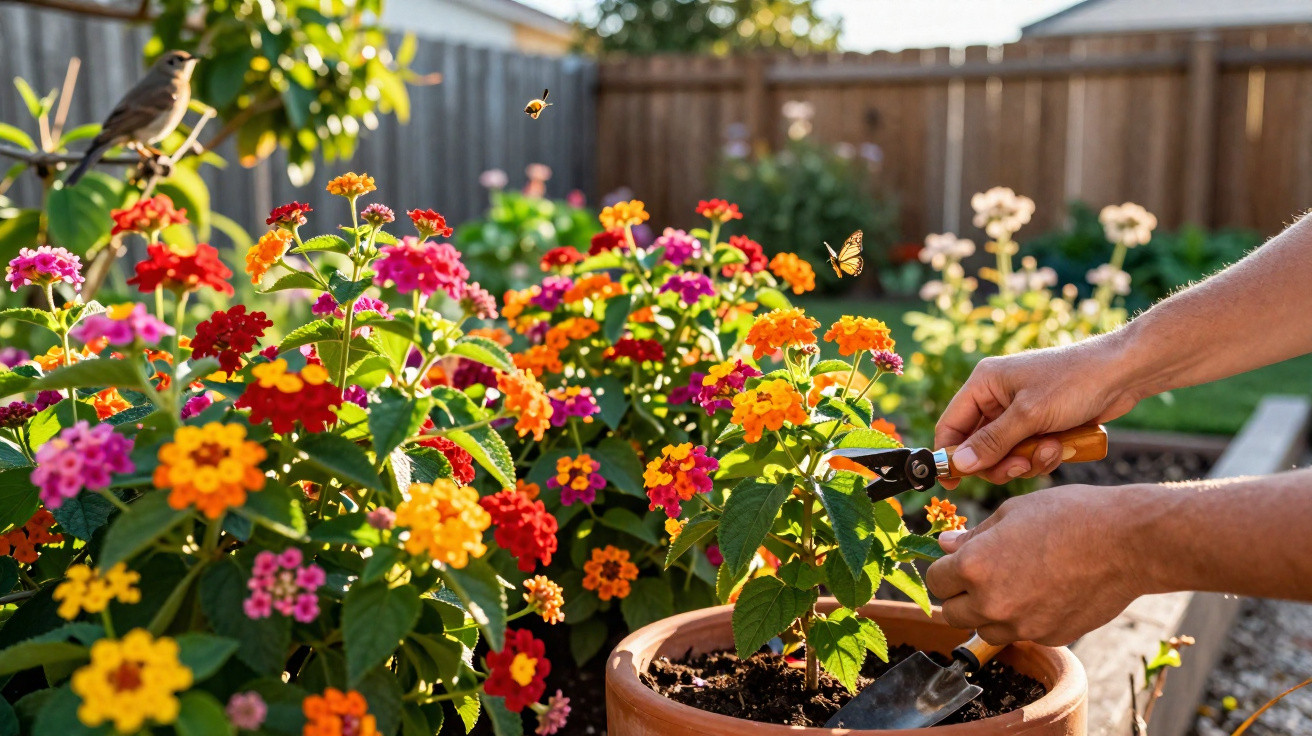
Many classic summer perennials produce striking seedheads once flowering has finished. Left in place, these become a natural buffet for finches, tits and sparrows. In late autumn and winter, they still offer food when fields and hedgerows have very little left to provide.
“Anyone who leaves the seedheads of Echinacea, Rudbeckia or oxeye daisies standing feeds wild birds through the leanest season – without any bird feeder.”
Food is not the only consideration: cover matters too. Tall dry stems, piles of leaves and dense clumps offer protection to insects, spiders, beetles and amphibians. Hedgehogs also like to overwinter in these undisturbed corners. At the same time, dry stems protect the crowns of many perennials from hard frost and waterlogging.
The autumn mistake that turns your garden into a wilderness desert
The familiar error is cutting everything down close to the ground in October or November, then removing every last leaf. The garden may look immaculate, but for wildlife it has been stripped bare.
“Anyone who cuts back every perennial drastically in autumn takes away two essential things from wildlife: winter food and safe shelter.”
The result is fewer birds in winter, scarcely any insects in spring and noticeably fewer pollinators in summer. Many gardeners then wonder why there are “suddenly” fewer butterflies and bees about – but the cause often lies in the previous year’s tidy-up.
These 15 perennials turn your border into a year-round buffet
Rather than filling every space at random, it pays to work to a clear plan: combine nectar-rich plants, seed producers and a range of plant heights. The aim is to have something flowering or fruiting in the garden from spring until late autumn.
The top 15 perennials for birds, insects and hedgehogs
- Purple coneflower (Echinacea purpurea)
- Rudbeckias (Rudbeckia species)
- Purpletop vervain (Verbena bonariensis)
- Lavender (Lavandula species)
- Thyme (Thymus species)
- Wild marjoram / oregano (Origanum vulgare)
- Yarrow (Achillea millefolium)
- Purple loosestrife (Lythrum salicaria)
- Joe-Pye weed (Eupatorium / Eutrochium)
- Oxeye daisy (Leucanthemum vulgare)
- Common foxglove (Digitalis purpurea – poisonous to people)
- Musk mallow (Malva moschata)
- Milkweed / silk plant (Asclepias species)
- Sneezeweed (Helenium autumnale)
- Autumn asters (Symphyotrichum and Aster species)
Each of these perennials serves several purposes: they supply nectar for pollinators, seeds for birds and structure for shelter. Together, they create a closely linked network of food and protection.
| Perennial | Main benefit | Flowering period |
|---|---|---|
| Echinacea & Rudbeckia | Highly popular with bees; seeds for finches & tits | Summer to early autumn |
| Lavender, thyme, oregano | Nectar for solitary bees, fragrant foliage, culinary herbs | Summer |
| Helenium & autumn asters | Late food for bees, butterflies and bumblebees | Late summer to autumn |
| Purple loosestrife, Joe-Pye weed | Nectar for butterflies; structure in damp locations | Summer |
| Oxeye daisy, yarrow, mallow | A variety of insects; a natural meadow appearance | Early summer to summer |
How to plant and combine these perennials
A successful wildlife refuge depends on layers. Tall perennials such as Joe-Pye weed, Verbena bonariensis and autumn asters should form the backdrop. In front, use medium-height plants including sneezeweed, Echinacea and Rudbeckias. At the front of the border, place low-growing herbs such as thyme and oregano, together with yarrow and mallow.
Creating several small island beds rather than one large border spreads the food supply throughout the garden. Birds and insects can then benefit in a front garden or along the edge of a patio as well.
“The more varied the plant heights and flowering times in a border, the denser the network of hiding places and food sources becomes.”
A mix of sunny and partially shaded spots is ideal. Purple loosestrife and Joe-Pye weed thrive in damp ground, while lavender, thyme and oregano cope well on dry banks. Taking this into account will save maintenance and watering later on.
Autumn care: cut selectively rather than clearing everything away
November is a good time for an initial inspection. Not everything needs to stay, but far from everything belongs on the compost heap.
What you really should cut back in autumn
- Perennials with clearly diseased foliage, such as severe powdery mildew
- Plants with soft, rotting remains that encourage fungal disease
- Herbaceous perennials such as phlox or hostas when their foliage is visibly affected
Cut these plants back to around 10 centimetres above ground level. This removes sources of disease without stripping away the entire habitat.
What should definitely remain standing through winter
Leave intact, dry flower stems of Echinacea, Rudbeckias, sneezeweed, asters and oxeye daisies in place until late winter. The same applies to the stems of many herbs. They may still hold seeds and provide hollow spaces for insects.
“The golden rule is this: anything still standing firmly and carrying seed stays. Only visibly diseased or rotten material should be removed.”
You can deliberately leave fallen leaves around perennial clumps, especially in quiet corners. They form snug nests for hedgehogs, toads and countless insects.
Late-winter clear-up: the right time for cutting back
The main cutback of perennials comes later, roughly between late February and mid-March. By then, the harshest frosts have usually passed and the first fresh shoots are appearing at the base.
At this point, cut dry stems back to approximately 10 centimetres. Chop the material and leave it directly around the base of the perennials as a natural mulch layer.
“Mulch made from your own perennial debris improves the soil, retains moisture and once again provides shelter for soil-dwelling creatures.”
After the first more severe frost, a thin layer of shredded leaves or straw, around five centimetres deep, is worthwhile. This layer protects the plant crown without sealing the soil completely. Earthworms, beetles and spiders can continue moving about undisturbed.
How your garden benefits from organised “messiness”
A deliberately slightly “untidy” garden visibly changes the life within it. There are more insects in spring, more birds feeding from perennial seedheads and often even a hedgehog snuffling through the beds in the evening. For many people, such encounters have more impact than any wildlife documentary.
Maintenance also becomes less demanding. When you do not cut everything short in autumn, the workload is spread across the year. Perennial remains feed nutrients back into the soil, meaning that you need less fertiliser.
What terms such as “melliferous” and “biodiversity” mean in everyday gardening
The term “melliferous” describes plants that strongly attract bees and other pollinators because they provide plentiful nectar and pollen. These include herbs such as thyme, oregano and lavender, as well as asters, coneflowers and sneezeweed.
“Biodiversity” can sound abstract, but it is very tangible in a garden: the more plant species there are, with different flowering periods and growth habits, the more animal species can establish themselves. With just 15 carefully chosen perennials, you can already see considerably more birds, solitary bees and butterflies than in a lawn with two box balls.
A possible scenario: from standard border to wildlife oasis in three years
Picture a typical border in a new-build estate: a cherry laurel, some lawn and a few summer flowers from a discount shop. In the first year, plant three to five of the perennials listed above – perhaps Echinacea, lavender, autumn asters and thyme. Stop cutting everything down neatly in autumn.
In the second year, add Rudbeckias, yarrow and sneezeweed, perhaps with an island of purple loosestrife beside the water butt. By the third year, you will have a fully developed perennial border that flowers from April to October and carries seedheads throughout winter. Without expensive specialist equipment, simply by changing your autumn habits, a small and richly diverse oasis can emerge.
If you also avoid toxic pesticides, the effect becomes even stronger. Beneficial creatures such as ladybirds, parasitic wasps and ground beetles will then control many pests themselves. Perennials that are well rooted in the soil and support healthy soil life generally cope far better with periods of heat and drought than a sterile lawn.

Comments
No comments yet. Be the first to comment!
Leave a Comment