
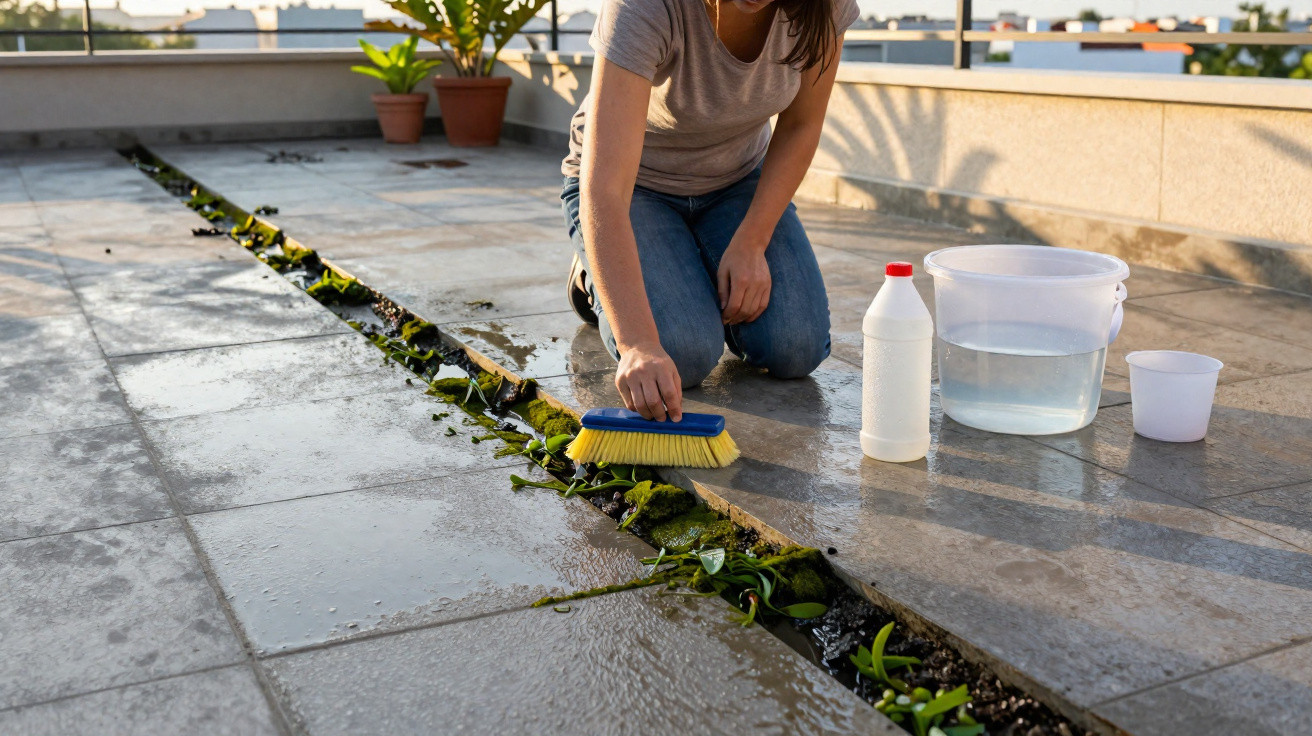
Many homeowners will recognise the scene: rather than a welcoming lounge area, the patio is covered in a slippery layer of moss and algae. The first thought is often expensive cleaning products, a pressure washer or hours of scrubbing. Yet in many cases, a simple kitchen bottle costing only a few pence can be enough.
Why the patio suddenly becomes hazardous after winter
Rain, limited sunlight, damp leaves and pooled water create exactly the conditions moss and algae thrive on during the colder months. They establish themselves in joints, on rough surfaces and between paving slabs.
The result is not merely a green patio but a deceptively slippery one. Older people, children and visitors wearing unsuitable footwear can easily lose their footing. There is also the visual shock once winter has passed: the patio looks uncared for, almost neglected.
Damp winter months can quietly turn many patios into a slippery danger zone – dealing with it early saves both effort and backache.
Waiting for weeks in the hope that “the sun will sort it out” only makes matters worse. Moss forms thicker cushions, while dark marks become embedded in porous surfaces. Early spring is the best time for a thorough clean, when temperatures are rising but the patio is still damp.
The 30p kitchen ingredient: what ordinary white vinegar can do
Rather than using specialist cleaners from the DIY shop, a British consumer writer has relied for years on an unexpectedly straightforward product: standard household white vinegar, meaning clear alcohol-based vinegar. A bottle costs around 30p in UK supermarkets.
The principle is chemically simple. Vinegar contains acetic acid, which attacks the thin nutrient layer supporting moss and algae. This weakens the growth, loosens it from the surface and makes it far easier to brush away or rinse off.
For an average-sized patio, half a bottle will usually suffice, although this depends heavily on both the size of the area and how dirty it is. While the mixture does its work, you can have a coffee indoors – vigorous scrubbing is often unnecessary.
The one-hour patio cleaning routine for concrete, tiles and paving
This method can be used on many patios, particularly those with:
- concrete slabs and exposed aggregate concrete
- outdoor ceramic and porcelain tiles
- concrete block paving
- rough paths with joints and light moss growth
The process is intentionally uncomplicated, so it can be completed on a free morning or after work:
- Sweep the patio thoroughly, removing leaves, soil, small stones and loose debris.
- Prepare the mixture by adding 1 part clear household vinegar and 1 part warm water to a bucket.
- Apply the solution with a watering can, pump sprayer or directly using a stiff brush.
- Leave it on the surface for around 60 minutes, without rinsing it off in the meantime.
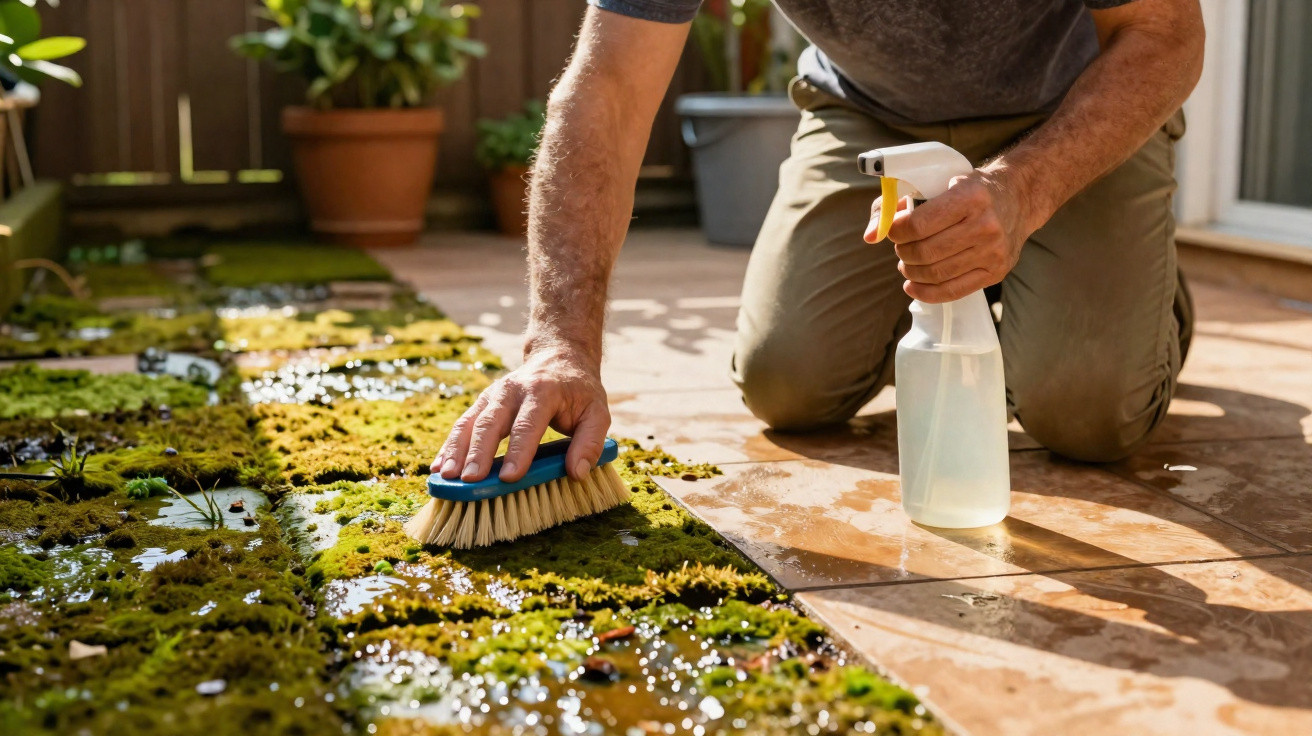
- Brush lightly over affected patches with a yard brush or scrubbing brush.
- Rinse everything thoroughly with clean water from a garden hose or bucket.
The key point is that the solution does most of the work while it is left to act – the brush is there to assist, not to do the heavy work.
Choosing an overcast day has an advantage: the mixture will not dry out too quickly and has more time to work. In strong sunshine, heavily affected areas may need a second application if the surface dries too rapidly.
Materials that should not be treated with vinegar
Despite its benefits, this approach is not suitable for every patio. Vinegar is still an acidic product, and it reacts with certain stones and finishes. Check the material before carrying out the first large-scale treatment.
As a general rule, the more limestone a stone contains, the greater the risk. Sensitive materials include, for example:
- untreated marble
- travertine and other limestone-based stones
- some engineered stone products with a high lime content
- decking made from untreated or only lightly oiled wood
On these surfaces, vinegar can cause dull patches, efflorescence or rough areas. For greater peace of mind, test a heavily diluted solution in an inconspicuous corner and wait for a day before proceeding.
Plants close to the patio should also be protected. Highly concentrated vinegar can damage leaves and young shoots. Cover them with sheeting, or apply the solution carefully to the ground only and do not allow it to run into flowerbeds.
Moss, algae and weeds: what the mixture can remove
The vinegar-and-water mixture does more than work on the surface. Small wild plants often grow in the joints between slabs or paving blocks and reappear in spring. The acid also weakens these plants and turns their leaves brown.
Anyone wishing to treat individual joints particularly thoroughly can direct the mixture into the gaps with a watering can. Once the waiting time has passed, the dried remains can usually be loosened with a joint scraper or a strong jet of water.
One side effect of the vinegar trick is that many small wild plants between the slabs disappear at the same time, without having to pull out every single stem.
Although this treatment is not a long-term answer for plants with very deep roots, it weakens them considerably. Combined with regular sweeping, it helps the patio stay clean for longer.
How often patio cleaning is worthwhile – and when it is not
For most households, one thorough vinegar clean of the patio each year is enough. Late spring is the ideal time, once the wettest weeks have ended and outdoor temperatures are reliably above freezing.
A second treatment in late summer can help in very shaded locations or on patios directly beneath trees. The deciding factor is whether the surface has become visibly discoloured again or feels slippery. Regular sweeping and prompt leaf removal significantly reduce moss growth.
In strictly protected settings, such as listed natural stone or high-end designer surfaces, it can make sense to consult a specialist company. Some manufacturers specifically exclude contact with acids in their care instructions.
Alternative methods: when pressure washers and specialist products are useful
Useful as vinegar can be, it is not a replacement for every other cleaning method. A pressure washer may be needed for thick moss cushions or stubborn algae film, although it has risks of its own.
Excessive pressure can remove the top layer of concrete or natural stone, leaving the surface rougher and more vulnerable to future dirt over time. Anyone using this type of equipment should therefore start at a moderate setting and try it first on a test area.
Chemical patio cleaners from DIY shops often use more powerful active ingredients. While they generally remove deposits more quickly, they can also put greater strain on wastewater systems and the environment. Households with young children or pets should check warning labels and dosage guidance carefully.
Practical tips to reduce green growth next season
Anyone who does not want to start from scratch every spring can protect their patio with a few simple habits:
- Remove leaves and fallen petals promptly, before they decompose and create a nutrient-rich base.
- Move plant pots and containers occasionally so that permanently damp spots do not develop beneath them.
- Check gentle slopes, as standing puddles encourage algae growth.
- Sweep roughly once a month, including in winter when the weather allows.
Knowing the vinegar method gives you a quick, low-cost option for spring. When used sensibly, it is kinder to your budget and your energy levels, and often to the environment too – especially compared with harsh chemicals or unnecessarily heavy water use from powerful machinery.

Comments
No comments yet. Be the first to comment!
Leave a Comment