
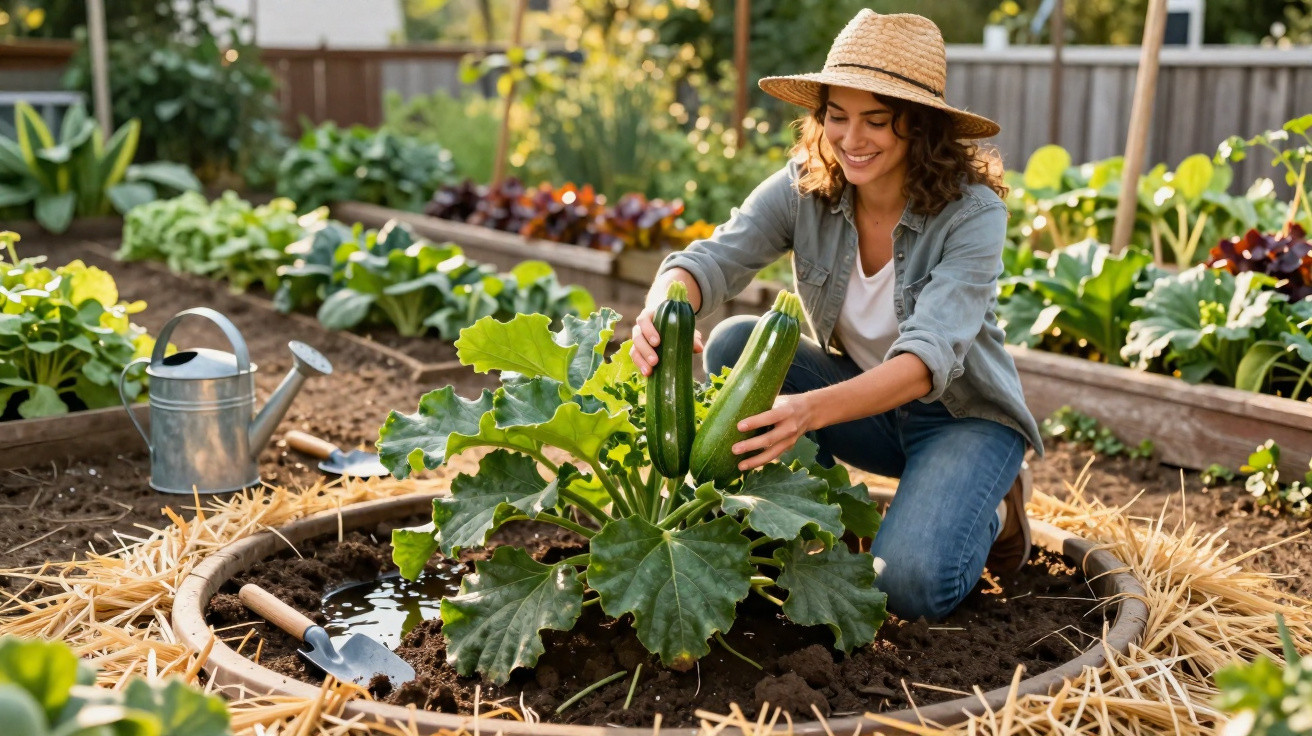
With a straightforward yet well-planned watering technique, you can substantially increase your harvest. Rather than ‘washing over’ the plants each time, direct the water so it reaches deep into the root zone and remains available there for longer. Once you understand the principle, each plant can produce three to five kilograms of courgettes in your own garden.
Why courgettes in the garden often fail to meet expectations
Courgettes are often described as a ‘thank-you vegetable’: fast-growing, undemanding and perfect for beginners. Yet the reality is often different. Many gardeners report:
- small, stunted fruits
- yellow leaves and rotting stems
- plants that suddenly collapse or scarcely produce new flowers
The most common cause is not the seed, but the watering can. Courgettes thrive on warmth, nutrient-rich soil and, above all, a reliable water supply. Water them incorrectly and the plants become stressed - and stress reduces yields.
“Courgettes need plenty of water, but they want it slowly, deeply and regularly - not frantically and superficially from above.”
The ideal start: raising courgettes and planting them correctly
Starting courgettes indoors gives you an early advantage. From early to mid-April, sow the seeds in small pots filled with seed compost. Keep the young plants somewhere warm until there is no longer a risk of late frosts outdoors and the soil has reached at least 12 to 15 degrees.
When planting out, remember that every courgette needs room. Allow roughly one metre between neighbouring plants to stop their leaves shading one another and to keep air moving around them. This reduces the risk of fungal disease.
The watering trap immediately after planting
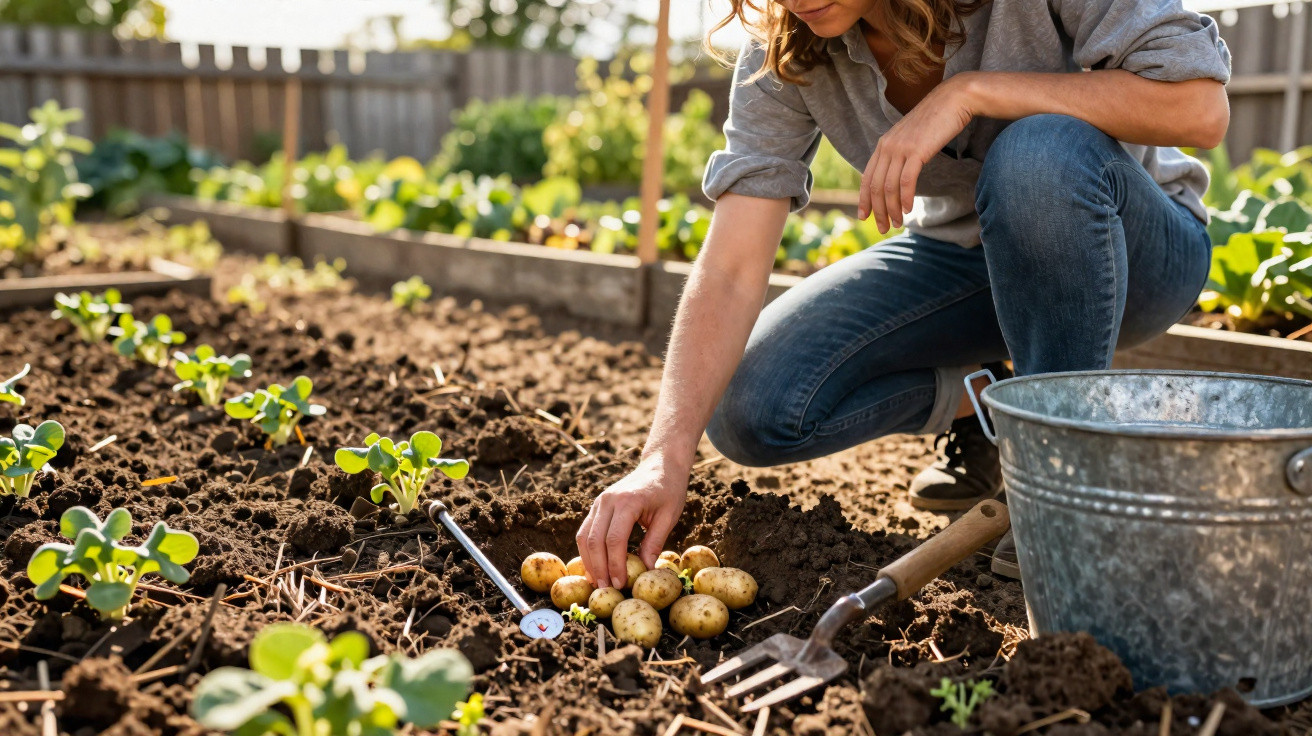
Newly planted seedlings can look fragile. In response, many gardeners give them frequent, small amounts of water directly on the soil surface. This quickly causes surface compaction: the soil develops a hard crust, water runs away sideways or evaporates, and the roots stay shallow and weak.
To enjoy vigorous plants for longer, deliberately guide the water deeper into the ground. All you need is a small spade and a few extra minutes of work.
The key courgette watering method: watering in a planting basin
The essential trick is to create a small water reservoir around each courgette. This simple bit of preparation dramatically changes how the water behaves.
How to create an effective watering basin
- Dig the planting hole slightly wider than the root ball.
- Position the courgette so it sits very slightly raised rather than at the lowest point.
- Using your hands or a spade, make a circular ridge around the plant, about 5 to 10 centimetres high.
- This ridge creates a basin that holds the watering water.
When you water, the basin fills like a small bowl. Instead of running off uncontrollably, the water seeps slowly and evenly around the root area. The soil can absorb it gradually without becoming waterlogged and muddy.
“The watering basin works like a water store: once filled, it supplies the roots for hours rather than just minutes.”
How much water courgettes really need
Mature courgette plants are extremely thirsty. As a general guide:
- water 2 to 3 times a week
- allow around one 5-litre watering-can bucket per plant
- water less often but thoroughly, rather than giving a little water all the time
During hot, windy spells, their requirements may increase. Checking the soil is what matters: if the top 3 to 4 centimetres are dry but the soil beneath still feels slightly damp, the timing is right. Anyone judging only by the surface can easily water too much or too little.
Why slow watering increases the harvest
If you water hurriedly with a strong stream, it pounds the ground, damages the soil structure and compacts the surface. The consequences include:
- roots remaining in the upper layer, which dries out quickly
- standing water directly around the stem, encouraging rot
- greater susceptibility to fungal diseases
With a basin and a gentle stream of water, moisture works its way down into the soil. The roots follow it deeper, spread more widely, access more nutrients and cope far better with dry days.
“Strong roots mean more flowers, more fruits and, ideally, up to five kilograms of courgettes per plant per season.”
Mulching intensifies the effect
Mulching courgette beds with a layer of grass clippings, straw or leaves further improves the results of this watering method. The mulch prevents a soil crust from forming and protects soil life from heat.
It also reduces the amount of watering needed: beneath a loose mulch layer, moisture remains in the soil for longer. Suitable materials include:
- dried lawn clippings, applied in a thin layer to prevent rotting
- straw or chopped hay
- shredded leaves from the previous year
Harvest correctly to keep the plant productive
Courgettes are continuous croppers. By picking ripe fruits regularly, you encourage the plant to produce new flowers again and again. If fruits remain on the plant for too long and grow huge, the courgette loses momentum - it ‘believes’ it has completed its job.
The right time to harvest
Good culinary courgettes have firm, smooth skin and come away from the stem easily. A useful guide is:
- around 15 to 25 centimetres long
- still tender and lightly glossy
- skin with no cracks or soft patches
Harvesting too early gives you small fruits but reduces both flavour and keeping quality. Leave them too late and courgettes become watery, tough or spongy, and are more difficult to store.
Use a sharp knife to remove them. Cut off the fruit with a small piece of stem, without twisting or tearing the plant. This keeps the main shoot healthy.
Mistakes that quietly reduce yields
Many courgette plants struggle for the same recurring reasons. Common issues include:
- Watering over the leaves: Wet foliage encourages fungal infection, especially in warm, humid weather.
- Constant moisture around the stem: If the basin overflows directly against the stem, the tissue can quickly start to rot.
- A poor location: Courgettes need at least six hours of sunshine each day, preferably more.
- Planting too closely: Closely packed plants dry more slowly, allowing diseases to spread faster.
Keep these points in mind and water consistently into the planting basin, and you will often harvest noticeably more in the first year than in the previous season.
How the method benefits the whole vegetable garden
The planting-basin technique is not only suitable for courgettes. Tomatoes, peppers, squash and cucumbers also benefit from targeted, deep watering. The effort is particularly worthwhile in sunny, exposed and windy locations.
There is also a practical side benefit: water goes exactly where it is needed. Paths, bed edges and unused areas stay drier, which reduces weed growth and lowers water use.
“Anyone who lays out their beds systematically and waters directly into basins saves water, time and, ultimately, money.”
Risks and limitations of the method
Like every technique, this one has its limits. In very heavy clay soils, water may remain in the basin for longer. In that case, mixing compost and sand into the planting area can improve drainage.
During wet summers, gardeners should keep an eye on the basins. If the rings repeatedly fill with rainwater, it may make sense to lower the ridge slightly so that the ground does not become waterlogged.
Practical additions for even higher yields
Alongside watering, three other factors have a noticeable effect on yields: nutrients, pollination and variety selection. Courgettes are hungry plants. Compost or well-rotted manure in the planting hole provides the initial boost, while an additional organic feed in early summer supplies the energy for the second wave of cropping.
If you see plenty of flowers but few fruits, pay attention to insects. A flower bed planted nearby attracts pollinators to handle flower-to-flower traffic. Without them, many flowers remain unfertilised and drop off.
Combining different varieties makes things more interesting: yellow, striped or round courgettes add variety to the plate, but all benefit from the same watering method. In this way, a simple watering-can trick becomes a route to consistently higher yields throughout the vegetable garden.


Comments
No comments yet. Be the first to comment!
Leave a Comment