
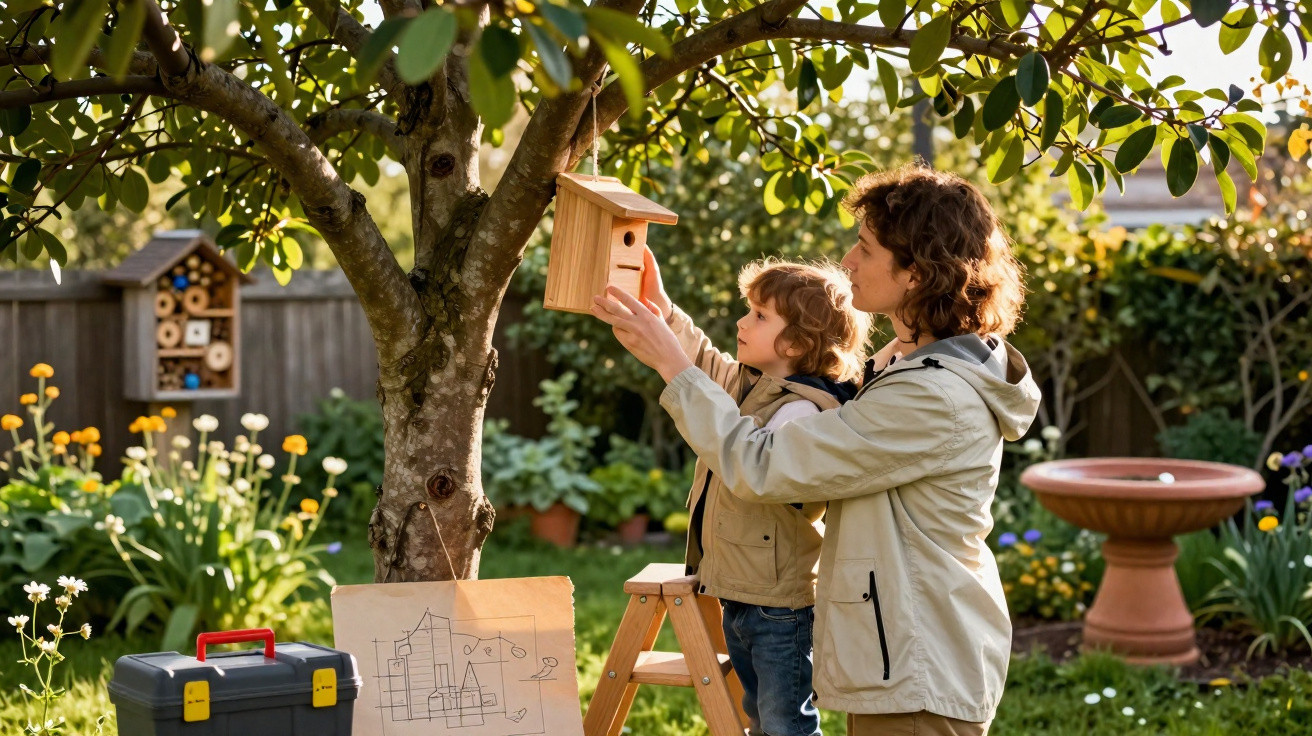
A wooden box in the garden is often all it takes: suddenly, you can see just how much life exists right on your doorstep.
Many people only notice how quiet things have become when the morning birdsong disappears. A simple nest box cannot change everything, but it does something crucial: it brings birds back into our immediate surroundings and reveals the true state of wildlife in our neighbourhood.
Why nest boxes are becoming so important now
Bird populations are quietly declining in many areas. There are fewer sparrows to hear, and tits or robins are seen less often. There are plenty of reasons: more densely built-up towns and cities, smooth building façades without crevices, the loss of mature trees, and tidy, “well-kept” gardens without dead wood or hedges.
A nest box is no substitute for an old tree, but it can fill a gap. It offers protection from rain, wind and predators, while also indicating whether birds nearby can still find enough food to breed at all.
“Anyone who watches birds at a nest box regularly gains a very direct sense of how healthy the local environment still is.”
When great tits or nuthatches suddenly start building a nest in your own box in spring, it is more than a pleasant sight. It is a sign that insects, seeds and sheltered spaces are still available – in short, that the habitat retains a certain quality.
More than decoration: a nest box as a real lifeline
Many people initially regard nest boxes as attractive garden ornaments. In reality, they serve a very different purpose: providing practical, secure nesting cavities. Natural tree holes have almost vanished from cities in particular. Yet old fruit trees and barns are disappearing in villages too.
In spring, birds urgently need:
- a dry, sheltered place for their nest;
- protection from cats and martens;
- an area with enough food close to the nest.
A well-designed nest box gives them precisely this. It cannot replace an entire habitat, but it helps some of the species losing out through these changes, including cavity nesters such as tits, sparrows and starlings.
Choosing the right nest box: a practical approach
There is no single “perfect” model, as every bird species has its own preferences. For beginners, a traditional box for tits is rarely a poor choice. A few basic principles nearly always apply:
- Use only untreated, unpainted wood.
- Give the roof a slight slope so rainwater can run off.
- Keep the entrance hole small enough to prevent larger predators from entering.
- Position the box around two to four metres above the ground.
- Choose a spot that is not exposed to strong afternoon sun.
One frequently overlooked detail is the direction of the entrance hole: it should not face the prevailing rain direction permanently. Otherwise, the interior can quickly become damp and the brood may become chilled.
“A well-made box, hung correctly, can easily last ten years – and be occupied again and again during that time.”
What you can observe around a nest box
Keeping a nest box in view suddenly reveals small dramas and successes that would otherwise remain unseen. One bird arrives carrying stems in its beak, checks the entrance several times and flies away again. Later its partner appears; they inspect, squabble and decide.
These scenes can tell you a great deal:
- Which species still visit the garden at all?
- At what time of year do they begin nest-building?
- Do they return over several years, or move elsewhere?
Many environmental projects now make deliberate use of such observations. Schools and local communities ask children and adults to record sightings over time in order to spot longer-term trends: is it becoming quieter, more colourful, richer in species – or not?
Building a nest box with children: a project that stays with them
Making nest boxes is an excellent shared activity for families, school classes or youth groups. Along the way, children learn to handle tools, understand measurements and, above all, develop patience.
For a basic model, you only need:
- a wooden board around 1.5 cm thick;
- a saw;
- a drill;
- six to eight screws;
- a hook or another fixing system;
- sandpaper to smooth the edges.
Children can help with sanding, holding the pieces together and decorating carefully. The front containing the entrance hole should not be painted or varnished too heavily: the wood needs to breathe, and toxic paints have no place there.
“It is often the moment when a bird moves into the homemade box for the first time that has a lasting effect on children.”
Anyone who has had this experience will generally become more mindful of animals and plants in everyday life, whether in the garden, the park or on the walk to school.
Common mistakes that can drive birds away
Nest boxes can also cause harm when they are used incorrectly. Several pitfalls occur repeatedly:
- Boxes are hung too low, making them easy prey for cats or martens.
- Direct sunshine overheats the interior, causing young birds to overheat.
- The box is placed directly beside a feeding station, where constant activity creates stress.
Cleaning can also go wrong. The right time is late autumn or winter, once the breeding season has definitely ended. Wearing gloves, simply remove the old nest and shake out any loose dirt. Chemical cleaners are best left in the cupboard, as residues could harm the next occupants.
Where to hang the nest box for the best position
A quiet area that is not in constant use is ideal: a large tree, a house gable, a shed or a sturdy post. Crucially, the box should still be reachable with a ladder so that you can clean it later.
In everyday terms, keep it away from climbing plants and potential perches for cats. Even an extra half-metre of height, or a trunk without intervening branches, can determine the survival of an entire brood.
How to tell whether the nest box has been accepted
Whether a box is “working” often becomes clear quite quickly. Typical signs include:
- repeated visits by the same birds;
- brief “test-sitting” at the entrance hole;
- birds carrying stems, moss or feathers inside;
- from a certain point onwards, noticeably cautious, frantic flying back and forth.
At this stage, restraint is worthwhile. Standing directly beneath the box, speaking loudly on the phone or taking close-up photographs can unsettle the parent birds. A viewing point some distance away is better, perhaps with a simple pair of binoculars.
How you can become a quiet guardian of biodiversity
A nest box in the garden or on a balcony changes the way you see the space around you. Suddenly, it is no longer only about lawns and furniture, but about habitats. You pay more attention to non-toxic plants, are more likely to leave a corner for wild plants, or avoid leaving lights on throughout the night.
“Once people start following birds at a nest box, they almost automatically begin making their own surroundings more bird-friendly.”
It can help to keep a small notebook: when do particular species appear? How many young birds leave the box? Does the location remain appealing over several years, or is it avoided? Over time, these simple notes create a surprisingly clear picture.
Further ideas for more life in the garden
Nest boxes are a good starting point, but their impact becomes much greater when several measures work together. These might include:
- planting native berry-bearing shrubs;
- leaving a corner of leaves and dead wood as a refuge for insects;
- avoiding chemical pesticides;
- creating small water sources and cleaning them regularly;
- limiting night-time lighting or controlling it with motion sensors.
Each of these actions increases the chance that the nest box will not merely serve as an emergency measure, but become part of a small, stable mini-habitat.
In densely built-up areas especially, even a balcony with a box, a bowl of water and a few insect-friendly plants can become a valuable stepping stone for birds. Anyone prepared to look, listen and occasionally make a note then takes on an important role: that of a quiet guardian of nature in everyday life.
Comments
No comments yet. Be the first to comment!
Leave a Comment