
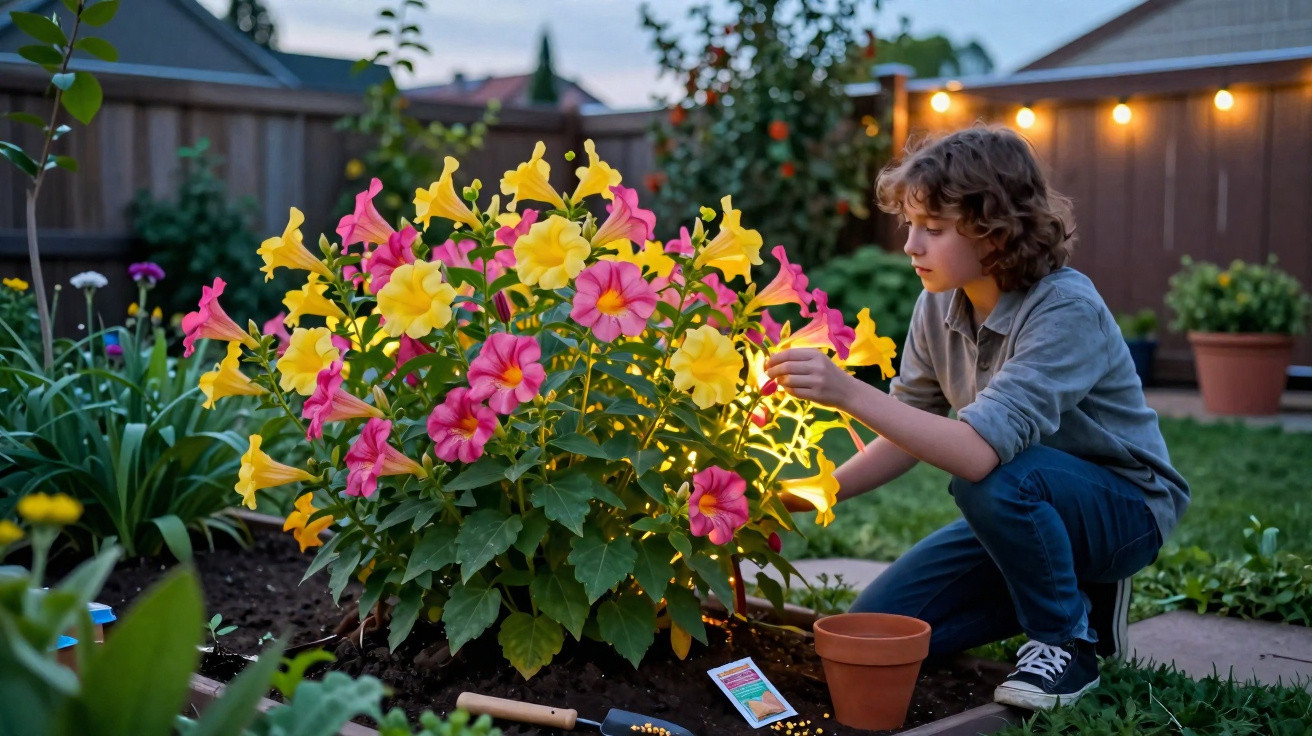
Many keen gardeners will recognise the situation: spring brings plenty of plans, yet the beds remain bare for ages. Perennials often take years to reach their full potential. This is where one plant stands out: it can grow from seed into a lavish cloud of flowers in roughly two months – and begins its display just as the sun goes down.
A star of the night border: what makes the wonder flower so special
The leading role belongs to a plant commonly known here as the wonder flower or four o'clock flower. Its botanical name is Mirabilis jalapa. Native to South America, it nevertheless adapts remarkably well to central European gardens.
This perennial grows into bushy clumps around 40 to 80 centimetres tall. Soft green foliage grows on branching stems. During the day, it can look almost rather unassuming – until its flowers begin to open in the late afternoon.
"The wonder flower blooms chiefly during the evening and at night – ideal for anyone who enjoys their garden after work."
Its trumpet-shaped blooms measure around 3 to 5 centimetres across and come in a wide range of colours:
- pure white
- sunny yellow
- pink and vivid red
- lilac and purple shades
- bicoloured and marbled forms on a single plant
As well as this display of colour, it has a pronounced sweet fragrance that becomes stronger at dusk. Anyone who likes to sit on the patio in the evening, or has a seat beside a flower bed, will soon notice how greatly this plant changes the atmosphere.
Fast growth: from seed to a cloud of flowers in around 60 days
The wonder flower's greatest advantage is its speed. While traditional perennials often need a whole year to establish themselves, Mirabilis jalapa gets going at record pace. Given a spring start and favourable conditions, it can flower abundantly after only about 60 days.
The seeds resemble small black nuts. They germinate quickly when a few simple guidelines are followed:
- Soak the seeds overnight in lukewarm water to soften their hard outer coating.
- Sow them about 1.5 centimetres deep in loose, free-draining soil.
- Keep the growing medium lightly moist and aim for temperatures of around 18 to 20°C.
In these conditions, the first seedlings generally emerge within 7 to 10 days. Growth then continues rapidly. In mild areas, the plant flowers continuously from late spring until the first hard frosts, without lengthy breaks.
The right time in spring: laying the foundations
For an earlier start, wonder flowers can be raised indoors. The best time is roughly 6 to 8 weeks before the expected end of night frosts. Alternatively, sow the seeds directly in the bed once the soil has warmed noticeably.
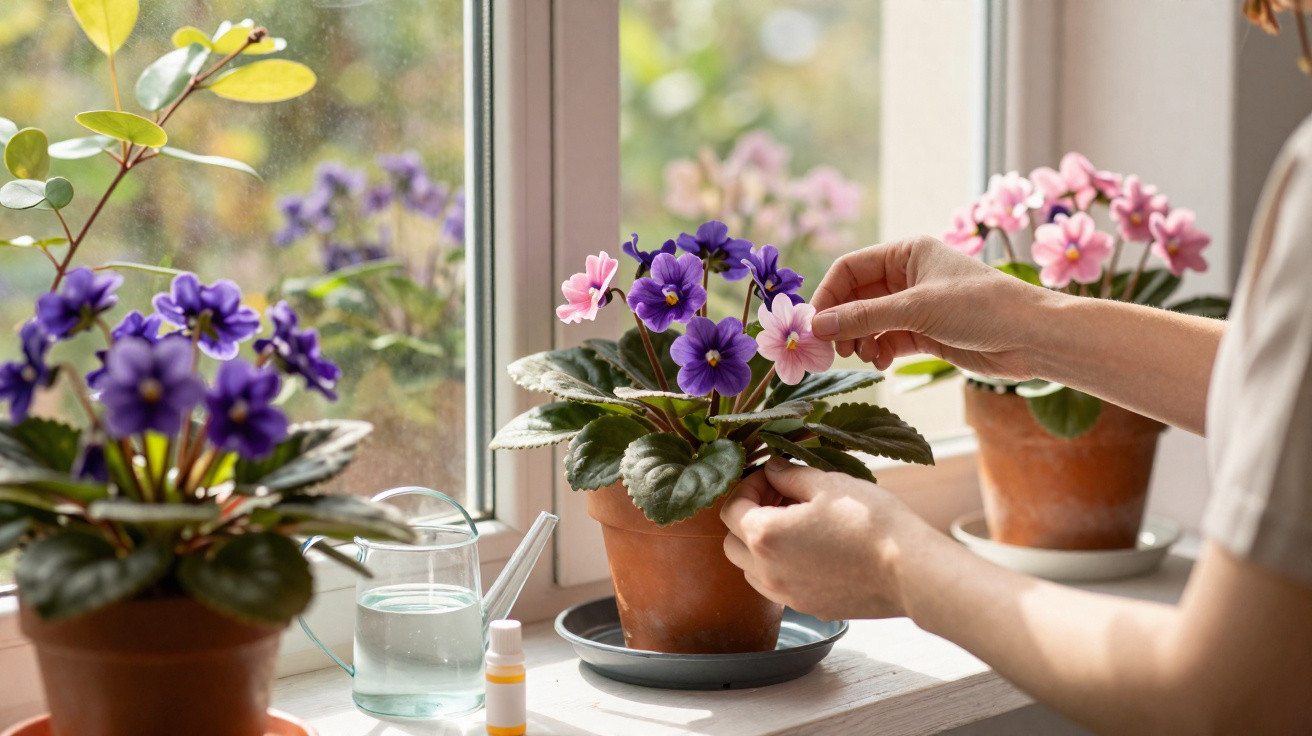
Raising plants on the windowsill
Simple pots or small seed trays are sufficient for indoor propagation. What matters is a loose, low-nutrient substrate that drains excess water well. The plant does not tolerate waterlogging at all.
A practical method:
- Fill pots with seed compost and press it down lightly.
- Place one seed in each pot, around 1.5 centimetres deep.
- Moisten the compost without "drowning" it.
- Position the pots somewhere bright, but away from intense midday sun.
Once the young plants have developed strong roots and there is no longer a risk of frost outdoors, they can be moved into the garden.
Sowing directly in a bed or container
In the garden, the wonder flower primarily needs light. At least six hours of direct sunshine each day will encourage plentiful flowering. The soil can be nutrient-rich, but it must drain water effectively. For heavy clay soils, mix in sand and compost.
For container growing, choose a pot 30 to 40 centimetres deep. A drainage layer of expanded clay pellets or coarse gravel at the bottom prevents wet roots. A blend of garden soil and ordinary potting compost is adequate.
"With around 2.5 centimetres of watering per week, the wonder flower manages surprisingly well in summer – a benefit for anyone who does not want to be out constantly with a watering can."
Easy to care for, but vigorous: keeping it under control
In day-to-day gardening, the wonder flower proves robust. It tolerates heat, copes with short dry spells and is rarely troubled by pests. Deer and other wildlife generally leave it alone, making it appealing for rural gardens.
A small amount of intervention will stop the plant spreading too far: regularly remove some of the spent flower heads. This limits self-seeding, especially beside paths and patios.
In mild regions, its rootstock – a tuberous storage organ – remains in the ground and produces new shoots every year. There, the wonder flower behaves like a true perennial. Areas with harsh winters require a little more work.
Overwintering tubers in colder regions
If winter temperatures fall well below freezing, it is worth lifting the tubers:
- Cut back the above-ground growth in autumn.
- Carefully lift the tubers and shake off loose soil.
- Store them somewhere dry and frost-free, such as in a box containing a little sand or loose soil in a cellar.
- Replant them in spring once the ground has dried out and is frost-free.
This effectively turns plants bought once into a long-lasting "gift that keeps giving" for the garden.
Important note: beauty with a downside
Attractive as the wonder flower may be, it has a less widely known characteristic: every part of the plant is considered poisonous if swallowed, especially the tubers. This should be taken into account in gardens with small children or free-roaming pets.
"The plant belongs in areas where children cannot snack unsupervised and dogs do not constantly dig."
For greater peace of mind, plant wonder flowers towards the back of a bed or in taller containers that are not positioned right beside a sandpit.
Where the wonder flower makes the greatest impact
Placed well, this night-flowering plant makes the most of its strengths. It is particularly effective in places used during the evening: beside a seating area, on a patio, balcony or along a garden path.
It also makes interesting combinations with other summer-flowering plants:
- Day-blooming flowers such as calendulas or zinnias provide daytime colour, while the wonder flower takes over for the evening shift.
- Fragrant perennials such as lavender add a more herbal note to its sweet scent.
- Grasses bring movement to the bed, which becomes especially atmospheric at dusk.
Anyone with a west- or south-facing balcony can create an impressive evening setting with just one or two large containers. The flowers usually open when direct sunlight has disappeared – precisely when many people begin to unwind after work.
Why this night-flowering plant is ideal for impatient gardeners
Ultimately, the wonder flower is especially suited to people who want visible results quickly without having to spend constant time kneeling in the border. It fills gaps, forgives minor care mistakes and continues producing fresh buds well into autumn.
For anyone with a newly created garden, a few bare spots to bridge near the patio, or simply a wish for more "evening atmosphere", this plant offers an uncomplicated solution. With just a few considered steps – soaking the seeds, choosing a sunny position and watering moderately – an ordinary border can become a stage for the night within a single season.



Comments
No comments yet. Be the first to comment!
Leave a Comment