
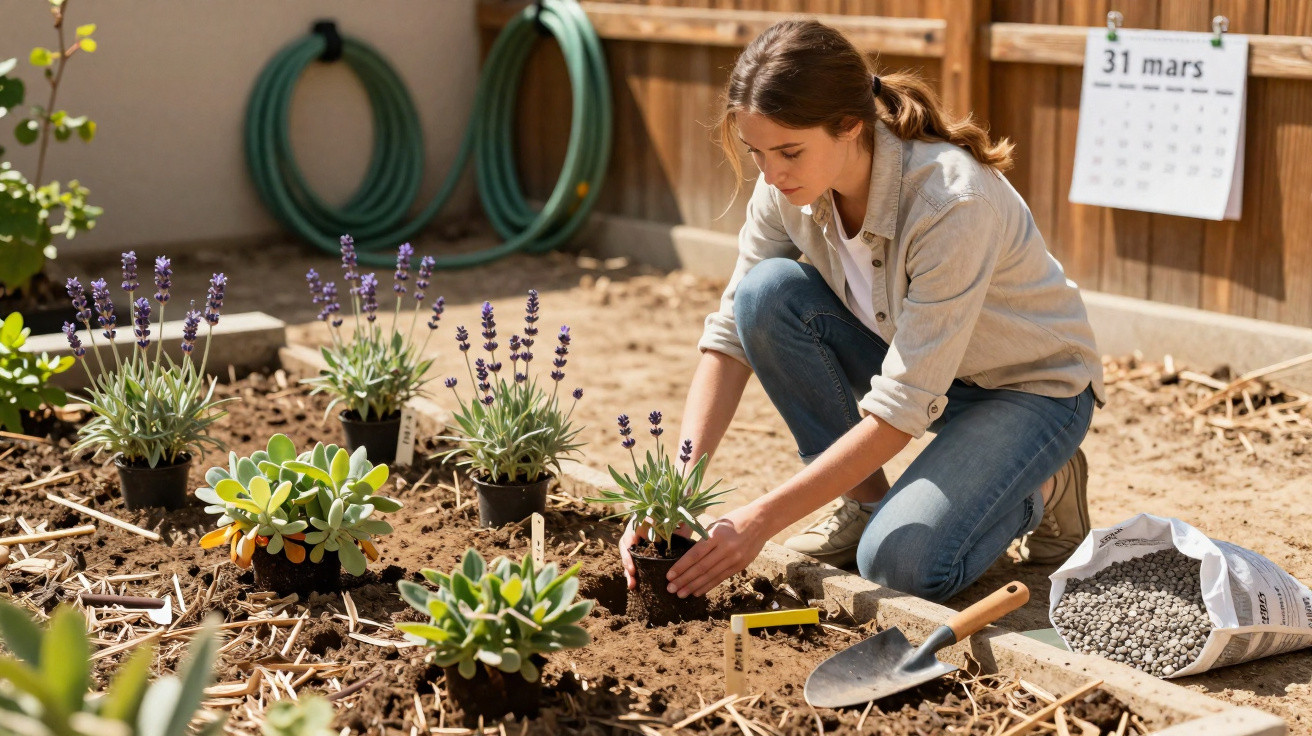
Plant now to save effort and water while creating resilient borders.
The plan only works if you make the calendar work for you. Until the end of March, new perennials benefit from cool soil, time to establish roots and less strain. The aim is a sunny border that thrives on rainfall, without daily watering rounds.
31 March: the deadline for drought-tolerant perennials
By late March, winter dormancy is ending, sap is rising and the soil still retains residual moisture. This window gives roots a head start before the heat arrives. According to the French environmental agency Ademe, planting early measurably reduces water requirements. Anyone who waits until May forces young plants to cope with heat, increasing transplant stress and the need for watering.
“Planting by 31 March takes advantage of cool soil and saves dozens of watering sessions in summer – for biological reasons, not merely visual ones.”
Practical experience supports this. A Gaura planted in May often needs watering every 48 hours during heatwaves. Across the season, this can easily amount to 200 litres more than a March planting. That is equivalent to two full watering cans each week, week after week.
Five perennials that withstand heat and drought
These species remain dependable even in a bone-dry July. They favour sun, wind and a well-drained growing medium.
| Plant | Strength | Height | Position and soil |
|---|---|---|---|
| Perovskia (Russian sage) | Grey foliage limits evaporation; long-lasting blue flowers | 80–120 cm | Full sun; poor, free-draining, lime-tolerant soil |
| Sedum ‘Autumn Joy’ | Succulent leaves store water; late flowers for bees | 40–60 cm | Full sun; sandy to stony, low-nutrient soil |
| Gaura lindheimeri | Taproot reaches deep reserves; moves gracefully all summer | 60–100 cm | Full sun; light, well-drained soil that is not overly rich |
| Echinops ritro (globe thistle) | Virtually indestructible once established; steel-blue spheres | 60–90 cm | Full sun; dry, lime-loving soil |
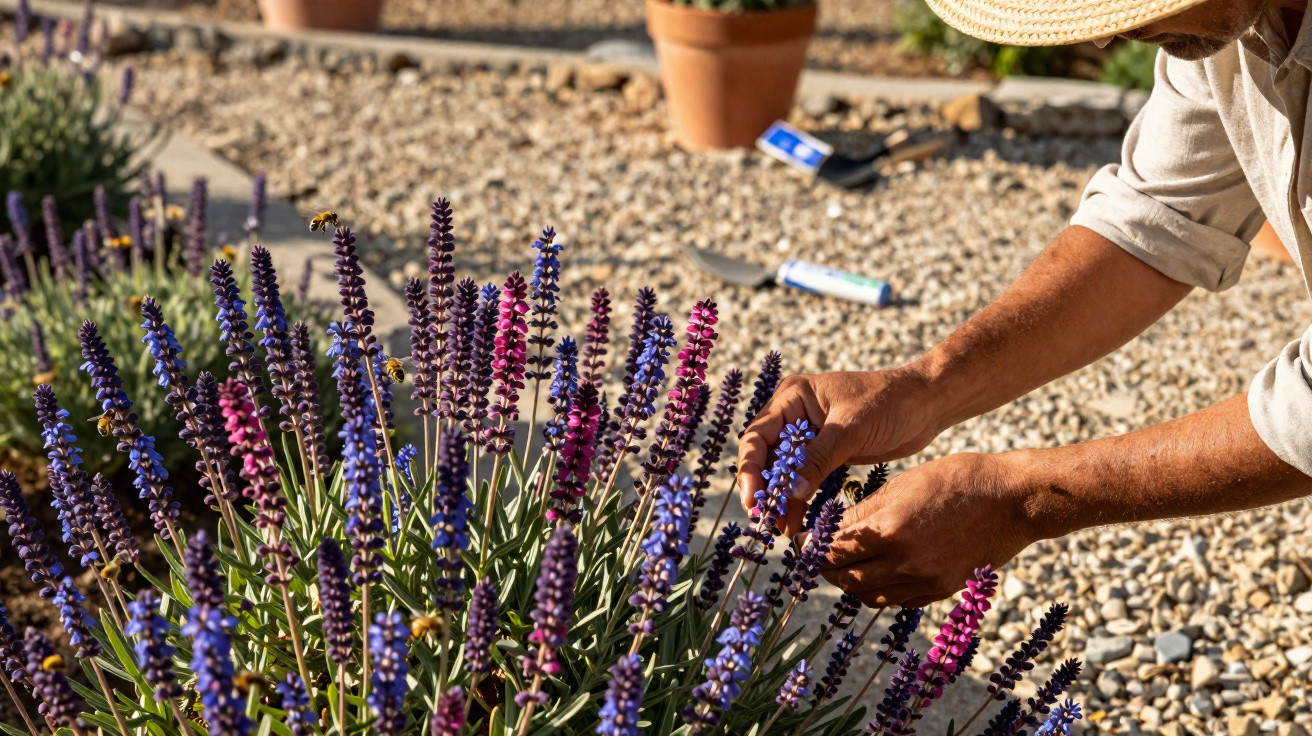
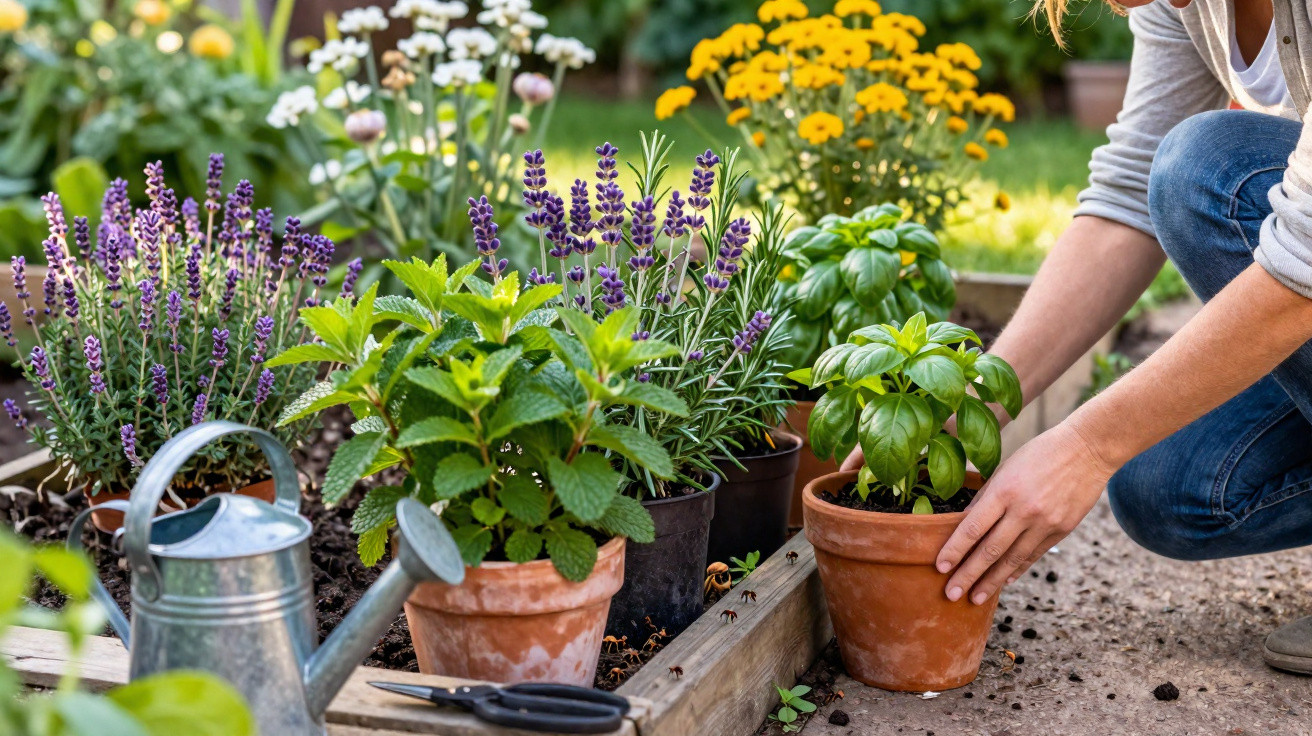
| Lavandula angustifolia (English lavender) | Fragrant and highly attractive to insects; drought-tolerant when water drains away | 40–70 cm | Full sun; stony, poor soil; avoid waterlogging |
Tough cranesbill varieties (Geranium) make suitable companions. They rarely die back completely, cover the ground and tolerate anything from partial shade to full sun. In late winter, remove the dry remnants by hand; they usually come away almost on their own.
How to plant properly in March
Prepare the root ball
- Submerge the potted root ball in water until bubbles stop rising, which takes around 15 minutes.
- Lightly roughen the outer roots so that they grow out into the surrounding soil.
- If possible, puddle the roots: dip them in a thin clay slurry to retain moisture around them at the start.
Planting hole and soil
- Dig a hole three times wider than the pot, loosen its sides and break up any compacted layers.
- Improve heavy soil with around 20 per cent coarse sand or grit.
- Check the planting depth: the crown should remain level with the soil surface, while lavender should sit about one finger-width higher.
Watering and mulching
- Water in thoroughly immediately after planting, using about 10 litres per plant, even if it has rained.
- Apply a 7 cm layer of mineral mulch, such as lava rock or gravel. This reduces evaporation and warms up quickly.
- Avoid bark mulch: it stays wet for too long and uses up nitrogen as it decomposes.
“Golden rule: one single, very deep watering at planting time (about 10 litres) encourages deep roots – small amounts achieve nothing.”
Afterwards, keep the watering can nearby, but only water when the top hand-width of soil is dry and warm. The objective remains depth: water infrequently, but thoroughly.
Missed March? How to save the project in April
Planting can often still succeed in April if you provide more initial support. Choose the earliest possible date, use a full-sun position, incorporate drainage material and keep emergency water available for the first summer. A hand test is useful: if the soil around the root zone feels cool and slightly damp in the morning, wait before watering. If the thermometer reaches 25°C or more in June, give young plants targeted water and briefly shield them from föhn winds with horticultural fleece or a crate.
A simple border plan that needs no hose
Keep the border layout straightforward. Perovskia and globe thistle provide structure at the back. Place Gaura and Sedum in the middle for movement and late-season interest. Lavender creates fragrance and definition along the edge. Geranium fills gaps and covers the soil. Use pale gravel throughout; it reflects sunlight and suppresses weeds.
Common mistakes – and how to avoid them
- Planting too deeply: the crown suffocates and rots, with lavender being especially sensitive.
- Winter waterlogging: break up compacted areas early and watch for soil washouts.
- Applying overly rich fertiliser: these perennials prefer lean ground, otherwise their stems lose stability.
- Overcomplicating the scheme: plant a small number of species in groups, making maintenance easier and reducing water use.
Extra guidance: choosing mineral mulch correctly
Mineral coverings such as lava rock, grit or pale gravel work in two ways: they allow rain to penetrate without drawing capillary moisture into the air, and they keep the soil surface free of moss. A layer of 5–7 cm is enough. Under shrubs, 4 cm works well; around perennials, 7 cm provides better stabilisation for the root area. Dark stones heat up more strongly, while pale ones reflect light and keep the root zone cool for longer.
Drainage check in 60 seconds
Dig a 30 cm-deep hole and fill it with water. If the water disappears within 30–60 minutes, drainage is suitable. If water remains after two hours, mechanically loosen the layer, incorporate coarse sand or create local drainage channels. For lavender, a 5–10 cm-deep layer of gravel beneath the root ball is a worthwhile safety measure against winter wet.
Comments
No comments yet. Be the first to comment!
Leave a Comment