

One hand gripped the fence while the other reached into the thick boughs of the apple tree she had spent all spring pruning. At his feet stood a crate, already half-filled with fruit. Still wearing slippers damp from the kitchen floor, she called out, rather more loudly than intended, “What are you doing?”
He laughed as though the answer were self-evident. “They’re my trees. I planted them before you moved in.”
In the silence afterwards, the apples seemed almost loud as they bumped together. Emma felt foolish for being upset about fruit. But this was not simply about apples: it was about privacy, boundaries and who truly has control over a place called home.
The question remained between them, weightier than the fruit itself: Can he actually do that?
Who legally owns fruit in your rented garden?
When you rent a house with a garden, it can be easy to overlook the fact that the land technically belongs to somebody else. You cut the grass, weed the beds, grow a few strawberries and, gradually, the space begins to feel like your own. You see the seasons turn from the kitchen window and develop small routines around that piece of green space.
That is why a landlord arriving unexpectedly to collect “their” fruit can feel much like somebody entering your sitting room and helping themselves from the fridge. Their legal ownership collides sharply with your feeling of belonging. Both realities exist on the same patch of earth.
That unease can be the first indication that a legal boundary has become unclear - sometimes very unclear.
Consider a familiar UK example. A tenant moves into a property where a mature plum tree is already growing in the garden. Nothing in the tenancy agreement specifically mentions fruit trees. The tenant waters it, shields it from late frosts and waits through the summer. Once the plums ripen, the landlord calls round “to check something” and leaves carrying two bags of fruit.
The tenant then asks a local Facebook group whether this is lawful. Responses pour in: one half calls it “theft”, while the other argues that “the garden is the landlord’s, so the fruit is as well”. Some suggest sharing the crop as a goodwill gesture. Hardly anyone has seen a tenancy agreement that clearly deals with fruit.
Housing advisers nevertheless encounter versions of this situation fairly regularly. The plums are rarely the main issue; it is the sense that someone has intruded upon your safe space. Legally, the garden belongs to the landlord, yet your everyday life and feelings are tied to it as well.
The legal starting point is straightforward: the landlord owns the land and anything permanently rooted in it, including trees and established shrubs. This is the default position. Under strict property law, apples, pears, figs or plums growing there when you moved in will normally belong to the landlord.
However, renting the property gives you what is known as “exclusive possession” of the home and garden. Put simply, for the duration of the tenancy, the indoor and outdoor areas are your private space to use without interference. The landlord retains ownership, but cannot simply wander in and take what they want whenever they fancy making a crumble.
This creates two competing truths: the landlord may legally own the fruit, while the garden remains your private space. The key legal issue is therefore not only “whose fruit is it?” but also “how can the landlord enter to get it – and are they allowed to do that at all?”
When may your landlord enter and use the garden?
For a useful general rule, begin here: a landlord will almost never be entitled to enter a rented garden solely to pick fruit without your consent. Tenancy rules across the UK, US, Canada and many EU countries broadly take the same approach: landlords need to give notice and must have a legitimate reason to visit, generally an inspection, repair or emergency.
Harvesting raspberries is not an emergency. Neither is replenishing the jam cupboard.
Most standard tenancy agreements also require a landlord to provide at least 24 hours’ written notice before accessing the property, with visits taking place at a “reasonable time of day”. This applies to the garden too, particularly where it can only be reached through the home. Ownership of an apple tree does not make a rental property a pick-your-own orchard.
Imagine a specific situation. A tenant in a semi-detached home emails their landlord to report a broken rear gate. Two days later, they return to find that the gate has been repaired - and that every berry has been taken from the patch. The landlord explains, “The handyman took some berries as a favour,” as though this were entirely ordinary.
If the matter became a dispute, attention would focus less on the berries than on permission and access. Did the landlord enter lawfully? Had the tenant agreed to anyone else using the garden? Were they told that the handyman might take produce? Housing ombudsmen and small-claims judges commonly consider behavioural patterns. Repeated visits without notice, even over something apparently minor such as fruit, may amount to harassment or a breach of quiet enjoyment.
One occurrence may never reach court, but it can still become part of a record. Once a pattern is established, the landlord’s claim that “it was just a few tomatoes” appears far less convincing.
There is another, more nuanced principle that online debates seldom mention: the tenant’s right to “quiet enjoyment”. This does not refer to peace and quiet. It is the right to occupy the property without interference, intrusion or pressure.
A landlord entering the garden only to collect fruit, without agreement, may therefore be undermining that right. This is particularly relevant where their visits feel intimidating or happen repeatedly when crops are ready to harvest.
Courts and mediators will, however, also consider the circumstances and whether everyone has behaved reasonably. A landlord who asks courteously beforehand, arranges a visit and comes once a year to share in a crop they planted is in a very different position from one who arrives unannounced and clears the trees. This is where property law meets common sense.
Protecting your boundaries without starting a war
If the harvest season is approaching and you already feel uncomfortable, the most effective step is remarkably simple: get an agreement in writing before anything happens. If you noticed fruit trees at a viewing and thought, “Nice, free cherries,” raise the subject before you sign. Ask the letting agent or landlord who will harvest the fruit and how this will be managed.
You could propose a practical arrangement, such as: “Can we agree that while I’m living here, I have first use of the fruit in season, and if you’d like some we’ll arrange a time and I’ll happily pick a bag for you?” Put this in an email and then include a short clause in the tenancy agreement. It will not make you a lawyer, but it makes the expectations clear for both parties.
If you are already renting, you can still send a measured message before the pears ripen. Explain that the garden forms part of your private space, that you enjoy looking after it and that you would like all visits - including those concerning fruit - to be agreed beforehand. The aim is not to create conflict over a basket of apples; it is to draw a gentle but clear line in the soil.
Naturally, discussions with landlords do not always feel equal. Some tenants worry about being regarded as “difficult” or fear that their tenancy will not be renewed. Those concerns are genuine, particularly in a competitive rental market. On a difficult day, it can seem easier to swallow your frustration and say nothing as your blackberries disappear through the gate.
You can still protect yourself without immediately escalating the matter. Keep a basic record of visits, including dates, times and what occurred. Save all messages. If you come home to discover that half the tree has been picked, take a quick photograph. You are not necessarily preparing a court claim; you are discreetly recording what has happened in case the situation deteriorates.
And you are entitled to refuse. Saying, “I’d prefer if you didn’t enter the garden without arranging a time with me first,” politely but clearly is not unreasonable. It is an assertion of a basic legal right to privacy. Let us be honest: hardly anyone does this every day, but it can alter the dynamic when things go wrong.
Many housing advisers recommend seeing fruit as an opportunity to establish a healthy boundary, rather than as a battleground. One legal worker I spoke to in London put it this way:
“The law gives tenants more power than they think over who enters their space. The real problem isn’t plums or figs. It’s when a landlord believes that paying the mortgage gives them a permanent open door.”
A combination of courtesy and firmness is useful here. You can say that you are willing to share part of the harvest while making clear that every visit must be agreed in advance. If the landlord disregards this and continues arriving without warning, the issue is no longer merely fruit-picking. It has become a pattern that tenants’ unions, local councils and legal clinics treat seriously.
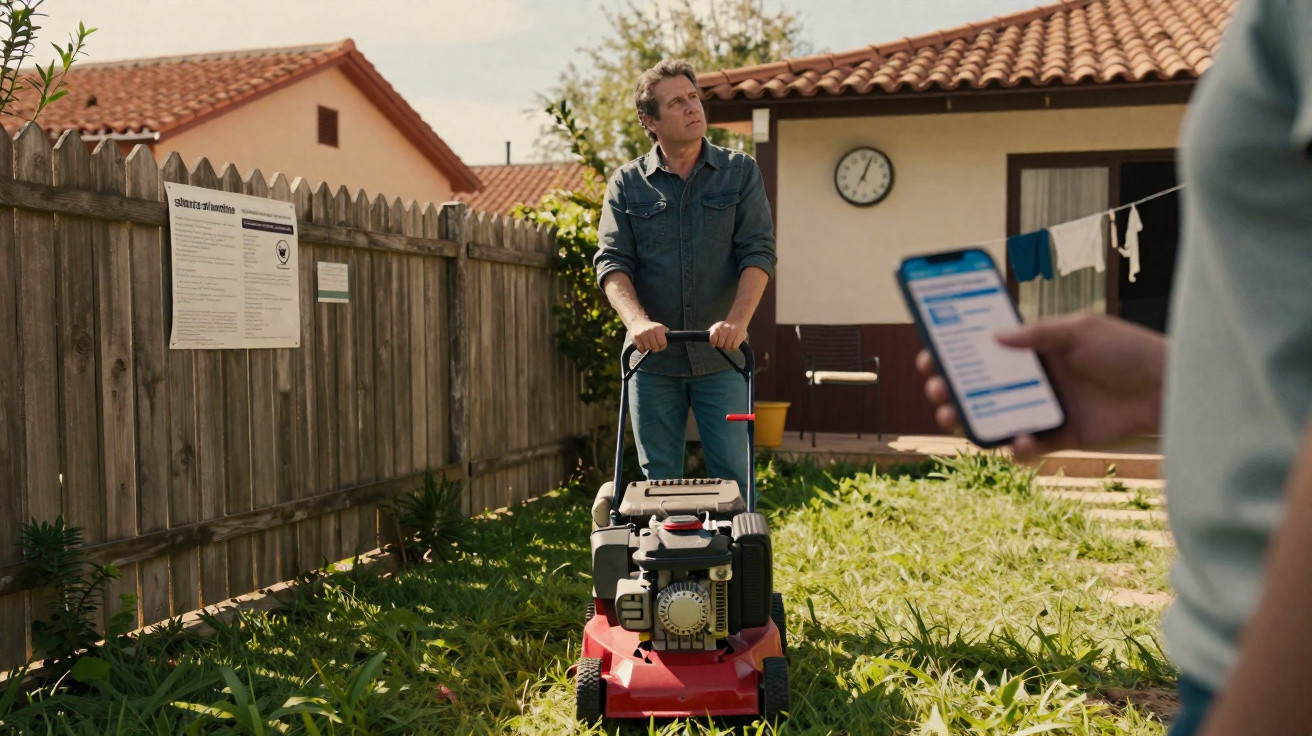
If you are someone who freezes in the moment, a prepared script can help you respond without panic. A few brief sentences, printed out or saved in your notes app, can offer a small but effective layer of protection.
- “Please don’t enter the garden without my permission. The garden is part of my rented home.”
- “I’m happy to discuss sharing the fruit, but visits need to be arranged in advance.”
- “I’d like all access requests in writing so I can keep track.”
Why this small issue reveals something bigger about home
Ultimately, this is not really about apples or pears. It concerns what it means to feel at home in a place that is not legally yours. You cook, sleep, argue, plant things and hang laundry in the sunshine, all within a space that belongs to someone else on paper. That underlying tension never disappears completely.
When a landlord reaches into “your” tree or walks across “your” lawn, it can therefore strike a deeper nerve than the legal position alone. It is a sharp reminder that your security rests on a fixed-term contract, and that someone else holds the keys in two senses - to the front door and to the Land Registry. On a human level, that can feel weighty.
Even so, practical steps can restore some sense of control. Read the tenancy agreement more closely. Ask candid, awkward questions before moving in. Speak to neighbours about their landlords’ conduct. Join a tenants’ group, even if it is only on WhatsApp. These quiet actions send the message that, although this home may not be “mine” permanently, my boundaries matter while I live here.
The next time you see a fruit tree in a rental listing, you may view it differently. Rather than seeing only free food, you may see a symbol of who may enjoy the harvest from a shared space. Some people will be happy to share; others will seek written arrangements. Between those positions, more mature agreements on renting and respect may be beginning to take root.
| Key point | Detail | Why it matters to the reader |
|---|---|---|
| Ownership of fruit | Fruit from existing trees generally belongs to the landlord, but use of the garden is reserved for the tenant | It shows that the issue is not only “who owns the fruit?” but also “who can enter the garden?” |
| Right of access | The landlord must give notice, have a legitimate reason and respect your right to quiet enjoyment | It helps you recognise when a visit becomes intrusive or potentially unlawful |
| Practical strategies | Negotiate in advance, record agreements in writing, document visits and use key phrases | It provides practical tools for protecting boundaries without direct conflict |
FAQ:
- Can my landlord pick fruit from the garden without telling me? In most cases, no. Even if they own the trees, they’re not allowed to enter your private garden space without notice and a valid reason. Fruit-picking alone is rarely seen as a valid ground for entry.
- What if the landlord planted the tree years before I moved in? The tree and its produce still legally belong to them, but your tenancy gives you control over access. That means they should ask permission and agree a time rather than just turning up to harvest.
- Can I stop my landlord using the garden at all? You can insist on your right to quiet enjoyment, which includes no unannounced visits. You can’t erase their ownership, yet you can reasonably refuse casual access that isn’t about repairs, inspections or emergencies.
- What if I planted the fruit bushes myself? Anything you plant usually becomes part of the property unless your agreement says otherwise. So if you’re investing serious time and money, clarify in writing whether you can take plants with you or keep all the produce.
- Is it worth making a fuss over a few apples? The issue isn’t the apples, it’s the boundary. If you feel uncomfortable or pressured, it’s valid to say so calmly, document what happens and get advice from a tenants’ organisation or housing charity.


Comments
No comments yet. Be the first to comment!
Leave a Comment