
A faint stir beneath dead leaves, a small huff, then a spiny shape shuffling over a frozen lawn beneath a security light far too harsh for such a tiny animal. In the darkness, your breath hangs in the air as this ancient visitor to the garden hunts urgently for one final meal before the cold takes hold.
Most of us close the back door, turn up the heating and give the night no further thought. Hedgehogs have no such comfort. Their survival genuinely rests on what happens in our gardens during the coming weeks: a leaf pile left in place, a gap beneath a fence, a shallow bowl of water. These small choices can determine whether this timid creature emerges next spring.
At present, however, the odds are stacked against it.
Hedgehogs are disappearing quietly – and our gardens are the front line
Stroll through a British suburb at dusk and the soundscape is different now: more traffic, heat pumps buzzing and glaring security lamps, but fewer movements in hedgerows. Hedgehogs were once almost guaranteed garden visitors, the nocturnal animals children would stay awake to glimpse. Today, plenty of people in their thirties have never seen a living one beyond a picture book or a meme.
One garden at a time, the untidy spaces hedgehogs depend upon have been cleared, paved and sealed behind fences. Grass has become plastic, while shrubs have made way for immaculate gravel. It may appear tidy and “low maintenance”, but to a hedgehog attempting to gain weight before hibernation, it is a desert.
Estimates across the UK indicate that hedgehog populations have declined by between a third and a half over only two decades. One significant survey recorded rural numbers dropping by as much as 75%. Urban populations are faring marginally better, an unusual reversal that means gardens are becoming among their last refuges. That gives the space behind every fence panel an unexpectedly important role.
Picture thousands of private plots creating a fragmented patchwork. One garden is welcoming, with leaves, logs and no pesticides. The neighbouring plot is hostile, with artificial turf, block paving and a wall without an opening. Crossing this landscape costs a hedgehog vital energy as it avoids roads and seeks food that was once abundant. This is what makes winter so unforgiving: if it enters hibernation slightly underweight, or wakes in January with nothing available to eat, it may not survive.
Hibernation is itself a risky wager. Over winter, hedgehogs can shed up to a third of their body weight. If autumn gardens were too “clean” for them to build sufficient reserves, they simply exhaust their fuel. When people say that there seem to be fewer hedgehogs, winter is often the quiet reason why.
How to turn your garden into a winter lifeline
Creating shelter is the most effective action you can take. It need not be an elaborate purchased box, although these can help; a straightforward untidy corner, left alone from late autumn through to spring, can be enough. Consider a stack of logs beneath a hedge or a loose heap of dead leaves behind the shed. It should be a concealed, dry spot where a hedgehog can curl tightly into a ball and rest without being raked out, burned or removed.
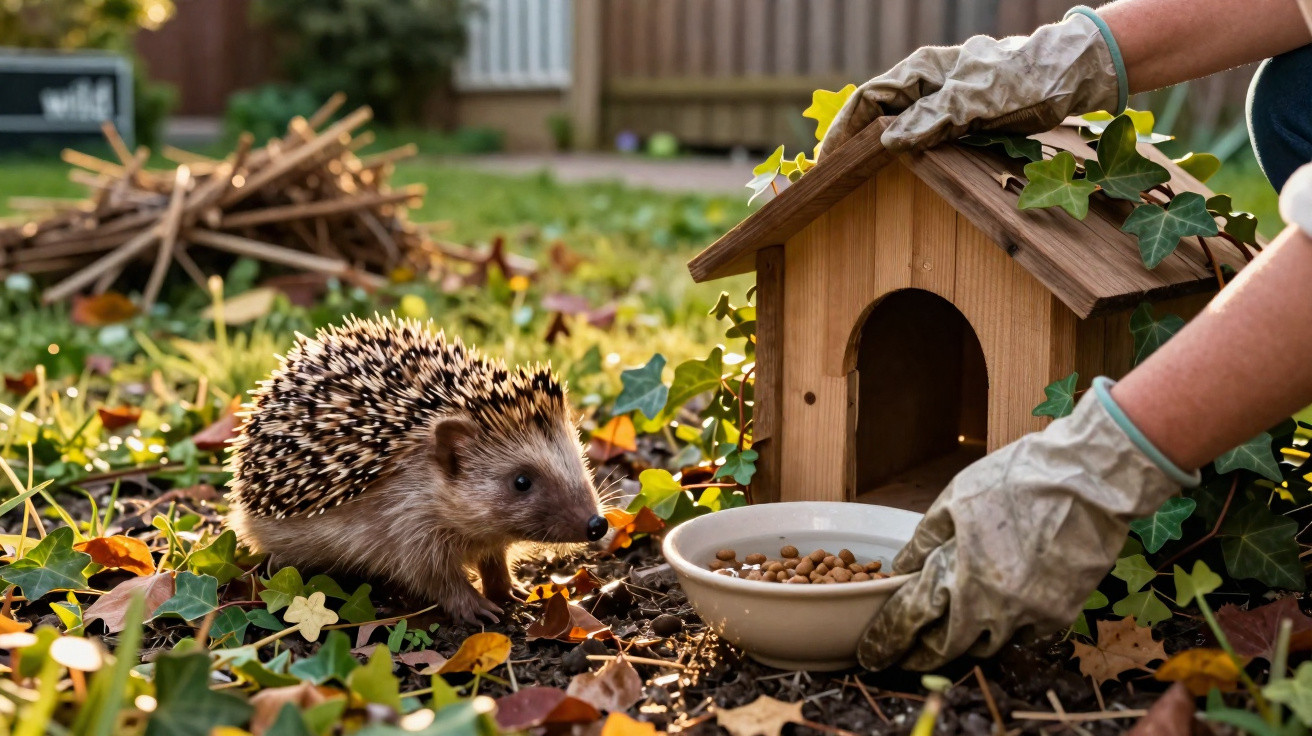
Allow fallen leaves to remain where they collect naturally, particularly beneath shrubs and beside fences. They provide a natural duvet for insects and worms, forming the hedgehog’s winter pantry. If you choose to buy or make a hedgehog house, position it somewhere peaceful with its entrance turned away from the wind. Use dry leaves or hay as bedding rather than straw, which may be too rigid. After that, leave it alone: no checking inside and no cameras pushed in every other weekend.
People often assume feeding is the main task. It can be useful, but the timing is important. Until the first proper frosts, leave a shallow dish of meat-based cat or dog food and a bowl of fresh water, preferably at dusk. Avoid milk, mealworms and bread, as these may lead to health issues or malnutrition. When the food remains untouched for several consecutive nights, gradually stop putting it out; this often indicates that local hedgehogs have settled into hibernation.
Many winter hedgehog crises result from good intentions combined with insufficient knowledge. The familiar case is a bonfire assembled in early November but not lit until weeks later. For a hedgehog, an untouched heap of branches is an ideal winter den. For us, it is excellent kindling. The outcome is easy to imagine.
Before lighting a bonfire or carrying out a major garden clear-out, rebuild or move piles immediately before burning or mowing. Carefully prod any debris heap with a broom handle, then wait a few minutes to see whether anything moves. On a cold day, this could quite literally prevent a sleeping animal from being burned alive.
Water presents another hidden danger. Iced-over ponds, water features with steep sides and deep cattle grids can trap an exhausted, underfed hedgehog at exactly the worst time. A basic plank, partly submerged brick or small set of escape steps offers a route out. It is free, and it works. Little ramps save little lives.
Garden chemicals are where the issue becomes less comfortable. Slug pellets, some weedkillers and powerful pesticides do more than remove prey: they may poison hedgehogs that consume contaminated insects. Let’s be honest: nobody really reads every line of tiny print on the back of a container. Yet by avoiding pellets and harsh sprays over winter, you remove another unseen risk.
A small change in habit can have a major effect. Check the garden at night from time to time. Watch for small black droppings, hedgehog-sized routes beneath fences and the distinctive snuffling in the dark. That brief look may reveal that a real animal depends on you leaving the leaf pile untouched until spring.
A quiet initiative is spreading through neighbourhoods and local groups. Known as the “hedgehog highway”, it is simply a 13cm x 13cm opening at the bottom of a fence or wall that enables hedgehogs to move between gardens. Social media features streets where almost every home has one, with the routes mapped and celebrated like hidden doorways from a children’s story.
“Hedgehogs can travel over a mile a night,” says one rescue volunteer in Hertfordshire. “A single fenced-off garden might look lovely on Instagram, but to a hedgehog it’s a dead end. Those fist-sized holes in fences literally give them back their neighbourhood.”
To keep this practical and manageable, focus on small actions:
- Make one hedgehog-sized opening in your fence, and ask your neighbour about connecting the gardens.
- Keep one garden corner untidy throughout winter, with leaves and logs but no raking or strimming.
- Provide water in a shallow dish, particularly in icy conditions or on dry, cold nights.
- Replace slug pellets with options such as copper tape or hand-picking slugs at dusk.
- Record any hedgehog sightings on a national or local wildlife map to support population monitoring.
What this winter really asks of us
We often imagine wildlife decline as something happening “out there”, in rainforests, coral reefs or faraway fields. Hedgehogs bring that crisis to the back step. They are small, recognisable animals that seem almost as if they belong in a storybook. If they are struggling to survive in our gardens, what does that reveal about the way we treat our own pieces of land?
On a bitter evening, when the security light flicks on and the lawn appears stark and white, shutting the curtains and forgetting about it is easy. But the garden remains alive in ways we seldom take time to notice. A hedgehog passes through the fence gap you made last month and finds a secure pile of leaves you chose not to bag. It eats a slug you might otherwise have fought with pellets, then curls into a ball in the corner you deliberately left undisturbed.
In human terms, this concerns more than wildlife. It is about how we use the modest power we have. We choose the rakes, fences, chemicals and bonfires. We decide whether our plot is barren or welcoming. A hedgehog doesn’t need perfection. It needs you to let go of tidiness just a little. Perhaps that is why the story lingers: every prickly shape and snuffling sound in the darkness quietly reminds us that even the smallest area of land can be either sanctuary or trap.
| Key point | Detail | Why it matters to the reader |
|---|---|---|
| Create natural shelters | Leave piles of leaves and logs, and keep one part of the garden untouched all winter | Provides a secure refuge where hedgehogs can hibernate without disturbance |
| Ensure access and safety | Create an opening in fences, make water features safe and avoid uncontrolled garden fires | Allows hedgehogs to travel, find food and escape deadly hazards |
| Adapt food and products | Offer wet cat or dog food and fresh water, and stop using slug pellets | Helps hedgehogs gain weight before winter while reducing poisoning risks |
FAQ:
- How can I tell if a hedgehog in winter needs help? A hedgehog active during daylight, unsteady on its feet, very small (under about 450–500g), or covered with flies or injuries probably requires rescue. Carefully place it in a ventilated box lined with a towel, then contact a local hedgehog rescue or vet for advice.
- Should I feed hedgehogs all winter or only in autumn? Feed consistently during autumn to support fat reserves. Feeding is less regular in deep winter because many hedgehogs are hibernating, but any hedgehog active in very cold conditions may benefit from a safe source of food and water.
- Is it okay to move a hedgehog nest if it’s in a tricky spot? Avoid doing so if possible. Relocating a nest may lead a hedgehog to abandon it, or even abandon its young. Where there is an urgent threat, such as building work, seek specialist advice from a rescue centre before touching it.
- Can my dog and hedgehogs safely share the garden? In many cases, yes, with some management. Keep curious dogs supervised at night, particularly those with strong prey instincts, and provide quiet areas free from dogs where hedgehogs can feed and nest without interruption.
- Are shop-bought hedgehog houses worth it? They may be useful when they are well designed and placed in a quiet, sheltered location with natural bedding. A simple homemade refuge or a suitably positioned pile of logs and leaves can suit hedgehogs just as well, so making a difference need not be expensive.






Comments
No comments yet. Be the first to comment!
Leave a Comment