
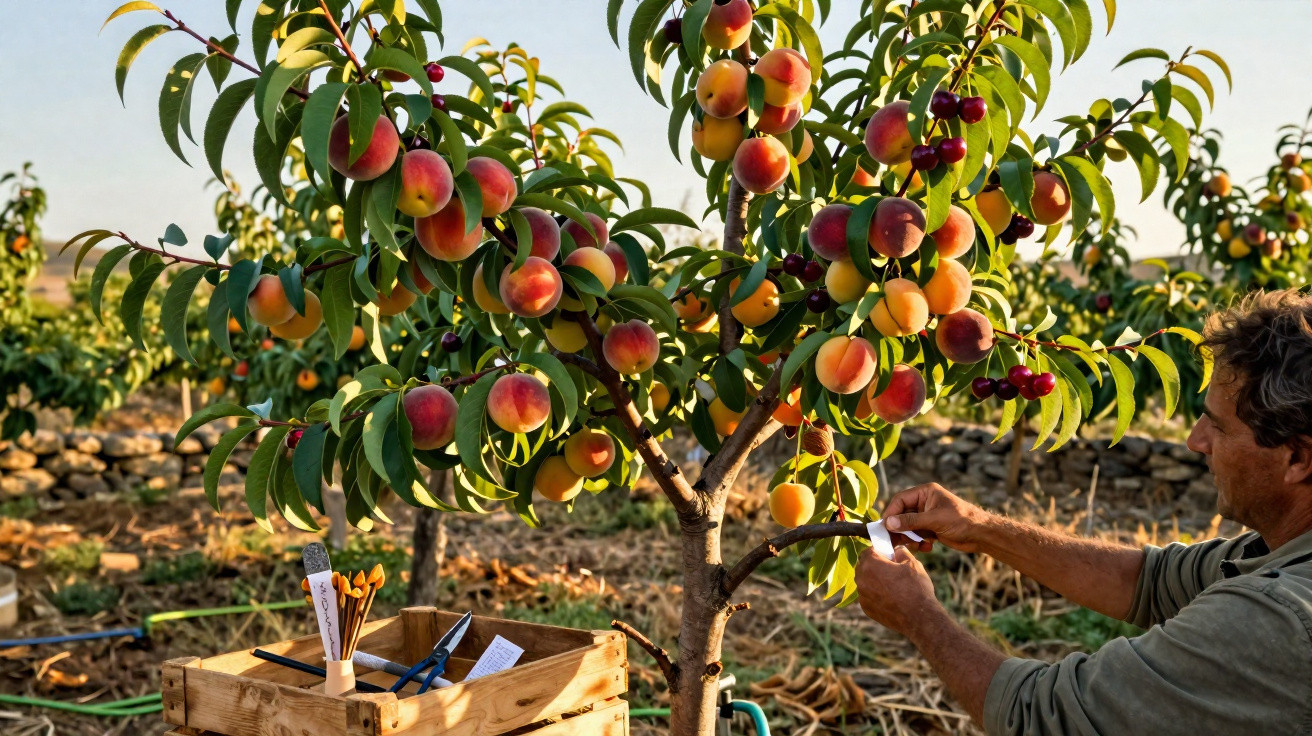
People pause, point and reach for their cameras. They all ask the same thing: is it genuine, or simply a smart illusion created by labels and timing?
On a warm evening in July, I stood beneath it as blush-coloured apricots weighed down branches on one side and deep-purple plums hung on the other, as though two seasons had chosen to perform together. A robin darted among neatly handwritten labels - “Suncrest”, “Santa Rosa”, “Moorpark” - while a child on a scooter asked his father how many trees were concealed below ground. His father shrugged, fingers sticky with juice, equally amazed and doubtful, before handing down a piece of fruit as if it were a newly found coin. Even in the heat, the bark was cool to the touch, marked by little scars that revealed a careful, exacting history. One trunk, many lives.
The living sculpture that produces fruit in forty ways
The “Tree of 40 Fruit” started as both an audacious notion and a horticultural test: could one tree support a whole range of flavours, colours and flowering times without failing? Artist and professor Sam Van Aken achieved it through decades of grafting, gathering heirloom scions and making every cut in tune with the tree’s cycle. One tree, forty flavours: it’s not a myth, it’s a method.
During spring, its limbs become a patchwork of blooms: white cherry blossom, pale-pink peach flowers and vivid red plum blossom, frequently appearing together like fireworks slowed down long enough to study. By late summer, fruit matures in succession: apricots first, followed by early plums, then peaches and nectarines, and finally cherries tucked among the leaves like tiny jewels. In a school garden in upstate New York, children learnt to track the days until fruit ripened rather than test marks, and no one needed to ask what “seasonal eating” meant when it was dangling at eye level.
This is neither magic nor genetic modification. It is grafting: attaching a twig from one variety, known as a scion, to a compatible host tree, or rootstock, so that their cambium layers meet and grow into one vascular network. The tree directs energy through that system; meanwhile, the scion retains its own character - its fruit form, sugar levels and flowering date - while using the trunk’s shared supply of water and nutrients. These are not forty unrelated species, but a family gathering within the Prunus genus: peaches, plums, apricots, cherries and even almonds, with every branch retaining its individual history and taste.
How to create your own multi-fruit tree
Begin with a robust, compatible rootstock. Myrobalan plum (Prunus cerasifera) is a commonly used foundation for stone fruit. Add grafts gradually: three to five varieties in the first year, followed by several more in each dormant season. Late winter or the earliest part of spring is the ideal period, when the tree is dormant, sap flow is reduced and wounds can mend as temperatures rise. Work with a sharp grafting knife and make precise, matching cuts - whip-and-tongue or cleft grafts for thicker wood, and chip budding once the bark lifts easily. Bind the join firmly with grafting tape or parafilm, label every scion, then support the new union with gentle watering and consistent shade over fresh joins.
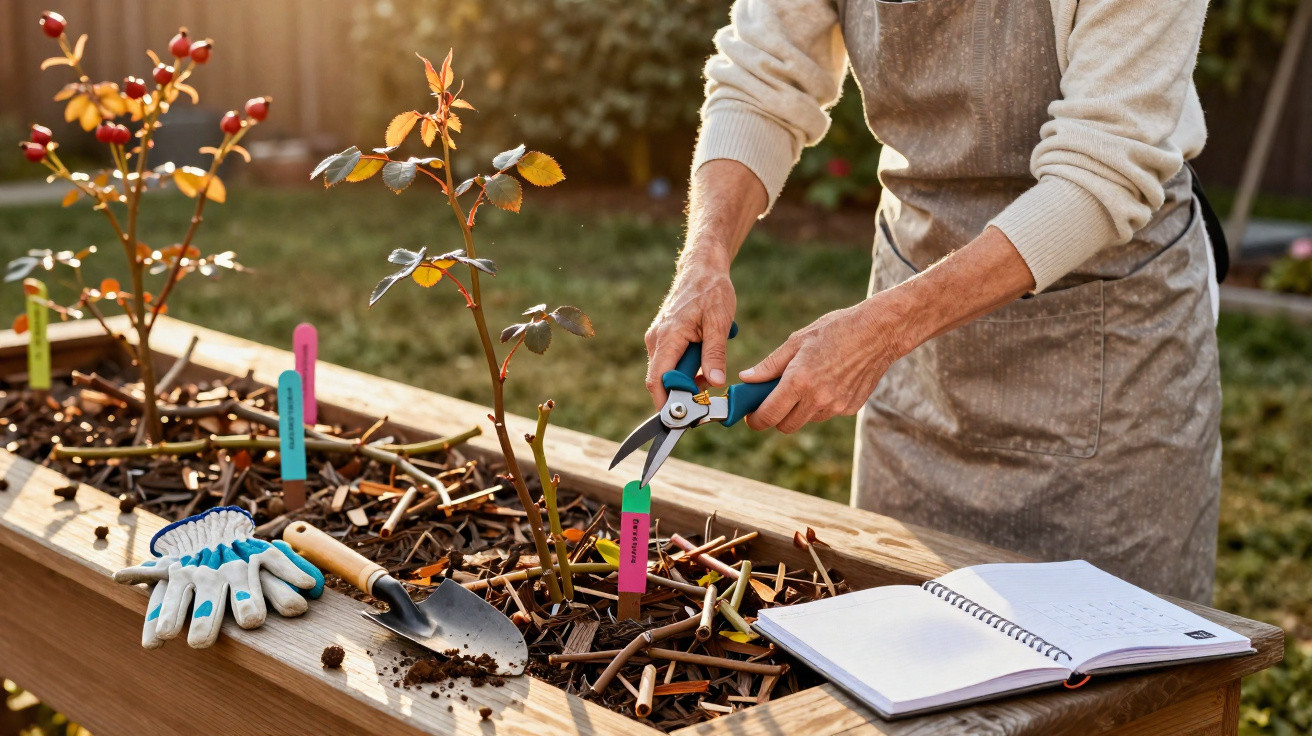
The most common error is overambition. Gardeners often attach too many varieties at once, causing the tree to struggle, or they combine incompatible species beyond the Prunus family and are surprised when the graft does not take. We have all experienced enthusiasm getting ahead of the instructions, so take a restrained approach: use pruning to balance vigour, remove some fruit in the early years, and give every graft sufficient light and room or the most vigorous branch will dominate the others. Let’s be honest: nobody really prunes every single weekend.
Plan around seasons and orientation - early-, mid- and late-ripening varieties; north, south, east and west - so that fruit does not all mature together and limbs are not competing for identical sunlight. Shape the main framework like a candelabra to spread the load, remove shoots growing from the rootstock, and disinfect tools between cuts so canker or gummosis is not transferred from one limb to another. With patience, a bundle of twigs can become a tree that feels like a community.
“Grafting is 10% the cut and 90% the waiting.”
- Select compatible scions: for stone fruit, remain within Prunus.
- Get the timing right: use the dormant season for grafting and the active growing season for chip buds.
- Match cambium with care: green against green, tightly bound and without gaps.
- Label every graft: note the variety, date, ripening period and source.
- Prune for equilibrium: allow weaker grafts to catch up before permitting heavy crops.
What the Tree of 40 Fruit reveals about food’s future
Its striking photographs are only part of the story. This tree offers a model of resilience: a garden tree that reduces risk by spreading flowering dates and ripening periods, supplying a household with different textures and sugar levels from July to October. It also protects heirloom genetics at a scale people can engage with - not behind museum glass or stored in a seed vault - because people eat the fruit, enjoy it and seek it out again. This is living biodiversity you can taste.
There is a social dimension too. Neighbours exchange scions, trade advice and move beyond theory into the sticky-fingered reality of harvest time. A multi-fruit tree changes a lawn into a conversation and turns a quiet practical skill into something resembling a tradition. You may begin with three varieties, then add five, and by the following spring you are offering somebody a twig that will become a pie four summers later.
The claim of “more than 40 species” needs some qualification: in reality, the tree combines several species from the same genus, although that remains a small miracle. The meaningful aspect is not the total, but the scope. One trunk can bear flavours descended from different branches of the supermarket fruit aisle, flower in staggered waves when late frosts are unpredictable, and show a neighbourhood that biology is not so much a rigid rulebook as a conversation we can learn to take part in.
| Key point | Detail | Why it matters to the reader |
|---|---|---|
| The craft behind the magic | Grafting scions to a compatible Prunus rootstock using clean cuts and tight bindings | Recreate the concept at home, beginning with 3–5 varieties |
| Seasonal fireworks | Patchwork blossom in spring and a staggered harvest from midsummer to autumn | Fresh fruit for months rather than weeks - plus serious kerb appeal |
| Biodiversity on a stick | Heirloom varieties maintained in back gardens, rather than only in storage vaults | Better flavour, local resilience and food you can genuinely touch |
FAQ:
- Is a 40-fruit tree real or merely a stunt? It is real, and it is remarkably straightforward once you understand basic grafting. You are not combining DNA; you are linking living plumbing so that each variety keeps its identity while sharing one trunk.
- Which fruits can grow on one tree? Stay within the stone-fruit group, the Prunus genus: plums, peaches, nectarines, apricots, cherries and sometimes almonds. Pome fruits such as apples and pears belong to a different group and will not graft onto Prunus.
- How long does it take before it produces fruit? If you begin with scions taken from fruiting-age trees, often in the first or second year after a successful graft. Young grafts require a light hand: thin early fruit so the union can strengthen.
- Do I need several trees for pollination? Many plums and cherries benefit from a partner to set substantial crops. The advantage here is that compatible varieties flowering at the same time can provide those partners on the very same trunk.
- What is the biggest beginner’s mistake? Adding too many grafts and failing to label them properly. Begin modestly, keep records, sanitise tools between cuts and prune to manage vigour, preventing one show-off branch from taking over.

Comments
No comments yet. Be the first to comment!
Leave a Comment