
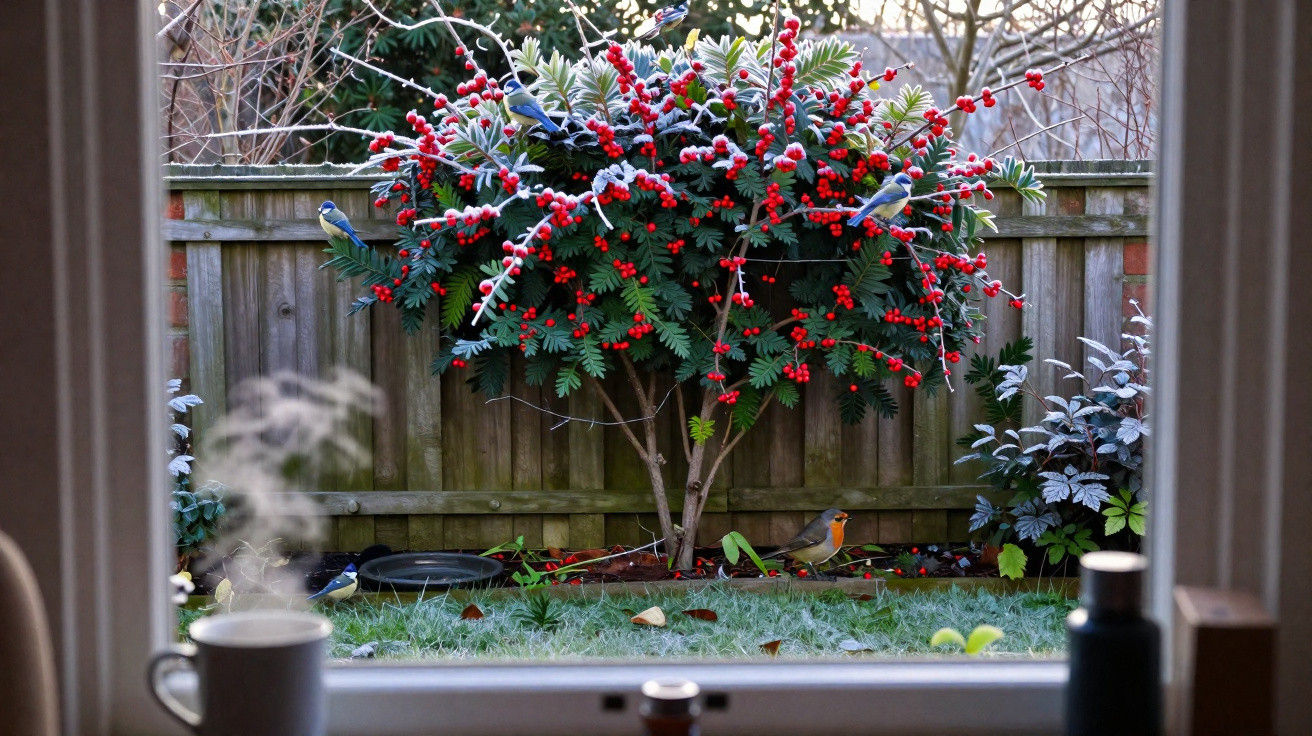
A bare garden can seem like a shut book in December. Feeders hang unused, frost grips the lawn, and the only thing moving is your breath in the chilly air. But one shrub can change everything, drawing blue tits and robins into sight while the rest of the garden appears dormant.
I was at the kitchen window, holding a mug warm against my hands, on the sort of unhurried dawn when you partly listen for signs of life and partly wish they would come to you. Without warning, two blue tits darted into the thorny growth by the fence, hopping from spine to spine like notes across a stave. Beneath them, a robin bounced about, bold and vivid, studying the red beads packed along the branches.
They seemed quietly purposeful. This shrub was not simply improving the view: it was providing food, cover and an invitation. The feeder was not the draw.
Firethorn: the overlooked winter magnet
Evergreen firethorn, or Pyracantha, whether trained against a wall or grown as part of a hedge, is the winter spectacle many gardeners overlook. Its stems are armed with thorns, its leaves remain through cold weather, and bunches of berries linger like little lanterns well into January. Robins treat the fruit as tiny stores of treasure, moving along the branches to pick and swallow each berry. Blue tits arrive not only for fruit, but also for insects concealed in the bark and twigs, searching for spiders’ eggs and overwintering larvae.
Few plants offer food and refuge so effectively at once. Imagine a south-facing fence covered in Pyracantha ‘Red Column’, its red berries crowded against deep green foliage. At 8 a.m., sunlight reaches the wall and raises the temperature by a degree or two. Birds notice. They appear in bursts, treating the thorns as a framework and the shadows as protection, weaving among the spines with a certainty that makes predators hesitate.
The reason for this steady traffic is straightforward. The berries mature late and remain available during the leanest months, acting as a cold-store cupboard when food on the ground is limited. Thorns make the shrub a secure shelter, particularly for small birds that favour swift escapes and short flights. Insects spend winter inside its dense growth, meaning there is still protein available after the berries have disappeared. Combine this with the warmth retained by a wall during the day, and you create a microclimate that keeps birds active even on bleak days.
Growing firethorn for winter birds
Begin with a young firethorn around knee height, choosing a position with morning sunshine and afternoons that are not excessively hot. Break up the soil, incorporate compost and set the plant a little high, ensuring that its crown is not covered. Fix horizontal wires to a fence or wall at intervals of 30–40 cm, then spread the stems out and secure them using soft twine. The goal is a flat screen that produces plenty of fruit. Water thoroughly after planting and then weekly during dry periods; you are establishing roots now for the winter visitors to come.
Pruning is the point at which many gardeners make mistakes. Cut back immediately after flowering in late spring, while the following winter’s berries remain a prospect rather than a loss. Remove only stems that spoil the fan shape or catch people passing by. Avoid severe summer pruning, which can remove hundreds of berry clusters in moments. Yes, the prickly one by the back fence. Wear gloves that offer some protection from thorns, and regularly stand back to make sure the outline remains soft and open.
Most of us have experienced the moment when we have tidied the garden, only to discover we have “cleaned away” exactly what wildlife needed. Keep sprays, strong cleaning products and overzealous tidying away from this plant; the less immaculate it is, the better the feeding opportunity. Birds do not seek perfection: they are looking for a dependable stopping place with both cover and calories. Let’s be honest: no one does this every day.
“A spiny evergreen with winter berries is a moving fortress for small birds,” says urban ecologist Anya Keating. “Pyracantha is especially valuable because it hosts insects and fruit at once. That double offer brings blue tits for the hunt and robins for the feast.”
- Quick win: combine firethorn with ivy or holly to create layered cover and extend the berry season.
- Timing tip: prune lightly immediately after flowering to preserve the next winter’s berry crop.
- Wildlife boost: place a shallow dish of water nearby; winter birds drink more than you might expect.
The quiet drama beyond the window
A shrub like this can transform winter mornings. You may find yourself stopping halfway through putting on a sock, watching a firethorn (Pyracantha) bend beneath a robin, or seeing a blue tit flash into view and disappear like a passing thought. The soundscape is made up of soft calls, dry leaves scraping and the occasional click of a thorn against glass as a branch brushes the shed. Modest movement, considerable meaning.
There is also a wider invitation. Plant one shrub that performs in cold weather, then see how the rest of the garden changes around it. Perhaps you will add a pile of logs. Perhaps a shallow water tray that stays free of ice. Perhaps you will do nothing except watch. Every winter needs a reason to make you look up, and this plant gives you one: bright, persistent and delivered berry by berry.
| Key point | Detail | Benefit for the reader |
|---|---|---|
| Choose the right shrub | Pyracantha trained against a wall or fence provides berries, shelter and insects | Brings winter berries within reach of robins and gives blue tits cover |
| Train, rather than tame | Wire supports and light pruning after flowering preserve fruiting wood and secure hiding places | Increases bird visits without demanding extensive maintenance |
| Work with winter | Morning sunlight, water nearby, no chemicals and gently shaped edges | Creates a reliable, low-effort winter wildlife hotspot |
FAQ:
- Which variety should I choose for berries and colour? Choose red- or orange-fruiting varieties such as ‘Red Column’, ‘Saphyr Rouge’ or ‘Orange Charmer’. They crop reliably and retain their colour far into winter.
- Do blue tits actually eat the berries? They may occasionally eat very small fruit, but they mainly visit to search for insects and eggs hidden inside the shrub. Berries are a stronger attraction for robins and birds around thrush size.
- Is firethorn safe around children and pets? Its thorns are sharp, while the seeds within the berries may cause mild stomach upset if consumed in large amounts. Plant it away from where small hands can reach it, and clear fallen berries from play areas.
- Can I grow it in a pot on a balcony? Yes. Use a large container, a robust trellis and fresh, gritty compost. It will grow more slowly and produce fewer berries than a plant in the ground, but its shelter and insect life will still benefit birds.
- How do I prune without losing next winter’s fruit? Trim immediately after flowering, retaining the fan shape and the short side spurs that carry berries. Do not give it a late-summer cut that removes the developing clusters.





Comments
No comments yet. Be the first to comment!
Leave a Comment