
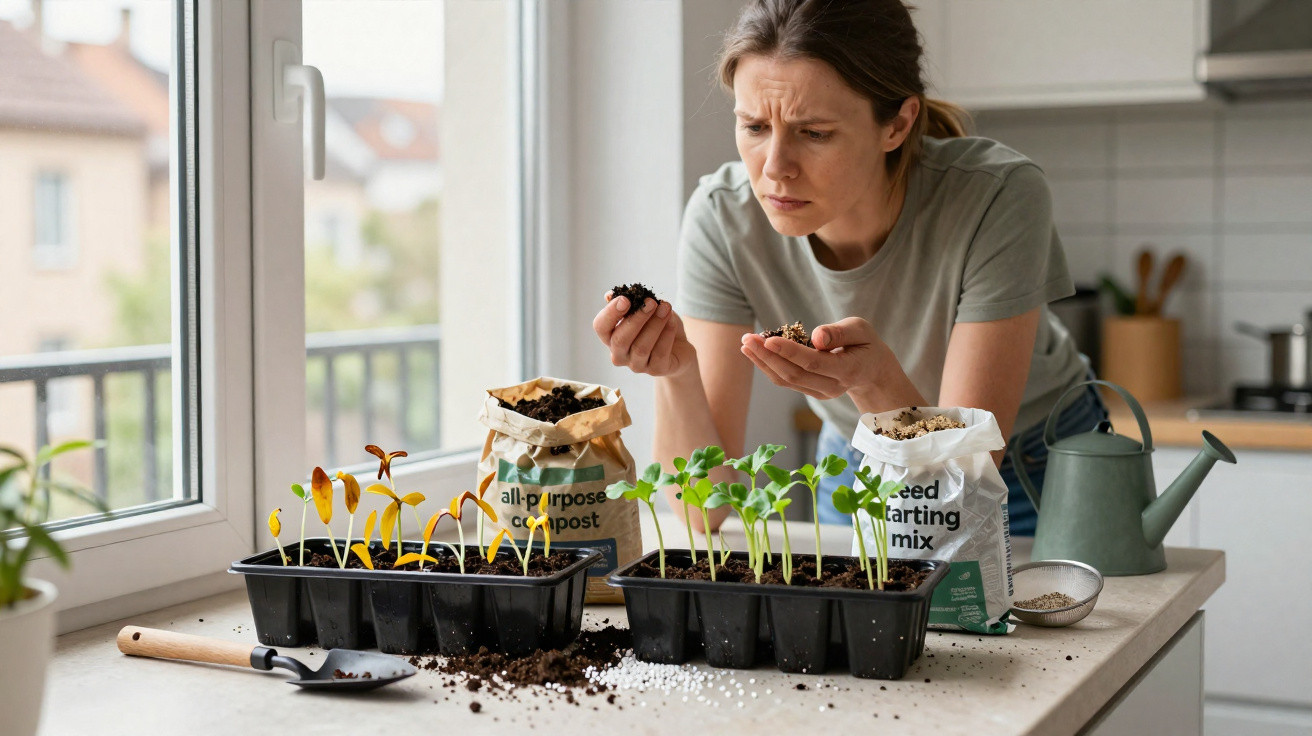
Each spring, huge numbers of home gardeners fill trays with optimistic seed sowings, then see delicate young plants stop growing, flop over and disappear.
The same story plays out on windowsills, balconies and in back gardens: seedlings emerge from the compost, appear healthy for a fortnight or so, then fail. Plenty of people put it down to “bad seeds” or not having green fingers. Increasingly, however, gardeners are identifying a less obvious cause in full view – an unsuitable soil mix.
Seedlings can fail for reasons unrelated to the seed
This season, UK and US gardening forums and social media have been crowded with remarkably similar reports. Tomato, pepper, zinnia and lettuce seedlings often germinate successfully, produce several leaves, then abruptly turn yellow, wilt or break at the base. Some gardeners find that an entire tray fails together, despite apparently correct lighting and watering.
More and more growers now suspect that their potting soil, not their technique, is sabotaging seedling trays before plants ever reach the garden.
The problem is not necessarily “bad” compost in the conventional sense. Retail bags are frequently labelled “all-purpose,” “multi-purpose” or “container mix”, which may sound suitable. However, these products are commonly formulated for established plants rather than fragile seedlings with small, sensitive roots.
The common seedling soil error: starting in overly rich compost
Gardeners have highlighted a clear pattern. Seedlings are more likely to fail when sown in dense, nutrient-rich compost intended for mature plants. Such mixes can contain substantial quantities of manure, slow-release fertiliser pellets or potent organic additives, including concentrated poultry-based products.
A mature tomato growing in a patio pot may benefit from that level of richness throughout months of flowering and fruiting. To a newly emerged seedling, though, it can be like standing in a chemical storm.
The core mistake: treating new seedlings like hungry adult plants, and planting them straight into soil that is simply too rich, too dense or too wet-holding.
How rich compost affects young roots
Seeds come with their own initial nutrient supply. For their first few days, and sometimes weeks, seedlings do not require strong fertiliser around their roots. If compost contains high salt levels from synthetic feeds or concentrated manure, the roots may burn or cease growing.
Gardeners repeatedly describe the following symptoms:
- Seedlings emerge, but their roots stay short and feeble.
- Foliage becomes pale or develops scorched edges despite consistent watering.
- Stems become narrow before the plant falls over, seemingly severed at compost level.
- Seedlings that survive fail to recover fully, even after being potted on.
Dense peat-free mixes can present separate challenges. Many environmentally minded gardeners choose them for sound reasons, yet certain products contain wood fibres and composted ingredients that retain water for too long. Trays can then remain in a wet, oxygen-starved mass, suffocating roots and encouraging fungal disease.
Clues that your seed-starting soil is working against you
For a home gardener in a garden centre, how can it be possible to distinguish a seed-friendly mix from one likely to spoil a sowing session? Packaging can be confusing, but several warning signs are worth watching for.
| Soil characteristic | Risk for seedlings | What gardeners report |
|---|---|---|
| A strong manure odour or “hot” organic feeds prominent on the label | Potential nutrient burn and salt stress | Fast yellowing, brown leaf margins and stunted growth |
| A heavy, tacky texture when wet that forms solid clumps | Poor drainage, limited oxygen and root rot | Seedlings fall over with dark, slimy stems at compost level |
| Clearly visible slow-release fertiliser pellets (“feed for 6 months”) | Excessive strength at the earliest stage | Successful germination followed by sudden failure across an entire tray |
| Large woody fragments, bark pieces or incompletely rotted fibres | Uneven moisture and weak seed-to-compost contact | Irregular germination and dry patches despite watering |
Several gardeners report ending their seedling losses only after replacing general-purpose compost with a fine, low-nutrient seed-starting mix, or with a home-made blend of sieved materials.
What gardeners recommend for stronger seedling starts
Seed-starting guidance has shifted during recent seasons. Many experienced growers now emphasise that the ideal “seed compost” is almost unremarkable: light, fine-textured and relatively low in nutrients, rather than loaded with additions.
Healthy seedlings usually grow from a mix that feels airy in the hand, drains quickly, and offers gentle nutrition instead of a heavy feed.
Essential qualities of a seed-starting mix
A broad agreement is developing across gardening communities. A dependable seed-starting mix will generally:
- Be light and friable, rather than sticky or clay-like.
- Have fine particles and very little coarse bark or twig material.
- Drain freely after watering, without water collecting on its surface.
- Provide only a mild nutrient charge instead of long-term fertiliser.
- Retain moisture evenly while allowing roots to breathe between waterings.
Some gardeners opt for purpose-made “seed and cutting” composts with these characteristics. Others prepare their own using simple ingredients such as sieved compost, coco coir and a small amount of perlite or vermiculite to boost drainage and aeration.
A straightforward home mix used by many gardeners
Recipes differ, but a widely used gentle seed-starting blend includes:
- 1 part fine, well-rotted garden compost or shop-bought compost sieved beforehand.
- 1 part coco coir, or a comparable fibre, to balance moisture.
- 1 part perlite or coarse sand for drainage and air spaces.
Gardeners sow into this leaner medium first. Plants are transferred to a richer potting mix only once they have developed a second or third set of true leaves.
Why overly rich soil appears to be a more frequent problem
A number of changes in gardening and compost manufacturing may have combined quietly. Firstly, more people are raising plants in balcony and patio pots, leading manufacturers to market stronger slow-release mixes for container plants. Because those composts must nourish plants for months in a restricted volume, they are heavily enriched with fertiliser.
Secondly, environmental concerns have led many gardeners to choose peat-free products. Although the switch brings clear advantages, peat-free formulations often use wood-based ingredients that hold and release water differently. When such products first appeared, some brands produced textures that retained too much moisture for vulnerable roots.
Thirdly, social media has greatly increased the number of first-time seed growers. Faced with rows of similar compost bags, many beginners select a product described as “all-purpose” without appreciating that seedlings have distinct needs.
Practical changes that can save struggling seed trays
Gardeners who think their soil mix is at fault are now making changes during the season instead of abandoning their efforts for the year. A handful of practical measures feature repeatedly in shared success stories.
Make strong compost lighter and weaker
Rather than discarding a bag of nutrient-rich compost, some growers dilute it with inert materials before sowing. Combining the compost 50:50 with coco coir, sieved leaf mould or even coarse sand can lower nutrient intensity and improve its texture.
If slow-release fertiliser pellets are clearly visible, some gardeners carefully take granules out of seed trays, particularly from around each young root area.
Begin lean and fertilise later
A “step-up” method is often recommended in gardening groups. Seeds begin in a very mild growing medium. After three to four weeks, the seedlings are moved into moderately richer compost. They progress to a full-strength potting mix containing long-term fertiliser only after their roots have filled that pot.
Shifting nutrition gradually in stages mirrors what happens in nature, where roots first stretch through gentle soils before hitting nutrient-dense layers.
Liquid fertilisers can provide greater control, too. Rather than placing substantial nutrition in the compost from the first day, gardeners can use a weak fertiliser solution when seedlings are visibly established and growing actively.
Beyond compost: hidden issues that resemble soil problems
Although soil mistakes are prominent this season, several other problems can produce almost the same signs. Gardeners increasingly check these possibilities before holding compost solely responsible. Overwatering, in particular, can mimic a poor mix. Permanently wet trays promote damping-off disease, a fungal condition that cuts through stems at compost level.
Sharp falls in temperature can also stunt seedlings, particularly in unheated greenhouses or on windowsills above cold radiators. Conversely, intense heat near radiators can dry shallow trays within one afternoon, putting roots under stress and worsening any compost imbalance.
Light is equally important. In weak indoor light, seedlings become thin and stretched as they strain towards a window, then collapse even when the compost is ideal. Gardeners now pair suitable soil with brighter south-facing windows, inexpensive LED grow lights or cooler rooms that reduce spindly, leggy growth.
Soil knowledge is a long-term skill, not a one-off purchase
This season’s widespread seedling failures point to a wider lesson. Many less experienced gardeners regard compost as a straightforward purchase: buy a bag, tick it off the list and start growing. More seasoned growers increasingly discuss soil as cooks discuss ingredients. Its texture, balance and timing matter, while minor adjustments can alter the end result.
For gardeners prepared to test different approaches, seed-starting can become a practical experiment. One tray may contain bought seed compost, another a home-made mix and a third a diluted rich multi-purpose blend. Comparing root development and stem thickness between them can reveal more in a month than years spent reading instructions on the back of compost bags.
Paying closer attention to soil at the seedling stage also brings benefits later in the growing season. Gardeners who can assess moisture by touch, spot subtle shifts in leaf colour and understand how nutrients travel through different mixes are often better able to handle pests and dry periods calmly. Understanding soil provides a buffer against setbacks.
When a tray of seedlings fails all at once, many gardeners will now inspect the compost first. This change in perspective is small but meaningful: instead of blaming seeds or misfortune, growers are recognising soil as something that can be adjusted, softened and suited to every delicate young plant. That shift alone may prevent thousands of seedlings from meeting a quiet, avoidable early end in pots and trays across the country.

Comments
No comments yet. Be the first to comment!
Leave a Comment