
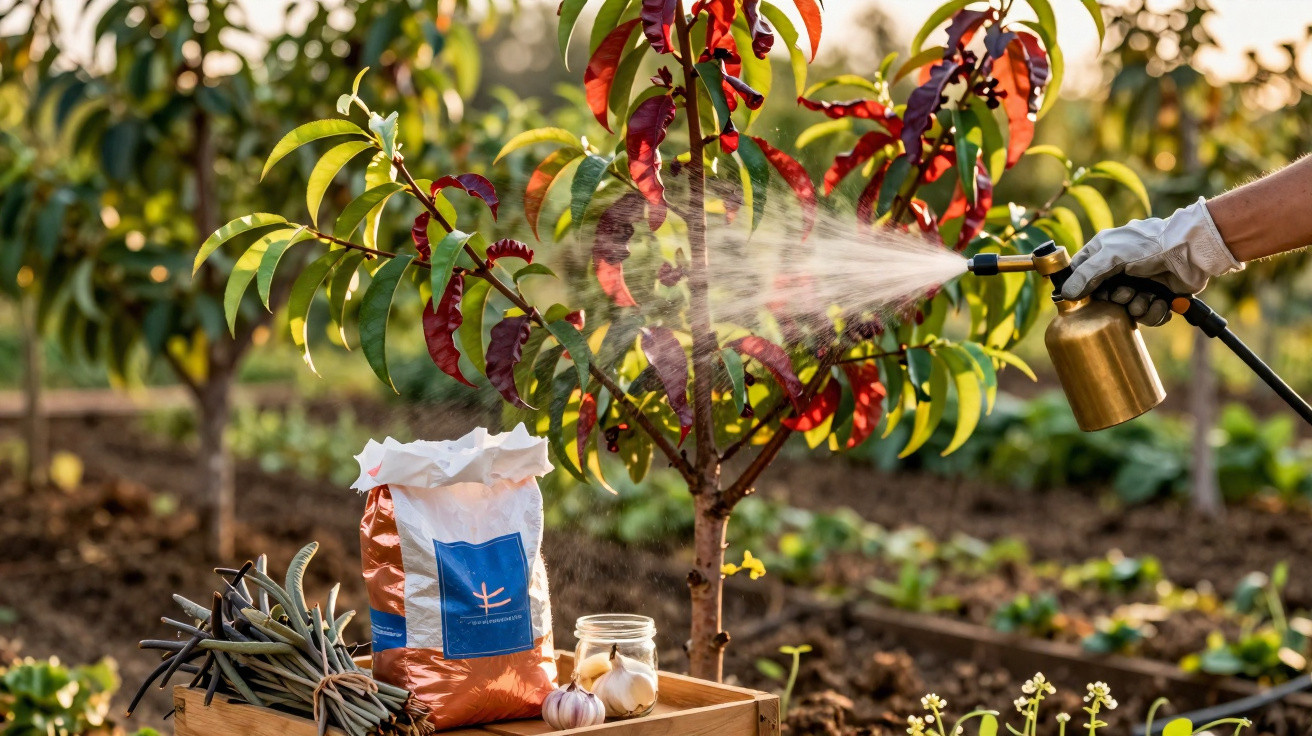
Many amateur gardeners will recognise the problem: in spring, the peach tree produces delicate new growth, but only a few weeks later its leaves hang limp, become distorted and change colour. The dreaded peach leaf curl has struck – and anyone who only responds at this stage is usually too late. Effective protection depends on targeted action in autumn and very early spring, with one particular copper active ingredient playing a key role.
What really causes peach leaf curl
Peach leaf curl is among the most aggressive fungal diseases in the fruit garden. It mainly attacks peach trees, although nectarines and, occasionally, almonds can also be affected. The cause is the fungus Taphrina deformans, which is exceptionally well adapted to damp, cool spring weather.
The fungus survives the winter on buds, in small cracks in the bark and even in the soil. Its attack begins as soon as buds start to swell in late winter and early spring. Young, newly emerging foliage is especially vulnerable.
Once the characteristic “curled” leaf appearance is visible, the fungus can scarcely be stopped effectively during that growing year – which is why consistent prevention is what matters.
Typical symptoms on leaves and shoots
The disease is generally easy to spot. Anyone who has seen the signs will not forget them:
- Leaves become thicker and appear swollen or blistered.
- They turn yellowish, pink or reddish.
- Leaf surfaces curl into spirals and dry out.
- Young shoots swell up, look fleshy and stop growing.
- Fruit remains small, becomes misshapen or drops prematurely.
If a tree is severely affected for several consecutive years, its overall vigour suffers. Photosynthesis declines, stored reserves are lacking, branches die back and, in extreme cases, the tree may eventually die.
Why copper hydroxide is considered the “secret weapon”
For decades, the most effective weapon against peach leaf curl in the home garden has been a long-established active ingredient: copper hydroxide. It is found, among other products, in the well-known Bordeaux mixture familiar to many gardeners from specialist retailers. It works as a contact treatment, forming a thin protective coating over bark, buds and young shoots, thereby preventing fungal spores from penetrating.
Timing determines success or failure
Treating a peach tree only after its leaves have already curled is a waste of both time and money. Copper hydroxide needs to be on the tree before the spores germinate. A proven schedule is as follows:
- Late autumn: Apply the first treatment once all leaves have fallen. The aim is to substantially reduce the amount of fungus overwintering on the bark and buds.
- Before bud break in late winter: Apply a second treatment shortly before the buds begin to swell. The copper coating protects the sensitive points where growth will emerge.
- During wet spring weather: In years with plentiful rain, apply a third spray around two weeks after the second treatment.
Spray the trunk, larger branches and fine shoots thoroughly. They should be wet to the point of dripping, but not running with liquid, so the coating adheres well without flowing off the tree.
Without early copper protection, a single damp April is enough to damage the peach severely again – even in gardens already “affected by fungus”.
Gentler companions: field horsetail and garlic
Between copper treatments, many gardeners use plant-based strengthening products. Field horsetail brew is a classic choice because it contains silicic acid, which strengthens cell walls. Garlic extracts are also used because they have a mildly antifungal effect.
These products are not a substitute for copper protection; they complement it. Used correctly, they help the tree produce fresh, healthy foliage more quickly and reduce pressure from the pathogen.
Strengthening peach trees for the long term: site, varieties and care
A healthy peach tree will usually cope with a mild infection. A stressed tree, however, declines more rapidly. Anyone wishing to spray less over the long term should therefore address several factors at once.
Resilient varieties and the right location
Not every peach reacts with the same sensitivity. Some older, regional varieties tolerate the disease far better than modern high-yielding varieties. It is worth asking specialist retailers or nurseries specifically for resilient or tolerant varieties suited to your particular location.
The position in the garden also makes a major difference. An airy, sunny site where leaves dry quickly after rain noticeably lowers fungal pressure. Peach trees squeezed between walls and hedges often remain damp for longer – ideal conditions for fungal spores.
Nutrients, soil life and strong roots
A vigorous root zone is the tree’s life insurance. This is where the value of regular, measured care becomes clear:
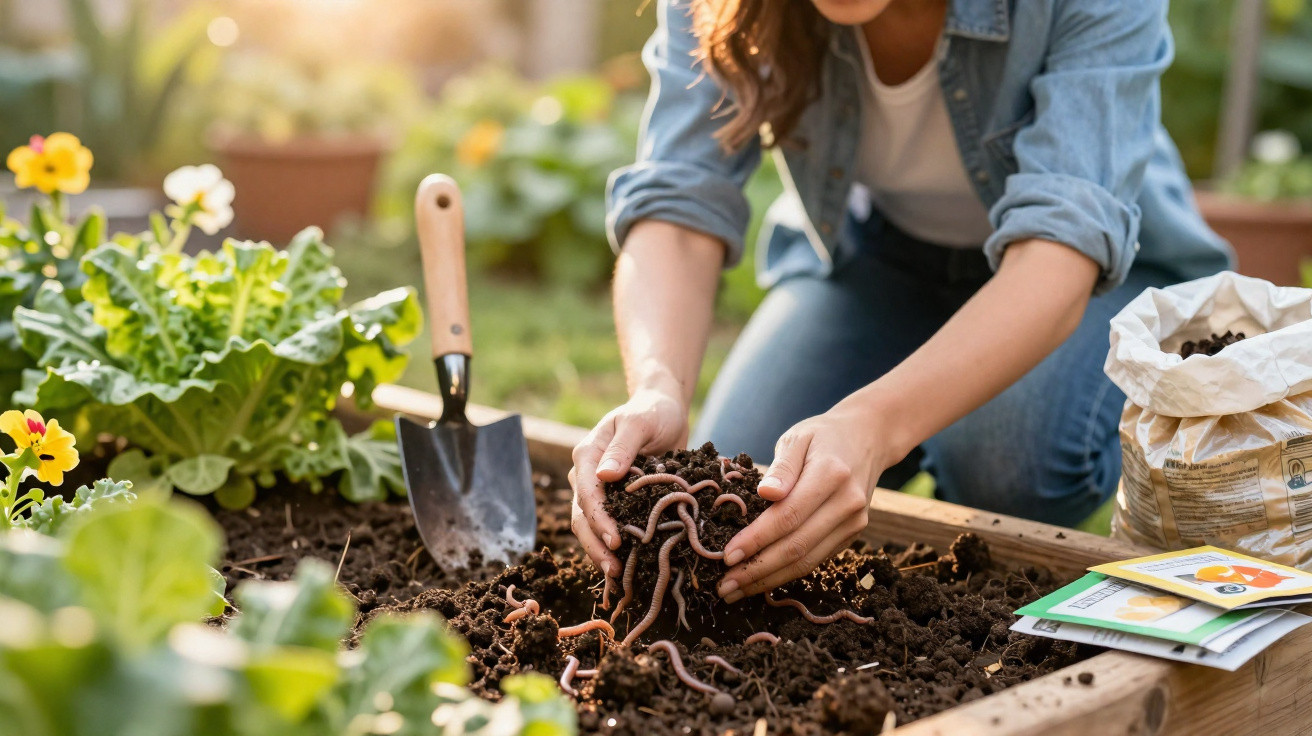
- Mature compost applied in autumn encourages soil life and replenishes nutrients.
- A mulch layer of leaves or grass clippings protects the soil against drying out and erosion.
- Trace elements, supplied for example through organic fertilisers or rock dust, support many of the tree’s defence processes.
- Crushed eggshells can provide the soil with a small amount of lime and improve its structure.
Excessive growth caused by over-fertilising with nitrogen is more harmful than helpful: shoots remain soft and susceptible. Slow, balanced nutrient applications are the better option.
What can still be saved after an outbreak
If peach leaf curl has severely affected the tree in a particular year, the priority during that summer is to stabilise it. The harvest will usually be poor, but the tree can recover.
Replacing leaves and rebuilding reserves
Once summer heat weakens the fungus, the peach tree often produces another flush of growth. This second generation of foliage is crucial, as it supplies the tree with energy for the following winter.
At this stage, plant feeds such as nettle brew or mild foliar fertilisers can help. They support the development of new foliage. The tree should not enter the next season as though nothing had happened, but with its reserves replenished.
Pruning and hygiene in winter
In late winter, inspect the crown closely. Heavily distorted, dead or clearly swollen shoots should be cut back to healthy wood. Do not put prunings on the compost heap; dispose of them instead, so the fungus is not spread around the garden.
Fallen diseased leaves should also be cleared from beneath the tree in autumn. Every source of fungus that is removed reduces infection pressure in the following season.
Legal considerations and sensible alternatives
Copper-based products are subject to strict approval rules in many countries, and permitted annual quantities are limited because copper can accumulate in the soil. Amateur gardeners should therefore always read the label carefully and never spray more often than recommended.
Anyone wanting to reduce copper use should combine several approaches: resilient varieties, an airy location, tree-strengthening care, and consistent pruning and hygiene measures. The stronger the overall package, the lower the fungal pressure – and the more likely it is that a minimal amount of copper will be sufficient to keep the peach tree healthy for many years.
Peach leaf curl remains a serious opponent, but with some knowledge, good timing and the targeted use of copper hydroxide, it is often possible to save the peach tree in the garden. Those who act in autumn and early spring will far more often enjoy juicy, healthy fruit in summer rather than bare branches.

Comments
No comments yet. Be the first to comment!
Leave a Comment