
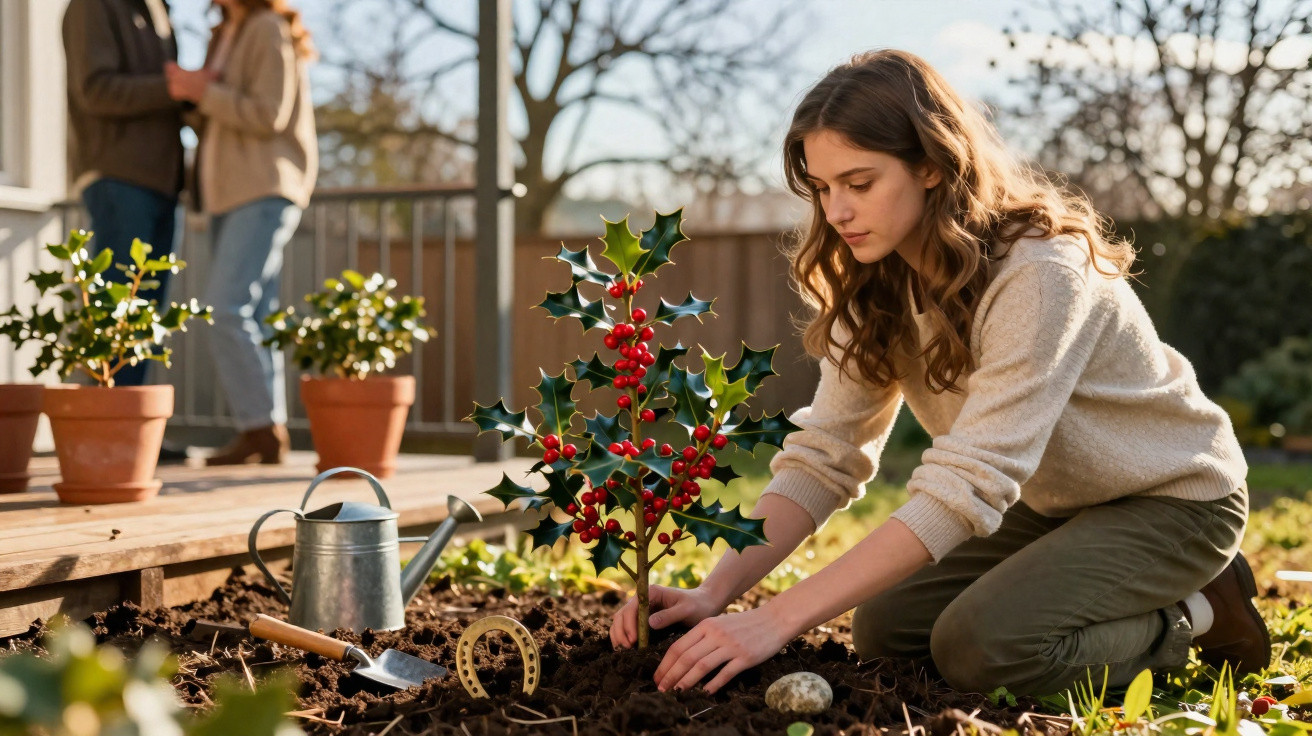
Many amateur gardeners feel the same urge at the end of winter: something has to change – in the garden, on the balcony or in their own mindset.
Between grey skies, bare branches and muddy beds, there is one shrub that experienced gardeners actively seek out at this time of year. It stands out not only for its colour, but also for the particular effect it is said to have on mood, symbolism and even wildlife: evergreen Ilex, more commonly known in Britain as holly.
Why holly is considered a lucky plant
For centuries, holly has held a place in Europe as a symbolic plant. Its glossy, deep-green leaves and vivid red berries are especially striking in winter, when little else adds colour.
The combination of winter greenery and red berries has traditionally represented protection, resilience and the beginning of a new phase of life.
Many people associate holly with:
- protection around the home, for example as a hedge or specimen shrub near the entrance
- a symbol of good fortune at the turn of the year and the start of meteorological spring
- decorative stems for the table, front door or balcony planters
- a visible reminder that there is still “life in the garden”
Practical advantages matter too: Ilex is tough, long-lived and far from delicate. It tolerates frost, copes well with partial shade and grows in places where other ornamental shrubs soon give up. Compact varieties are available for small urban balconies, while larger gardens can accommodate impressive shrubs or even small trees.
Why the period before early March matters so much
Planting now gives your new lucky plant a distinct head start. The soil is generally still sufficiently moist, sunlight is gradually becoming stronger and hot spells remain some way off.
If you plant holly before the beginning of March, its roots benefit from:
- regular rainfall towards the end of winter
- cooler temperatures, which reduce stress on the plant
- ample time to establish themselves securely before the first hot period
As a result, the shrub can develop a stable root system in good time and may put on stronger new growth in its first year. With a little luck, it may already produce the characteristic red berries by the following autumn and winter, which so many people associate with the plant.
A holly planted in the ground early in the year gets a natural “turbo boost” from rain, moderate temperatures and increasing levels of light.
There is also an emotional aspect. For many garden enthusiasts, planting at the start of the year feels like a small ritual: a deliberate opening to a new season, made visible through a striking evergreen shrub.
Planting holly in a border step by step
Holly is straightforward to grow, although a few basic principles are worth observing. Here are the key details at a glance:
| Aspect | Recommendation |
|---|---|
| Position | Partial shade to dappled shade, sheltered from wind |
| Plant spacing | 1.5 to 2 metres for standard varieties |
| Planting hole | Around 40 cm wide and 40 cm deep |
| Soil improvement | Work in compost plus a little sand or fine gravel |
| Initial watering | 5–10 litres of water immediately after planting |
Proceed as follows:
- Dig the planting hole and loosen the soil at the base thoroughly.
- Mix the excavated soil with well-rotted compost and a little coarse sand.
- Position the plant so that the top of its root ball sits level with the surrounding soil surface.
- Backfill with the prepared soil and firm it only lightly; do not stamp it down.
- Water generously, then apply a layer of organic mulch.
If you are creating a hedge or planting several specimens, allow for sufficient spacing. Standard varieties need 1.5 to 2 metres between plants, while dwarf forms can manage with around 1 metre.
Holly in a container: a lucky plant for balconies and patios
You do not need a garden to enjoy the plant’s benefits. Many varieties naturally remain compact and grow happily in a pot.
For container-grown holly:
- choose a pot at least 30–40 cm in both diameter and depth
- ensure it has drainage holes, as waterlogging must be avoided
- use good-quality, free-draining container compost, ideally mixed with a little sand
- keep it evenly moist during the first year, particularly in exposed, windy positions
On a balcony, Ilex gives winter planting structure and provides a neat green appearance throughout the year.
Low maintenance: how to care for this lucky plant properly
Anyone looking for an easy-care shrub is well served here. Holly grows slowly and responds well to shaping. In most cases, a light trim towards the end of winter is enough.
Pruning and shape
Prune the following:
- remove dead or damaged shoots consistently
- cut back wayward branches that spoil the overall shape
- trim the sides of hedges slightly tapered, making them narrower towards the top
Ilex is less keen on severe pruning, so regular small adjustments are preferable. This keeps the shrub dense and attractive.
Water and nutrients
After its first year in place, normal rainfall is often enough in ordinary weather. Water deeply only during extended dry spells in summer. Plants in containers need more water, and their compost should not be allowed to dry out completely.
A light application of a balanced organic fertiliser in spring supports the formation of new shoots and berries.
Take care with the berries – beautiful but not harmless
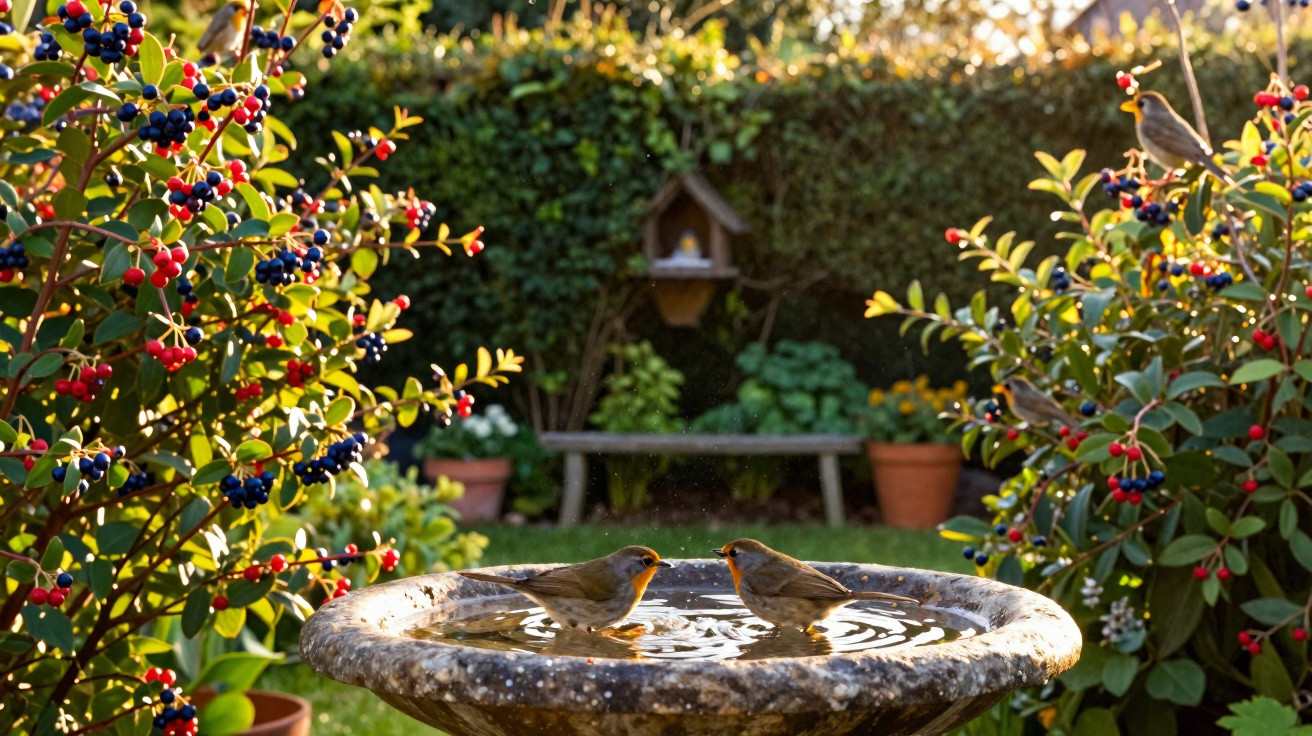
The red fruits can look tempting, particularly to children. They are an important winter snack for many bird species, but are inedible for people and some pets.
Holly berries are considered poisonous and may cause gastrointestinal symptoms if eaten.
If you have young children or inquisitive dogs, it is better not to place the shrub directly beside play areas or paths. Instead, position it along fences, at property boundaries or in more secluded corners. Fallen berries are easy to collect if you want to be extra cautious.
Choosing the right variety: no red berries without a male plant
One point regularly surprises people: not every holly produces berries. Most species are dioecious, meaning that male and female plants are separate.
- Only female plants produce berries.
- They need pollen from a nearby male specimen to do so.
- One male shrub is generally sufficient for three to five female plants.
When buying, it pays to read the label carefully. Many garden centres identify the plants accordingly or sell suitable “pairs”. If you simply want an evergreen structural plant, you can also choose purely male varieties.
Regional varieties support the garden – and wildlife
Where possible, choose Ilex varieties suited to your local area. These types are adapted to the climate and soil, and usually fit better with native insects and birds. Local nurseries and garden centres know the regional selection well and can recommend varieties that have already proved successful.
In a wildlife-friendly garden, holly is often combined with other evergreen woody plants, such as privet or alternatives to yew, as well as flowering shrubs for bees. This creates a varied, lively garden space throughout the year.
More than decoration: how holly affects mood and everyday life
Many people underestimate how much difference a single, thoughtfully placed plant can make. An evergreen shrub by the front entrance catches your eye every day – as you leave for work and when you return in the evening. Especially during the months when darkness falls early, a living splash of colour can alter your perception.
Holly also has several practical uses: stems can be used in Advent wreaths, winter arrangements or as natural decoration in a vase. Regular pruning provides free decorative material that would otherwise cost money in a shop.
For many households, this almost automatically becomes a small ritual: every year at the end of winter, the shrub is checked, perhaps supplemented with another plant and a few stems are cut. It creates a connection with your own greenery – and this very sense of renewal and optimism is what many people are currently seeking, whether they have a terraced-house garden or a rented balcony in the middle of the city.
Comments
No comments yet. Be the first to comment!
Leave a Comment