
The real key lies somewhere else entirely.
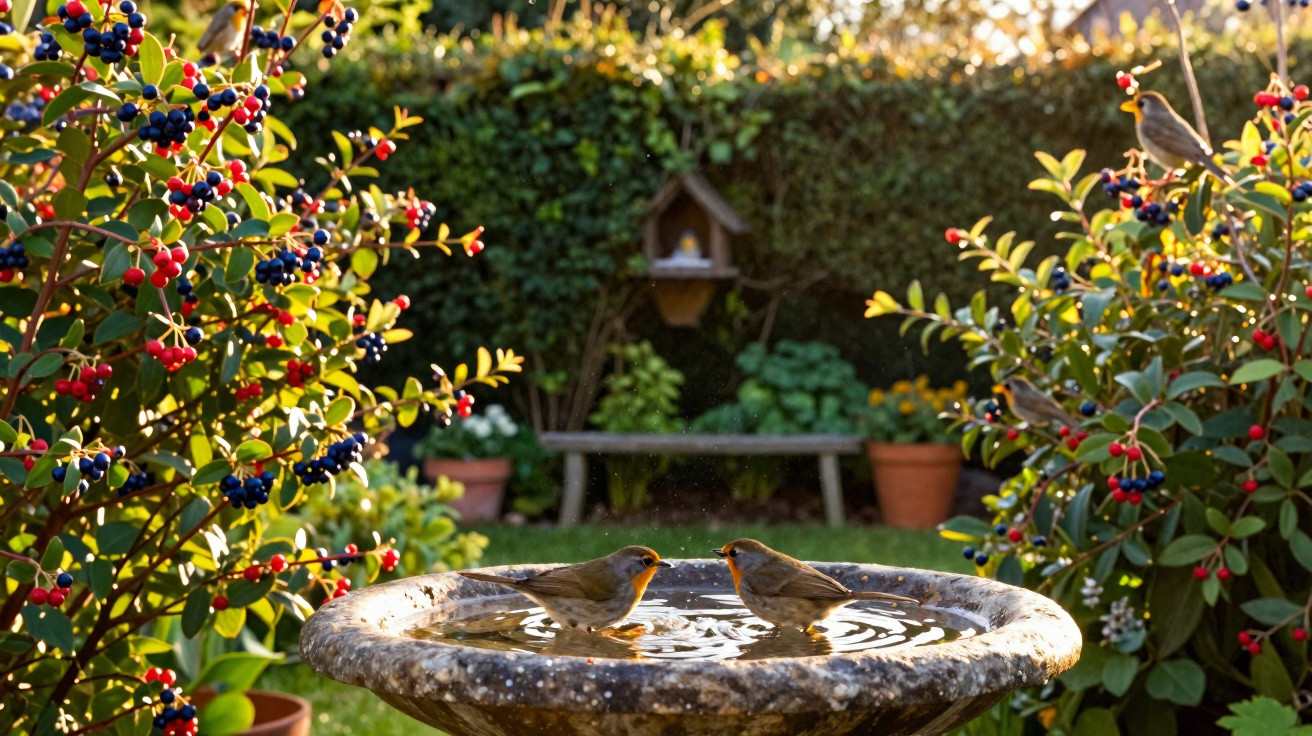
Anyone who has watched blue tits, robins and blackbirds turn their own garden into a stage will not want to miss the spectacle again. Rather than expensive feeders from the garden centre, wild birds chiefly need a natural landscape that provides food, shelter and water all year round. With a few well-chosen changes, almost any garden can become a genuine refuge for feathered visitors – without plastic ornaments or permanent supplementary feeding.
Natural food: three berry shrubs that attract birds like a magnet
Why bird feeders are only a temporary solution
Feeding stations can help at particular times, especially during harsh winters. However, they do not address the underlying issue: most gardens lack natural food sources. Gravelled areas, closely mown lawns and sterile hedges dominate many residential neighbourhoods. Such places may have bird feeders, yet offer scarcely any insects, seeds or berries.
“Wild birds thrive in gardens where they can feed directly from shrubs, grasses and herbs – just as they do in the wild.”
Anyone seeking to attract greater species diversity over the long term should therefore shift their focus: away from styled decorative bird feeders and towards planting that supplies food for months at a time.
Berry shrubs that turn flower beds into a living buffet
As few as three carefully selected shrubs can make a garden a real magnet for birds. Species that fruit abundantly in late summer and autumn, with berries that remain on the branches for a long time, are particularly suitable. These include:
- Bird cherry or wild cherry – popular with blackbirds, starlings and thrushes
- Elder – provides berries for birds, while its flowers support insects
- Dog rose or rose hip – rose hips often remain through winter and provide valuable energy
- Firethorn or rowan – their bright berries act as a signal to hungry animals
The precise species matters less than variety. Combining different shrubs extends the “feeding season” and appeals to a range of bird species, from tits and robins to finches.
Positioning the shrubs correctly
Shrubs should not stand alone in the middle of a lawn. Birds feel safer when they can quickly dart into cover. Mixed hedges at the edge of the plot or in a garden corner are ideal:
- Plant several shrubs as a group rather than scattering them individually
- Use varying heights to create a layered structure
- Place flowering perennials or herbs in front to attract insects
With little effort, a dull fence can become a lively source of food and habitat.
Safe refuges: a dense corner can be a lifeline
What really threatens birds – and how a garden can help
Open spaces without cover cause birds stress. Cats, martens, magpies and birds of prey are constantly on the move in residential areas. When there is no dense area to escape into in an emergency, many species avoid the garden or visit only briefly.
“A single dense strip of hedge can make the difference between life and death for a brood of birds.”
Instead of trimming every hedge into a perfect shape, it is worth deliberately leaving one corner “out of control”. It can grow freely, branch out and become dense – exactly as a natural thicket would.
Turning a hedge into a sheltered space
A safe refuge does not require a park. One garden corner is enough if it is given the opportunity to become dense. Privet, hawthorn, blackthorn, cornelian cherry and hornbeam are all well suited. The following points are crucial:
| Feature | Benefit for birds |
|---|---|
| Dense branches down to ground level | Protection from cats and martens |
| Thorny species, such as hawthorn | A secure nesting place that is difficult for predators to access |
| Leave fallen leaves and branches in place | Shelter for insects, which in turn become food |
| Less formal pruning | More nesting opportunities and natural growth |
This type of area is especially valuable in winter. Birds retreat into the dense branches to escape wind and cold and survive the night.
Water source: a shallow bowl, a big impact
Why water matters more than many people realise
Most garden owners think about food but overlook water. Yet birds need both: for drinking and bathing. Clean feathers are vital for flight and for protection against the cold. A simple bowl or shallow plant-pot saucer can therefore be almost as appealing as an entire pond.
“Anyone who provides and maintains a shallow water bowl creates a vital ‘filling station’ for all wildlife in the garden.”
A sturdy bowl with a rough surface is ideal, as it gives animals better footing. The water should be only a few centimetres deep, allowing even small birds to bathe safely.
Keeping the water source safe and hygienic
No elaborate equipment is necessary; a little routine is sufficient. The important points are:
- Provide fresh water daily, especially in summer
- Rinse the bowl regularly to remove germs and algae
- Position it where there is a clear view, so birds can spot predators in good time
- Avoid smooth metal bowls, as animals may slip in them
During winter, the bowl can briefly be thawed on frost-free days using warm, but not hot, water. Chemical additives have no place in a bird bath.
When everything comes together: your garden as a small bird paradise
The ideal combination of the three elements
Things become particularly interesting when all three elements are combined: berry shrubs, dense hedges and a water source. Birds then find everything they need in one place – without risky journeys across open ground or constant energy loss.
“A garden that provides food, shelter and water becomes a regular destination for birds – not merely a stopover.”
It often takes only a year for noticeably more wildlife to appear: tits pecking at berries, sparrows bustling through the hedge, and blackbirds splashing in a puddle. Over time, territories become established, and some species nest regularly within sight of the patio.
What the effort feels like in everyday life
Choosing natural structures can even save time. A wilder part of the garden needs less formal pruning, no artificial fertiliser and no ornamental lawn that must be mown constantly. Instead, small areas develop where much takes care of itself: leaves decompose, insects settle in and birds keep pests in check.
There is another advantage: gardens like these cope better with climatic extremes. Deep-rooted shrubs withstand dry spells more effectively than closely cut lawns. Dense hedges slow the wind, provide shade and create a more pleasant microclimate – for animals and people alike.
Those starting out do not need to transform everything at once. Adding a few berry shrubs to an existing hedge, maintaining one garden corner less strictly and putting a bowl of water beside the patio is often enough to turn a “nice” garden into a living habitat where birds do not merely land briefly, but stay for good.
Comments
No comments yet. Be the first to comment!
Leave a Comment