
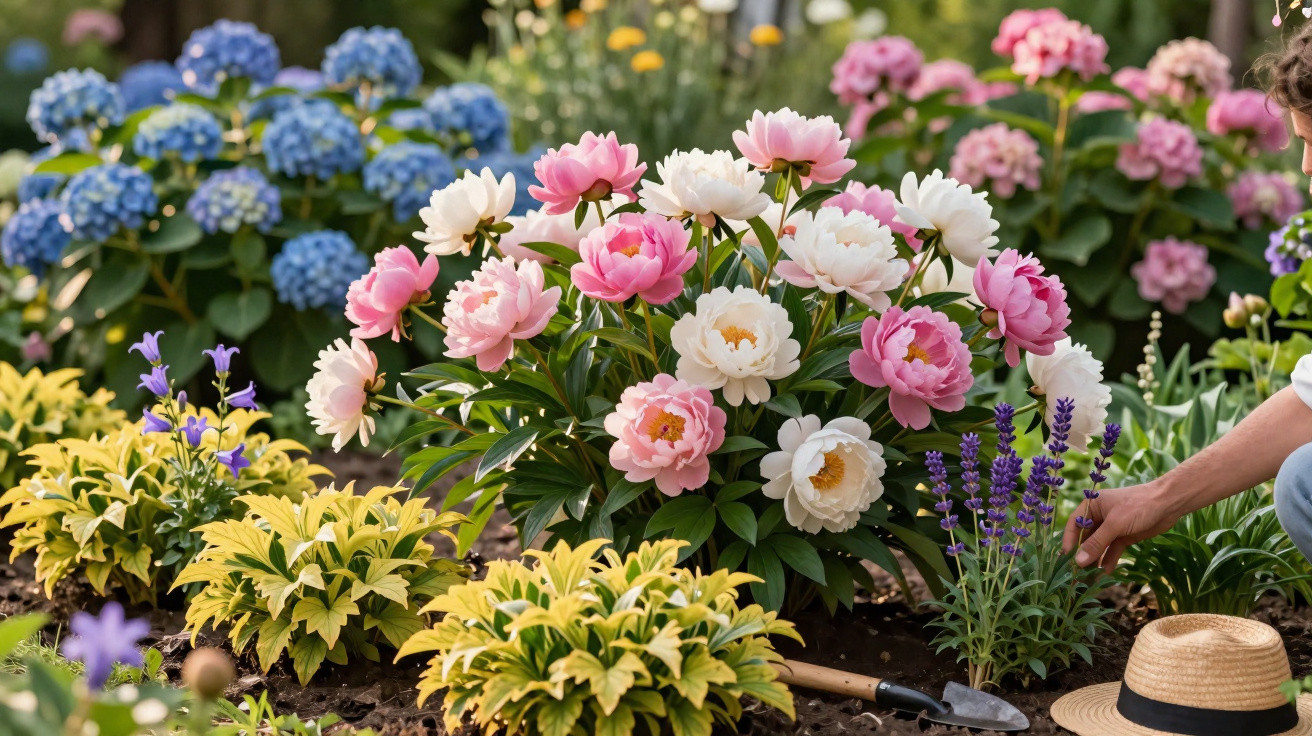
Many amateur gardeners wonder why their peonies grow reliably yet never produce the spectacular display of flowers seen in parks or traditional cottage gardens. Surprisingly often, the answer is not the variety or fertiliser, but the plants growing immediately beside them - and the amount of space these perennials truly have.
What peonies need before you combine them with other plants
Peonies are among the longest-lived perennials for the garden. Given suitable conditions, they often remain in the same position for decades. Above all, they need a sunny site or light partial shade with at least four to five hours of sunshine each day.
Their soil should be deep, humus-rich and free-draining. Peonies strongly dislike waterlogging during winter, as their roots can quickly rot in these conditions. Heavy competition from the roots of particularly vigorous neighbouring plants is equally unsuitable.
“Anyone who crowds peonies too closely risks fungal diseases and disappointing flowering - generous, airy spacing is their most important ‘luxury’.”
One common mistake is allowing the bed to become increasingly crowded over the years. Plants merge together, moisture lingers on the foliage, and the result is an ideal breeding ground for grey mould and other fungi. Buds may then collapse, flowers can become misshapen, or flowering may fail altogether.
Three straightforward rules will help with any planting scheme around peonies:
- Choose only perennials that enjoy sunshine and free-draining, fairly nutrient-rich soil.
- Do not plant substantially taller plants directly in front, where they will shade the peonies.
- Leave a small open area around every perennial so that air can circulate freely.
Lady’s mantle and more: ground cover that makes peonies shine
Once the basic conditions are right, it is time to choose companions for the border. Soft lady’s mantle (Alchemilla mollis) is an especially successful match. It forms a loose carpet of softly pleated foliage, topped with clouds of yellowish-green blooms.
This restrained shade creates an interesting effect: it makes the delicate pinks and whites of peonies appear noticeably stronger without stealing attention from them. The pairing works just as well in a cut-flower arrangement as it does in a perennial border.
Bellflowers as elegant companions for peonies
Compact bellflower varieties are another particularly harmonious choice. Many produce delicate white, blue or violet flowers in early summer. They create a light, romantic setting while avoiding competition with the peonies’ root mass.
One point deserves consideration: bellflowers can sometimes attract more pest insects. When combining them, avoid planting too densely and include a few “protective plants” nearby that help keep unwelcome visitors away.
Hydrangeas at the back: a backdrop for large blooms
Hydrangeas are excellent for adding structure to the rear of a border. Their large rounded flower heads echo the shape of peony blooms without overpowering them. Planted with some distance between them, they create a calm background.
Depending on the variety, hydrangeas tolerate a surprising amount of sunshine provided the soil does not dry out. During hot summer weeks, they can take some of the midday sun off peonies without creating a dense canopy of shade. This is particularly helpful for the perennials in dry years.
For an attractive border over several months, peonies and hydrangeas can be paired with perennials that flower early and late:
- Bearded iris: usually flowers shortly before peonies, introducing their season.
- Allium: ornamental onions add architectural globe-shaped flowers among the perennials from late spring.
- Daylilies: take over in high summer, providing colourful accents once peony flowering has finished.
This creates a sequence of flowers from late spring well into summer, without one plant pushing out another.
Lavender as a fragrant protective hedge around peonies
Lavender is an excellent companion for peonies both visually and horticulturally. It favours sunny, free-draining positions and copes well with relatively poor soils. Used in the right way, it forms a kind of fragrant protective hedge.
Its essential oils disturb many pests: mosquitoes, flies and some beetles, while deer and rabbits often avoid areas planted with strongly scented rows of lavender. In borders edged with peonies, lavender can be positioned precisely along that outer edge.
“Lavender and ornamental onions act like small security teams in the perennial border: decorative while also deterring many pests.”
Allium species perform this dual role as well. Their slightly sulphurous scent is uninviting to many insects but harmless for us. Planted among peonies, they bring height and structure without casting shade.
Which plants are best kept away from peonies
However attractive they may look in catalogues, very tall, spreading ornamental grasses placed directly beside peonies quickly cause difficulties. They take away light, congest the root area and retain a great deal of moisture around the foliage.
Plants that thrive in permanently wet, heavy soil are not a suitable match either. They keep the ground wetter for longer and create an environment in which fungal diseases can flourish. Over time, peonies respond with weaker growth and fewer buds.
| Suitable neighbours | Better avoided |
|---|---|
| Lady’s mantle | Very tall ornamental grasses |
| Bellflowers (compact varieties) | Perennials for permanently wet soils |
| Hydrangeas in the background | Deep-rooted shrubs planted directly beside them |
| Lavender, allium, bearded iris, daylilies | Shallow-planted, strongly creeping ground cover |
Practical tips: planning a low-maintenance peony border
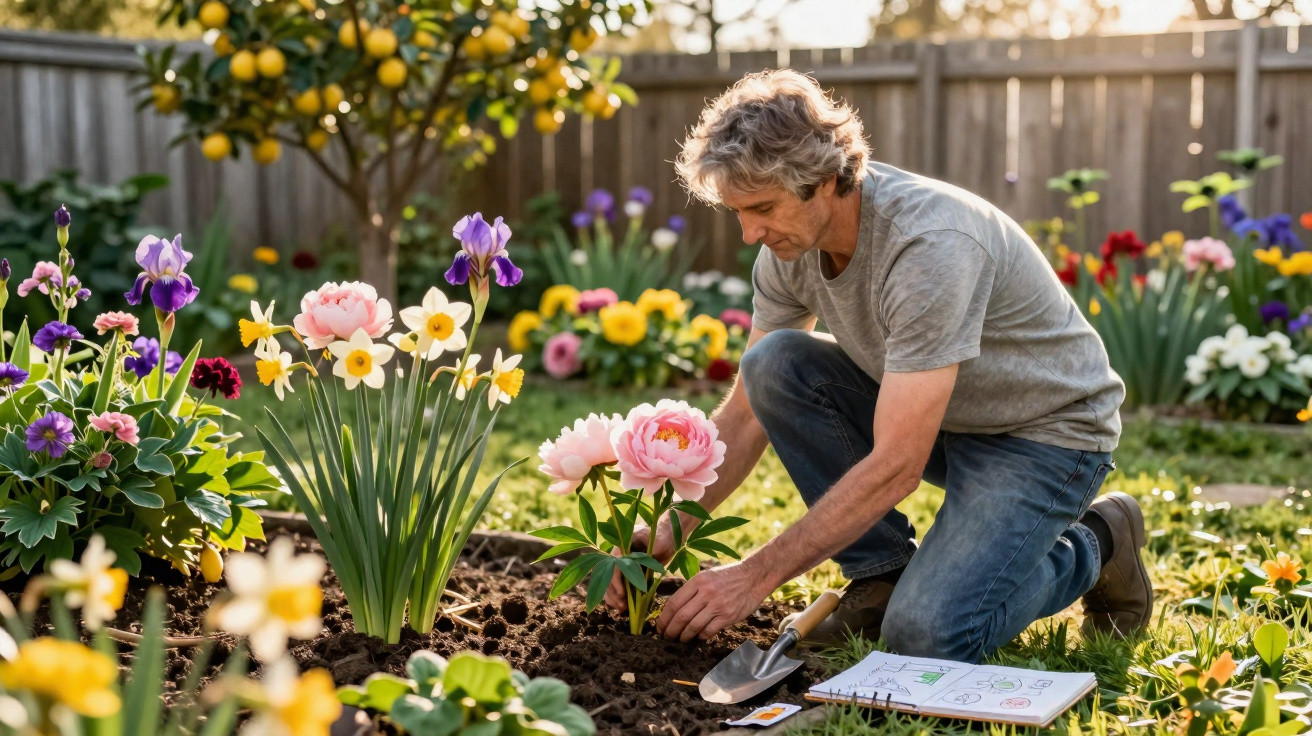
In practice, it works best to treat peonies as the clear stars of the display. First establish their position in the border, then plan the surrounding plants in rings. Keep the ground immediately around the roots largely clear, or plant it only with very low, airy companions.
The next ring can consist of lady’s mantle or low-growing perennials. At the outer edge, add a band of lavender, allium or other fragrant protective plants. Hydrangeas and taller structural plants can then be placed behind this, or staggered behind it.
Those just starting with peonies should avoid planting them too deeply. The perennial’s “eyes” - its developing buds - should ideally sit only a few centimetres beneath the surface. If they are lower than this, peonies may refuse to flower even with the best possible neighbours.
How the right mix pays off over time
A carefully planned peony border develops a stable rhythm over the years. The perennials gradually grow together without crowding one another. Pest insects find fewer opportunities because scented plants disturb them, while good airflow is maintained throughout the planting.
With suitable plant partners, intervention is needed far less often: fewer supports, less summer cutting back and fewer fungal treatments. At the same time, the garden remains lively from late April well into summer - first with iris, then peonies, followed by daylilies, hydrangeas and the lasting scented band of lavender.
When trying new combinations, consider colours and flowering periods. Pastel-coloured peonies can take strong blue and violet companions, while vivid pink or red varieties look calmer alongside soft yellow and cream shades. By deliberately planting a few groups of alliums and lady’s mantle, you can create a border with simple means that makes every peony bloom resemble a small painting.
Comments
No comments yet. Be the first to comment!
Leave a Comment