
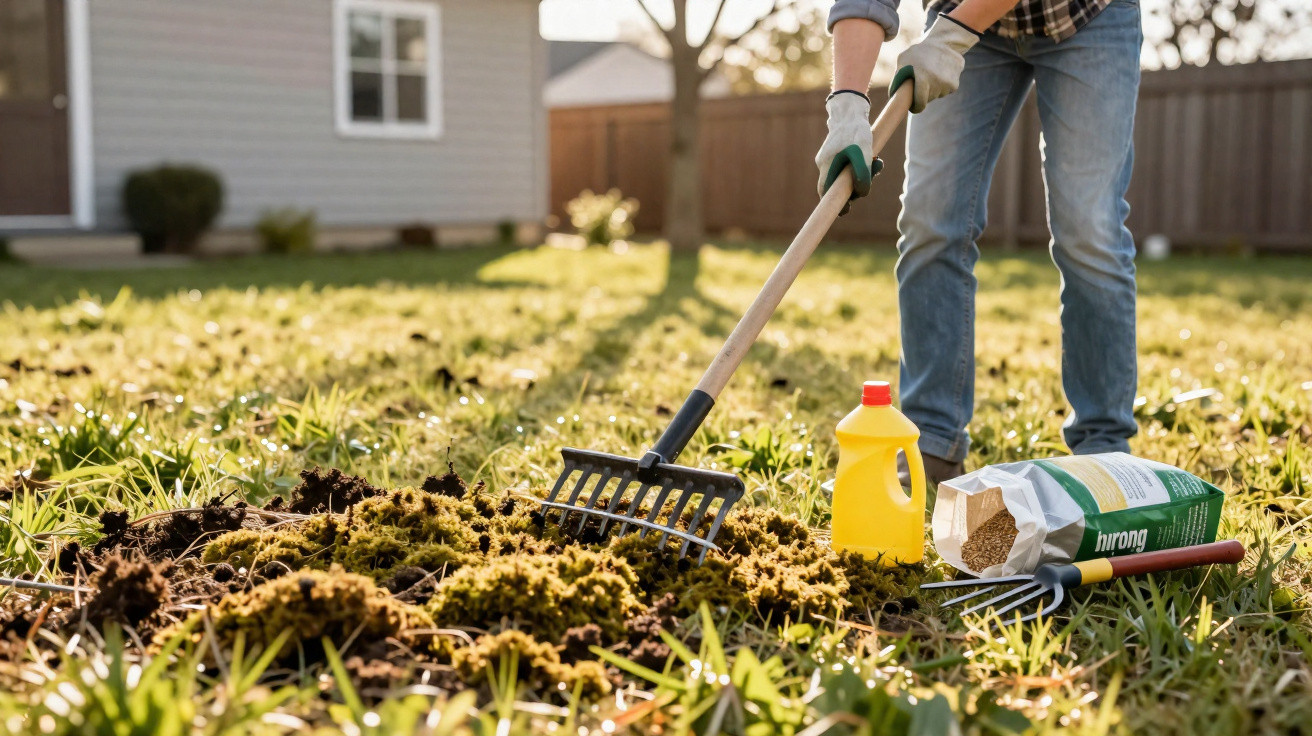
After the first mild days of the year, it is natural to inspect the garden with pride – only to get a shock: instead of lush green grass, dark cushions of moss are spreading. Plenty of “tricks” for this circulate online. One of them is using washing-up liquid to tackle moss. It sounds clever and inexpensive, but in the long term it can cause real problems for the lawn.
Why moss appears throughout the lawn after winter
When people first step into the garden again in March or April, they often see the same thing: the turf is patchy, the grass looks dull and large islands of moss sit between it. Shaded corners, damp spots and areas beneath trees are especially likely to be affected.
The explanation is straightforward: winter puts the lawn under strain. Cold temperatures, wet conditions and limited light hold grass back. It grows poorly, produces hardly any new shoots and is less able to compete with other plants. Moss, by contrast, copes remarkably well in these conditions.
Horticultural and soil experts point to further causes too: moss tends to spread where the soil is:
- heavily compacted, for example from frequent foot traffic
- lacking sufficient nutrients
- persistently damp and slow to dry out
- exposed to very little sunlight
In these areas, grass has little chance of growing densely. The result is gaps in the turf, which moss quickly takes over.
Moss is not a sign of “evil weeds”, but a cry for help from the lawn: the soil and site conditions are unsuitable.
The major misconception: “making moss disappear” with washing-up liquid
The same advice repeatedly appears online: dilute washing-up liquid with water, spray it over the moss, wait briefly – and supposedly the issue is solved. The suggestion is tempting because almost everyone has washing-up liquid at home, and it seems like a quick, cheap answer.
But that is precisely the problem. Washing-up liquid was designed to remove grease and protein residue in the kitchen, not for use on garden soil. Its surfactants break down dirt and grease, while also affecting the delicate structures in the soil and on grass blades.
What washing-up liquid really does to soil
Applying washing-up liquid to a lawn can cause several unwanted effects:
- The lawn’s fine root hairs may be damaged or die off.
- Soil organisms, including earthworms and microorganisms, can be disturbed or driven away.
- Soil structure may deteriorate, leaving the ground more compacted and less permeable.
- Rain can wash residues into groundwater.
Over time, this damages exactly what a lawn needs most: living, well-aerated soil with enough nutrients. The moss may decline a little at first, but the lawn as a whole becomes weaker – making it more susceptible to fresh moss growth.
Anyone who pours washing-up liquid over the grass may gain a few weeks of peace – but will ultimately lose the quality of their lawn.
The better approach: remove moss mechanically
Rather than reaching for the washing-up liquid bottle, gardening professionals rely on simple but effective practical measures. They take some time and effort, but protect the soil and strengthen the grass in a lasting way.
Step 1: Mow correctly
At the start of spring, it is worth giving the lawn its first cut, mowing it slightly shorter than usual. This lets more light reach the turf and makes moss cushions easier to rake out afterwards.
Step 2: Rake through thoroughly
After mowing, it is time for the rake. Use a sturdy lawn rake or scarifying rake to pull moss, old clippings and dead plant material out of the lawn. It can look drastic at first, but it creates room for fresh grass shoots.
If the lawn contains a lot of moss or the area is larger, a scarifier – either manual or powered – can also be used. It lightly cuts into the turf and reliably removes moss and thatch.
Many gardeners are alarmed by how the lawn looks immediately after scarifying – but a few weeks later, it is usually much denser and fresher.
Step 3: Reseed bare patches
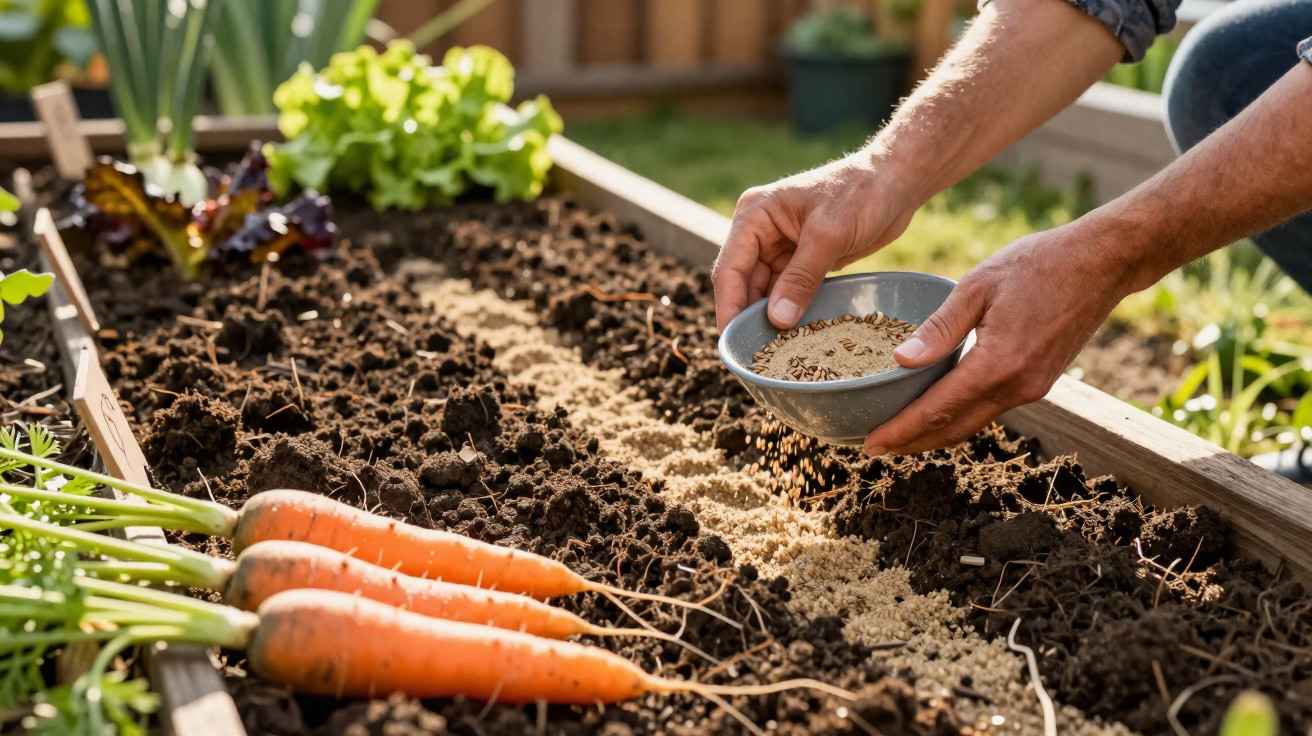
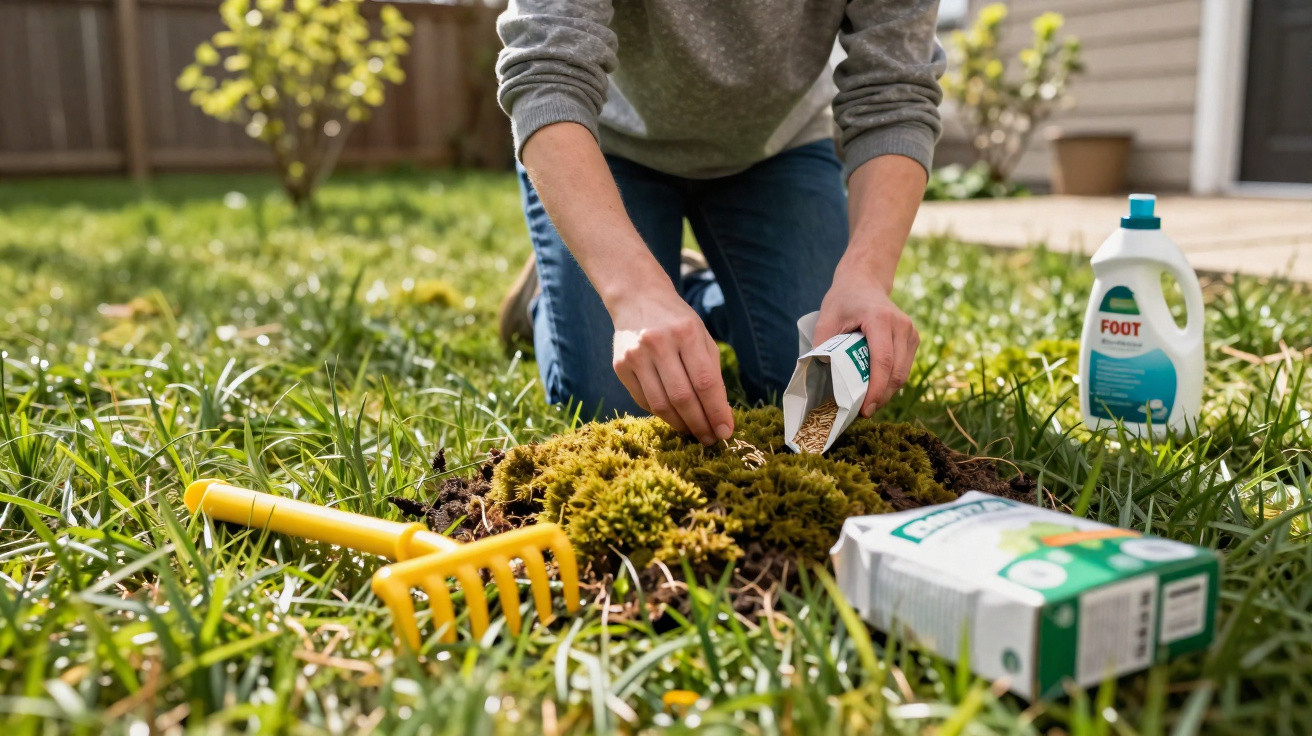
Removing moss often leaves bare areas behind. If these are left unused, moss will soon return. This is why overseeding is advisable: scatter suitable lawn seed over the open patches, rake it in lightly and water well.
This gives the grass an opportunity to occupy the cleared ground – the best protection against a new moss problem.
When moss has already taken over the lawn
In some gardens, moss has gained the upper hand over several years. The surface looks as though it has been covered by a soft carpet, with only remnants of grass left. In these cases, some people turn to specialist moss treatments.
These products often contain iron sulphate, also known as ferrous sulphate. It turns moss brown to black within a few days, making it easier to rake away.
However, using it has drawbacks:
- Incorrect dosing can make the soil too acidic.
- Moss will return unless the soil is improved afterwards.
- Iron sulphate stains can discolour paving slabs and clothing.
Anyone intending to use iron sulphate should follow the instructions exactly and always wear suitable protective equipment. Even so, such treatment never replaces tackling the underlying causes: compacted soil needs loosening, nutrients must be replenished and waterlogging reduced.
How to make the lawn less prone to moss in the long term
Moss cannot simply be “sprayed away”. For lasting results, the conditions needed for healthy grass must be improved. The most important measures are surprisingly unglamorous, but highly effective.
Loosen and aerate the soil
Compacted areas can be recognised by water that remains on the surface for longer and soil that feels hard. Regular aeration helps here. This can be done with, for example:
- a lawn aerator, a hand tool with spikes or blades
- aerator shoes, which press holes into the turf as you walk
- hollow tines, which remove small cores of soil
The holes created allow air and water to penetrate the soil more effectively. If desired, they can then be filled with sand to keep the structure looser in the long run.
Add nutrients where needed
A hungry lawn remains thin – and moss takes advantage of that. A lawn-specific fertiliser in spring helps grass grow more strongly and fill gaps more quickly. Organic fertilisers also support soil life, which improves soil structure over time.
A dense, well-fed lawn is the most effective moss suppressor – entirely without “magic tricks” from the kitchen cupboard.
When moss is not actually a problem
Some garden owners are frustrated by every patch of moss, while others enjoy its soft carpet-like appearance. Anyone maintaining a lawn for play or display will find consistent care hard to avoid. In less-used corners of the garden, however, moss can be deliberately tolerated.
Mossy areas retain moisture, provide a habitat for tiny organisms and often create a calm, naturally harmonious look – especially beneath mature trees or in shaded places where grass is unlikely ever to thrive perfectly.
A practical approach may be this: where the lawn needs to be functional – for playing, sitting or appearance in front of the patio – the effort of scarifying, overseeding and fertilising is worthwhile. In remote, shaded corners, moss can simply remain.
Ultimately, the deciding factor is not botany alone, but also personal expectations for the garden. Those who resist the spring urge to “just put washing-up liquid on it and get rid of it” and instead plan a few targeted care measures will, in most cases, be rewarded with a considerably healthier, stronger lawn – without risky kitchen experiments on the grass.


Comments
No comments yet. Be the first to comment!
Leave a Comment