
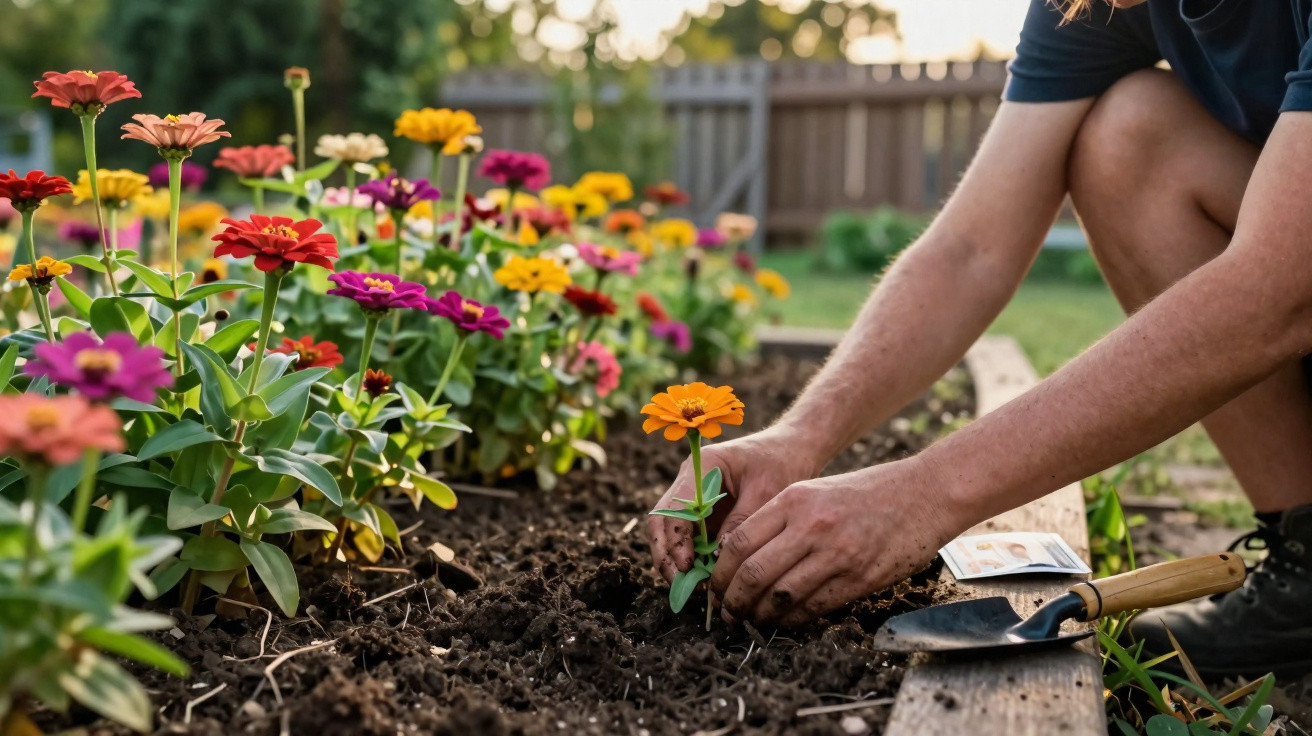
For anyone juggling work, children and everyday life, there is rarely time for elaborate gardening projects. Every year brings the same question: what can I plant to keep things colourful for as long as possible with very little care? Gardening professionals repeatedly turn to a delicate, feathery summer flower that has long been considered a top tip for lazy gardeners in England – and which performs just as well in UK balconies and flowerbeds.
The overlooked summer star: why Nigella is now on trend
The plant in question is Nigella damascena, often called Love-in-a-mist. At first glance, it can seem almost understated, with fine foliage, airy blooms and soft colours. Yet this very combination can turn borders, containers and even small front-garden driveways into a gentle sea of flowers for months.
"Nigella flowers from June through to September, needs very little attention and attracts bees and other pollinators at the same time."
Gardening experts describe Nigella as hardy, undemanding and remarkably adaptable. This annual tolerates light frosts, copes well with poor soil and forgives the occasional missed watering. That makes it ideal for families, commuters and anyone who wants attractive flowers without constantly carrying around a watering can.
Clouds of colour rather than single blooms: Nigella in the garden
Love-in-a-mist truly comes into its own when planted in groups. It then creates loose, cloud-like drifts of flowers, weaving among other plants without crowding them out.
- delicate blooms, usually blue to violet, although some varieties are pink or white
- finely divided, “mist-like” foliage that disguises gaps in the border
- ornamental seed pods that form after flowering and remain appealing when dried
- a long flowering period – with well-timed sowing, virtually the whole summer
The plant is also widely used as a cut flower. According to gardening professionals, freshly cut blooms can last in a vase for up to ten days when kept in clean water. Allowing space for a few rows in a vegetable patch or raised bed provides a steady supply of small bouquets for the home over several weeks.
Sow Nigella now: how to establish it reliably
A major advantage is that Nigella germinates very reliably when sown directly outdoors. There is no need for expensive pots, complicated grow lights or heated greenhouses. It can also be started in trays or containers, which is particularly useful for balcony gardeners.
Direct sowing in a border
For anyone with a flowerbed or a patch of bare soil, the method is straightforward:
- Loosen the soil and remove larger stones and leftover roots.
- Scatter the seeds thinly across the surface rather than sowing them in rows.
- Cover lightly with soil or compost, to a depth of around 0.5 to 1 centimetre.
- Water gently so that the seeds are not washed away.
- Keep the soil evenly and lightly moist until germination.
Gardeners recommend leaving around 20 to 30 centimetres between plants. If seeds have been sown generously, surplus young plants can later be moved elsewhere or simply thinned out.
Growing in pots or trays
Nigella is equally uncomplicated on a balcony or terrace. Sow it in shallow trays or window boxes as follows:
- fill a shallow tray with loose, free-draining compost
- sow the seeds fairly closely together – seedlings can be thinned later
- dust them lightly with compost without firming it down
- place in shade or light partial shade until the seedlings are sturdy
- transplant later into larger pots or containers
The seed packet itself makes a useful reminder: many home gardeners place it at the edge of the tray like a small label. That way, even weeks later, it is clear what is germinating there.
Easy care for everyday life: keeping the flowers going for months
Once Nigella is established, it demands very little day-to-day attention – in the best possible sense. Only a few simple tasks are needed to keep it looking good over a long period.
Watering, deadheading and repeat sowing: the three essentials
"With minimal effort, one packet of seeds can provide several months of flowers, cut blooms and even new plants for the following year."
- Watering: In an average summer, rainfall is often enough. During heatwaves, water pots regularly and give borders a thorough soaking when necessary.
- Removing spent flowers: Cutting off faded blooms encourages fresh buds. This can easily be done while picking flowers for a vase.
- Repeat sowing: A second sowing a few weeks after the first extends the flowering period considerably, as younger plants take over later.
Towards the end of the season, many home gardeners deliberately allow some seed pods to ripen. The plants then self-seed, and small seedlings reappear in the same places the following spring. Over time, this creates a loose, almost natural-looking ribbon of Nigella among perennials, shrubs or even vegetables.
Ideal for bees, small gardens and tight budgets
Nigella offers more than visual appeal. Its blooms provide food for bees, bumblebees and hoverflies. Anyone wishing to avoid chemical products in the garden will welcome every additional pollinator.
The plant is also attractive for tighter budgets: a packet of seeds generally costs only a few pounds, yet can cover several square metres or fill numerous containers. Thanks to its ability to self-seed, the purchase can continue to pay off for several years.
| Feature | Benefit for home gardeners |
|---|---|
| Long flowering season (June–September) | Colourful accents throughout the summer and fewer gaps in the border |
| Hardy and low-maintenance | Suitable for working people and gardening beginners |
| Suitable for borders and pots | Works just as well in a terraced-house garden as on a city balcony |
| Excellent cut flower | Fresh home-grown bouquets instead of supermarket flowers |
| Can self-seed | Flowers often return to the garden the following year without buying new seed |
Where Nigella looks best – and what it pairs with
Love-in-a-mist is most effective when used in groups rather than as an individual plant. It is a classic choice for naturalistic cottage gardens, although the same approach can readily be adapted for contemporary urban gardens.
Combinations that work
- among roses, where it acts as an airy companion and softens the transition down to the soil
- in the vegetable patch, for example beside lettuce or carrots, where it attracts pollinators
- in pots with low-growing grasses or lavender
- as an informal edging along paths or patios
Its delicate leaves settle like a veil around bolder plants, softening the hard lines of paving edges and borders. Gardeners who prefer a restrained colour scheme can stay with blue and white, while those keen to experiment may choose mixed packets containing pink or bicoloured flowers.
Practical notes on position, soil and risks
Nigella prefers full sun to no more than light partial shade. In darker corners, it remains sparse and tends to flop over. The soil should drain freely, as waterlogging quickly causes root rot. In highly fertile soil, leaves and stems grow lushly, but flowering can sometimes be a little less abundant.
Pests tend to cause relatively few problems for this plant. Slugs are rarely interested in the delicate foliage, while beneficial insects often bring typical aphid pressure under control quickly. Only prolonged periods of heavy rain can be troublesome, as the slender stems may occasionally bend or fall over. In exposed, windy positions, a loose support ring or planting alongside sturdier partners such as lavender or smaller perennials can help.
Anyone with children or pets should be aware that the mature seed pods contain many small seeds. They are not considered highly toxic in normal quantities, but they are certainly not a snack. As with many ornamental plants, the rule is simple: explain this and do not allow them to be tasted.
For anyone wanting to add more colour to a garden, front garden or balcony this year with minimal effort, Nigella is therefore one of the most appealing options. One packet of seeds and a few minutes of time can turn an otherwise easily forgotten spring task into a summer-long display in blue, violet and white.


Comments
No comments yet. Be the first to comment!
Leave a Comment