
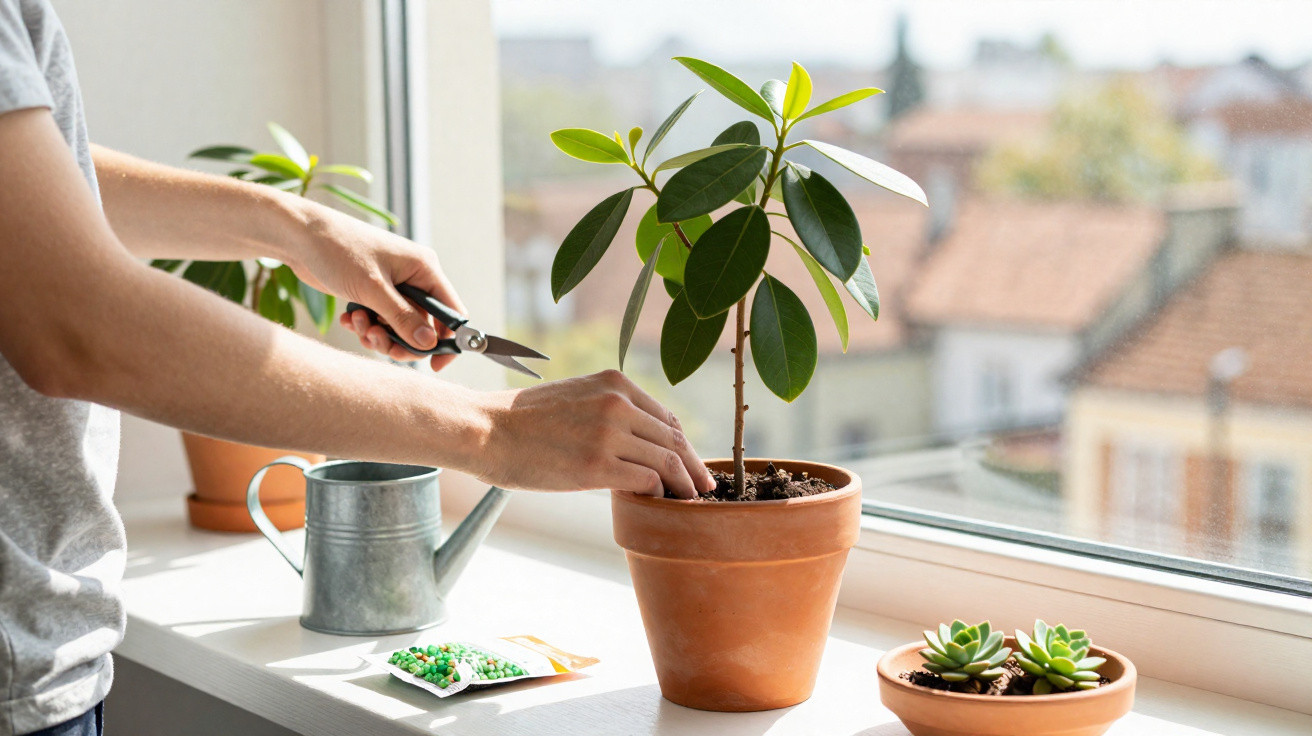
After its winter dormancy, the money tree slowly gets going again in March – but without one crucial change in care, its growth will virtually stall.
Many owners leave their money tree largely to its own devices throughout winter. Very little water, no fertiliser and limited light – the plant copes surprisingly well with this. In March, however, the situation changes: this member of the stonecrop family wants to resume growing, but it needs conditions that have been clearly adjusted. Those who make the right changes now will be rewarded with a dense, glossy plant rather than a tired, leggy houseplant.
Money tree in March: the quiet start of the growing season
The money tree (Crassula ovata), also often called the jade plant, is among the most popular succulents for a windowsill. During autumn and winter, its activity slows considerably. The compost remains damp for longer, while the plant needs very little water and no extra fertiliser. In many homes, watering once a month over winter is perfectly adequate.
By March, the picture gradually shifts: days become longer, the sun is higher and temperatures rise. The growing medium dries out more quickly, while delicate new buds form at the tips of the shoots. This is the signal that the winter routine needs changing now, otherwise growth may suffer throughout spring.
In March, it is decided whether the money tree merely survives – or enters spring strong, compact and deep green.
Adjusting the light: avoid scorching and legginess
The first major factor to address in March is light. A money tree thrives in bright conditions, but after the darker winter months it is not yet ready for an unforgiving spot in full sun.
Suitable locations include:
- An east-facing windowsill: gentle morning sun, plenty of light and little risk of overheating
- A west-facing windowsill: evening sun and brightness during the day, suitable for most homes
- A south-facing window with a light curtain: filtered yet very strong light
When a money tree is kept too dark, its response is quite obvious: shoots grow long and thin, the plant appears to splay outwards, and its crown becomes sparse. Conversely, too much direct, unfiltered sun following winter can bleach the leaves, create brown edges and sometimes cause scorched patches.
A gradual move is helpful: shift the pot a little closer to the window each week and turn it regularly. This ensures all sides receive sufficient light, keeping the crown even and compact.
Watering in March: a new routine for healthy leaves
Once the light has been adjusted, it is time to tackle the most sensitive issue: watering. Succulents such as the money tree store water in their fleshy leaves. During spring, excessive water is a far greater problem than too little.
The following approach is a useful guide for March and spring:
- Check with a finger whether the top 2 centimetres of compost are dry.
- If they are, water thoroughly until water runs from the drainage holes.
- Empty the saucer or decorative outer pot completely after a few minutes.
- Do not water again until the top layer has dried out once more.
In a bright room, this often means watering roughly every 10 to 15 days in spring. Small pots dry out faster, whereas large containers take considerably longer.
Warning signs: how the money tree indicates thirst or waterlogging
| Symptom | Likely cause | Action |
|---|---|---|
| Leaves are soft, yellowish and fall off easily | Too much water; stressed roots | Leave longer between waterings and prevent waterlogging |
| The base of the trunk becomes dark or mushy | Waterlogging; rot is imminent | Water substantially less immediately and check drainage |
| Leaves are wrinkled and slightly sunken | Too little water | Water slightly more often, but still allow the compost to dry out thoroughly |
Rather than changing from monthly watering straight to a weekly schedule, make the transition gradually. Adjust the interval by a few days at a time so that the roots and growing medium can adapt.
Fertilising the money tree in March: gentle energy, not a nutrient shock
After its long winter break, the money tree can absorb nutrients much more effectively again in March. A suitable fertiliser now offers noticeable benefits: shoots become sturdier, leaves grow denser and firmer, and the plant’s overall form looks more vigorous.
A liquid specialist fertiliser for cacti and succulents is well suited. It contains less nitrogen than standard green-plant fertiliser, which prevents growth becoming overly soft and unstable.
A practical rule is:
- Begin in March
- Fertilise every 4 to 6 weeks
- Use half the dose stated by the manufacturer
- Apply only to slightly moist compost, never to completely dry soil
It is best to hold off after fresh pruning wounds, immediately after repotting, or when the plant is weakened. At these times, the plant already has enough to do with recovery.
Pruning in spring: creating shape and encouraging branching
When the first new leaves appear in March, light shaping is worthwhile. The aim is a sturdy, well-branched, bushy crown rather than just a few long, top-heavy branches.
For successful spring pruning:
- Lightly shorten long shoots that have grown out of shape
- Always cut directly above a leaf node
- Remove no more than 20 to 30 percent of the plant at one time
- Keep tools sharp and disinfect them before every cut
Cutting immediately above a node will usually prompt two new side shoots to emerge at that point. Over time, this creates a much denser money tree with a more stable structure.
Repotting: when a money tree needs a new home
Spring, especially March and April, is considered the ideal time for repotting. The plant is then on the verge of active growth and will root into fresh growing medium quickly.
Signs that it needs a larger pot or fresh compost include:
- Roots are growing out of the bottom of the pot
- The compost remains wet for a long time and appears compacted
- The plant tips over easily, or the pot looks very small in proportion to it
For succulents, choose a largely mineral, very free-draining growing medium. A layer of clay pebbles or coarse gravel at the bottom of the pot helps water drain away. After repotting, a short pause is worthwhile: water lightly only after a few days, then wait two to three weeks before fertilising.
Common March mistakes – and how to avoid them
Many problems later in the season can be traced back to mistakes made during this transitional month. Three issues arise time and again:
- Moving it too quickly: Placing it straight into intense south-facing sun often causes leaf scorch. Acclimatise the plant gradually instead.
- Keeping the winter watering routine: The plant may already be in full light but still receive water only infrequently, which slows new growth.
- Using fertiliser as a rescue measure: Applying fertiliser to a sick or overwatered plant usually only increases its stress.
Keeping these points in mind and reading the money tree’s signals will prevent plenty of frustration – while greatly reducing the risk of rot or leaf drop.
Why the money tree seems so hardy – yet reacts sensitively
The money tree originates from dry regions of South Africa. Its thick leaves retain water and nutrients, and its trunk becomes woody over time. This is why it has a reputation for being virtually “indestructible”. In practice, that is only partly true: the plant forgives occasional care mistakes, but it can respond severely to unsuitable conditions that persist.
Anyone who keeps its natural origin in mind will find many care recommendations easier to understand. Plenty of light, relatively lean compost and no continuously wet soil all recreate its native conditions indoors. March forms the bridge between the comparatively sparse winter period and the more active phase when the plant should begin putting on growth again.
Especially in rented homes with dry central-heating air, fluctuating temperatures and limited window space, it pays to look closely at your own conditions. For example, a money tree above a constantly warm radiator may need a different watering schedule from one kept in a cooler hallway with a rooflight.
Taking time to observe the money tree carefully in March soon reveals a pattern: how long does the compost stay damp? When do the leaves start to wrinkle? How does the plant react to a new position? These answers make it possible to fine-tune care – and it is precisely this adjustment that turns a merely surviving plant into a genuine spring showpiece.





Comments
No comments yet. Be the first to comment!
Leave a Comment