
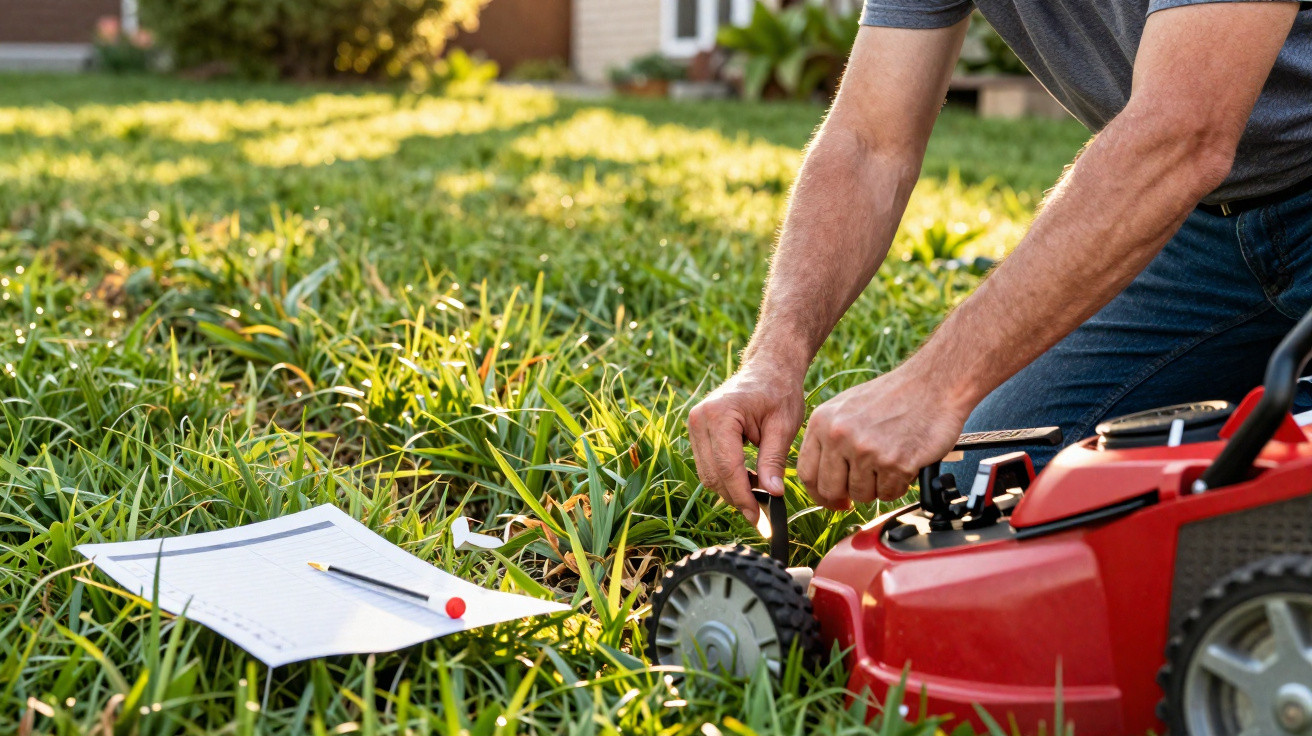
Timing and cutting height are what separate a lush lawn from unnecessary strain and bare patches.
Mowing too early and too short interrupts growth precisely when the lawn is building its strength. A well-judged start to the season protects the roots, reduces water use and helps the grass withstand heat and foot traffic.
The single mistake that weakens a lawn
The most common error is cutting too soon and too low. As the lawn emerges from winter dormancy, it relies on its leaf growth as an energy store. If this is cut back severely, the roots lose vigour and the turf remains sparse.
"Never remove more than one third of the current grass-blade length in a single mowing session."
Setting the mower too low exposes the soil. Sunlight then dries it out more quickly. Weeds and moss move into the gaps because the grass cannot form a dense cover.
Why the spring start shapes lawn roots
In late winter, growth and metabolism are still running at a low level. As temperatures rise, the lawn begins growing again, but this stage remains sensitive. A few straightforward indicators provide useful guidance.
Reading temperature and soil signals correctly
- Daytime temperatures consistently above 10 °C: the grass begins growing visibly.
- Soil temperature of 6–7 °C: the roots start producing new growth.
- The lawn is 8–10 cm tall: there is sufficient leaf area for the first mow.
- The ground is neither frozen nor muddy: this prevents wheel tracks and compaction.
- No night frost is forecast: freshly cut surfaces remain protected.
"First cutting height: leave 5–7 cm. This keeps the soil shaded and encourages deeper root growth."
How to set the mower correctly
Start with the mower at its highest cutting setting. Lower the cutting height gradually over two to three mowing sessions, spaced a week apart, to avoid putting the lawn under stress.
Cutting heights that genuinely work
| Situation | Grass height before cutting | Setting | Height after cutting |
|---|---|---|---|
| First cut in spring | 8–10 cm | High | 5–7 cm |
| Second cut (1–2 weeks later) | 7–9 cm | Medium-high | 5–6 cm |
| Regular mowing during dry spells | 7–8 cm | Medium | 5–6 cm |
| Heatwaves | 8–10 cm | Medium-high | 6–7 cm |
Sharp blades, clean cuts
Blunt blades tear the grass rather than cutting it cleanly. The leaf tips turn brown and lose moisture. Sharpening the blades at the start of each season prevents stress and reduces the load on the motor.
"Check before the first start: blades sharp, cable or battery in good condition, wheels moving freely, grass collector clean."
Checklist for the first mow
A brief routine before the first cut promotes dense growth and means less repair work later.
- Clear away leaves, branches and winter thatch so the blades can run freely.
- Schedule mowing for late morning, once the dew has dried.
- Change the mowing direction each week to prevent flattened areas.
- Leave clippings behind as a light mulch only when they are finely cut.
- Use the grass collector for coarse clippings or wet grass.
Mistakes that create bare patches
- Wet ground: mower weight compacts the soil, leaving the roots with less oxygen.
- An excessively low first cut: moss and weeds gain the advantage in the competition for light.
- Mowing immediately after frost: damaged cells at the blade tips cause yellowing.
- Long gaps between the first early cuts: the second cut becomes too severe again.
- Ignoring edge areas: tall borders shade the rest of the lawn and encourage gaps.
Lawn care plan until June: less stress, more green
Give the lawn consistency rather than overzealous treatment during its first eight weeks. Weekly mowing at a moderate height keeps the turf dense. A restrained initial feed using slow-release nitrogen supports development without forcing excessive shoots. Water only infrequently but thoroughly, once the soil is dry and footprints remain visible.
A robotic mower needs a higher cutting profile in spring. Set it to its maximum height, then lower it only slightly after two weeks. Check its blades more often, as spring growth is more fibrous to cut.
Reading your lawn: three everyday tests
Simple checks will show whether the first cut is right.
- Footprint test: if the imprint remains visible for a long time, the soil lacks water or structure.
- Finger test: reach into the turf. If it feels cool and springy, the remaining height is suitable.
- Blade pattern: smooth cut tips show that the blade is working cleanly. Frayed tips indicate that sharpening is needed.
Bonus: when scarifying, liming and feeding make sense
Scarifying is useful only on thatchy lawns with stable growth. Choose a day when daytime temperatures are above 12 °C and rain is forecast within 24–48 hours. Mow down to 4–5 cm, scarify lightly, then apply a recovery fertiliser.
Lime should only be applied if the soil is too acidic. A soil test reveals the pH value. Liming without testing can lead to over-liming and nutrient lock-up. For spring feeding, a balanced lawn fertiliser with a moderate nitrogen content and trace elements is enough.
Practical guide: from signal to action
| Daytime above 10 °C, grass 8–10 cm | First mow, leaving 5–7 cm |
| Soil moist, not wet | Mowing is possible; avoid wheel tracks |
| Night frost expected | Postpone mowing |
| Many brown tips | Sharpen blades and raise the cutting height |
| Moss in partial shade | Mow higher, relieve compaction and improve light |
"Those who begin spring with height, sharpness and patience will have a dense, hard-wearing lawn in summer that needs less water."
Definition: mowing means the actual cutting of grass with a machine, whereas mulching refers to finely shredding clippings and leaving them on the lawn. Mulch protects the soil from evaporation and slowly supplies nutrients, provided the layer remains extremely thin.
Practical example: if your lawn is currently 9 cm tall and the forecast shows daytime temperatures of 12–15 °C with no frost, select the highest setting and mow to around 6 cm. Remove any visible clumps, then inspect the cut tips the next day. If they still look clean, maintain this height for a week before carefully reducing it to 5–6 cm.




Comments
No comments yet. Be the first to comment!
Leave a Comment