
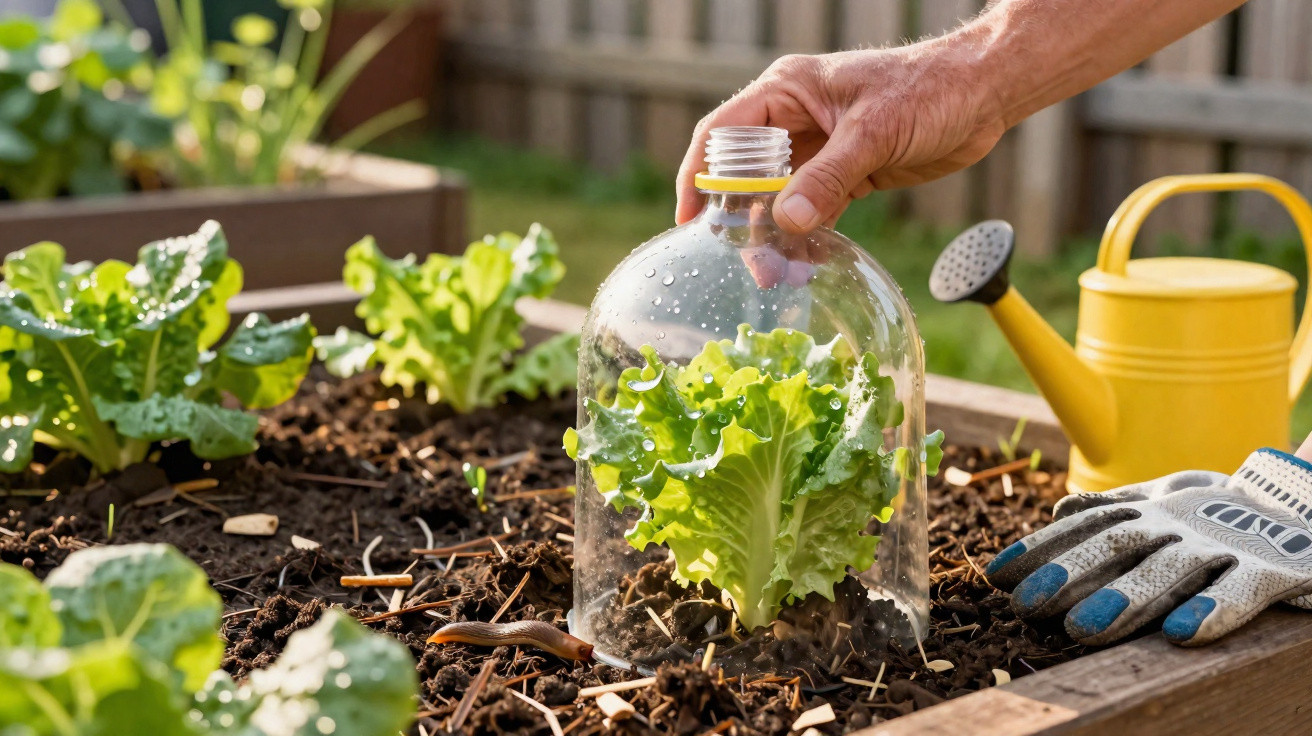
After returning to the garden following warm rain, many people will recognise the scene: lettuce leaves riddled with holes, courgettes half eaten and strawberries with bite marks. Slugs are usually responsible, and frustration can quickly lead to blue poison pellets being scattered across the bed. Yet there is a straightforward, almost free alternative using an everyday item that protects your beds reliably without poisoning the garden.
Why slug pellets do more harm than good in the garden
Blue slug pellets may seem convenient at first: scatter them and the job is done. However, that apparent simplicity creates a problem for the entire garden environment. Many products contain the active ingredient metaldehyde. It kills more than slugs, putting pets, hedgehogs, birds and other beneficial animals at risk when they eat poisoned slugs.
Even products containing ferric phosphate, which are marketed as “organic”, are still plant-protection products. They interfere with the soil ecosystem and may also affect organisms that are urgently needed in the garden.
Anyone who spreads slug pellets over a large area ultimately affects more than just slugs; they weaken the entire garden ecosystem.
Although slugs are voracious, they also serve a purpose: they consume dead plant material and are themselves eaten by beetles, hedgehogs, toads and birds. Poisoning them in large numbers removes an important food source for these animals. The balance is disrupted and, in the long run, gardeners are more likely to face additional problems in their beds.
The better approach: protect plants rather than destroy slugs
Many amateur gardeners are now changing their approach. Rather than attempting to control every slug, they protect the most vulnerable plants specifically. The aim is to shield lettuce, cucurbits or strawberries so that slugs cannot reach them in the first place, without harming the predators that feed on those slugs.
This is where a remarkably simple idea comes in, one that has already proved effective in many gardens: an ordinary plastic bottle can be turned into a protective cloche. Acting like a miniature greenhouse, it physically keeps slugs out.
The bottle method: how a plastic bottle protects your lettuce
For this slug protection, all that is needed is a clear plastic bottle with a capacity of 1.5 or 2 litres. Within minutes, it can be made into a small greenhouse-style cover placed around each individual young plant.
This bottle cloche performs several functions at once:
- It creates a solid barrier against slugs.
- It blocks the wind and protects delicate leaves.
- It retains warmth and some moisture, making it ideal for young plants.
- It keeps certain crawling insects away.
The method works particularly well for:
- young lettuce plants
- courgettes, pumpkins and cucumbers
- strawberry plants while they are establishing

Comments
No comments yet. Be the first to comment!
Leave a Comment