
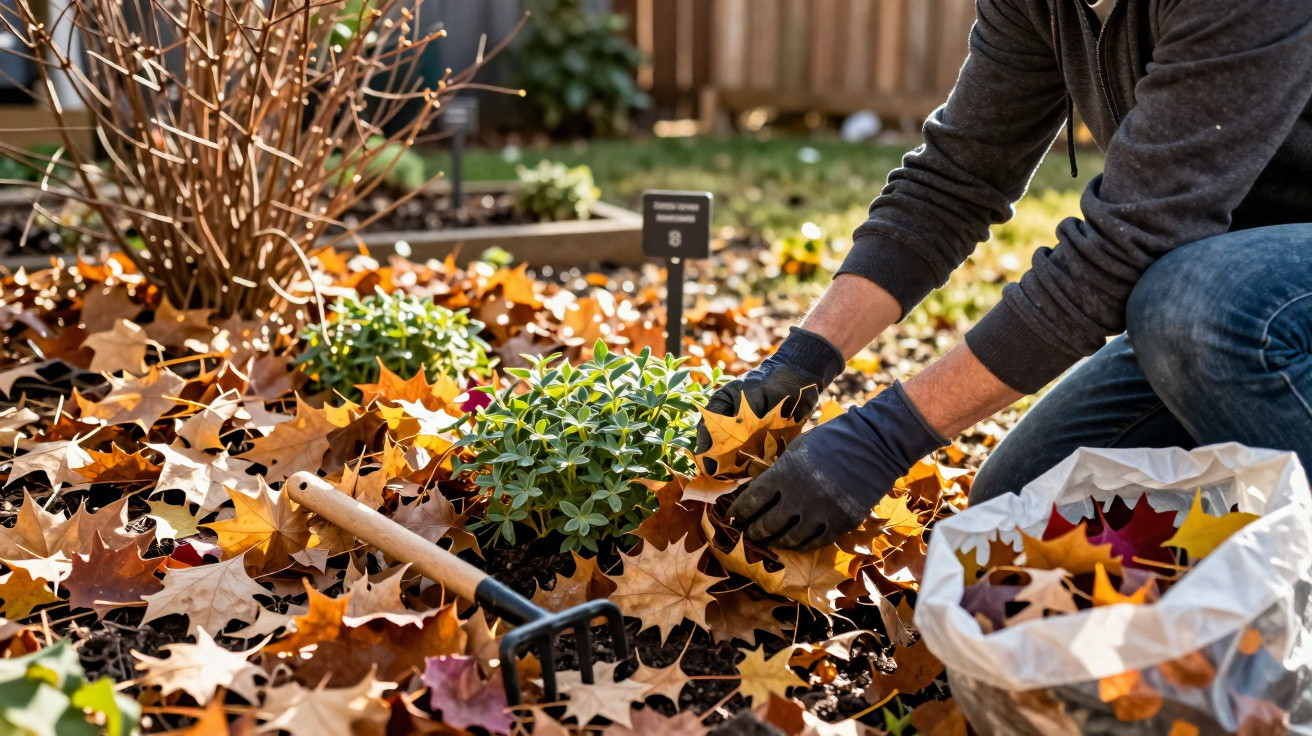
At the height of winter, an almost imperceptible detail on the garden ground can determine the fate of entire flowers, vegetables and shrubs.
For years, many amateur gardeners have followed the same winter routine: rake everything up, bag it, put it out for collection and hope their plants survive the frost. Yet this idea of a “perfectly tidy” garden conceals a quiet mistake that weakens the soil and leaves roots exposed to freezing temperatures. The change begins once what looked like rubbish is recognised as protection and nourishment.
From garden-waste bag to garden saviour
In the familiar autumn scene, dry leaves blanket the lawn. Neighbours reach for the rake, fill bags and load up the car boot, all to keep the garden looking “presentable”. What few people realise is that they are removing the very material that could protect plants in January, when temperatures plunge.
What we call “green waste” is, in reality, a thermal blanket, a wind shield and, as an added benefit, a slow-release organic fertiliser.
Nature does not produce waste. There are no workers in forests collecting fallen leaves. Instead, they cover the ground, build up, break down and become a loose, fertile layer rich in microscopic life. When gardeners send all of this material away in the collection lorry, they interrupt that cycle.
Bare soil leaves plants exposed
A completely “tidy” bed may look orderly, but it creates an agronomic problem. Without a protective layer, the soil is directly exposed to heavy rain, which washes nutrients away, and to severe cold, which penetrates deeply and freezes the water between soil particles.
This internal freezing forms ice crystals that can tear fine roots and damage the plant crown, the vulnerable transition zone between root and stem. In more delicate crops, the consequences can include sudden yellowing, loss of vigour and death by the end of winter.
Leaves as a “puffer jacket”: the garden’s winter coat
The key shift occurs when dry leaves stop being seen as mess and begin to serve as a thick coat over the soil.
Trapped air, steadier temperatures
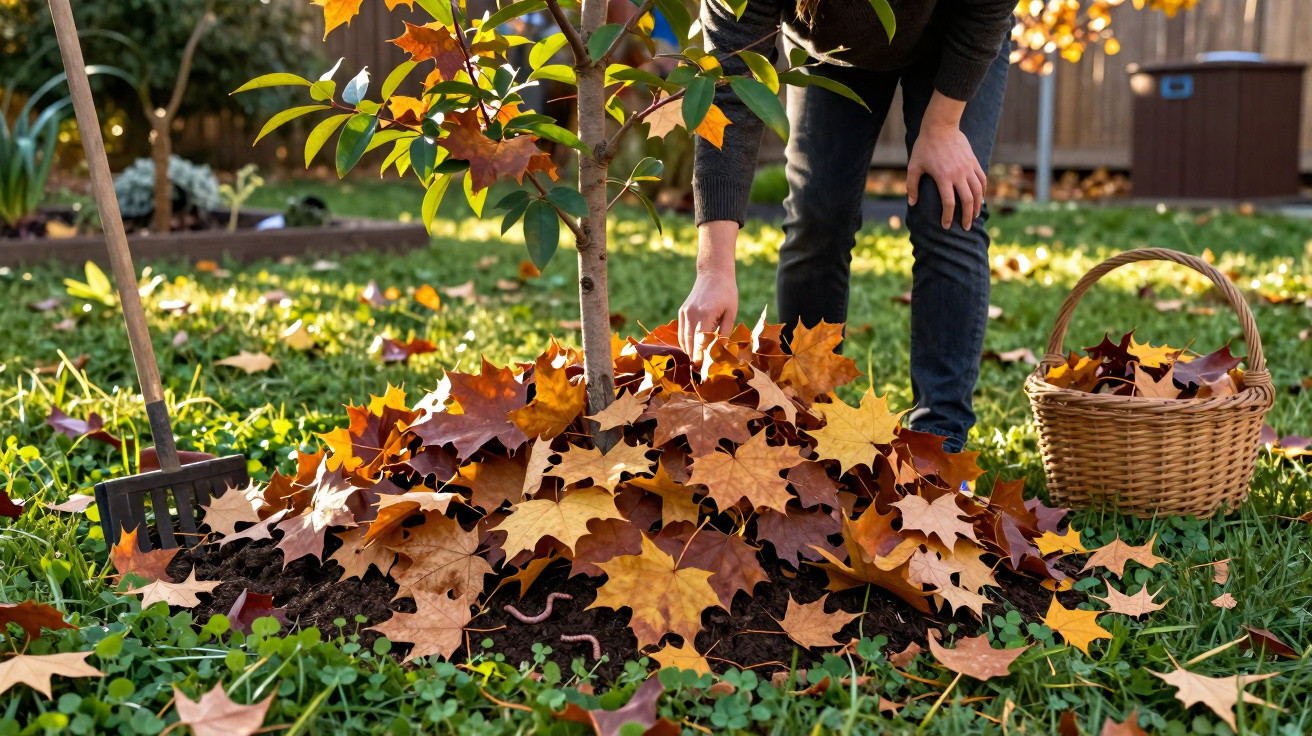
Spreading a layer of dry leaves over the ground creates a cushion containing many small air pockets. Air is an effective thermal insulator, so this layer works much like the filling in a down jacket.
While the outdoor air can fall below zero overnight, temperatures beneath this plant-based cover fluctuate less. This limits the thermal shocks that strain root systems and lowers the risk of deep freezing.
Gardeners who use a “leaf blanket” report fewer losses among sensitive plants and more vigorous new growth the following spring.
Protection from drying winds
Cold is not winter’s only enemy. Strong winds, especially dry ones, draw moisture from the soil surface and from above-ground plant parts. In many cases, plants keep losing water through their leaves, while roots trapped in cold ground cannot replace it.
This imbalance is known as “physiological drought”: the plant wilts in the middle of winter even though the soil appears moist. A leaf layer acts as a breathable lid. It reduces direct evaporation, retains moisture near the roots and still allows the soil to exchange gases with the atmosphere.
Free slow-release fertiliser
As it provides protection, the leaf carpet quietly works as a factory for new soil. Beneath the dry layer, life remains active even on cold days.
From waste to humus
Fungi, bacteria, small soil insects and earthworms gradually shred and digest the organic matter. The resulting humus is a dark, stable part of the soil that is highly valued by agronomists and farmers.
Humus improves soil structure, helps it hold water like a sponge and stores nutrients for gradual release. It underpins the fertility of forest soils and can be recreated in ornamental borders and home vegetable plots.
Fewer trips to the garden centre
Leaves are a type of “concentrated extract” from the garden itself. As trees grow, they draw minerals from deeper soil layers and store them in their foliage. Once those leaves fall and decompose, the nutrients return to the system.
- Potassium: supports flowering, fruiting and cold resistance.
- Calcium: strengthens cell walls and roots.
- Magnesium: a central component of chlorophyll, directly linked to photosynthesis.
Through this natural recycling, many gardeners can cut back on industrial fertilisers, spend less on bags of ready-made compost and gradually notice an improvement in soil texture.
How to make a “blanket” without smothering the garden
The principle is straightforward: cover the soil. The important details are how the material is applied and how thick the layer is.
Depth for each type of bed
| Area | Suggested depth | Notes |
|---|---|---|
| Flower beds and shrubs | 5 to 10 cm | Keep the plant crowns visible and clear |
| Resting vegetable plot | 15 to 20 cm | Ideal for beds not currently being cultivated |
| Large pots and planters | 3 to 5 cm | Helps retain moisture and protect roots |
For small plants with leaves close to the ground, it is best to keep the material away from the base. This prevents constant moisture build-up, which encourages fungal growth.
Stopping the wind from carrying it away
One of the most commonly mentioned problems is finding all that work blown into the neighbour’s garden the next day. A few methods can greatly reduce this risk:
- Run a lawnmower over the leaves to shred them before use.
- Combine dry leaves with a small amount of grass clippings or finer pruning debris.
- Lightly water the material after spreading it, helping it form more stable layers.
- Lay thin branches on top like a loose grid, simply to hold everything in place.
What should never go on a garden bed
Not every leaf is suitable for direct mulching. Some carry diseases and can spread problems throughout the garden if used without care.
Diseased material: a hidden risk
Rose leaves with dark spots, fallen fruit affected by rot and remains of tomato plants that suffered from fungal wilts all need to be handled separately. If this material is spread over the soil without hot composting, spores may survive the winter and reinfect plants in spring.
A practical rule: anything with spots, mould, a strong smell or a visibly abnormal appearance should not be used as mulch on healthy beds.
In these circumstances, the recommendation is to place it in a properly managed compost system that reaches high temperatures, or send it for municipal disposal in line with local green-waste guidance.
Common mistakes and what changes when the habit becomes routine
Beginners generally make two mistakes: applying a layer that is too thin to protect against cold, or creating overly compact heaps that prevent air from passing through. With experience, it becomes easier to judge the amount needed and adapt the method for each area.
In trials carried out by agronomists and nursery growers, covered beds maintain more even temperatures and moisture levels, recovering faster after severe cold spells. In areas where frosts are frequent, some professionals pair leaves with other materials, such as straw and shredded bark, to create layers with slightly different roles: thermal insulation, weed control and visual appeal.
For people growing plants in smaller spaces, including balconies and urban gardens, the same principle applies. Large pots containing citrus trees, hydrangeas or perennial herbs benefit from a few centimetres of organic cover. Water from watering lasts longer, roots are less affected by temperature changes and the growing medium does not become compacted as easily.
There is also an interesting cumulative effect. Year after year, as the leaves break down into humus, the fertile soil layer becomes deeper. Beds that once cracked in summer begin retaining moisture more effectively. Plants that needed regular feeding start responding well to lighter interventions. Meanwhile, the heavy work of raking, bagging and carrying away garden waste is reduced, replaced by a routine of observation and on-site management of the garden’s own organic matter.


Comments
No comments yet. Be the first to comment!
Leave a Comment