
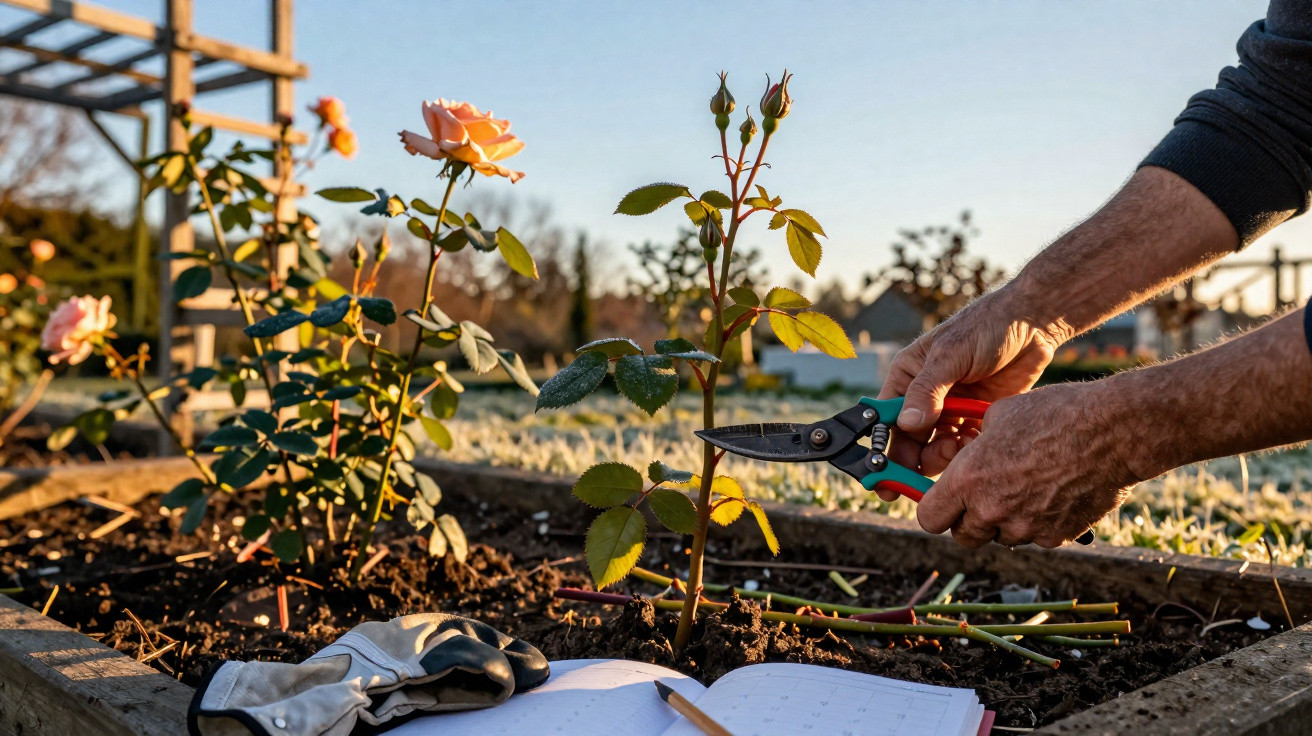
Roses may appear robust, but a single ill-timed cut can leave them exposed to harsh winter weather.
This guide explains when to prune so your plants stay protected and emerge strong in spring. Success depends on balancing caution with renewal.
How winter affects pruned roses
Pruning rouses a rose from dormancy. Each cut activates hormones that encourage buds and soft new shoots to grow, but this tender growth is highly vulnerable to frost. Cutting back hard too early in autumn can make the plant use its stored sugars before it encounters severe cold. Blackened shoot tips, dieback and reduced flowering are common results.
Roses need autumn to mature their wood. Their stems lignify, cuts heal and energy reserves accumulate. Once the risk of hard frost has passed, sap begins to rise again, making this the right time for substantial shaping. Cuts dry more quickly, while emerging buds avoid frost scorch.
Make light reductions in fall to reduce wind damage. Reserve structural pruning for late winter as hard frosts fade.
A rose-pruning calendar that works
Approach pruning in two stages: stabilise plants before winter, then shape them as dormancy ends. Exact timing varies according to climate and microclimate. A sheltered, south-facing courtyard will behave very differently from an exposed ridge. Follow what the plant and weather are doing rather than relying on a date in the diary.
- Autumn, after the first light frosts: cut back long canes by roughly one-third, remove dead or diseased wood, tie in climbers and apply mulch.
- Late winter, once severe cold has eased: make structural cuts, open up the centre and give a light feed when growth begins.
- Once-flowering heirloom roses and ramblers: prune immediately after their summer display, rather than before winter.
A useful signal in many areas is the flowering of forsythia: when it turns bright yellow, the late-winter pruning period has begun. In mild coastal areas, this may be January or early February. In northern gardens or at higher altitudes, wait until March or even early April.
| Window | Action | Why it matters |
|---|---|---|
| October–November | Light tidy; shorten wind-catching canes; remove dead wood; secure climbers; leave rose hips | Prevents breakage and avoids big wounds that winter exploits |
| Late winter (post-hard frost) | Structural pruning; cuts above outward buds; open the center | Stimulates strong, healthy regrowth and generous flowering |
| After bloom (once-bloomers) | Prune spent shoots only after their show | Protects next year’s flower buds formed on old wood |
Making the correct pruning cuts
Use sharp, clean bypass secateurs. If you notice canker or blackened stems, disinfect the blades between bushes. Make each cut 5–8 mm above an outward-facing bud, angling it slightly so rain runs away from the bud. The goal is an open, well-ventilated shape that allows light into the plant.
Hybrid tea and floribunda roses
Late winter is the time to prune these roses. Cut hybrid teas back to approximately 30–40 cm above soil level, and reduce floribundas to around 40–50 cm. Retain 3–5 vigorous canes on each plant, removing stems that cross or rub together. Younger canes often produce more flowers than thick, ageing ones.
Shrub and landscape roses
Take a less severe approach. In late winter, reduce these roses by one-third to one-half, according to their vigour, while maintaining their natural habit. As these varieties carry flower clusters on numerous side shoots, avoid hard pruning unless the bush is overcrowded or has been neglected.
Climbers and ramblers
Repeat-flowering climbers should retain their principal framework canes. Secure these horizontally, or in a gentle fan shape, to encourage additional side shoots. In late winter, shorten the side shoots to 3–5 buds. Once-flowering ramblers bloom on the previous year’s wood, so prune them as soon as flowering finishes. Remove some of the old canes and train the new long shoots into position.
Open the plant like a small goblet: remove dead, diseased, and crossing wood; keep a few well-spaced main canes; let air move through the center.
Mistakes that reduce rose flowers
- Pruning hard in autumn, which encourages frost damage and wastes stored energy.
- Cutting during a freeze or immediately beforehand, when wounds remain damp and cold.
- Making flat cuts that collect water instead of using a slight angle to shed rain.
- Leaving long stubs, which die back and can harbour disease.
- Applying too much nitrogen late in summer, causing soft growth that winter damages.
- Removing every hip in autumn, even though hips restrain fresh growth and provide food for wildlife.
- Overlooking wind, as tall untied canes behave like sails and can snap during storms.
Autumn care that protects roses
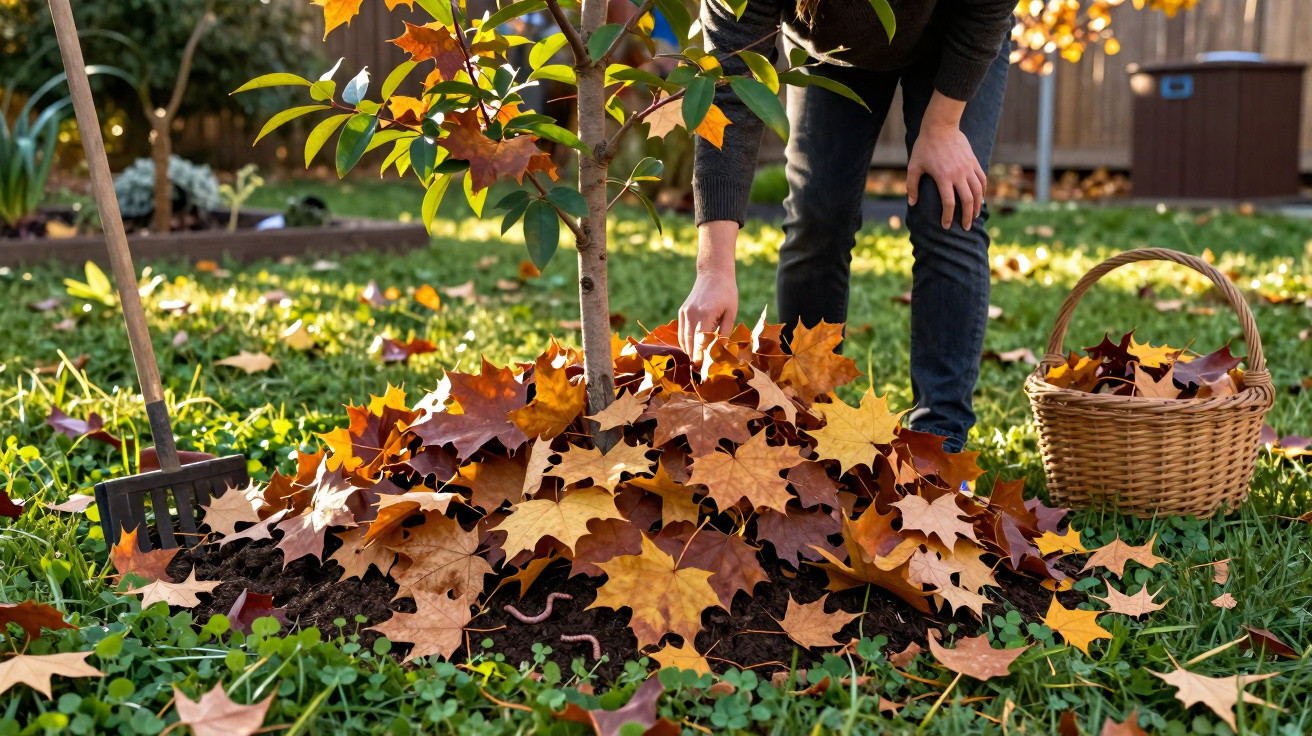
Prioritise stability rather than neatness. Cut tall canes back by one-third to prevent them from being whipped about by wind. Fasten climbers to trellis or wires using soft ties. Remove blackened stems or those that are clearly diseased. Keep healthy hips in place for birds and as a natural check on late-season growth. Spread compost or leaf mould to a depth of 5–7 cm to moderate soil temperatures and retain moisture.
In colder parts of the UK, mound soil or compost 10–15 cm around the base of young or tender roses once the ground has cooled. Remove this covering in spring when growth restarts. Do not wrap plants in plastic, as it retains moisture and encourages rot.
Late-winter rose pruning for spring growth
Choose a dry day when temperatures are above freezing. Begin by cutting out dead, damaged, diseased or rubbing stems, then shape the rest of the bush. Apply a light feed when buds start to swell. Slow-release or balanced fertilisers are safer than strong doses of nitrogen. Water after feeding when the soil is dry.
How microclimates alter timing
A walled courtyard can escape frost a week earlier than an open garden. Coastal gardens generally warm up sooner than inland valleys, while mountain locations may be a month behind. Observe local signs such as thawing soil, swelling buds and the first yellow forsythia flowers. Let these indicators, rather than a fixed calendar date, determine your timing.
Quick reference by rose type
- Hybrid tea: 30–40 cm in late winter; 3–5 main canes; remove old, exhausted stems.
- Floribunda: 40–50 cm in late winter; keep a framework for clusters.
- Shrub/landscape: reduce by one-third to one-half; keep natural shape.
- Climbing, repeat-blooming: keep framework, shorten laterals to 3–5 buds late winter.
- Ramblers and once-bloomers: prune after flowering; avoid winter cuts that steal next year’s show.
Light in fall. Strong in late winter. Once-bloomers after they’re done. That rhythm keeps roses alive and generous.
Extra guidance worth following
Good tool hygiene prevents unnecessary problems. Wiping secateurs with 70% alcohol between plants takes only seconds and helps limit disease transmission. Sharpen or replace blades each season, as clean cuts heal faster than torn ones. When removing a thick, old cane, use a pruning saw and cut flush without tearing the bark. In wet climates, breathable wound sealant may help on large cuts, although the best defence remains a clean, angled cut made on a dry day.
Try a straightforward timing test. If you have two similar bushes growing side by side, give one a light autumn tidy followed by late-winter pruning, and cut the other back hard in October. Monitor dieback and count the spring flowers. Gardeners who make this comparison seldom repeat heavy autumn pruning, as the difference is visible by March.
Your feeding plan matters just as much as your cuts. In cold areas, stop applying nitrogen by late August. Use compost and potash-rich amendments instead, as these help stems mature. Restart balanced feeding when the buds swell. Paired with regular mulching, this builds a resilient root system that copes well with cold snaps.



Comments
No comments yet. Be the first to comment!
Leave a Comment