
The woman in the red fleece stops at the edge of her lawn, rake in hand, looking out over a blanket of dry, copper-coloured leaves.
Further along the road, a leaf blower buzzes like an irritated wasp. It is the familiar soundscape of autumn: rakes scraping, plastic sacks crackling and the muted drop of full bags left at the kerb.
With a sigh, she puts on her gloves and begins to rake, quietly determined to follow what she has always been told is “good garden hygiene”. Remove the leaves. Make everything neat. Prepare the garden for winter.
Thirty minutes later, her back is sore, the lawn appears bare and oddly lifeless, and five swollen bags of leaves are lined up beside the gate like gloomy pumpkins. She has no idea that she has just made the biggest autumn gardening mistake.
The ‘clean lawn’ myth that’s quietly wrecking your garden
Most of us grew up with the same autumn instruction: as soon as leaves fall, clear them off the grass as quickly as you can. Garden centres display shining lawns that resemble green carpets, with no leaf visible. Councils clear pavements completely. Neighbours measure up whose grass looks tidier, as if it were a sign of virtue.
So we follow suit. We rake, blow, vacuum and pack leaves into bin bags. The aim is a flawless garden, almost like a lounge you would happily show to visitors. It seems “right”. It seems orderly. It seems… oddly lifeless.
Yet the immaculate green lawn you are pursuing is often being created at precisely the time when your soil, grass and wildlife need you to do the reverse.
Consider one British suburban street last October. On a mild Saturday, three neighbouring gardens presented three very different scenes. In the first, a couple used two petrol blowers to blast every leaf into a noisy heap, their faces strained as the sound bounced between the houses. In the second, an elderly man raked at a steady pace, filling weighty black bags for the tip. In the third, leaves formed a scruffy mosaic beneath the trees, while only dense layers had been removed from the lawn.
By April, a subtle contrast was clear. The gardens stripped of leaves were dealing with thin, patchy grass, compacted ground and exhausted flowerbeds. The untidy garden had fewer bare areas, more fertile soil and an unexpected spread of self-seeded flowers. There was no miracle fertiliser involved. Simply… fewer bin bags.
Research is beginning to support what attentive gardeners have long noticed. Studies at US botanical gardens have found that shredded leaves used as mulch can enhance soil structure, nourish helpful fungi and suppress weeds. Where every leaf is removed, earthworm populations decline, moisture is lost more quickly and microbial life becomes less abundant. The hidden cost of that tidy appearance is paid below ground.
When you clear your garden completely each autumn, you are doing more than tidying up. You are taking away food, shelter and future fertility at the same time.
What to actually do with your leaves instead of binning them
The understated reality is that you do not have to choose between a suffocated lawn and a sterile, leaf-free garden. The sensible approach is far easier. Rake or blow leaves away from key lawn areas where they collect in deep layers, then make use of them as free mulch and future compost wherever possible.
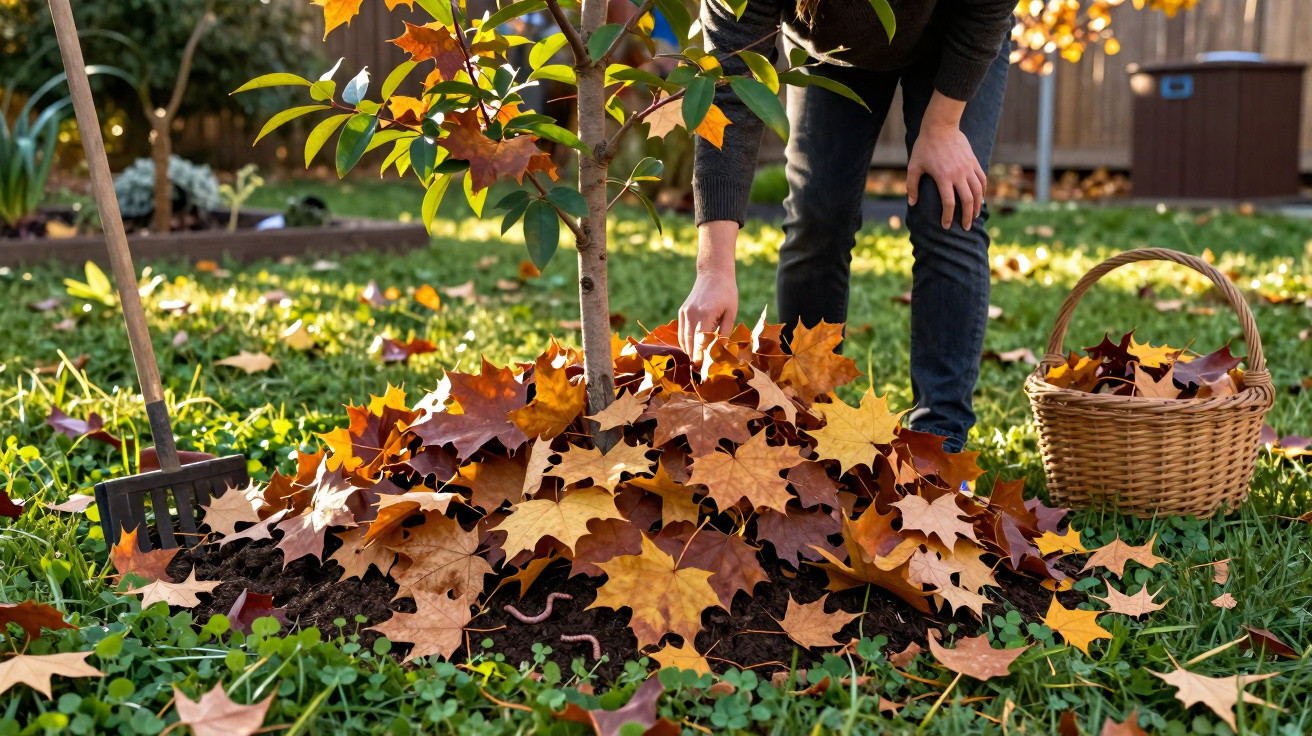
Lay a light covering beneath shrubs, hedges and trees. It should be loose enough that soil remains visible in places, rather than forming a thick, wet layer. If your mower has a mulching setting, pass it over dry leaves and spread the shredded material back across the lawn or garden beds. These small fragments decompose faster, feeding the soil without smothering it.
Have some left over? Heap them in a corner to produce leaf mould. A basic pile or wire cage is enough. It may not look like much in its first year. In its second, it becomes a dark, crumbly material that works like a mild, costly soil conditioner - except it was lying on your lawn at no cost.
The mistake many gardeners make is swinging between extremes. They either clear away every leaf, or announce that they are “rewilding” and leave a thick, soggy blanket across the whole lawn until spring. Neither approach is ideal.
Grass can genuinely suffer beneath a heavy wet covering, particularly in small urban gardens with limited light and poor drainage. Yellow patches may appear, moss can begin to dominate, and the surface may feel unpleasantly soft and spongy underfoot. That is not a natural woodland setting; it is simply suffocation.
Try not to put pressure on yourself over this. You do not need to manage leaves flawlessly to gain most of their advantages. Clear the deep piles, spread out the remainder, and keep in mind that some leaf cover is not a failure but part of the seasonal cycle. Your garden does not have to resemble a catalogue photograph to be healthy.
One experienced gardener said something that has stayed with me:
“The day I stopped fighting every leaf was the day my garden relaxed… and so did I.”
That is the gentle change in perspective. You are not being lazy; you are deciding when to intervene and when to stand back. You are changing leaves from a burden into a resource. Areas beneath shrubs offer insects and hedgehogs secure winter shelter. Beds receive a natural cover that slows weed growth and retains moisture. Lawns can breathe rather than being smothered by ankle-deep drifts.
- Remove thick layers of leaves from the main lawn, but do not clear every final leaf.
- Mulch beneath trees, hedges and perennials with leaves.
- Shred dry leaves or mow over them to help them break down sooner.
- Set up a straightforward leaf-mould heap in an undisturbed corner.
- Deliberately keep a few “untidy” areas for wildlife.
Rethinking what a ‘good’ autumn garden looks like
Walk around almost any neighbourhood on a calm November afternoon and you will hear it: the steady hum of leaf blowers, rakes scraping and garden-waste sacks zipping as they are hauled to the kerb. It resembles a seasonal ceremony of control. We treat effort as care, neatness as achievement and an exposed lawn as proof that someone is a “proper” gardener.
But the gardens that seem most full of life in early spring are seldom those scrubbed spotless through winter. They tend to be the slightly rumpled spaces where leaves still border the beds, a few faded stems remain upright, and the soil has been covered and protected rather than left exposed. At a deeper level, this means moving from domination towards cooperation. It allows nature to take on some of the work instead of fighting it with every implement in the shed.
There is a gentler human side to it as well. On a cold Sunday morning, do you truly want to struggle with every remaining leaf because an image of tidiness is lodged in your mind? Or might you allow yourself to do “enough” and let the rest become part of the view? On a screen, it may appear to be a minor gardening tip. In everyday life, it is a small act of resistance against the demand to have everything under control.
There is also a practical benefit: the leaves you once dragged to the kerb can reduce your workload in spring. Beds mulched with leaves are simpler to weed. Soil enriched by decomposed foliage retains moisture more effectively during dry summer spells. Wildlife that spends winter in leaf litter - ladybirds, ground beetles and solitary bees - will discreetly help control pests in your garden, reducing the need to reach for sprays.
Let’s be honest: nobody really does this perfectly every day. No one gets the timing of their raking exactly right, shreds every leaf or turns a leaf-mould heap on schedule. That is not important. One or two small changes to the way you handle autumn leaves can have an effect throughout the gardening year. It begins with challenging one loud, enduring message: that removing your leaves is always the correct thing to do.
| Key point | Detail | Benefit for the reader |
|---|---|---|
| Do not throw everything away | Move only thick layers of leaves from the lawn | Protects the lawn while retaining the benefits for the soil |
| Use them as mulch | Spread a thin layer of leaves beneath hedges, trees and beds | Feeds the soil, limits weeds and retains moisture |
| Create a “leaf” corner | Make a simple leaf pile or cage to produce leaf mould | Provides a rich soil conditioner for spring at no cost |
FAQ:
- Will leaves really kill my lawn if I leave them? A light, scattered covering normally will not. The real problem is thick, wet piles left on grass throughout winter, as they can prevent light and air reaching it, causing yellow patches and disease.
- Is it okay to mulch with any kind of leaves? Most leaves from trees are suitable. Very thick, leathery leaves, such as laurel, decay slowly, so it is best to shred them or leave them in a separate pile for longer rotting.
- Do I need a special shredder for leaves? No. Running an ordinary mower over dry leaves works remarkably well. Raise the cutting height, move slowly, then spread the shredded material over beds or compost heaps.
- Won’t leaving leaves attract pests? Leaf litter primarily provides shelter for beneficial insects and small wildlife. Slugs may also hide there, but a healthy, active garden generally keeps them in balance through natural predators.
- How long does leaf mould take to be ready? Allow roughly 1–2 years, depending on the leaves involved and how tightly the pile is packed. It is ready when it is dark, crumbly and has the scent of a forest floor.


Comments
No comments yet. Be the first to comment!
Leave a Comment