
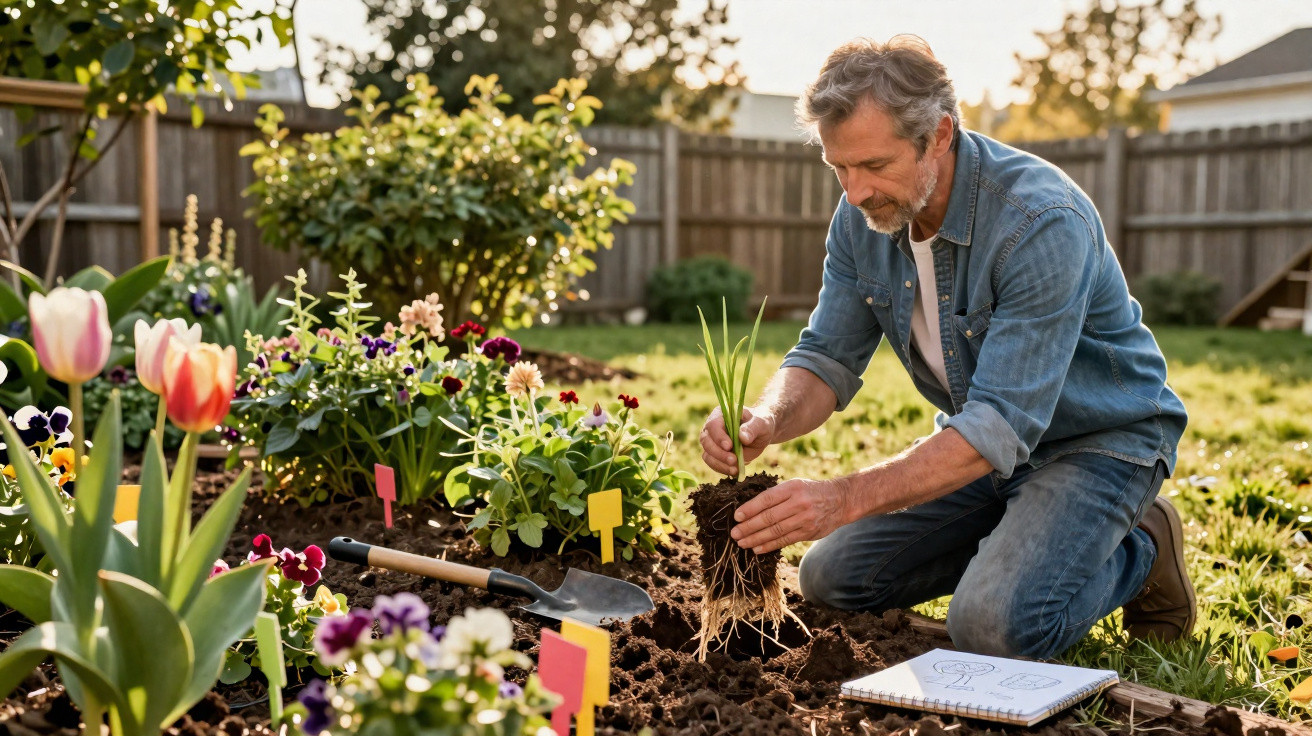
Recognising perennials correctly saves money, time and a great deal of frustration.
When planning a flower bed, gardeners often face the same question: which plants flower for just one summer, and which will remain for years? The technical term “perennial” means more than a pleasing label at the garden centre. Understanding the basics lets you plan beds for the long term, avoid gaps and enjoy something to look at for almost the entire year.
What perennials really are – and what gardeners mean by them
In botanical terms, any plant that lives for more than two years is considered “perennial”. Strictly speaking, that even includes trees and shrubs. In everyday gardening, however, “perennial” is used more narrowly.
“In the home garden, perennials are usually plants that live for several years, whose above-ground parts die back in winter before they regrow from roots, rhizomes, tubers or bulbs.”
Typical examples include hostas, delphiniums, daylilies, coneflowers and catmint. They may appear to vanish in autumn, but below the soil they remain full of life.
The three main groups: annuals, biennials and perennials
To classify plants in a bed, a broad division by lifespan is useful:
- Annuals: grow from seed, flower, produce new seed and die in the same year (for example, cosmos, zinnias and many vegetable crops).
- Biennials: make leaves only in their first year, flower in their second, set seed and then die (for example, foxgloves, hollyhocks and some bellflowers).
- Perennials: survive for many years, often resting underground through winter before growing again.
Knowing which group a plant belongs to makes planning far easier: annuals provide quick colour, while perennials create lasting structure.
Annuals versus perennials: speed against staying power
Annuals work at an extraordinary pace. Within a few months, they must germinate, grow, flower and produce seed. That is why many bloom so lavishly – think of sunflowers or colourful summer-flowering seed mixes.
Perennials, by contrast, put more resources into roots, rhizomes or bulbs. Rather than relying on an “all-or-nothing summer”, they are built for the longer term.
“Annuals are the fireworks of the garden; perennials are its permanent lighting.”
For a vibrant bed, combining both is worthwhile: annuals supply instant colour in the first year, while perennials establish themselves and form the framework in the years ahead.
Woody and herbaceous perennials: how to identify long-lived plants
One important clue is whether a plant produces wood.
Woody plants: shrubs and trees as long-lived plants
Anything with a woody trunk or woody shoots generally lives for several years. New layers of tissue form each year, gradually creating branches and trunks. The inner layers die and serve only as support – this is what we call wood.
This includes:
- trees (for example, apple, maple and birch)
- shrubs (for example, currants, lilac and hibiscus)
- low-growing woody plants (for example, blueberries and some dwarf shrubs)
Even small, gnarled shrubs that grow only a few centimetres high are genuinely long-lived plants – you simply need to look closely enough.
Herbaceous perennials: gone above ground, full of energy below
Many classic perennials do not form any wood at all. They die back completely in winter, often leaving only a dry stem behind. Beneath the ground, though, they have storage organs:
- roots containing reserves (for example, coneflowers)
- bulbs (for example, daffodils, tulips and ornamental alliums)
- tubers (for example, dahlias and tuberous begonias)
- rhizomes or runners (for example, lily of the valley, irises and some grasses)
“By definition, all bulb and tuber plants are perennial – otherwise they would hardly invest so much energy in their storage organs.”
Annuals direct almost all their resources into seed rather than substantial bulbs or tubers. This can help when identifying plants in a bed.
Common pitfalls: when a “perennial” does not return
Many gardeners know the disappointment: a plant is expensively labelled “hardy” or “perennial” at the garden centre, yet there is no sign of it the following spring. Several factors are usually responsible.
The wrong site or a lack of nutrients
Some perennials are uncompromising: the wrong soil, conditions that are too wet or too dry, and they give up. Others survive but lack the strength to flower. Common reasons include:
- soil that is too nutrient-poor or compacted
- winter waterlogging (which causes bulbs to rot)
- no fertiliser, or the wrong fertiliser
- too little sun for sun-loving plants such as coneflowers or lavender
One crucial point is that some perennials produce mainly leaves in their second year and hold back their flowers. Their full display may not arrive until the third year.
The tulip trap: a flower show with no future
Botanically, tulips are perennials, but in the garden they often behave like short-term visitors. The reason is that many modern varieties direct all their energy into spectacular flowers. Little remains for adequate reserves the following year.
Anyone hoping to keep tulips for the long term should:
- remove spent flowers before seeds can ripen,
- leave the foliage in place until it has turned completely yellow,
- favour dry, free-draining soil.
Where breeding has focused intensely on appearance, many bulbs still remain short-distance runners – the only solution is regular replanting.
When “annuals” are secretly perennials
Surprisingly, some plants treated as annuals in vegetable plots or window boxes are actually perennials in their native climate.
“Tomatoes, peppers and some ornamental plants are botanically perennial, but they fail to survive our winter.”
In frost-free regions, tomatoes grow for several years and can even become partly woody. In central Europe, they usually freeze at temperatures only slightly above freezing, which is why they are grown here as annuals.
Pansies are similar: they are perennial, but often look tired and less attractive in their second year, so many gardeners replace them after one season.
“Wildlings” in the bed: are self-sown seedlings perennials?
Nearly every garden produces them: plants that suddenly appear without any help, often described as “wildlings” or self-sown seedlings.
They usually arise from seeds dropped during the previous year. Common examples include:
- tomatoes from forgotten fruit
- squash or courgettes from the compost heap
- calendulas, nasturtiums and sunflowers
These newcomers are not perennials in the strict sense, even if they reappear every year. They are new plants grown from fresh seed, not the same rootstock growing again.
Practical check: how to assess plants in your own garden
| Feature | What it indicates |
|---|---|
| woody shoots that remain visible in winter | usually a long-lived plant (shrub, subshrub or tree) |
| stems become completely soft and disappear in autumn, then return in the same spot next year | herbaceous perennial |
| a large bulb or tuber in the ground | perennial with storage organs |
| many young plants near the parent plant | often self-sowing, rather than the same perennial |
| plant flowers for only one year and dies completely | probably an annual |
Why perennials are ideal for lazy gardeners
Anyone who does not want to replant an entire bed every spring should choose a high proportion of perennials. Selected and combined well, they provide:
- less shopping stress in spring
- a stable bed structure for many years
- food and shelter for insects and other animals
- often less maintenance than planting solely with summer flowers
There is another interesting benefit: many medicinal plants – including yarrow, coneflower and sage – are also perennial. Once established, they can be harvested for a long time.
A few final tips for planning with perennials
Anyone looking to build a bed for the long term will benefit from a simple approach:
- Set the framework: use shrubs and larger perennials to provide structure.
- Choose gap-fillers: select shorter perennials and long-flowering plants for the front.
- Use annuals as a bonus: place them deliberately for bursts of colour in the first year.
- Take labels seriously: read information on flowering time, height and hardiness.
Once you understand how perennials work, spring brings fewer surprises. Instead of asking, “Is anything still coming?”, you will more often say, “There it is again!” – and that is exactly the appeal of a well-planned perennial bed.
Comments
No comments yet. Be the first to comment!
Leave a Comment