
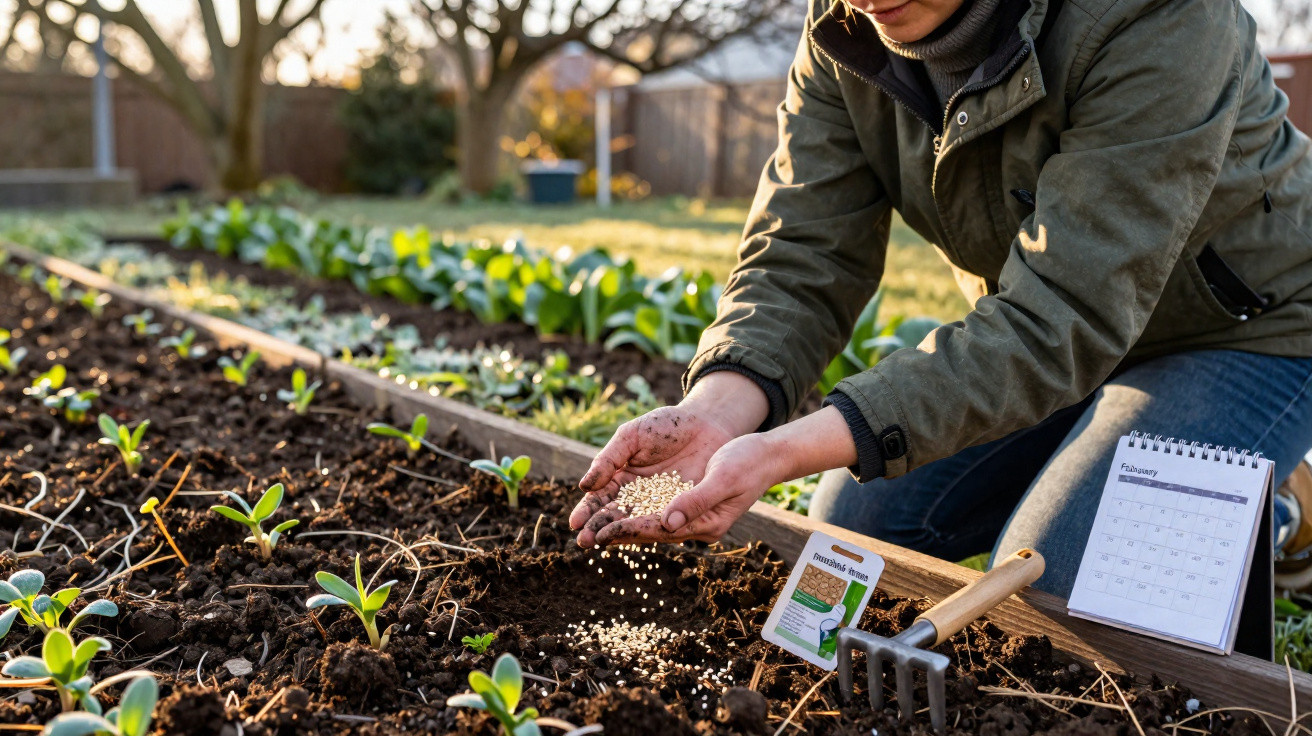
Anyone who simply waits now is wasting potential. With a quiet sowing that barely anyone considers, you can give your soil a month’s head start. No bagged fertiliser, no heavy machinery – just a deliberately sown green partner that prepares the ground perfectly for your next crops.
Why an unassuming winter visitor transforms the soil
Many home gardeners leave their beds bare throughout winter. The result is that rain leaches out nutrients, wind dries the surface, and weed seeds exploit every available gap. This is exactly where a green manure crop comes in: a plant grown not for harvest, but for the benefit of the soil.
One particularly interesting option is white mustard (Sinapis alba). It begins growing once the soil reaches around 5°C. While the rest of the garden may still look grey, it can already be germinating and spreading into a green carpet.
“This plant is not harvested – yet it works harder for your garden than many a bag of artificial fertiliser.”
Where soil would otherwise remain exposed, this cover protects it. Weed seeds receive very little light, the delicate crumb structure is shielded from heavy rain, and the roots create fine channels through the ground. This leaves the soil looser, better aerated and noticeably easier to work.
How the “green carpet” works in practice
Protection against weeds and erosion
Once the young plants emerge, they quickly shade the entire area. For many common weeds, this means insufficient light and too little space, so they struggle to establish themselves properly.
- the surface stays covered rather than bare
- weed seeds germinate less successfully
- mud and soil wash-off after heavy rain are reduced
- wind does not dry the soil out as quickly
At the same time, the roots push down into the soil and loosen it without any need for digging. Rather than battling with a spade or powered cultivator, you allow the plant to carry out the hard work quietly for you.
A natural nutrient store for the next crop
As it develops, the plant absorbs nutrients from the soil – especially nitrogen. Instead of being washed away over winter, these nutrients are stored in the leaves and stems. When you later cut the growth down and incorporate it shallowly, soil organisms gradually turn the plant material back into available food for your vegetables.
“You store nutrients from the winter season in plant matter – then release them again in spring, just as your vegetable crops are getting started.”
In trials carried out from 2018 to 2022, yields following this type of green manure rose by an average of around 18 percent. Plants made a stronger start, faced less competition from weeds and benefited from improved soil conditions.
The right timing: why mid-February is ideal
The key is for the soil to no longer be freezing cold, while not yet fully set for spring. In many areas, the period from mid-February to early March is well suited.
| Step | Recommended period | Note |
|---|---|---|
| Sowing | Mid-February to early March | Soil should be lightly thawed, not frozen |
| Emergence | Approx. 7–14 days after sowing | Faster in moist, mild weather |
| Cutting | Approx. 6 weeks after sowing | Act before full flowering |
Important: do not wait until the beds look “nice”. Sowing can still work even if frosty nights are expected. The plants are remarkably hardy, provided the soil is not permanently waterlogged.
How to sow this soil improver properly
Simple bed preparation
There is no need to dig the bed deeply. Lightly loosening the surface is enough:
- scratch the top few centimetres with a rake or cultivator
- break up large clods
- roughly clear away plant remains from the previous year
The aim is for the seeds to make contact with the soil rather than sitting on a hard, crusted surface. If the ground is compacted, lift it once with a garden fork without turning it over completely. This helps protect soil life.
Method and sowing rate
Sow by broadcasting, scattering the seed by hand across the area. It may seem unspectacular, but it works very well.
- 1–2 grams per square metre is entirely sufficient
- for a bed of 10 square metres, 10–20 grams of seed is enough
- rake the seeds in lightly or cover them by no more than 1–2 centimetres
Then gently firm the area using the back of a rake or the soles of your shoes. This closes air gaps and keeps the seeds securely in place. Winter moisture will do the rest.
Cutting and incorporation: timing matters
Around six weeks after sowing, the beds will have developed dense growth. At this point, do not miss the moment to intervene. Leave it too long and the stems become woody while the plants begin producing seed. The helper can then quickly become a nuisance.
“Cut the crop when the first flower buds appear – not when the bed is already glowing yellow.”
A scythe, sickle or sharp pair of garden shears is sufficient for cutting. Leave the cut material directly on the bed and work it into the surface – a depth of 3 to 5 centimetres is enough.
Do not bury the remains too deeply. In oxygen-poor layers, the material decomposes more slowly and may even rot. In the top layer, earthworms and microorganisms break down the plant matter much faster.
What you can realistically expect
Those who look after their soil in this way during late winter will usually notice the effects in their first spring crops:
- the soil crumbles more easily and sticks less to tools
- seedlings find a fine structure that roots can penetrate readily
- competition from weeds is considerably lower
- vegetable plants establish more quickly and produce stronger leaves
The roughly 18 percent yield increase observed in trials is not a magic trick, but the combined result of several small benefits: healthier soil life, nutrients released at the right time and less stress from weed pressure.
Important points and potential pitfalls
This green helper also comes with a few rules:
- prevent seed formation, otherwise the plant itself can become a “source of weeds”.
- do not sow into waterlogged soil, as the seeds can easily rot.
- after cutting, do not wait for weeks before incorporating the material.
If you regularly grow cabbage, rocket or other brassicas in the bed, switch to another green manure crop from time to time. This helps keep disease pressure from soil-borne pathogens low.
Practical uses in the home garden
Sowing is especially worthwhile on areas that will not be planted until later in spring, such as beds intended for tomatoes, peppers or squash. While radishes may already be growing next door, the green helper continues working for you in these beds.
The effect is also especially clear on heavy clay soils: after a late-winter green manure crop, beds can be levelled more quickly and are less likely to form a hard crust after rain. In dry areas, the cover retains moisture in the soil for longer, making it easier for young vegetable plants to get established later.
Related methods and smart combinations
Once you have taken to the method, you can vary it throughout the year. After early potatoes, for example, summer mixes of phacelia and clover are suitable; in autumn, rye or winter vetch can follow before winter. This means the soil is hardly ever left bare, greatly stimulating soil life.
There is another benefit: many green manure plants attract pollinators if parts of the crop are allowed to flower. With the white mustard described here, this is only advisable at the edge of the bed or in small strips, so that unwanted self-seeding remains under control.
Anyone planning their garden for the long term should include green catch crops from the outset. They are not merely a way to fill a gap, but a permanent part of crop planning. This understated winter sowing ensures that the soil is no longer simply along for the ride, but actively contributes long before you sow your first vegetable seed.


Comments
No comments yet. Be the first to comment!
Leave a Comment