
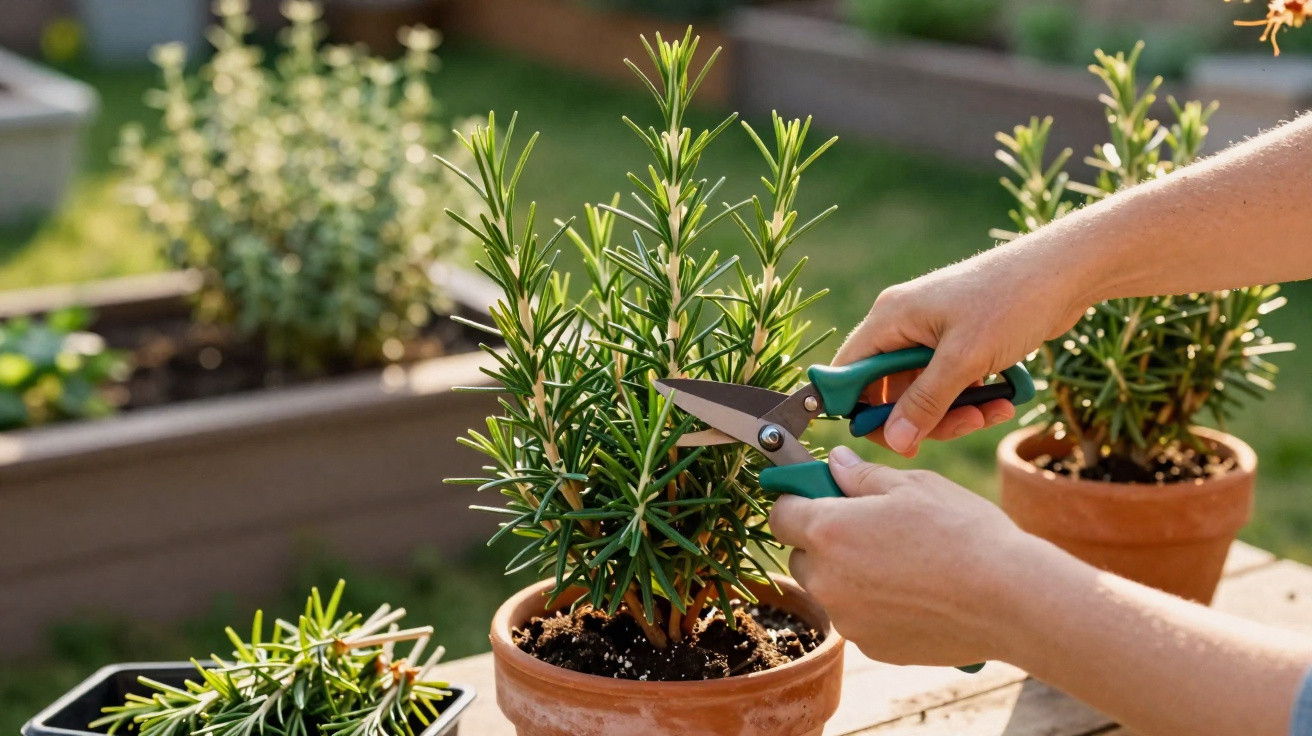
With the right pruning, it will stay dense, flavoursome and in excellent condition.
Rosemary is regarded as an undemanding Mediterranean plant, but without purposeful pruning this shrub soon loses vigour and good looks. Anyone who merely harvests it without pruning it properly risks bare branches and reduced flavour. A few straightforward rules can prevent this, turning a scruffy bush into a compact, long-lasting source of flavour for the kitchen, balcony and garden.
Why rosemary needs pruning at all
Rosemary is an evergreen subshrub that becomes increasingly woody over the years. Left to its own devices, it develops dry, brown branches, with green growth remaining only at the tips. Not only does this look untidy, it also weakens the plant over time.
Regular pruning encourages fresh new shoots, denser foliage and a more intense fragrance – while also providing perfect material for the kitchen.
The benefits of regular pruning at a glance:
- encourages young, tender shoots with plenty of flavour
- keeps the shrub compact and bushy
- prevents it from becoming bare from the inside out
- makes harvesting easier, both for fresh cooking and drying
- significantly extends the lifespan of older plants
Whether it is growing in a pot on the balcony or in a rock-garden border, rosemary wastes its potential without pruning – both visually and in flavour.
The right time: when should you prune rosemary?
Gentle shaping after spring flowering
The ideal time for the main prune is in spring, once flowering has finished. Depending on the region, this is usually in March, or more often April in colder areas. At this point, the shrub is already preparing to produce new growth, making it the perfect opportunity to reshape it.
Proceed as follows:
- cut only green, still-flexible growth
- shorten shoots by around one third
- always cut just above a pair of leaves or a branching point
The plant will respond by producing plenty of side shoots, resulting in denser foliage and a more even-looking shrub. In areas prone to late frosts, it is worth delaying the main prune until the cold spell has definitely passed.
A light maintenance prune in autumn
October is a good time for a second, much more cautious trim. The aim is not to reshape the plant, but to tidy it before winter.
Choose a dry, sunny day. Then:
- remove dry, dead or heavily aged tips
- lightly thin out small shoots that are growing too densely
- do not carry out any drastic shortening
Gardeners in very cold regions should be particularly restrained in autumn. Fresh cuts and young shoots are more susceptible to frost damage.
Times to avoid completely
There are periods when rosemary should ideally not be pruned:
- Frosty spells in winter: wounds heal poorly, while fungal problems and frost damage become more likely.
- Heatwaves in high summer: heat combined with pruning causes extreme stress, especially for potted plants.
- During peak flowering: the shrub is then putting a great deal of energy into flowers and seed production.
- During persistent rain and high humidity: damp cut surfaces invite fungal diseases.
If you want to take cuttings, it is better to wait until after flowering or until late summer, when the shoots are well matured.
Pruning rosemary according to its age
Gently shape young plants
Young rosemary needs guidance rather than heavy intervention. The objective is to establish dense, rounded growth from the outset.
In practical terms, this means:
- shorten or pinch out only the soft shoot tips by 5–10 centimetres
- never remove more than one quarter of the total foliage
- always cut just above a pair of leaves so that new side shoots can form there
This gradually creates a compact, sturdy shrub. If this stage is missed, pruning back woody sections will require more effort later on.
Rejuvenate old rosemary carefully
Older rosemary shrubs often have long, brown branches that are bare at the base, with greenery only at the tips. A rejuvenation programme is needed here – but it should be done in stages.
With old plants, rejuvenate them gradually over two to three years rather than cutting everything back in one go.
This is how rejuvenation works:
- In the first year, remove the clearly dead, completely dry branches.
- Shorten shoots that still have green sections only moderately.
- In the second and third years, gradually replace further aged branches.
Rosemary can barely produce fresh shoots from entirely old, brown wood. Some green foliage must therefore always remain, allowing the plant to continue generating energy.
Hard pruning – a last chance for problem plants
Some completely neglected shrubs resemble woody brooms. If old wood still carries individual buds or small leaves, a more forceful intervention may be the final option.
In that case, individual shoots may be shortened by up to half – but only where there are still signs of life. Afterwards, the shrub needs:
- loose, well-drained soil
- moderate watering, never waterlogging
- patience – recovery can take months
If the plant does not start growing again, the wood was generally already too aged. Starting afresh from cuttings is often worthwhile in this case.
Pruning in pots and borders: important differences
Pruning rosemary in a pot
In a container, the plant has less root space and dries out more quickly. This makes it more sensitive to severe pruning.
Keep the following in mind:
- remove less growth than you would from plants in a border
- concentrate chiefly on shortening soft, green shoots
- avoid woody growth where possible, as recovery is slower in a pot
- after pruning, ensure good drainage and do not leave water sitting in the saucer
For potted rosemary, several small shaping trims each year work better than one major operation.
Pruning rosemary in the ground
In a garden border, the shrub can usually respond more vigorously. Its roots have more space, and soil life supports recovery.
In the ground, you can therefore:
- prune back more firmly, by up to around two thirds of the green shoot length
- selectively thin the centre of the shrub to improve air circulation
- shape it into balls, hedges or structured border plantings
Clean, sharp secateurs or pruning shears make neat cuts that heal quickly. Particularly in a border, confident but considered pruning is often rewarded with an impressive, bushy shrub.
Ball and carpet forms: keeping rosemary in shape
Alongside the familiar upright varieties, there are trailing and creeping forms. These are ideal for wall tops, containers or ground cover.
- Creeping varieties: remove shoots that grow steeply upwards to retain the carpet effect.
- Ball shape: shorten all shoots evenly by around one third, working all around the plant so the form remains balanced.
Regular, light adjustments twice a year are better than infrequent, severe pruning. With little effort, this produces dense, decorative “rosemary balls” in a border or pot.
Common mistakes when pruning rosemary
Cutting into old wood
The most common mistake is cutting too far back, directly into brown, completely woody material. Rosemary rarely sprouts again from this. The result is gaps and bare patches that remain permanently.
A quick test: lightly scratch the bark – if it is green and fragrant underneath, it can be cut. Brown and dry means: hands off.
When in doubt, leave a little more green material behind. A shrub that is slightly too large looks better than half a pile of dead wood.
Removing too much at once
Taking away more than one third of the foliage in one go forces the plant into stress mode. It then directs all its energy towards wound healing instead of producing strong new growth.
A phased strategy is better:
- Year 1: moderate pruning, begin addressing problem areas
- Year 2: further rejuvenation
- Year 3: complete the shaping
This maintains the balance between roots and crown, enabling the shrub to recover after each intervention.
Incorrect tools and unsuitable conditions
Blunt or dirty secateurs crush shoots and can spread diseases from one plant to another. A clean, disinfected, sharp cut heals considerably faster.
Conditions matter just as much:
- prune only in dry weather
- avoid high humidity
- choose a sunny day where possible, so cut surfaces dry quickly
A position with several hours of direct sunlight each day ensures that rosemary has plenty of energy after pruning to grow back strongly and develop its intense flavour.
Using cuttings: growing new rosemary from prunings
Growing your own plants from pruning waste
The sprigs produced during shaping do not need to go in the bin. They provide excellent starting material for new plants.
Young, strong shoots around 10–15 centimetres long are suitable. Remove the lower leaves so roots can form at that point. Then place the cuttings in a loose, sandy substrate that drains water well.
Rooting in water or directly in compost?
Both methods work, depending on the type of shoot:
- Water: suitable for tender, fresh spring shoots; stand the base a few centimetres deep in clear water and change it regularly.
- Substrate: better for slightly woody summer shoots; place them straight into a pot of sandy compost and keep it moderately moist.
In water, you can watch the roots develop, but this requires daily checking. In substrate, the roots remain better protected and are usually stronger.
Caring for young plants
Once a strong root system has formed, the young plants can be moved into slightly larger pots. A free-draining, fairly low-nutrient substrate helps prevent rot. Small rosemary plants tolerate waterlogging just as poorly as mature ones.
If the young shrubs are kept in a bright spot, protected from strong winds and watered only moderately, they will develop into robust plants within a few months. Once they reach around 15 centimetres in height, they can be moved to a sunny place in the garden or into a larger container – and trained from the beginning with gentle, small trims into dense, aromatic bushes.





Comments
No comments yet. Be the first to comment!
Leave a Comment